

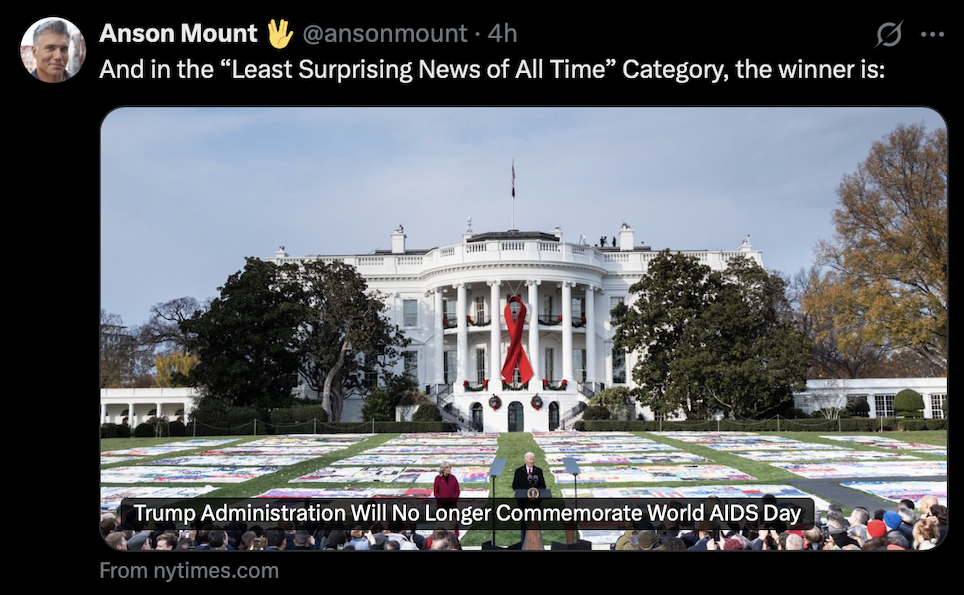
For the first time in nearly four decades, the United States government has opted not to officially acknowledge World AIDS Day, halting a long‑standing tradition of honoring those lost to the disease and raising global awareness for HIV/AIDS.
This decision came earlier this month when the State Department reportedly directed its staff and federal grantees to stop using public funds for any messaging or commemoration of World AIDS Day — including posts on social media, public statements, or other outreach efforts. While employees may still attend community events, they’re barred from speaking or promoting their participation through official channels.
RELATED: This $40 Injection Could Rewrite the Future of HIV Prevention
State Department Calls Awareness Days ‘Not a Strategy’
State Department spokesperson Tommy Pigott explained the policy shift, emphasizing the administration’s focus on direct action rather than symbolic recognition.
“An awareness day is not a strategy. Under the leadership of President Trump, the State Department is working directly with foreign governments to save lives and increase their responsibility and burden sharing,” Pigott said.
While the administration frames this as a strategic decision, critics note that World AIDS Day has historically served as a critical platform to educate the public, mourn those lost, and galvanize global efforts.

AIDS Awareness Tradition at Risk
Since 1988, its worldwide commemoration has been recognized internationally to raise awareness about HIV/AIDS and honor the millions of people who have died from the disease. Former President Ronald Reagan was the first U.S. leader to publicly address AIDS in a 1985 speech, while President Bill Clinton became the first to issue a Presidential Proclamation for World AIDS Day in 1993.
It remains unclear whether President Trump will issue a proclamation for December 1 this year, leaving a historic tradition in limbo.

PEPFAR: America’s Lifeline in the AIDS Fight
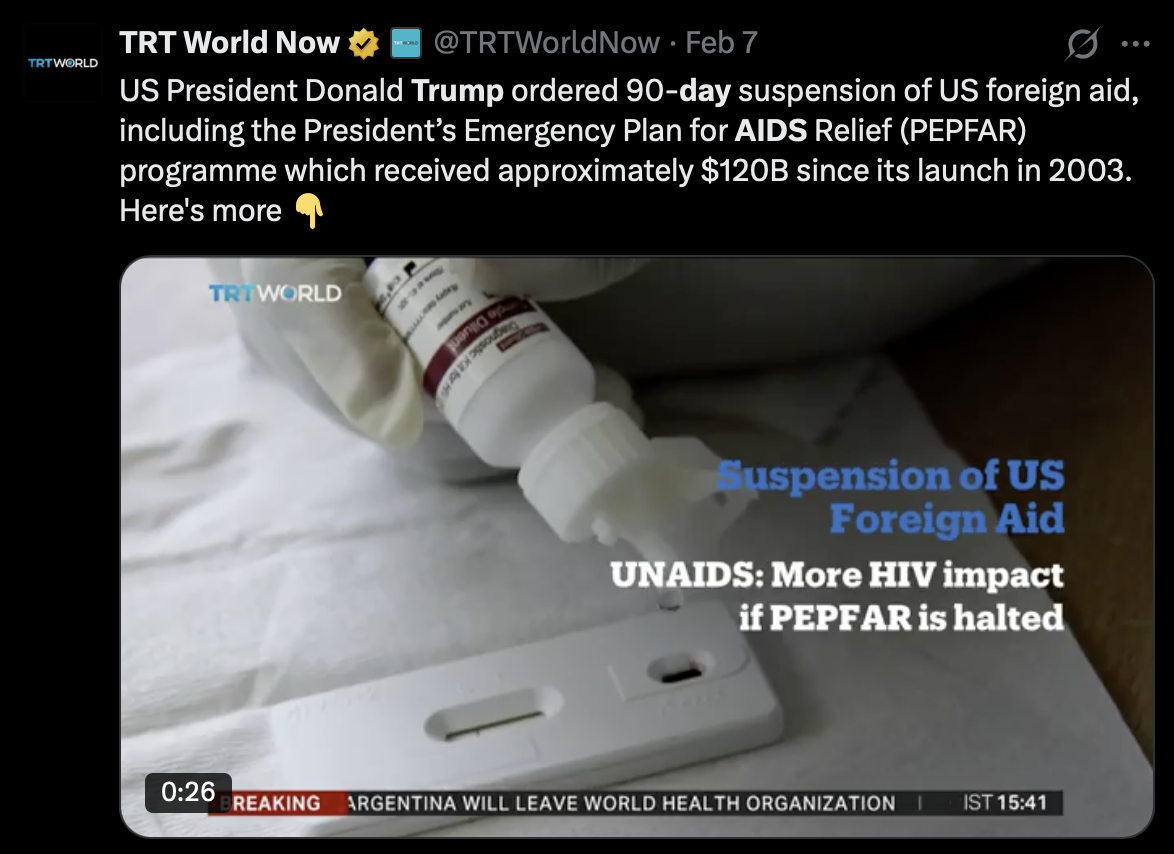
One of the central programs highlighted is PEPFAR (President’s Emergency Plan for AIDS Relief). Launched in 2003, PEPFAR represents the U.S.’s largest investment in the global prevention against the chronic disease, including its treatment and care, totaling more than $120 billion. The initiative has helped save an estimated 26 million lives by supporting countries in preventing infections and expanding access to treatment.
However, PEPFAR funding has faced turbulence this year. The Trump administration temporarily halted all HIV-related funding before resuming it, and now proposes a $1.9 billion reduction in fiscal year 2026. Experts warn that even modest cuts could have serious global consequences, including reduced access to lifesaving medications and higher mortality rates.
Global Impact of Funding Cuts on AIDS Programs
The U.S. is the largest single donor to the global AIDS response, making every funding decision critically important. According to a recent report by the Joint United Nations Programme on HIV/AIDS, funding cuts worldwide have already led to millions losing access to treatment, and a yet-undetermined number of deaths due to the disease.
Ending official recognition of World AIDS Day, combined with proposed budget cuts, has sparked concerns that the U.S. is stepping back from its leadership role in the fight against the chronic disease.
Why This Day Matters
For decades, World AIDS Day has been more than symbolic. It has served as a platform for awareness, advocacy, and international collaboration, giving voice to millions affected by the epidemic. Experts argue that skipping official commemorations sends the wrong message, particularly at a time when global funding and resources are already strained.
While attendance at local events remains possible, the lack of federal promotion diminishes visibility and undermines the work of advocates and organizations who rely on national attention to raise awareness, funding, and support.
Looking Ahead
As the U.S. government steps back from official recognition, questions remain about the administration’s commitment to the global fight. For now, communities, nonprofits, and global partners continue to carry the mantle of awareness and advocacy, reminding the world that the fight against HIV/AIDS is far from over.
REFERENCE: The New York Times