


When Norwegian decathlete Jonathan Hertwig-Odegaard hit 8,002 points at the European Athletics U23 Championships in Bergen two weeks ago, it wasn’t just a personal best—it was a milestone that thrust him into an exclusive club of athletes who’ve cracked the elusive 8,000-point barrier in the decathlon. But there’s another milestone Jonathan’s reached that has little to do with numbers: being an openly gay athlete in a world where the topic still tends to raise eyebrows, particularly in men’s track and field.
RELATED: Josh Cavallo’s New Life in the UK and Dreams of Fatherhood
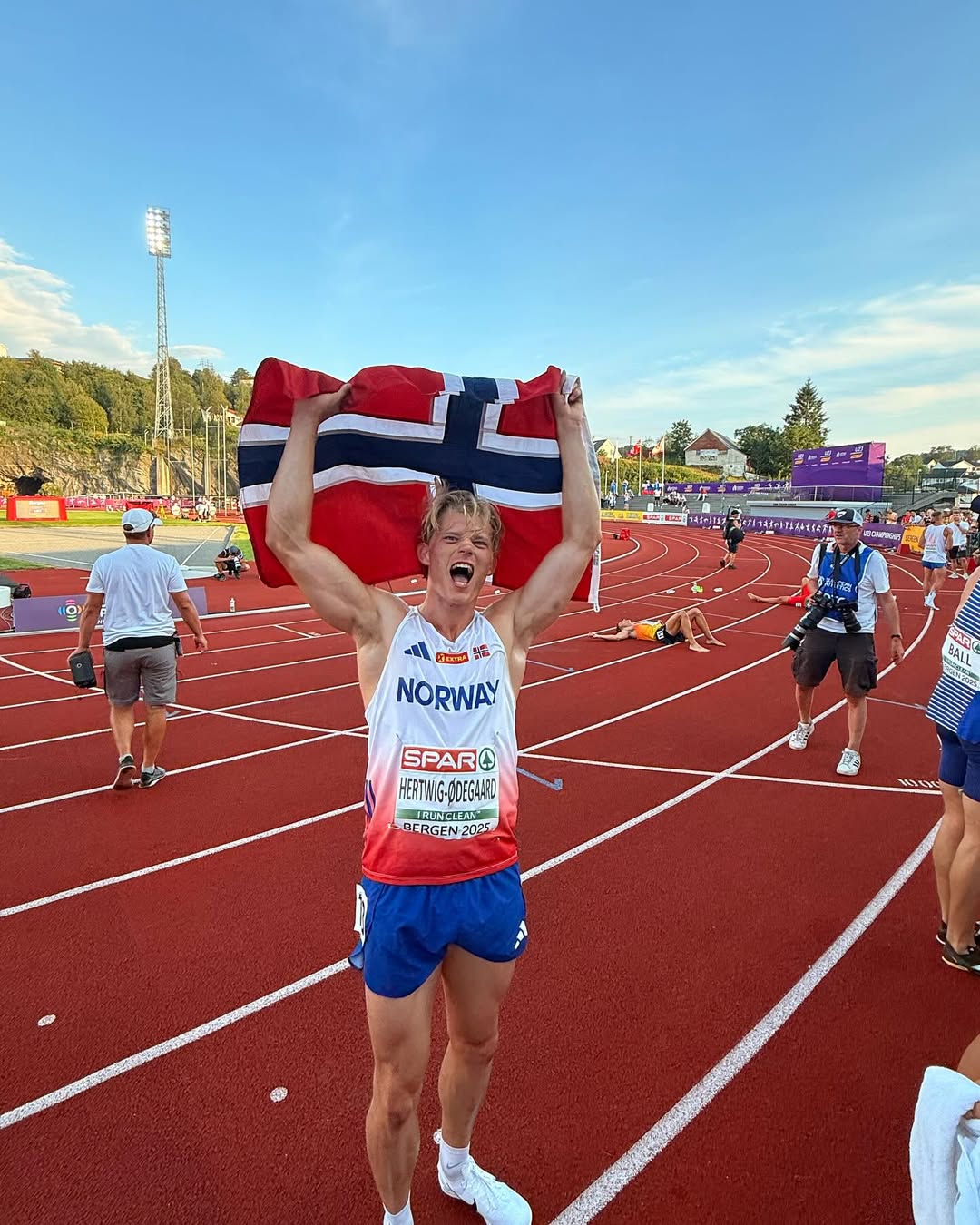
As Hertwig-Odegaard heads to the University of Texas this fall, where he’ll compete on their prestigious track and field team, he’s becoming a role model—whether he likes it or not. And yet, he’s quick to point out that being gay, for him, isn’t what should define his career. “I think it’s great that you can be a role model, but at the same time I hope in the long run that it doesn’t have to be necessary, and that it gets so much publicity and attention,” he says. His words echo the sentiment that many LGBTQ+ athletes feel—while it’s important to be visible, it should not be exceptional to simply be yourself.
RELATED: Ryan Russell’s Take on Bisexuality: It’s Not a Switch, It’s a Strength
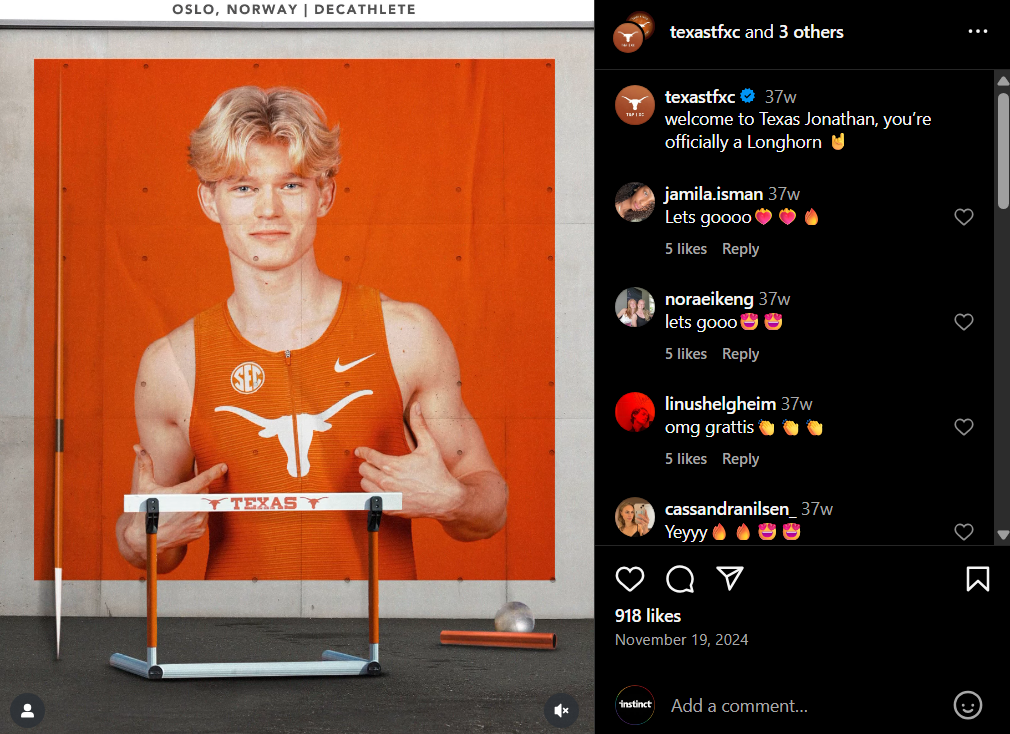
Jonathan is only the second openly gay decathlete in Outsports’ 26-year history of covering LGBTQ+ athletes, a striking fact considering that the decathlon is arguably one of the most physically demanding sports, requiring an athlete to excel in 10 different events. He’s also breaking barriers in track and field, where there was only one openly gay male athlete at the Paris 2024 Olympics (though another came out after the Games). This is a rarity, not only in his sport but in most men’s athletics, where coming out still often carries weight.
Still, while many athletes have to navigate the waters of personal and public identity, Hertwig-Odegaard believes the emphasis shouldn’t be on the courage it takes to come out.
“Among athletes, people talk about ‘it’s so brave and tough’ when people come forward,” he says. “I feel that there is a bit of a wrong focus, that the responsibility should not lie with individuals. I think it is the responsibility of society at large to facilitate that people are comfortable being open about their sexuality, also as athletes.”
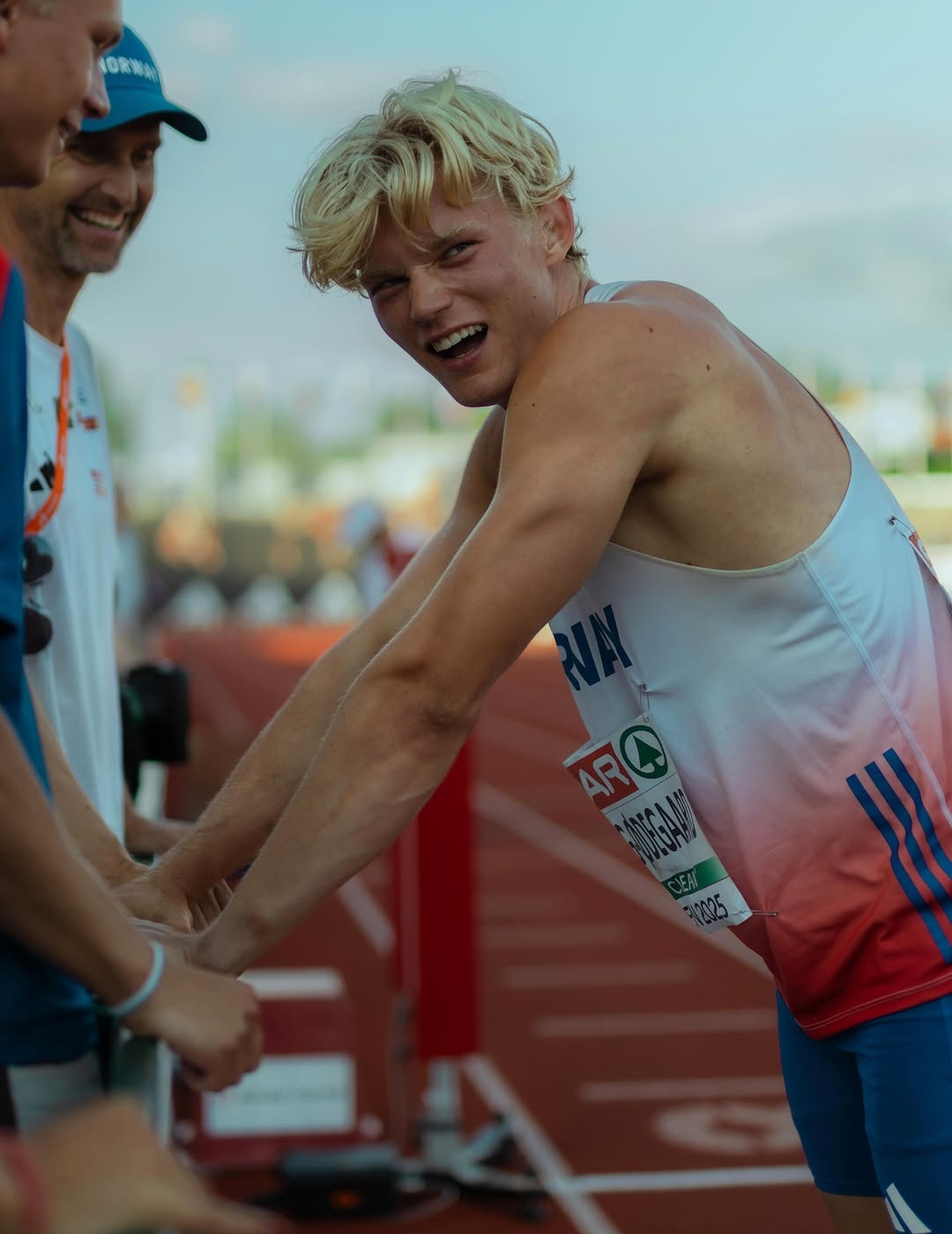
He’s not wrong. In an ideal world, the concept of “coming out” wouldn’t be a headline-grabbing story, because it would be seen as just another part of an athlete’s journey. The fact that it is a big deal, though, speaks volumes about the need for more visibility and acceptance in sports, especially for gay men in track and field, where machismo and hyper-competitive attitudes still dominate.
Though Jonathan doesn’t want the focus to be on his sexuality, he admits that had he seen other openly gay male athletes as a younger athlete, it might have been easier for him to accept who he was. “Knowing there were other gay male athletes would have helped me as a young boy or young athlete,” he reflects. It’s a reminder that visibility matters—because for all the progress we’ve made, many young people still face challenges when it comes to being comfortable with their sexuality, especially in highly traditional or hyper-masculine sports environments.
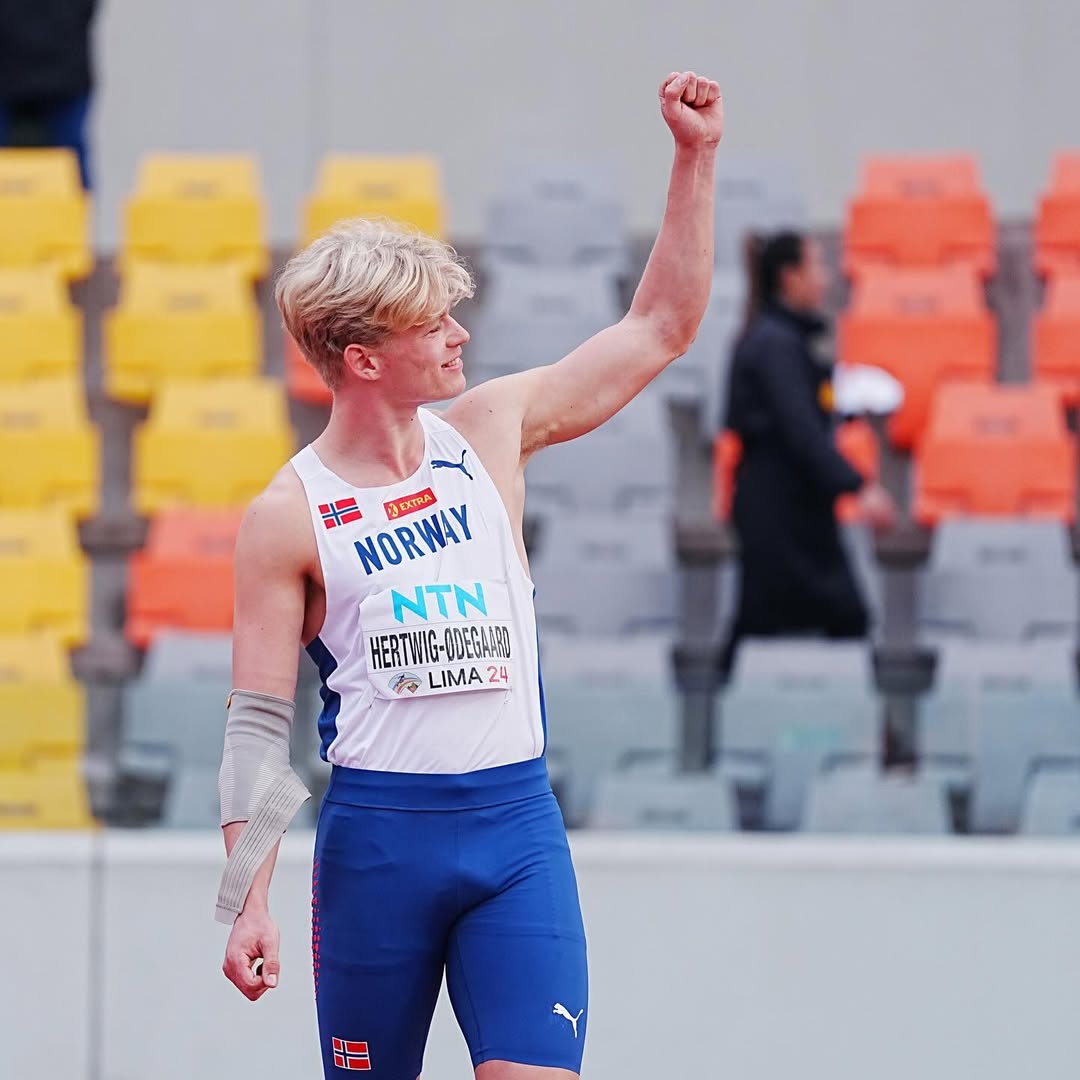
But that doesn’t seem to be a hurdle for Jonathan anymore. As he turns 20, he exudes a confidence that’s hard to ignore. “Now I’m proud and happy with who I am, and I don’t think there’s a problem,” he says with the ease of someone who’s made peace with themselves. And if others have a problem with his identity? Well, that’s their issue, not his.
In the midst of all the personal triumphs and media buzz about his sexuality, Jonathan’s true love remains the sport he excels in. And it’s clear that breaking 8,000 points in the decathlon has earned a special place in his heart. “It means a lot,” he says, reflecting on the significance of this feat. “What’s so great about athletics is that it’s so measurable, with numbers and scores. So to go over 8,000, I feel like that’s a real decathlon result.”
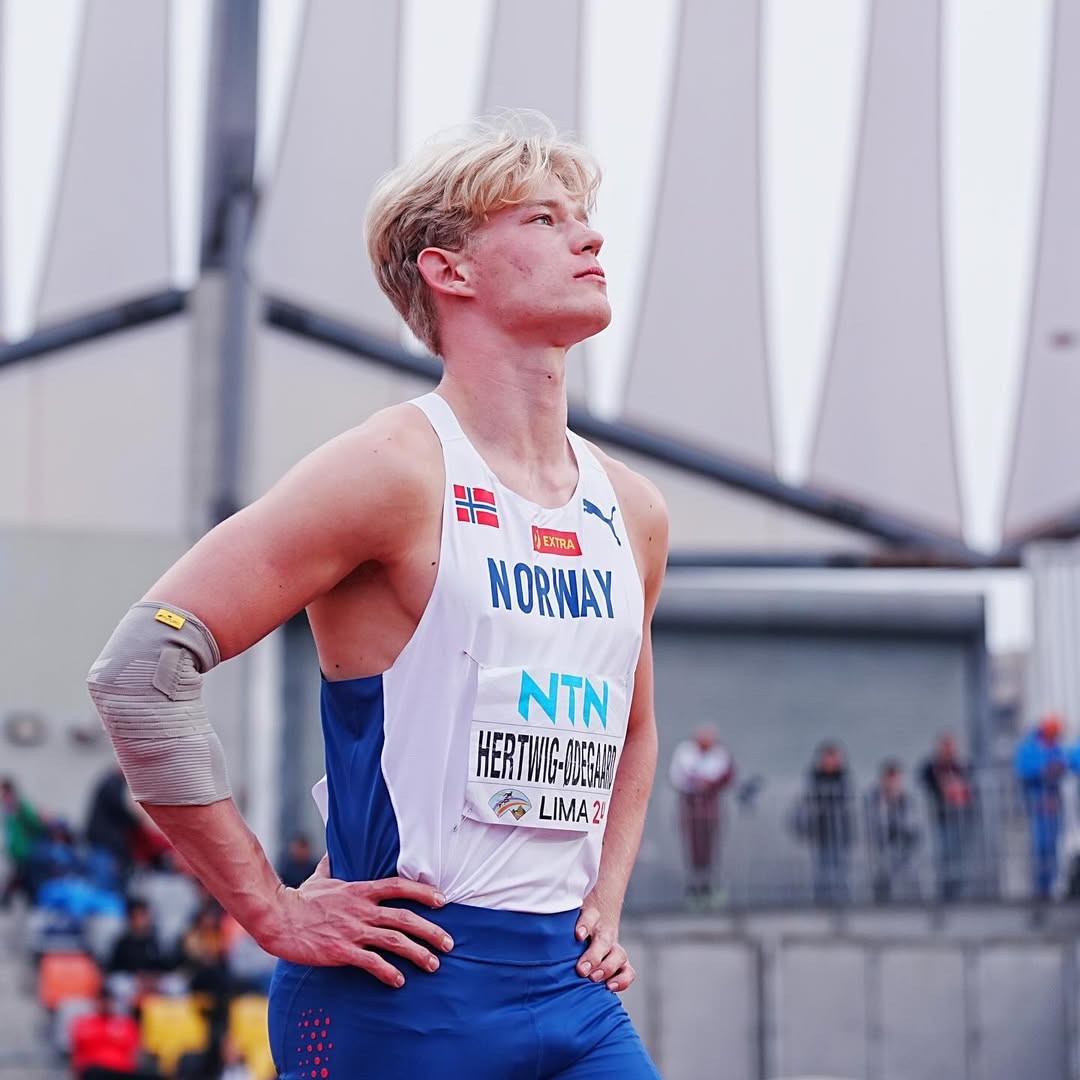
His focus on performance underscores the reality that, at the end of the day, it’s the skill and dedication that matter most. It’s his athleticism that propels him to new heights, not his sexuality. But for those who look up to him—whether for his impressive scores, his ability to compete at the highest level, or his courage in being openly gay—Jonathan Hertwig-Odegaard is an inspiration. And he’s showing the world that it’s possible to hit the highest marks both on the track and in life.
I certainly congratulate this guy. What a milestone! Sleeping with guys and still being superbly athletic. It sure gives all us guys who sleep with other guys hope. Those of us who feel that we are 100% masculine and perfectly capable of competing with other men are immediately reduced in our abilities by our “peers” who feel that our athletic abilities are “tainted”. Thank goodness this fellow shows that we, who are masculine in every way, even with a habit of preferring the company of other guys, can succeed normally, and even in a superior way to other similar masculine men. Kudos to him! The importance of visibility is just to be yourself and not a made-up persona.
That was almost pitch-perfect sarcasm, I congratulate you!
You would have to go to Data Lounge to get better.
In the meantime, while some European college student talented enough to score an athletic scholarship to a top USA collegiate track and field team doesn’t really need the congratulations of some rando from the interwebz, cheers to Odegaard!