


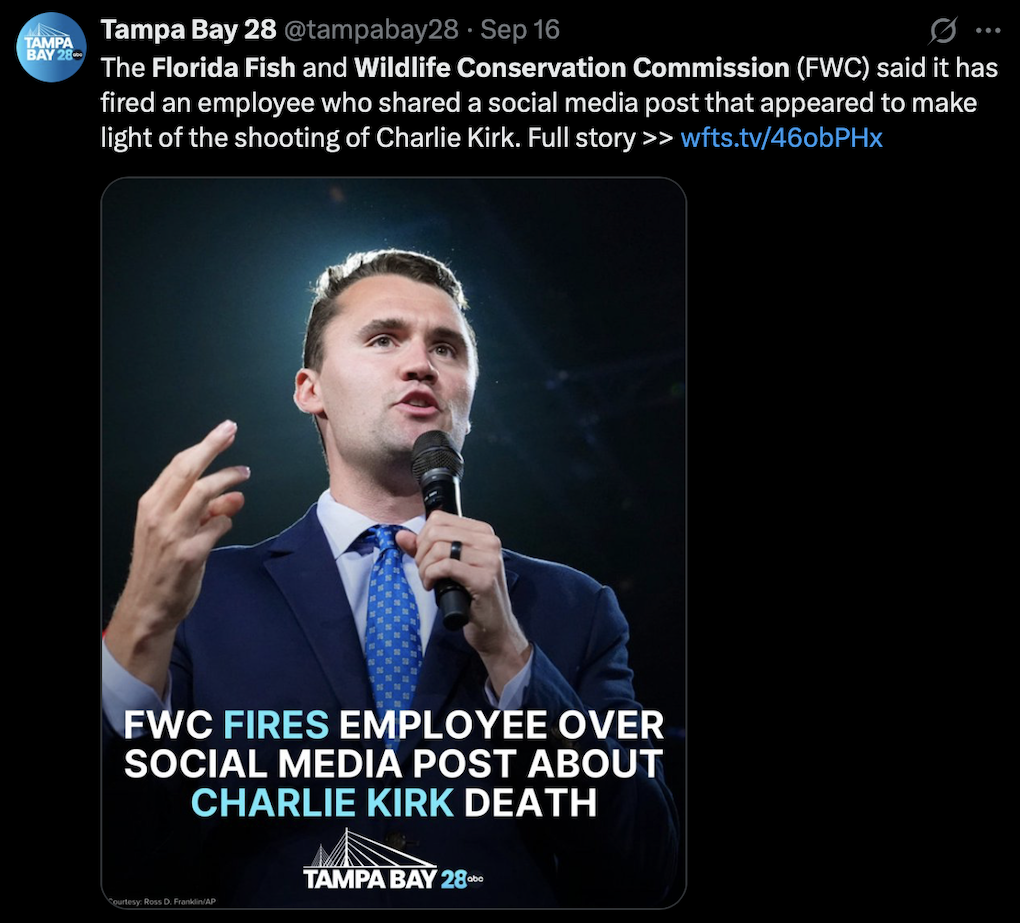
The Florida Fish and Wildlife Conservation Commission (FWC) is defending its decision to dismiss one of its biologists following a social media post about conservative activist Charlie Kirk, arguing that the move was necessary to protect the agency’s credibility and public trust.
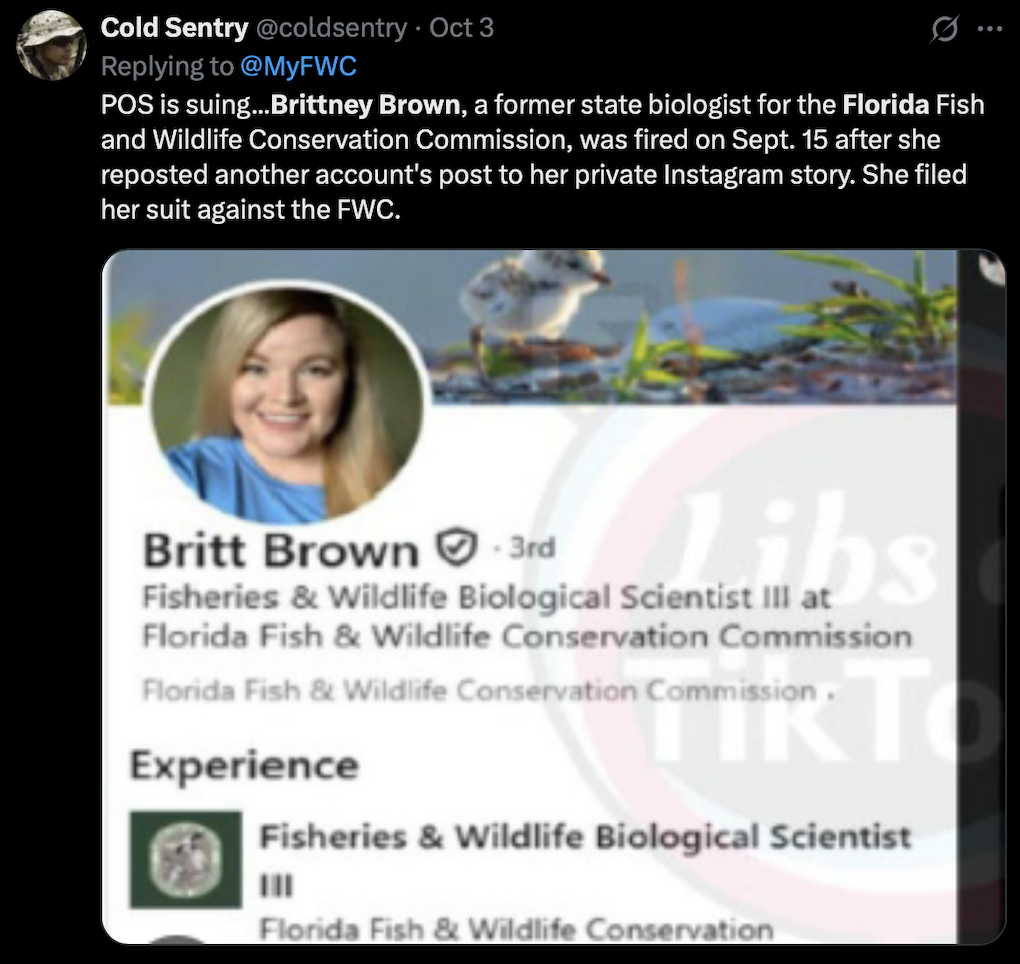
Attorneys representing FWC Executive Director Roger Young and Division Director Melissa Tucker filed a response Thursday to a lawsuit brought by former employee Brittney Brown, who alleges she was wrongfully terminated for exercising her First Amendment rights. Brown, a wildlife biologist who had worked for the commission for about seven years, was fired on September 15, just one day after a screenshot of her personal Instagram post was shared by the conservative account Libs of TikTok, which called for her dismissal.
RELATED: Pete Buttigieg’s Response to Tucker Carlson’s Cringe-Worthy ‘Gay Sex’ Questions
The Kirk Post That Led to a Florida Biologist’s Firing
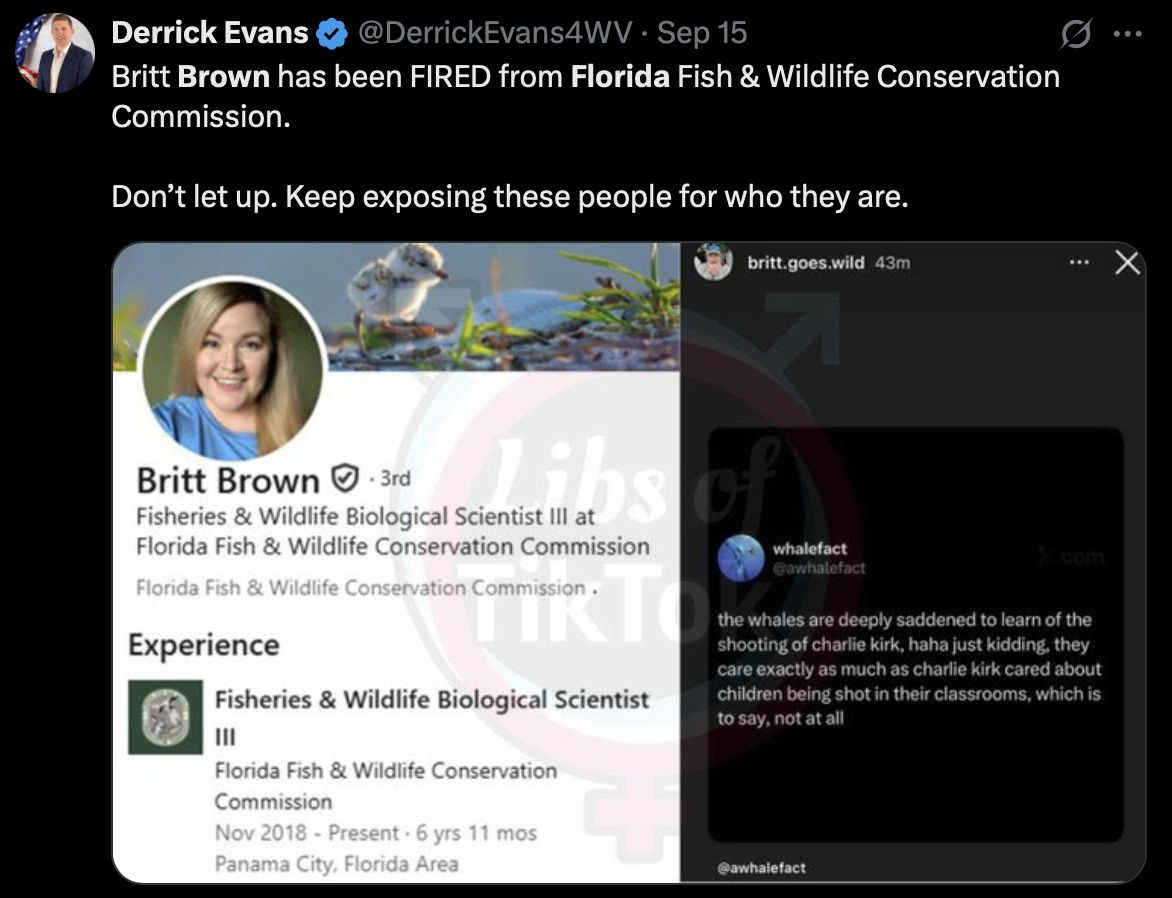
According to court documents, the controversy began after Brown reposted a meme from the account @whalefact on her personal Instagram account. The post read:
“The whales are deeply saddened to learn of the shooting of Charlie Kirk, haha just kidding, they care exactly as much as Charlie Kirk cared about children being shot in their classrooms, which is to say, not at all.”
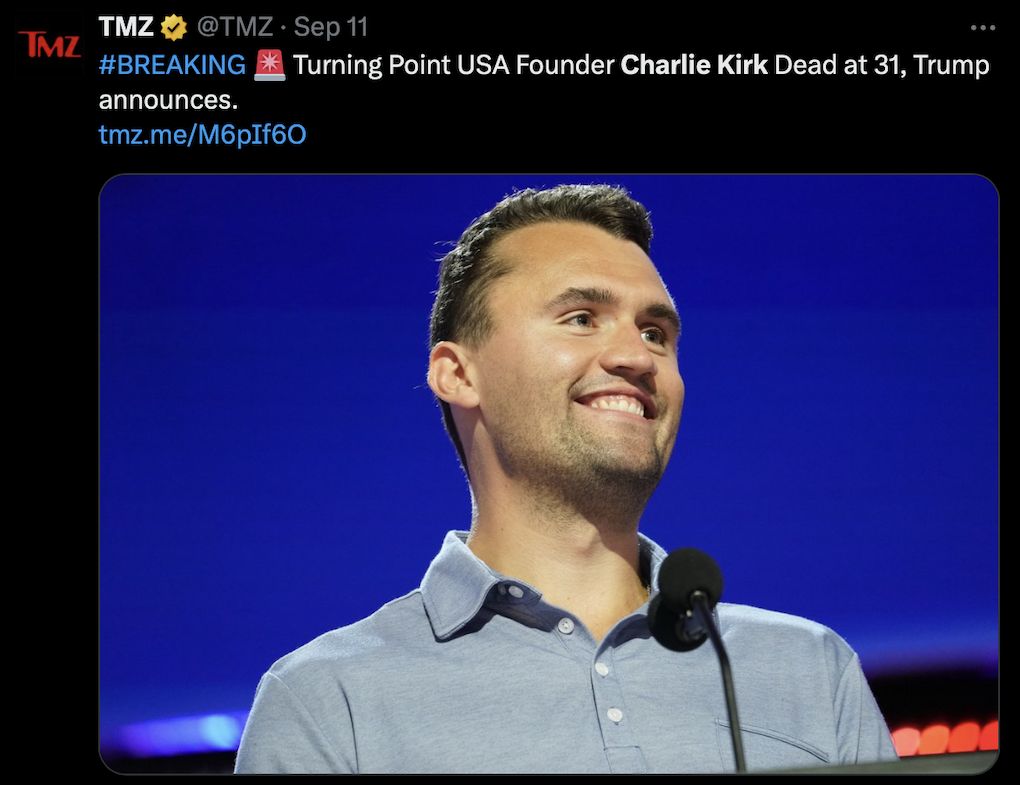
Kirk, the founder of the conservative organization Turning Point USA, was shot and killed on September 10 during an appearance at Utah Valley University. The post, which appeared to reference his death in a sarcastic tone, quickly spread online.
In the lawsuit filed September 30, Brown claims her firing violated her constitutional rights and that her post had no connection to her work or the agency. Her attorneys argue that she made the post on her personal phone, while on vacation, and that she did not identify herself as an FWC employee on her account.
“That political post had nothing to do with plaintiff’s job responsibilities. After all, she is a wildlife biologist, not a public information officer,” the motion reads.
State Cites ‘Public Trust’ in Firing Employee for Post on Charlie Kirk
The defense, however, maintains that the firing was not politically motivated but a matter of protecting the agency’s integrity. In a court filing submitted Thursday, attorneys for Young and Tucker wrote that the decision was made to “prevent foreseeable disruption, reputational harm, and loss of public trust.”
“The agency did not police ideology; it protected credibility central to its mission,” the filing stated.
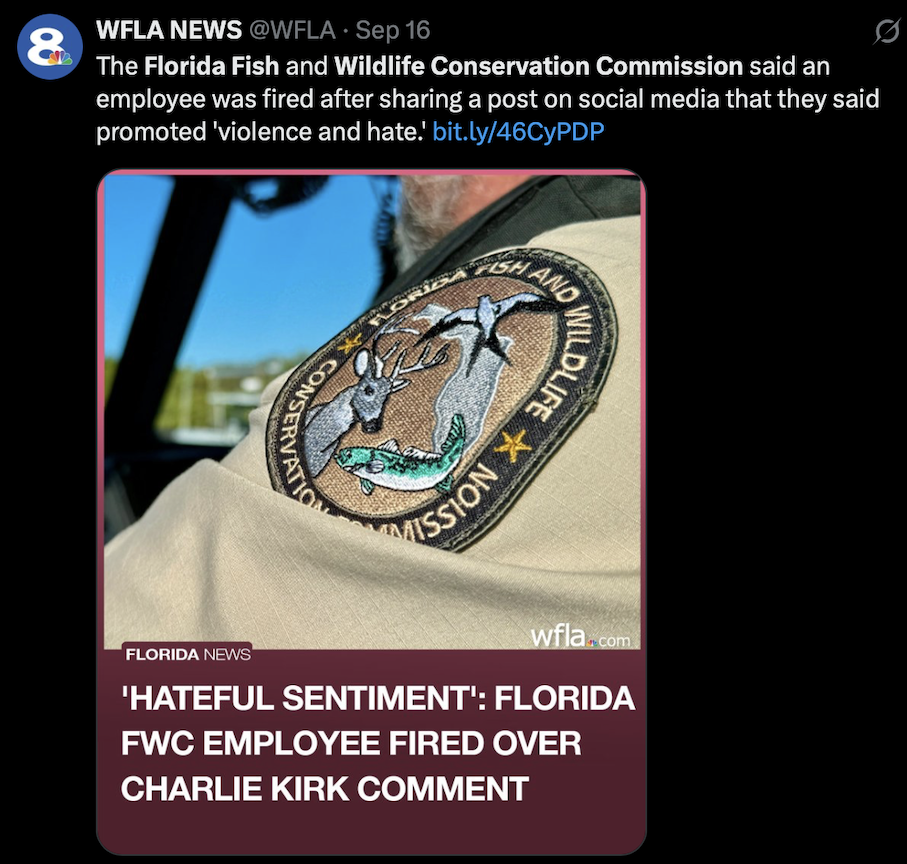
They further argued that public employees are not immune from workplace consequences stemming from speech that could undermine public confidence.
“The First Amendment does not shield public employees from the consequences of speech that undermines the effectiveness, credibility, or public trust on which their agencies depend,” they wrote. “Even if the post had some political dimension, FWC’s interest in maintaining credibility and neutrality far outweighs any minimal expressive value.”
A copy of Brown’s termination letter included in the court documents shows she was employed under an “Other Personal Services” (OPS) classification — a status that does not carry the same job protections as full-time state employees.
Brown’s legal team filed a motion for a preliminary injunction on October 3, asking the court to reinstate her to her position and prohibit any retaliation while the case proceeds. The defense’s filing on Thursday was a response to that motion.
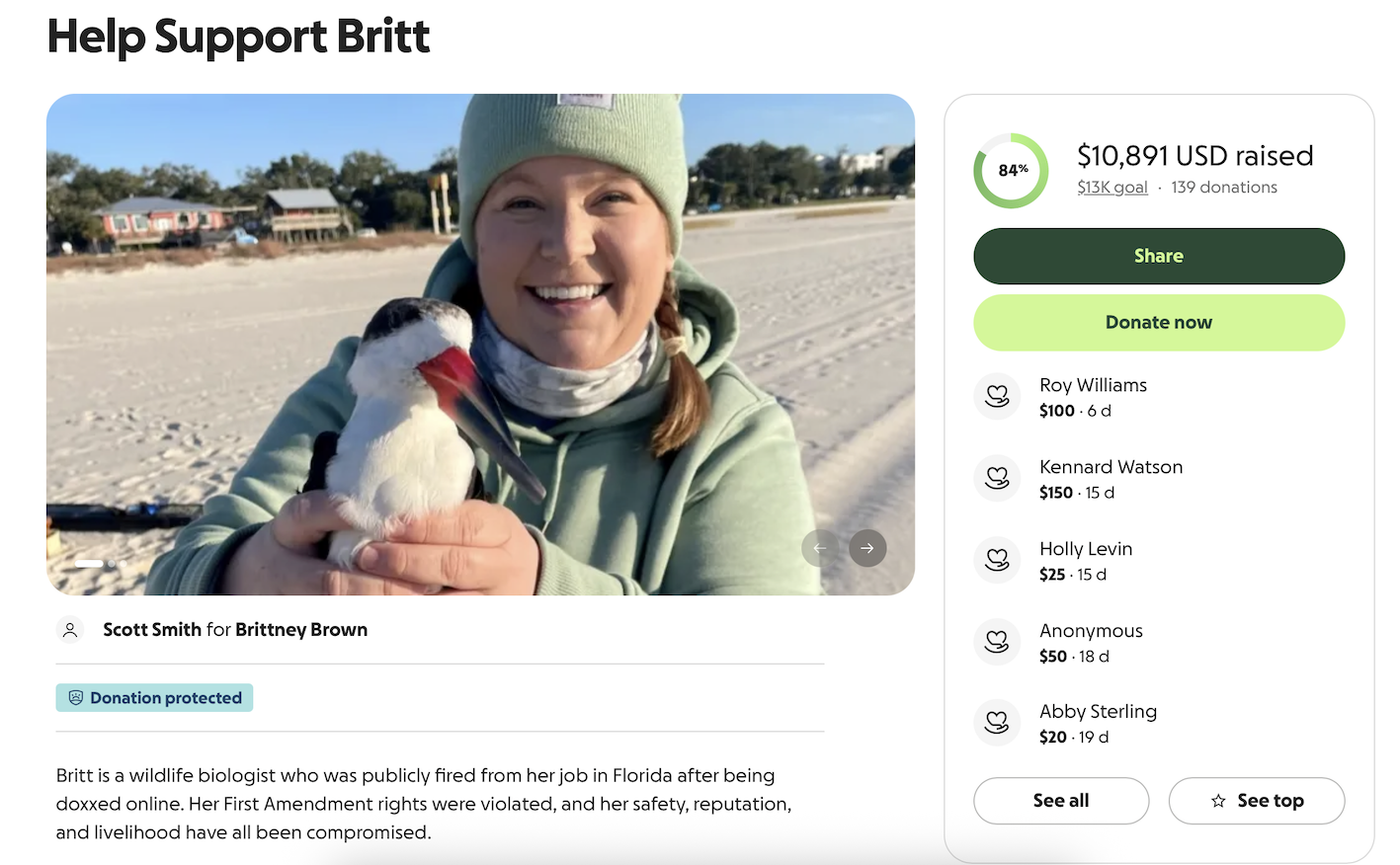
Brown has raised $10,891 as of writing on her Go Fund Me page:
“Britt is a wildlife biologist who was publicly fired from her job in Florida after being doxxed online. Her First Amendment rights were violated, and her safety, reputation, and livelihood have all been compromised.Britt has dedicated her career to protecting coastal imperiled species, working in a field that rarely offers fair financial compensation. She is passionate about protecting beach-nesting birds; a fierce advocate for all Floridians, great and small.”
U.S. District Judge Mark Walker has scheduled a hearing for November 10, where both sides will present their arguments. The outcome could determine not only Brown’s employment status but also set a precedent for how state agencies navigate the intersection of employee free speech and institutional neutrality in the social media era.
At the heart of the case lies a modern dilemma: how much personal expression–free speech– a public employee can exercise before it becomes a professional liability.
If she is a MAGA and said something about the “woke, leftist, liberal” being shot or killed, she would have gotten away with it. The double standards of free speech. Republicans be all “protect free speech except if you are “woke, leftist, liberal”.