


Shakespeare would have loved Michael Urie. A man of many hats, Urie is best known for his scene-stealing turn as Marc St. James in Ugly Betty, but he’s far from a one-trick pony. His resume spans stage, screen, and now, the royal drama Richard II. In this candid chat with TimeOut, Urie opens up about his career, his love for classical theater, and how he brings humor and humanity to every role, whether it’s a flamboyant assistant or a tragic king.
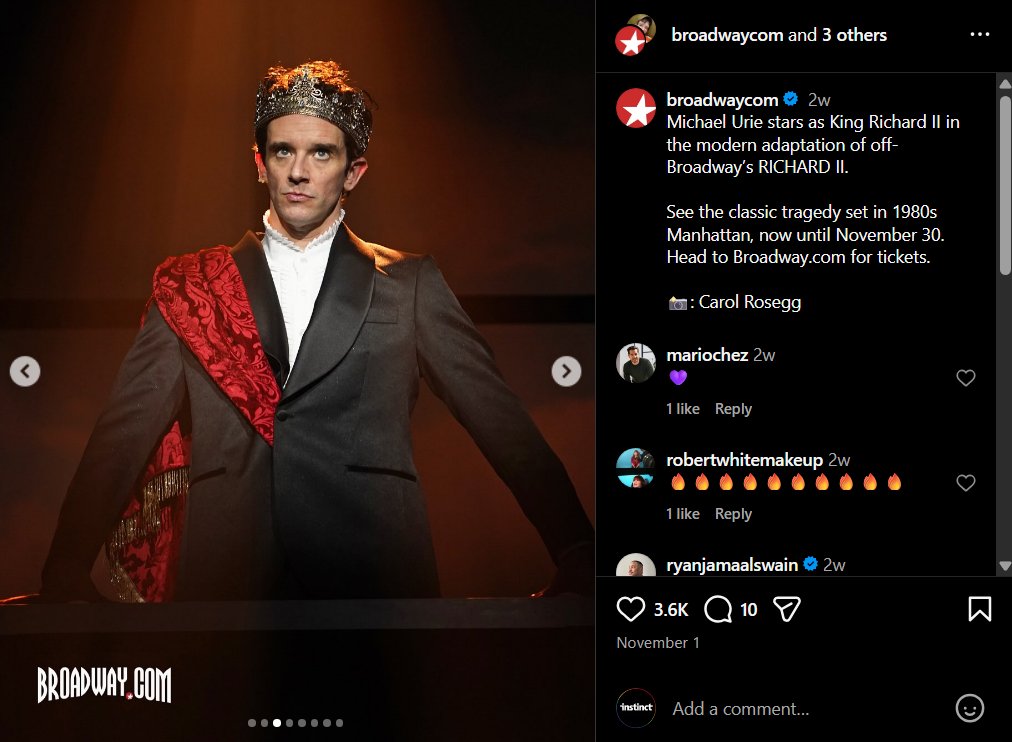
A Career That Won’t Slow Down
“I’m a little tired,” Urie admits, and who wouldn’t be? This powerhouse actor has appeared in six Broadway shows in just seven seasons, from the heart-wrenching Torch Song to his recent role in the quirky comedy Oh, Mary! Yet, it’s his turn as Richard II that’s pushing him to new creative heights. After years of wanting the part, Urie’s finally playing the ill-fated king in Red Bull Theater’s production, a role he’s long dreamed of. The exhaustion, however, is worth it. “I’ve always been trying to get to this place,” he says. “Being able to go between varying roles was the dream when I was getting out of school.”
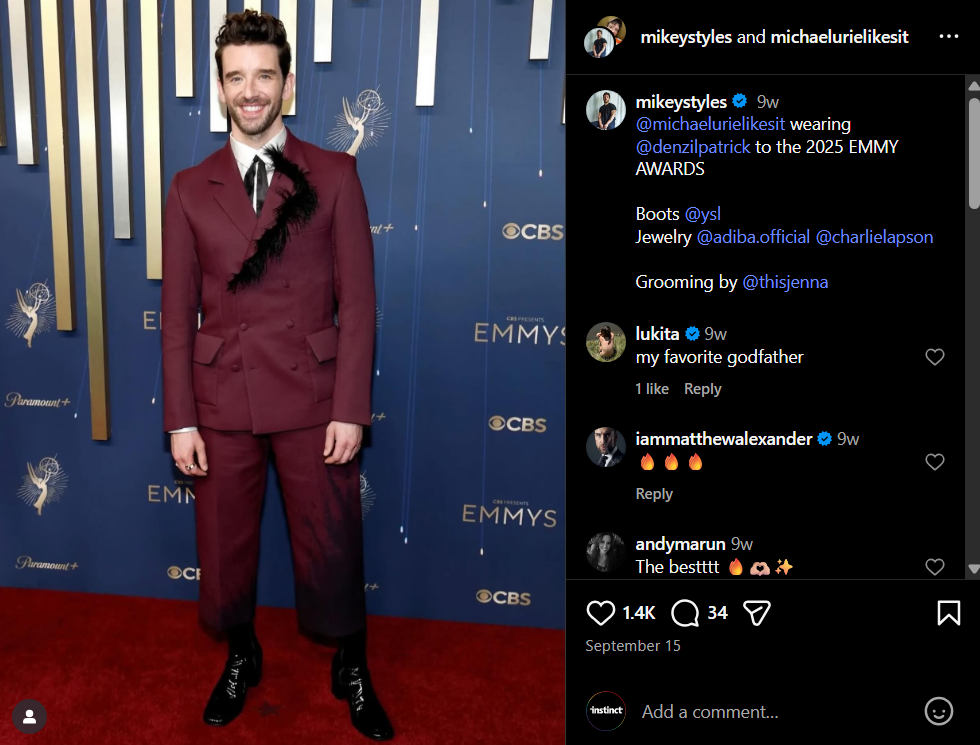
Shakespeare—Not Just for the “Fancy Boys”
In Urie’s hands, Richard II is more than just another regal tragedy. It’s a study in vulnerability, as Urie brings an intimacy to the character not typically seen in Shakespeare’s history plays. He explains, “Richard’s kind of this little flower-picking fancy boy… someone who loves his crown and scepter and avoids any kind of physical conflict.” But it’s this very softness that, in Urie’s eyes, speaks to Richard’s humanity. His portrayal is not about being the king who goes to war but about navigating the complexities of power and personal guilt in an emotionally charged world.
While Urie admits that roles like Benedick in Much Ado About Nothing or Berowne in Love’s Labour’s Lost also appeal to him, his love for Shakespeare runs deeper than just the comic roles. “I didn’t grow up on classical theater, but I fell in love with it in high school,” he says. “The reason we keep coming back is the psychology, the romance, the poetry.” Urie’s passion for Shakespeare has only grown, and he credits his Juilliard training with helping him unlock the visceral quality of the verse. “It’s not meant to be read, it’s meant to be spoken,” he explains. “When I speak it, I understand it.”
Shakespeare Meets 1980s New York
Urie’s take on Richard isn’t just steeped in Shakespearean tradition—it’s infused with modern sensibilities, leaning into themes of gender, sexuality, and power. By setting the play in a stylized 1980s New York, Urie’s Richard becomes a figure trapped between two worlds: one of regal expectation and one of open queerness. “It’s kind of like a New York aesthetic,” he says, “but it’s also medieval England. There’s a big queer element—Richard has a queen, but he also has a bunch of gay guys around him.”
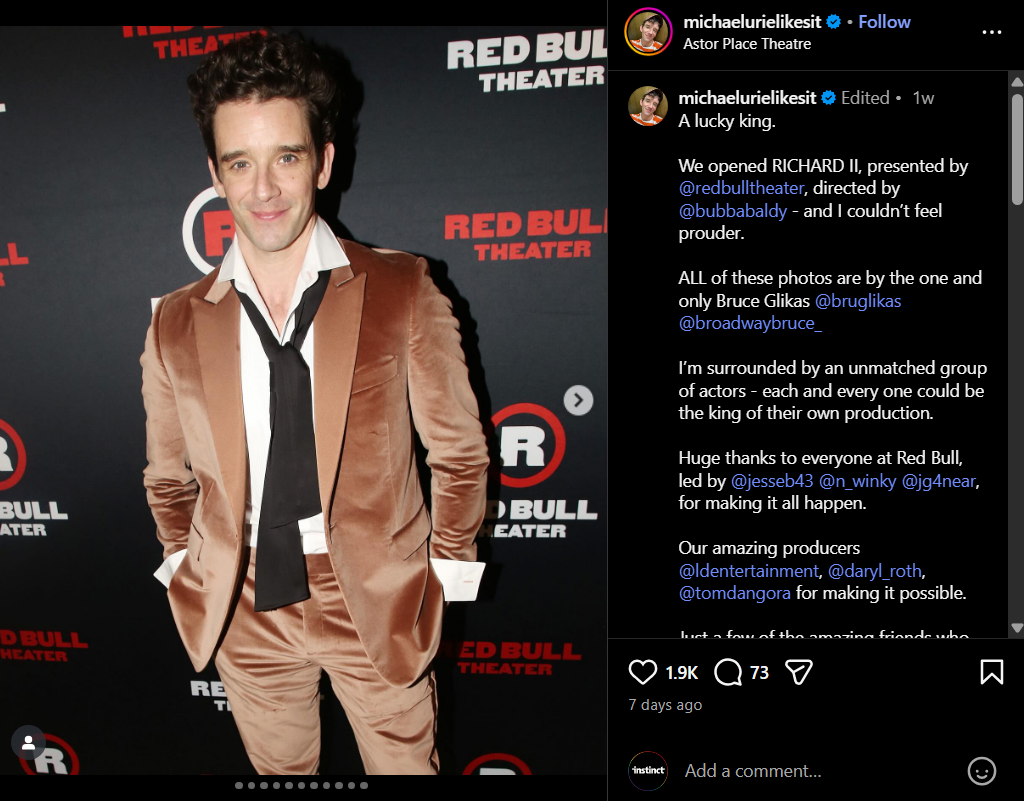
This modern touch doesn’t detract from the historical weight of Richard II. Instead, it gives the play a fresh, accessible twist. Urie and his director, Craig Baldwin, lean into the complexities of Richard’s sexuality while still honoring the text’s rich, tragic nature. “We’re giving it a sort of 1980s New York aesthetic, leaning into the idea of open queerness or how queerness becomes an open secret,” he says.
The Actor’s Journey: From TV to Theater
Urie’s career trajectory has been anything but conventional. From Ugly Betty to Shrinking to his stage roles in Torch Song Trilogy and Angels in America, Urie has embraced the full spectrum of performance. Reflecting on his journey, he notes how far the industry has come for gay actors. “I’ve been at the forefront of a generation of openly gay actors who often play gay roles,” he says. “The fact that there were even four gay actors nominated in a category like Best Supporting Actor in a Comedy? That’s a huge change.”

He credits much of his success to his willingness to embrace the complexity of gay characters, which often defy the one-dimensional stereotypes. “The idea that you can only play gay one time is total bullshit!” he laughs. “I’ve played Marc St. James and Rudi Gernreich—two gay characters in fashion—but they couldn’t have been further apart. We contain multitudes.”
A Legacy of Laughter
Though Urie is known for his dramatic chops, his comedic timing is equally legendary. Whether it’s his physical comedy in Ugly Betty or his slapstick moments in musicals, Urie brings a unique energy to his performances. “I think it’s organic,” he says. “If the audience is laughing, they’re following it. The more we can make them laugh, the more they’re going to understand it.”
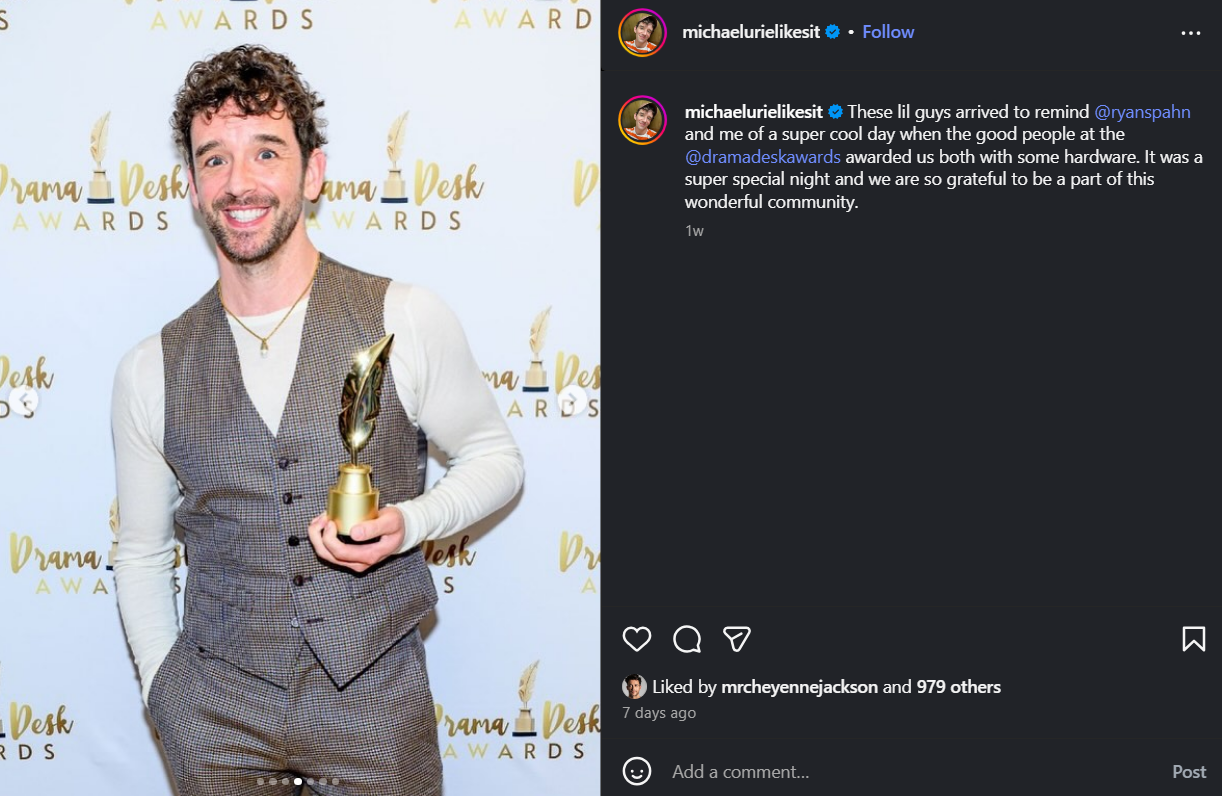
For Urie, comedy isn’t just about delivering punchlines—it’s about creating moments that feel authentic and make the audience lean in. Whether he’s slipping on a prop in a classic Shakespearean play or orchestrating a hilarious pratfall, his approach is all about finding the fun in the story and, of course, in the physicality.
The Power of Community
Beyond the theater, Urie has built strong friendships with fellow gay actors, who he sees as a community of support. Reflecting on the joy shared at the Emmy Awards, where he and other openly gay nominees celebrated one another’s success, Urie is optimistic about the future. “Things have changed so much over the last 18 or 19 years,” he says. “We’re seeing a shift, and it’s exciting. I don’t think we’ll get jaded anytime soon.”
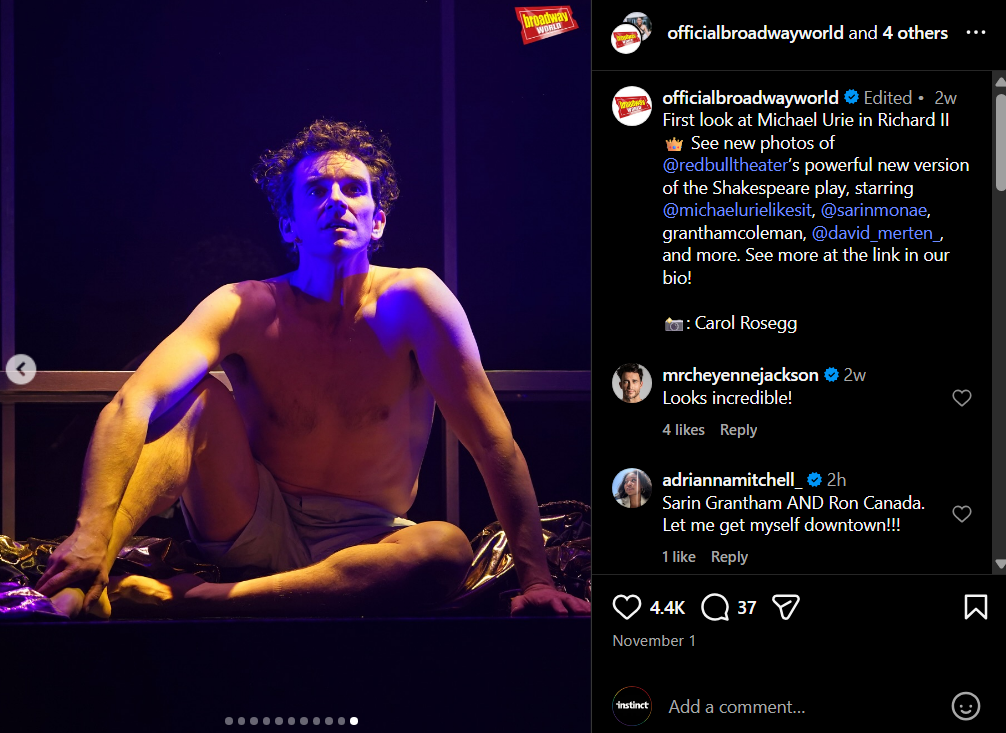
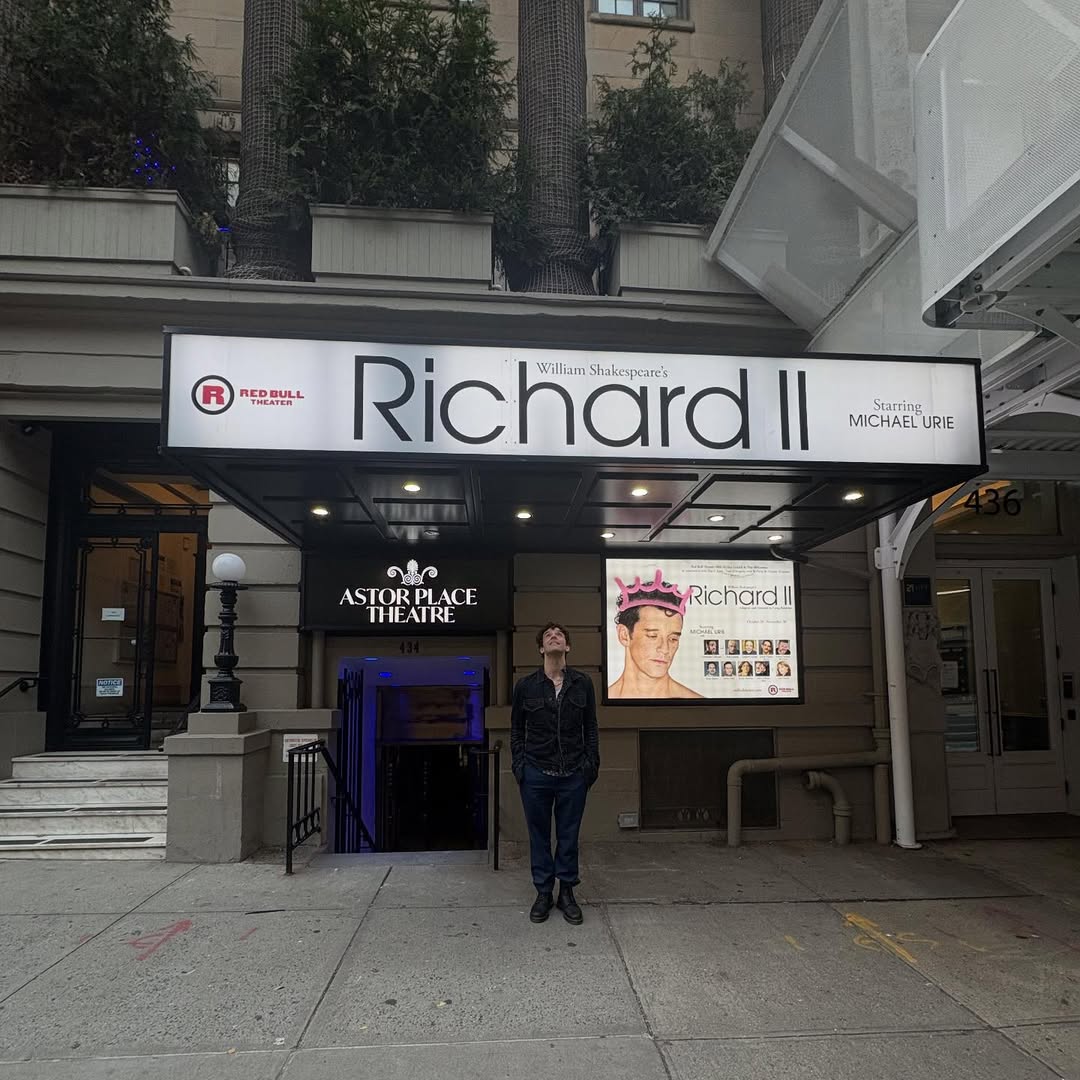
Michael Urie’s Richard II is playing at the Astor Theatre until December 14, 2025.