


Long before leather trench coats, time-bending action scenes, and international superstardom, a teenage Keanu Reeves was stepping onto a stage in Toronto for a play that would quietly become a cult favorite within the city’s gay community.
It was 1984, and Reeves was just 19 years old when he appeared in Wolfboy, a provocative homoerotic thriller written by Canadian playwright Brad Fraser. The play told the story of two boys inside a mental institution whose intense connection unfolds in ways that blurred the line between friendship, rebellion, and attraction.
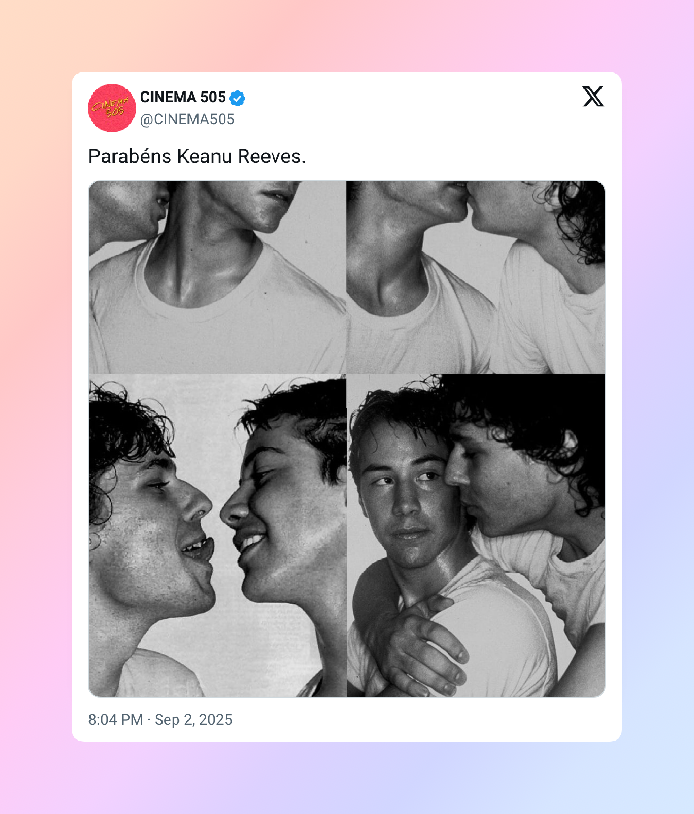
At the time, neither Reeves nor his co-star Carl Marotte were household names. But in Toronto’s theatre scene—and particularly among its LGBTQ+ audiences—Wolfboy quickly developed a cult reputation.
And decades later, queer fans are rediscovering that early chapter of Reeves’ career.
RELATED: Colin Farrell’s Line-Dancing and Jockstrap Modeling Days Have Been Unearthed
A Cult Classic Rediscovered
The production itself has recently resurfaced online thanks to its striking promotional artwork, sparking fresh conversations among film buffs and LGBTQ+ history lovers.
Photographer David Hlynsky, who shot the play’s poster, recalled the young actors as “nervous and giggly” during the shoot. The image—featuring an intimate moment between the two characters—became unexpectedly iconic.
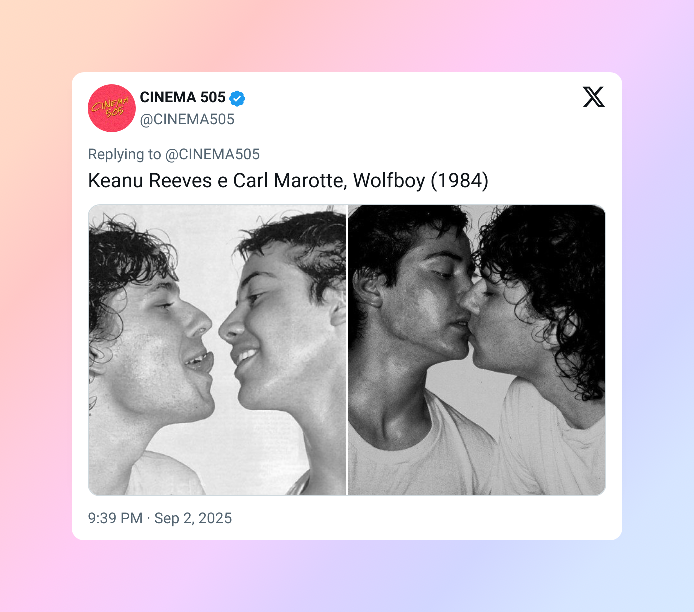
“The poster was stolen a bit off the street,” Hlynsky once said, noting how members of Toronto’s local gay community would take copies and even sell them for hundreds of dollars.
Director John Palmer also remembered Reeves vividly when discussing the casting decision. “He was absolutely gorgeous,” Palmer said. “He was a knockout… There was an honesty about him. He had so much energy that he didn’t know what to do with.”
@movie_takedown A audition tape of a very young Keanu Reeves. From what I could find out this is from the early to mid 80’s #keanureeves #matrix #billandted #auditiontape
It’s the kind of description that makes queer fans smile today—because yes, the world eventually noticed that same magnetic energy.
The Film That Changed Queer Storytelling
Seven years later, Reeves would once again appear in a project that quietly pushed boundaries in LGBTQ+ storytelling. In 1991, he starred alongside River Phoenix in the independent drama My Own Private Idaho, directed by Gus Van Sant. The film followed two young men navigating life on the margins of society—both homeless, both hustlers, both searching for belonging.
While it was made on a modest $2.5 million budget, the film ultimately earned around $8 million and became a defining entry in independent cinema. But the real impact went far beyond its box office performance.
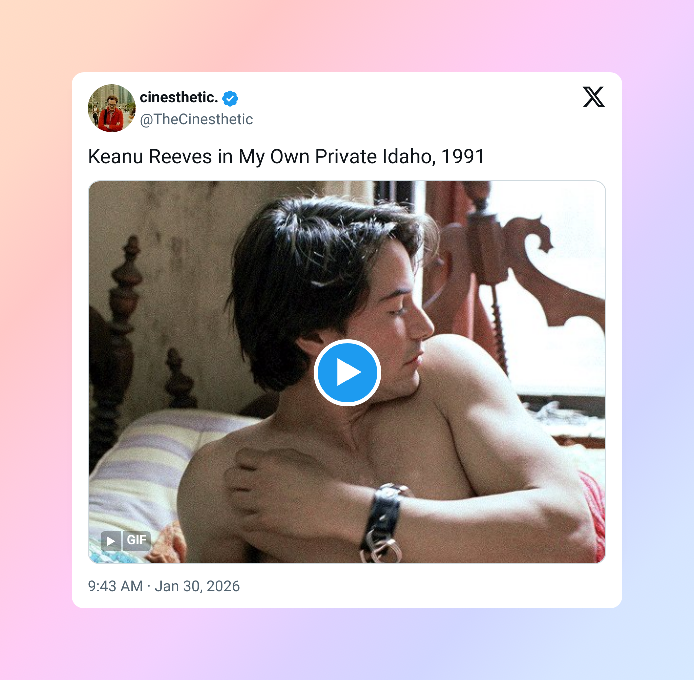
At a time when queer characters in mainstream media were often flattened into stereotypes, My Own Private Idahoportrayed queer youth as complicated, vulnerable, and deeply human. The film explored themes of friendship, love, survival, and identity—particularly among marginalized queer men who didn’t fit into the sanitized or glamorous images often associated with gay representation at the time.
It was raw. It was poetic. And for many viewers, it was unforgettable.
@pm.4my “i love you and you don’t pay me” PACK IT UP. (movie: my own private idaho) #myownprivateidaho #myownprivateidahoedit #myownprivateidaho1991 #riverphoenix #riverphoenixedit #keanureeves #keanureevesedit
A Queer Awakening for Some Fans?
Looking back now, it’s hard not to wonder whether those early roles played a part in many queer viewers’ coming-of-age memories.
For some, the soft-spoken charm of Reeves in My Own Private Idaho—combined with the emotional intensity of his scenes with Phoenix—was quietly formative.

For others, discovering that the future action star once appeared in a homoerotic stage play feels like uncovering a hidden piece of LGBTQ+ pop culture history.
Either way, those early performances show that Reeves’ career has intersected with queer storytelling more than people might realize.
The Nostalgia Is Real
Today, Reeves is known globally for blockbuster franchises like The Matrix, Speed, The John Wick franchise, and for simply being him. But those earlier, experimental projects remain an important part of queer cinema history. They remind us of a time when independent films and small theatre productions were often the only spaces where LGBTQ+ stories could unfold with honesty and complexity without the harshness of social media.
And they remind us that sometimes, before the world fully notices a star, queer audiences already know.
So here’s the real question.
Did those early Reeves roles bring back memories for you?
And more importantly… was he your queer awakening too?
It was River Phoenix’s open and deeply emotional and performance that captured my attention much more than Reeves’ who’s always got some closed part of his personality and the character’s, imo. But River Phoenix’s entire physical presence embodied his roles and it was just a truer acting performance for me.