


For many transgender students, simply existing in public spaces has become increasingly politicized.
Bathrooms become debates. Sports become debates. Healthcare becomes debates. IDs become debates. And now, even attending college is becoming part of the culture war.
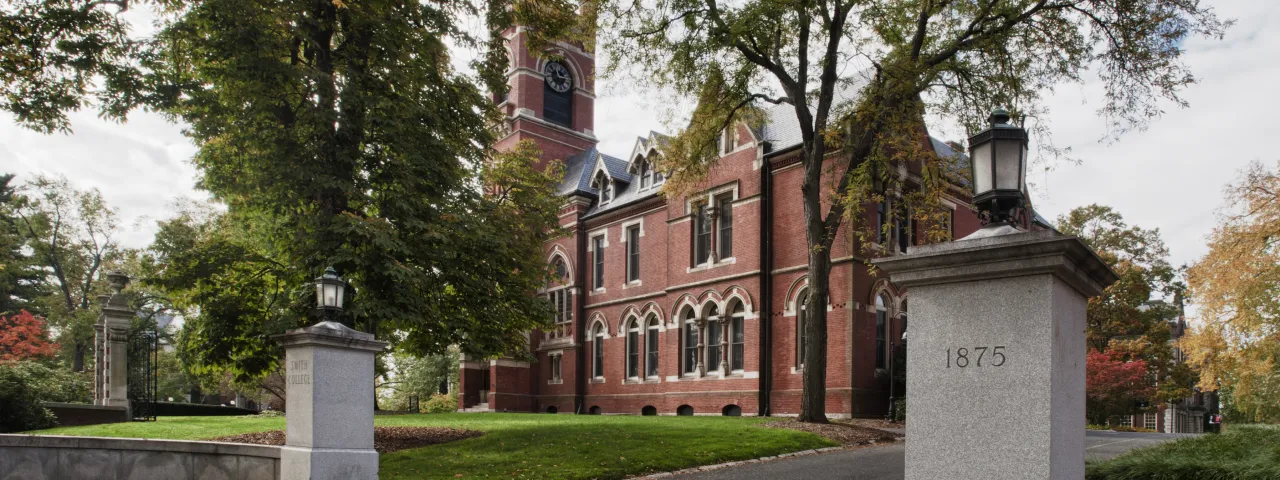
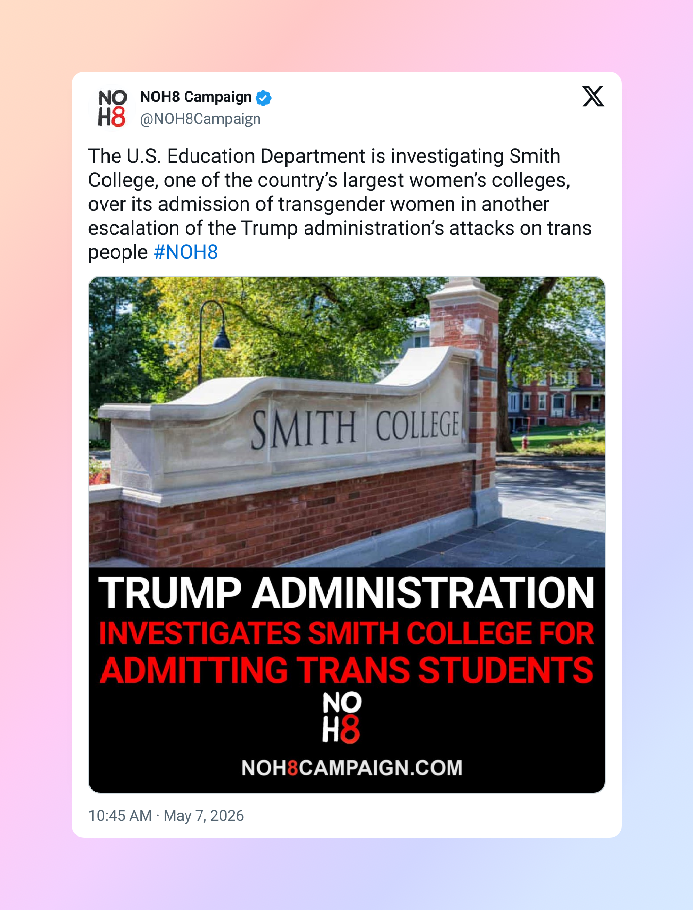
This week, Smith College found itself at the center of a new federal investigation after the U.S. Department of Education’s Office for Civil Rights (OCR) opened a Title IX inquiry into the school’s transgender-inclusive admissions policy.
The reason? Smith admits trans women.
Why Smith College Is Being Investigated
Smith College, located in Northampton, has long maintained an admissions policy that allows “any applicants who self-identify as women; cis, trans, and nonbinary women” to apply.
That policy is now being scrutinized by the Trump administration.
According to the Department of Education’s Office for Civil Rights, the investigation will examine whether Smith College violated Title IX “by allowing biological males into women’s intimate spaces,” including dormitories, bathrooms, locker rooms, and athletic teams.
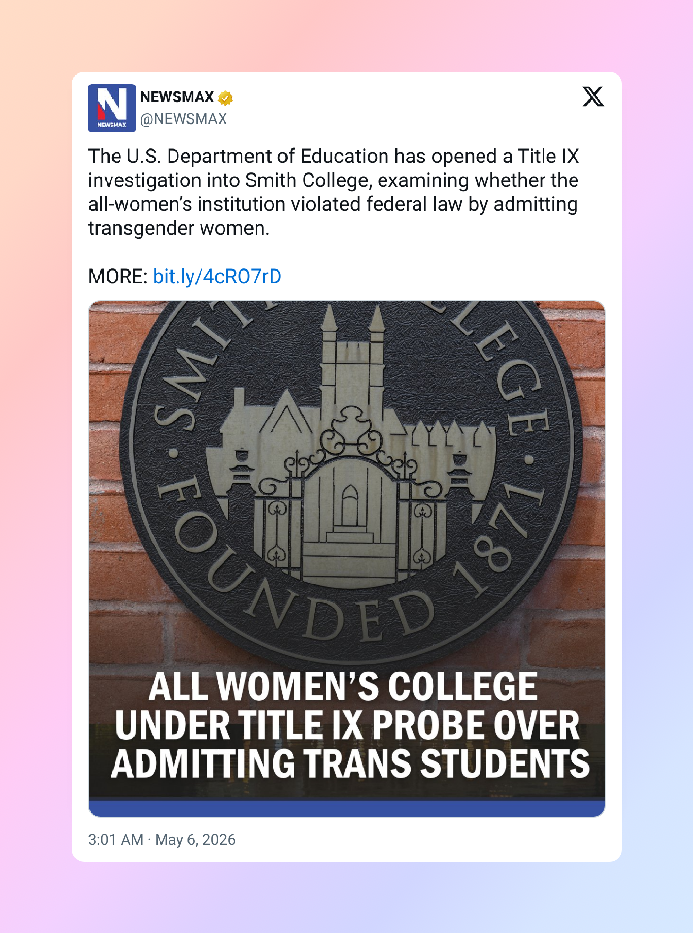
The administration argues that Title IX’s single-sex exception applies strictly based on “biological sex difference” rather than gender identity.
Assistant Secretary for Civil Rights Kimberly Richey stated:
“An all-women’s college loses all meaning if it is admitting biological males.”
She added:
“Allowing biological males into spaces designed for women raises serious concerns about privacy, fairness, and compliance under federal law. The Trump Administration will continue to uphold the law and fight to restore common sense.”
Smith College, meanwhile, told CNN that it “is fully committed to its institutional values, including compliance with civil rights laws,” though the school declined to comment further due to the pending investigation.
The Education Department on Monday opened a Title IX investigation into Smith College, a private all-women’s school, for admitting transgender women.
In a release, the Education Department wrote that its Office for Civil Rights is opening an investigation into the Massachusetts… pic.twitter.com/uUZFGL2q8X
— The Hill (@thehill) May 5, 2026
What Is Title IX, Exactly?
Title IX is a federal civil rights law passed in 1972 that prohibits sex-based discrimination in educational programs receiving federal funding.
Historically, it has been used to expand educational opportunities for women and address inequities in schools and athletics. But over the past several years, interpretations of Title IX have become deeply contested, especially regarding transgender inclusion.
The Trump administration’s current interpretation emphasizes sex assigned at birth, while LGBTQ+ advocates and many educational institutions argue that gender identity protections should also fall under anti-discrimination policies.
That disagreement is now playing out in real time on college campuses.
For Trans Students, This Debate Is Personal
What often gets lost in these political and legal battles is the reality that transgender students are actual people trying to live their lives, finish degrees, build friendships, and exist safely on campus.
For many LGBTQ+ students, women’s colleges and liberal arts institutions have historically served as rare spaces where identity exploration felt possible.
That’s part of why this investigation feels significant beyond just one school.
Critics of the administration worry the message being sent is broader: that institutions welcoming trans students could face federal consequences for doing so.
And after years of increasingly aggressive rhetoric surrounding transgender rights, many in the LGBTQ+ community see this as part of a larger pattern rather than an isolated case.
The Broader Political Context
Since returning to office, Donald Trump has continued advancing policies and rhetoric targeting transgender rights and LGBTQ+ protections more broadly.
Recently, the administration released a report connected to Executive Order 14202, titled Eradicating Anti-Christian Bias. The report focused on claims that Christians faced discrimination under policies implemented during the Biden administration.
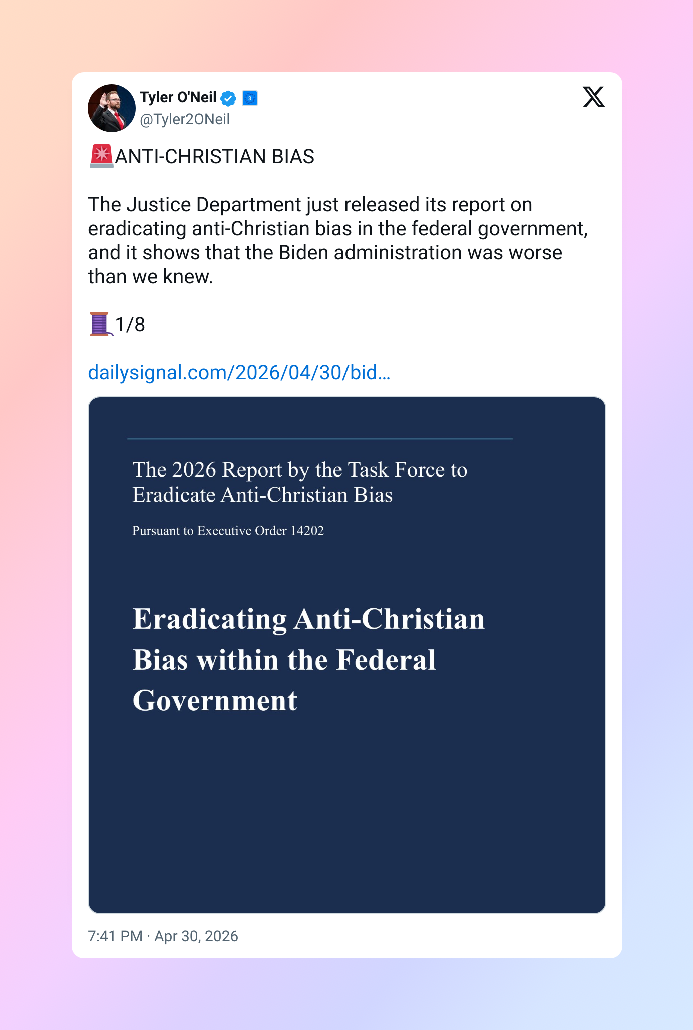
A significant portion of the report criticized LGBTQ+-inclusive policies, particularly in areas like healthcare guidance and foster care placements.
According to the report’s executive summary, some religious groups argued they were unfairly pressured to affirm LGBTQ+ identities in certain settings.
Supporters of the administration frame these efforts as protecting religious liberty and restoring legal clarity. LGBTQ+ advocates, however, argue the policies increasingly place transgender people at the center of political attacks.
RELATED: “Make America Healthy Again”: Trump’s Nominee Draws Mixed Reactions
A Growing Fear About Access and Belonging
For transgender Americans, especially young people, the anxiety surrounding these debates extends beyond headlines.
Many are left wondering where they are supposed to belong.
If trans students are debated in classrooms, restricted in sports, challenged in healthcare settings, and scrutinized in bathrooms, it’s understandable why investigations like this feel emotionally exhausting to many LGBTQ+ people.
The concern isn’t only about one college’s admissions policy.
It’s about whether transgender people will continue losing access to spaces where they once believed they were welcome.
And for students already navigating identity, safety, and education at the same time, that uncertainty can feel incredibly isolating.
The Investigation Is Just Beginning
At the moment, the Department of Education investigation remains ongoing, and no formal ruling has been issued against Smith College.
But the case is already becoming another major flashpoint in America’s ongoing fight over transgender rights, education, and who gets to define inclusion.
For now, many students, educators, and LGBTQ+ advocates are watching closely — not just because of what this could mean for Smith College, but because of what it may signal for the future of transgender students across the country.