


A legal battle regarding surrogacy is unfolding in Florida and is quickly becoming one of the most closely watched reproductive rights cases in the country, especially for LGBTQ families who rely on surrogacy, IVF, and other forms of assisted reproduction to have children.
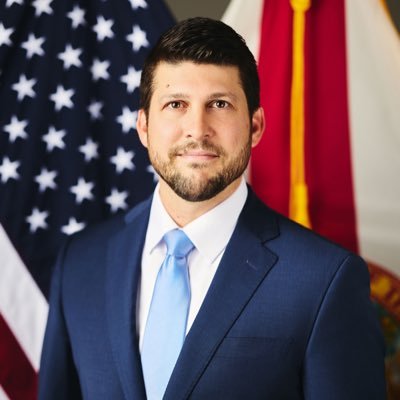
At the center of the controversy is Florida Attorney General James Uthmeier (R), whose office has intervened in a confidential surrogacy case involving a married same-sex couple from France. According to reporting from the Miami Herald, the Attorney General’s office has argued that surrogacy is comparable to slavery and human trafficking, a position that reproductive rights advocates warn could dramatically reshape family law in Florida.
What started as a routine surrogacy proceeding involving two expectant fathers has now evolved into a legal fight that reproductive rights advocates fear could ripple far beyond one family.
The couple had contracted with a Florida surrogate and petitioned for early parental recognition before the child’s birth. While the judge approved the order, Broward County Judge Marlon Weiss also raised constitutional questions about surrogacy itself. Weiss suggested in his opinion that if unborn children are legally entitled to personhood, then they cannot be subject to contractual agreements.
To advocates and legal experts, the implications stretch far beyond one courtroom battle.
RELATED: Meet the Couple Behind the Longest Legal Same Sex Marriage in U.S. History
Why LGBTQ Families Are Paying Attention

For many LGBTQ couples, surrogacy and IVF are not luxury options. They are often among the few available pathways to parenthood.
Critics of the Attorney General’s position fear that if Florida courts accept these legal theories, the consequences could extend well beyond surrogacy arrangements involving same-sex couples.
Attorneys involved in the case reportedly say the arguments could affect sperm donation, egg donation, embryo donation, and certain IVF procedures. There are also concerns that adoption protections and parental recognition laws could eventually face new legal challenges.
That possibility prompted strong criticism from Equality Florida, which warned that the legal effort threatens reproductive freedom and family stability across the state.
“Family is defined by love, not Attorney General Uthmeier’s campaign strategy,” said Jon Harris Maurer, General Counsel and Public Policy Director for Equality Florida. Adding, “Politicians have no business intruding because parents turn to surrogacy and IVF to start the family they’ve desperately dreamed of.”
Equality Florida Sounds the Alarm
Equality Florida described the Attorney General’s arguments as “inflammatory and deeply offensive,” warning that they could destabilize decades of established family law protections.
The organization also emphasized that although the current case involves a same-sex couple, the broader implications could affect countless Floridians regardless of sexuality.
“This is part of a broader and deeply dangerous effort to dictate who gets to build a family, whose families are recognized under the law, and who deserves the freedom to parent their children,” Maurer said.
The group further argued that children born through surrogacy or IVF deserve the same legal protections and family stability as any other child.
“Every child deserves security and stability,” Maurer added. “Families, no matter how they are formed, deserve equal dignity and protection under the law.”
RELATED: Rep. Mace Called Herself a “Proud Transphobe.” Polls Show We Haven’t Forgotten.
The Broader Political Climate
The surrogacy dispute is unfolding against a larger national push by conservative lawmakers and activists targeting reproductive rights and LGBTQ protections.
In recent years, anti-abortion legal theories surrounding fetal personhood have increasingly intersected with debates over IVF and assisted reproduction. If courts determine that embryos or fetuses possess the same constitutional rights as born children, legal experts warn that it could create conflicts involving abortion access, fertility clinics, and surrogacy agreements.
The issue gained national attention in 2024 after the Alabama Supreme Court IVF Ruling classified frozen embryos as children under state law, temporarily disrupting IVF services across Alabama.
Now, advocates fear Florida could become the next major battleground.
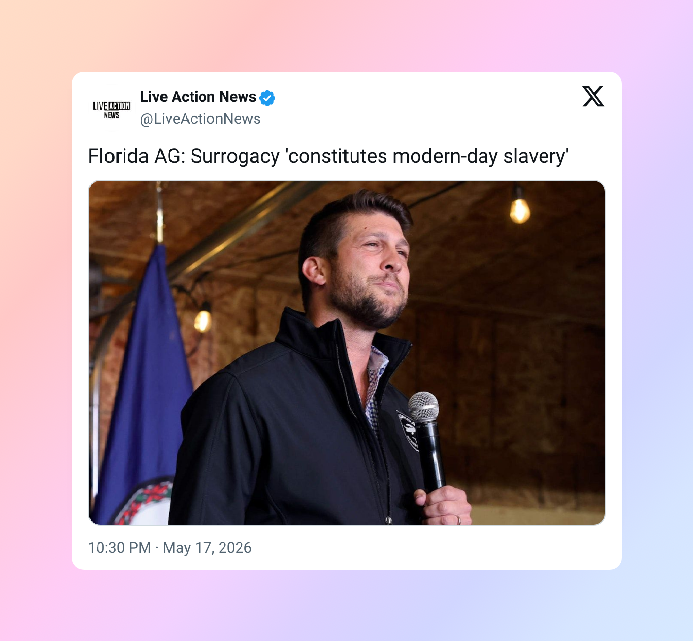
Uthmeier, a close ally of Ron DeSantis, has publicly criticized surrogacy before, comparing it on social media to human trafficking and calling for stricter oversight. While he has not publicly called for an outright ban on surrogacy or IVF, critics argue that the legal theories being introduced could effectively undermine both.
What Happens Next
The case is currently pending before Florida’s Fourth District Court of Appeal.
The child involved remains with the fathers and is not expected to be removed from their care. Still, advocates say the larger legal precedent is what matters most.
For LGBTQ families watching from across Florida and beyond, the fear is not only about one court case. It is about whether political ideology could begin redefining what kinds of families are legally recognized and protected in the future.
And for many parents who built their families through surrogacy, IVF, or adoption, that uncertainty feels deeply personal.