


Long before rainbow logos filled corporate campaigns, before nationwide marriage equality became law, and before same sex couples could openly dream about weddings without legal fear, two young men in the Midwest quietly decided they were going to make history.
Not by asking for permission.
Not by waiting for society to catch up.
But by getting married anyway.
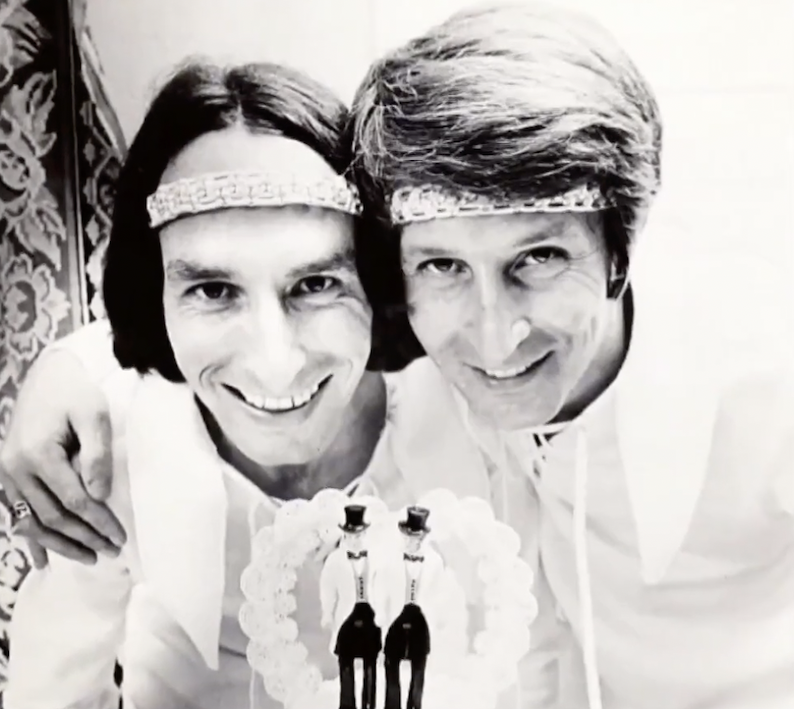
Michael McConnell and Jack Baker are recognized as being part of the longest legal same sex marriage in United States history. Their 1971 marriage has also been described by The Family Law Reporter as “the first legally undisputed marriage between persons of the same gender.”
More than 50 years later, their story still feels radical.
A Love Story That Started With One Very Specific Request
McConnell and Baker first met in 1966 at a Halloween party in Norman, Oklahoma. According to a 2022 interview with Story Corps, Baker jokingly described himself at the time as searching for his “4Ts”: “Tall, Thin and Twenty Three” plus someone intelligent enough to keep up with him.
What he found in McConnell would become much bigger than a relationship.
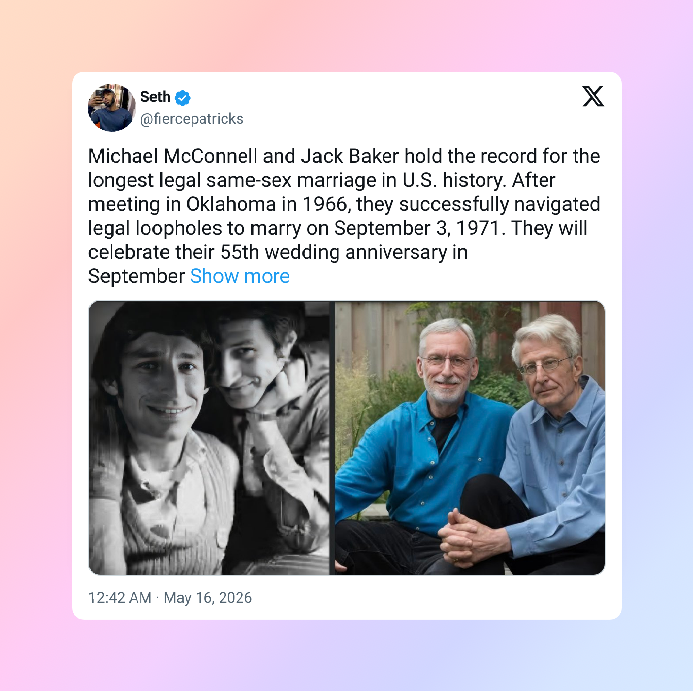
Early in their romance, Baker asked McConnell to be his lover. But McConnell wanted something more permanent and visible.
By 1967, he already knew exactly what he wanted from their relationship.
“I was now ready to state what I wanted in a commitment,” McConnell later recalled. “Live openly and not repeat the mistakes of my previous relationships. I was in it for the long haul, whatever that took.”
Then came the line that would quietly shape LGBTQ+ history.
“I wanted marriage.”
At a time when same sex relationships were still criminalized in many parts of America, that dream sounded almost impossible. But Baker agreed to help make it happen.
RELATED: Ten Years After Marriage Equality, Obergefell Faces Its First Direct Challenge
The Law Student Who Read the Fine Print
Between 1968 and 1970, the couple focused on one goal: legally getting married.
According to the timeline recorded by Seeds for Gay Marriage Equality, Baker enrolled at the University of Minnesota Law School and began studying marriage statutes as part of his legal coursework. While reviewing Minnesota law, he noticed something fascinating.
The statutes never specifically stated that marriage applicants had to be opposite sexes.
“Equal treatment under law was intuitively obvious to a second-year law student,” Baker later joked.
That legal loophole became the foundation of their strategy.
In August 1971, McConnell legally adopted Baker, whose name was then changed to the gender-neutral “Pat Lyn McConnell.” Using that updated legal identity, the couple successfully obtained a marriage license in Blue Earth County, Minnesota.
On September 3, 1971, they were legally married by Reverend Roger Lynn, a United Methodist minister authorized by the state to perform marriages.
For McConnell and Baker, this was never symbolic theater or a private commitment ceremony.
“Ours was not a civil union, or a ceremony of commitment to be witnessed by friends and family,” McConnell later explained.
“The crucial difference between our marriage and those from previous decades and centuries is that we obtained a valid license from the civil government.”
That distinction mattered enormously to them because their goal was not simply recognition within LGBTQ+ circles. They wanted legal recognition under the same system that governed everyone else.
RELATED: Inside the Gay Games: Where Sports and LGBTQ+ Joy Collide
A Marriage Decades Ahead of Its Time
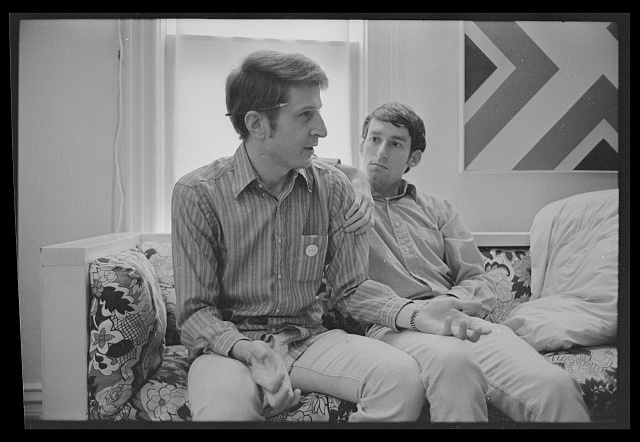
Today, it can be difficult to fully understand how extraordinary their actions were in 1971.
This was years before mainstream conversations about marriage equality even existed. Same sex couples were rarely portrayed positively in media, anti LGBTQ discrimination protections were almost nonexistent, and openly queer public lives carried enormous social risks.
Yet McConnell and Baker insisted on visibility.
They wore matching wedding rings designed with a deeply personal detail. When placed together one way, the rings read “Jack loves Mike.” Reverse them, and they read “Mike loves Jack.”
For McConnell, the rings represented permanence, equality, and mutual devotion in a world determined to deny all three.
Their marriage would eventually survive decades of legal and political battles surrounding LGBTQ+ rights in America. Long before the Supreme Court legalized same sex marriage nationwide in 2015, Baker and McConnell had already spent years living as a married couple despite legal systems attempting to erase or dismiss relationships like theirs.
Why Their Marriage Still Resonates Today
In many ways, Baker and McConnell’s story feels surprisingly modern even now.
Their fight was not only about romance. It was about visibility, legality, dignity, and refusing to shrink themselves to fit societal expectations.
They wanted the same thing millions of couples want: a public commitment recognized by the world around them.
And they pursued it decades before most Americans could even imagine such a possibility becoming reality.
Today, as younger LGBTQ+ generations grow up in a very different world, McConnell and Baker’s marriage stands as a reminder that progress did not suddenly appear overnight. It was built by couples willing to risk everything simply to say, openly and legally, that their love counted too.
This is a wonderful story. These guys have guts to have been married in 1971 when the world really put down gay relationships. I will add that I knew of a same-sex couple in Fort Lauderdale, now deceased, who were together since 1955 and lived until they had been together for more than 60 years – one deceased just before 2018. They were together for 60 years in 2015. When they first met, they bought two homes in a duplex in Connecticut because of fear of reprisals should they have purchased one home and lived together.