


The 79th Cannes Film Festival delivered one of its most emotional moments when actors Emmanuel Macchia and Valentin Campagne walked onto the stage together to accept the festival’s Best Actor award for their performances in Coward.
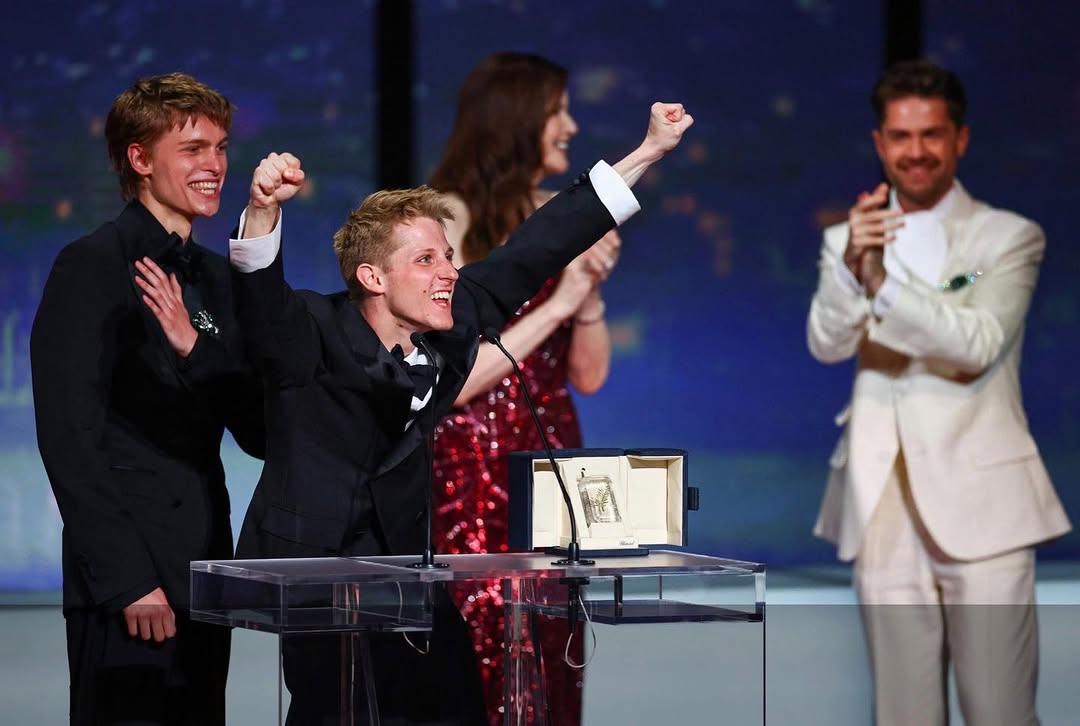
The joint victory instantly became one of the most talked about highlights of Cannes, not only because of the performances themselves, but because of the deeply intimate story at the center of the film.
As audiences and critics continue to praise Coward, many are already calling it one of the standout queer and romantic films to emerge from this year’s festival season.
A Love Story Hidden Within War
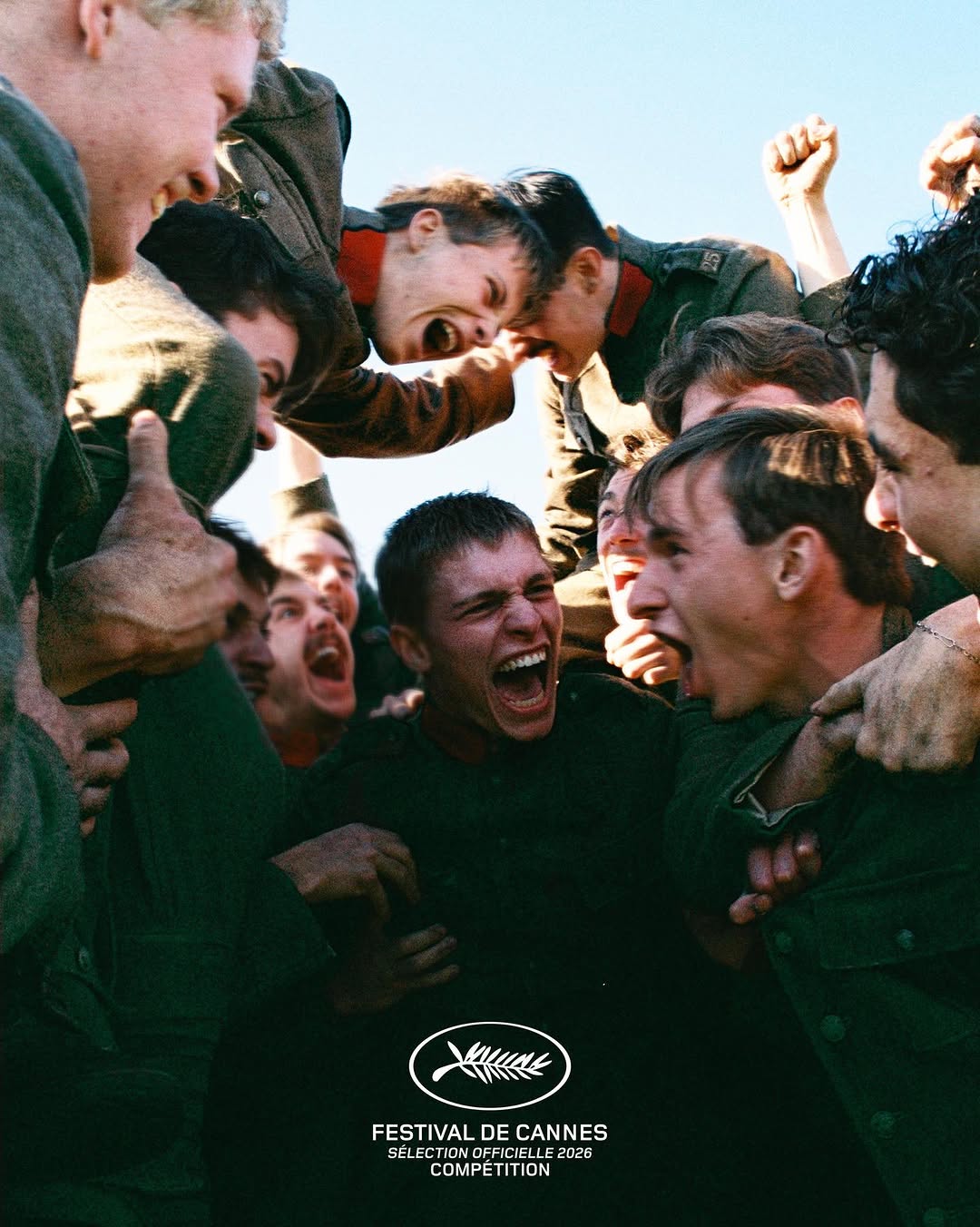
Set during the chaos of the First World War, Coward follows Pierre, played by Macchia, a young soldier newly arriving at the front lines eager to prove himself. Behind the trenches and violence, he meets Francis, portrayed by Campagne, a charismatic performer who organizes theatrical shows to keep soldiers’ spirits alive while war rages around them.
While bombs explode and fear consumes the battlefield, the two men slowly discover moments of connection, performance, tenderness, and escape through art.
Rather than focusing solely on combat, Coward explores how people survive emotionally during war. Music, theater, and companionship become acts of resistance against despair.
That emotional balance appears to be exactly what resonated so strongly at Cannes.
RELATED: Cowboys, Sailors, Leather Daddies, and Thongs? Welcome to ‘Brolesque: Follies’
The Chemistry Everyone Is Talking About
One reason Coward has generated so much buzz is the chemistry between its two leads.
Speaking to Festival de Cannes, Valentin Campagne explained that a successful acting partnership depends on genuine emotional understanding.
“What makes a good pairing of actors is when they understand each other, are compatible, and also love each other very much,” Dhont shared. “To act together, I feel you have to love each other deeply.”
That closeness translated directly onscreen. When Macchia and Campagne accepted their award onstage together, they embraced warmly and thanked one another, creating another memorable Cannes moment that audiences immediately celebrated online.
Primeiro clipe de ‘Coward’, drama queer de Lukas Dhont (Close) que estreia em Cannes 2026.
A trama acompanha um jovem soldado belga e seu romance com um colega extravagante que encena danças e performances teatrais que desafiam os padrões de gênero.pic.twitter.com/Oyc0ZW7EyZ
— CINEMA 505 (@CINEMA505) May 17, 2026
The Surprising Inspiration Behind Coward
Dhont, who both directed and wrote the screenplay, revealed that the film’s origins began with a single black and white photograph discovered in a Paris bookstore. The image showed soldiers performing onstage wearing handmade skirts crafted from sandbags and jewelry fashioned out of old ammunition.
“When I began talking to historians about it, they told me that since the dawn of time, in every army, men waiting to return to the front lines have turned the tools of destruction into art as a way of escaping from their reality,” Dhont explained.
That haunting contrast between violence and creativity became the foundation for Coward.
Rather than portraying masculinity through aggression alone, the film examines vulnerability, fear, performance, and emotional survival. Even the title itself was chosen to challenge traditional ideas of bravery.
“The film explores the theme of fear,” Dhont said. “Courage and cowardice are always linked to a person’s capacity for violence. It’s more about questioning than judging.”

Two Perfectly Opposite Energies
Dhont also shared that the casting process relied heavily on finding two completely different energies that could naturally pull toward each other. For Pierre, the shy farm boy at the center of the story, the director visited agricultural schools in Belgium searching for someone who felt naturally quiet and withdrawn.
When Macchia approached him in a school courtyard, Dhont immediately noticed how softly he spoke. Dhont shared with Festival de Cannes,
“That’s exactly what Pierre’s character is like,” the director explained. “Someone whose voice gets lost in the group at first.”
Francis required the opposite energy. Dhont wanted someone magnetic, expressive, and impossible to ignore.
While Campagne was not professionally known as a dancer or singer, the director became fascinated by his physicality and unpredictability.
“When he spoke, when he moved, you were curious to see what he might do next,” Dhont said.
Together, those opposing personalities created what the filmmaker described as “the perfect magnetism to tell a love story.” And judging by Cannes’ reaction, that magnetism clearly worked.