


Posts like this don’t need much time to circulate during Pride Month — they tend to circulate themselves.
RELATED: George Santos May Have Found a New Side Hustle: Betting on Himself
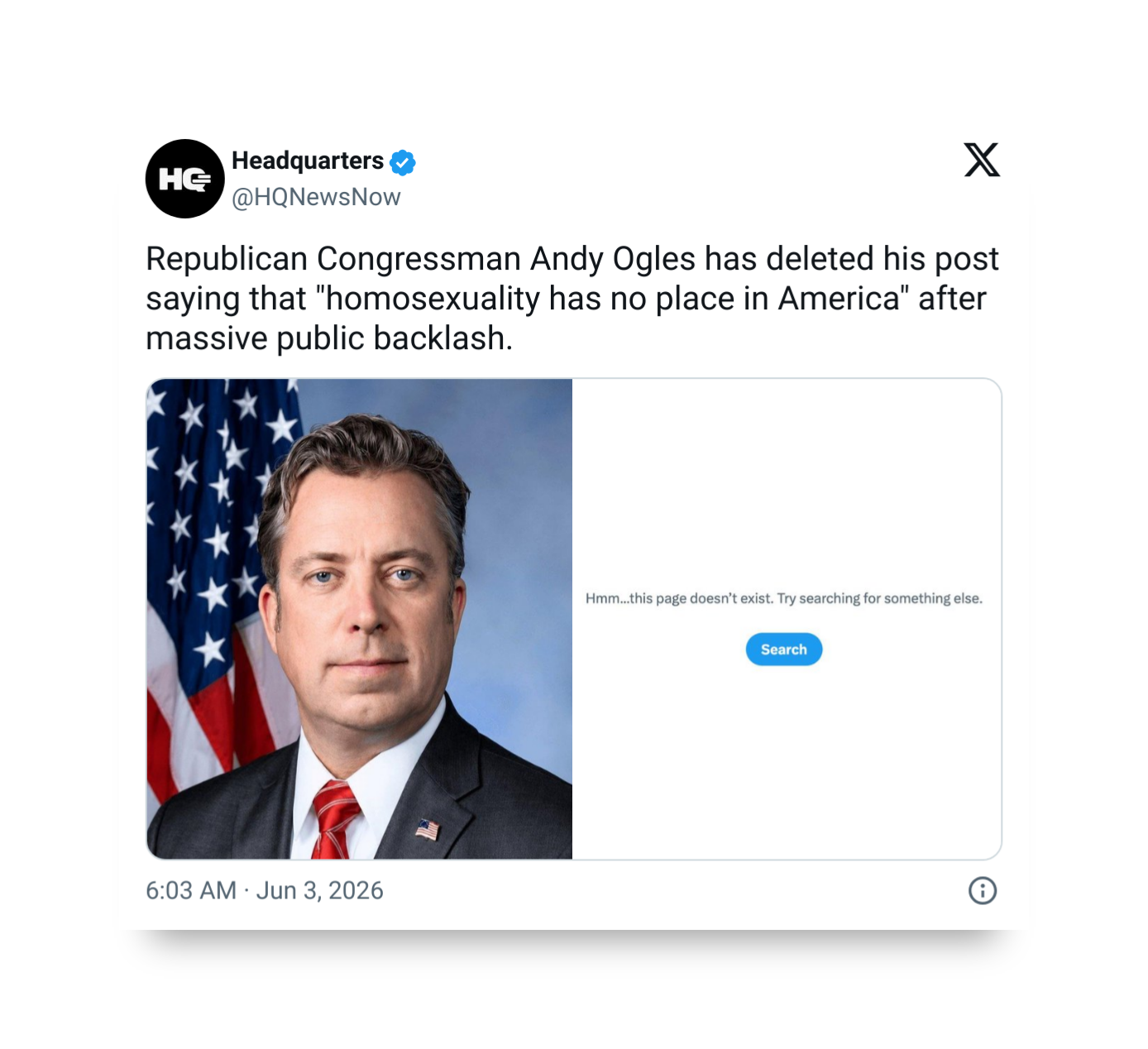
This week, Congressman Andy Ogles (R-TN) learned that lesson the hard way after posting a message to X that read: “Homosexuality has no place in America.” The statement didn’t just spark outrage from political opponents. It triggered criticism from fellow Republicans, conservative commentators, and public figures across the political spectrum — a response that turned what could have been another social media controversy into something much bigger.
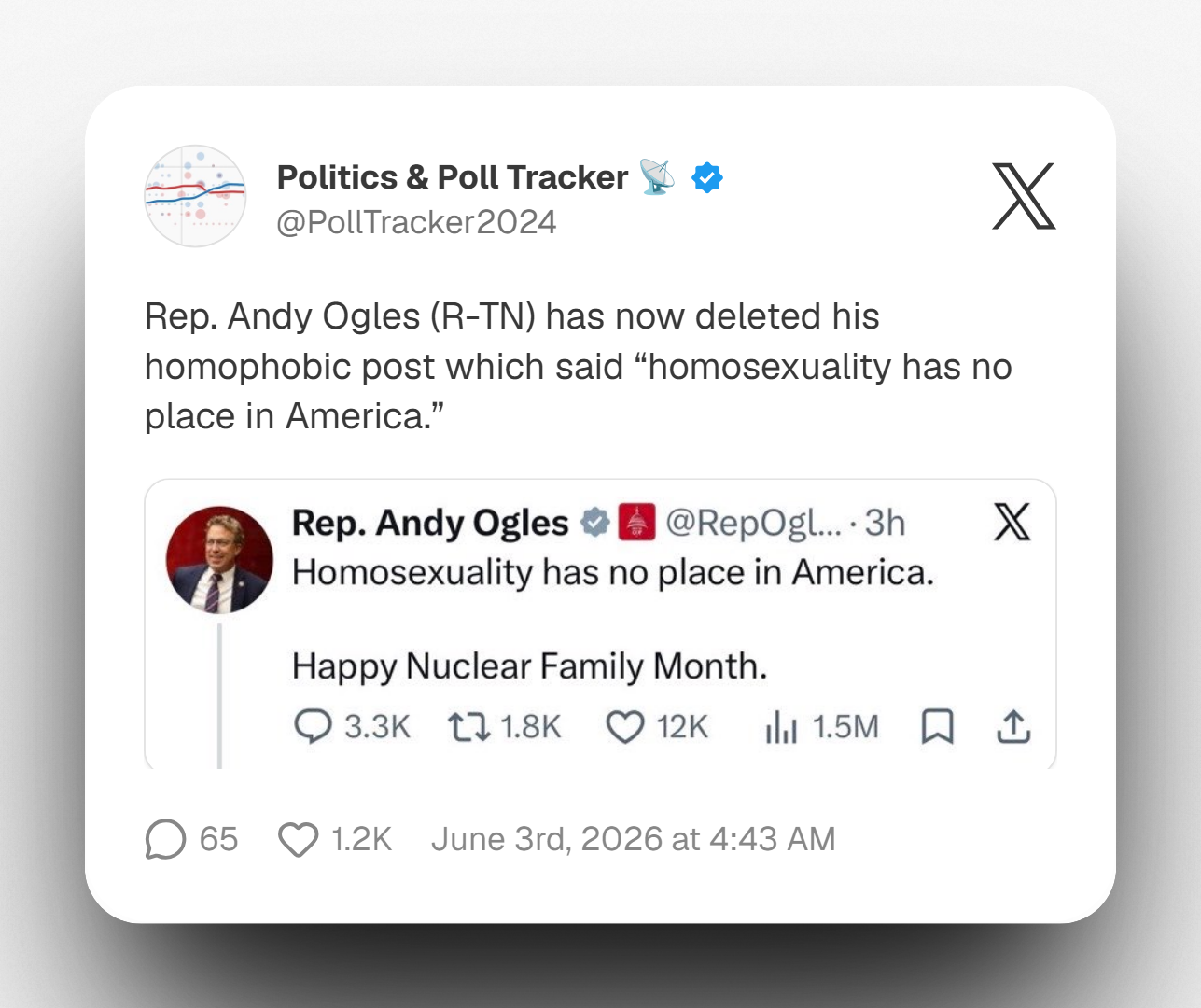
When your own side joins the backlash
Political outrage cycles are usually predictable. One side attacks, the other side defends, everyone logs off angry. That wasn’t quite what happened here. Rep. Mike Lawler (R-NY) publicly challenged Ogles almost immediately.
RELATED: Gay Candidates Can Win Elections But Only If They Seem Straight
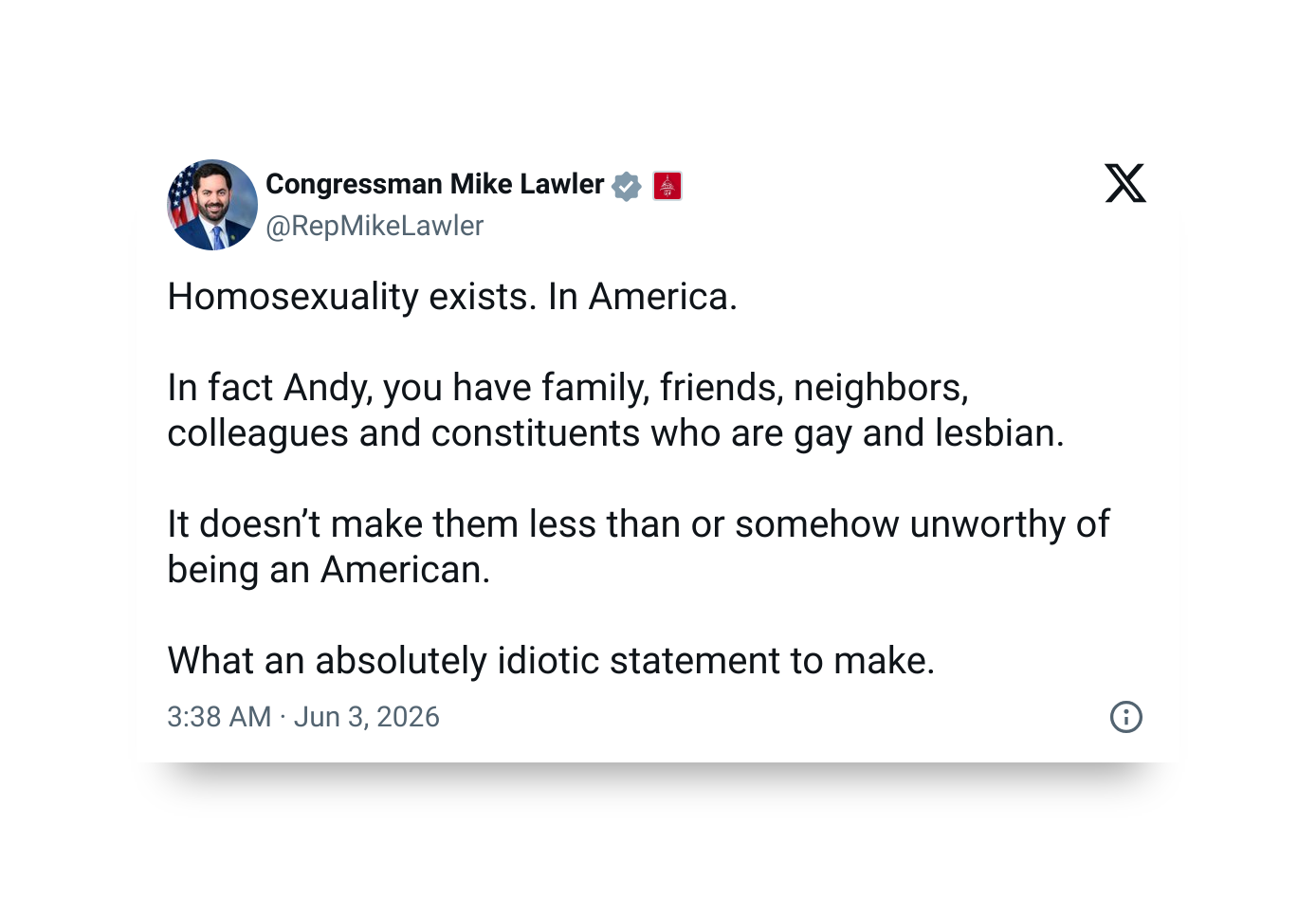
“Homosexuality exists. In America. In fact Andy, you have family, friends, neighbors, colleagues and constituents who are gay and lesbian.”
“It doesn’t make them less than or somehow unworthy of being an American. What an absolutely idiotic statement to make.”
😳 Rep. Mike Lawler is slamming Rep. Andy Ogles, telling @jacob_wass that he’s a “f***ing idiot” for his “homosexuality has no place in America” comment. pic.twitter.com/1S4ASaemUs
— TMZ (@TMZ) June 2, 2026
He then calls him a “f***ing idiot” from TMZ’s interaction with him.
The criticism didn’t stop there. Meghan McCain brought up Treasury Secretary Scott Bessent while questioning whether Ogles would repeat the sentiment in person.
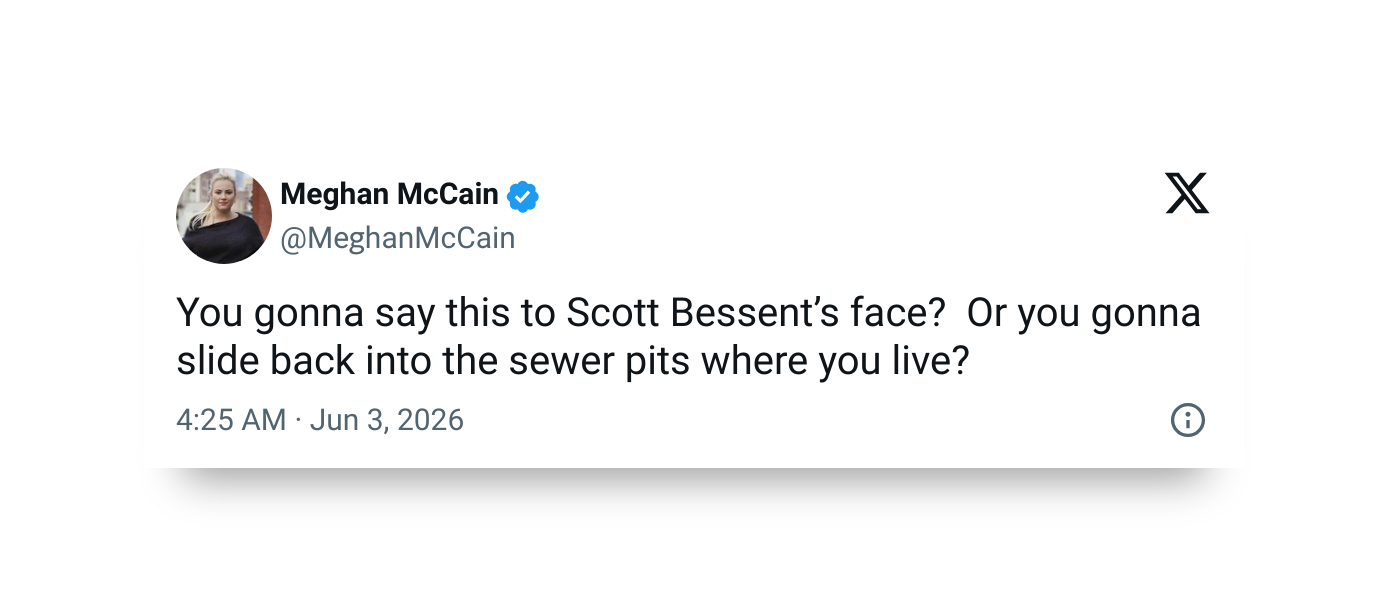
“You gonna say this to Scott Bessent’s face? Or you gonna slide back into the sewer pits where you live?”
Rep. Katherine Clark (D-MA), conservative influencer Link Lauren, former Rep. George Santos (R-NY), and media personalities also weighed in. In today’s political climate, getting that many people to agree on something might be the most statistically unlikely part of this story.
What made the reaction notable wasn’t simply that people objected. It was who objected. Public criticism from members of your own party tends to signal that the controversy has escaped the usual partisan gravity.
The increasingly familiar art of blaming the staffer for the post”
After the backlash snowballed, Ogles deleted the post and shifted attention toward his communications team.
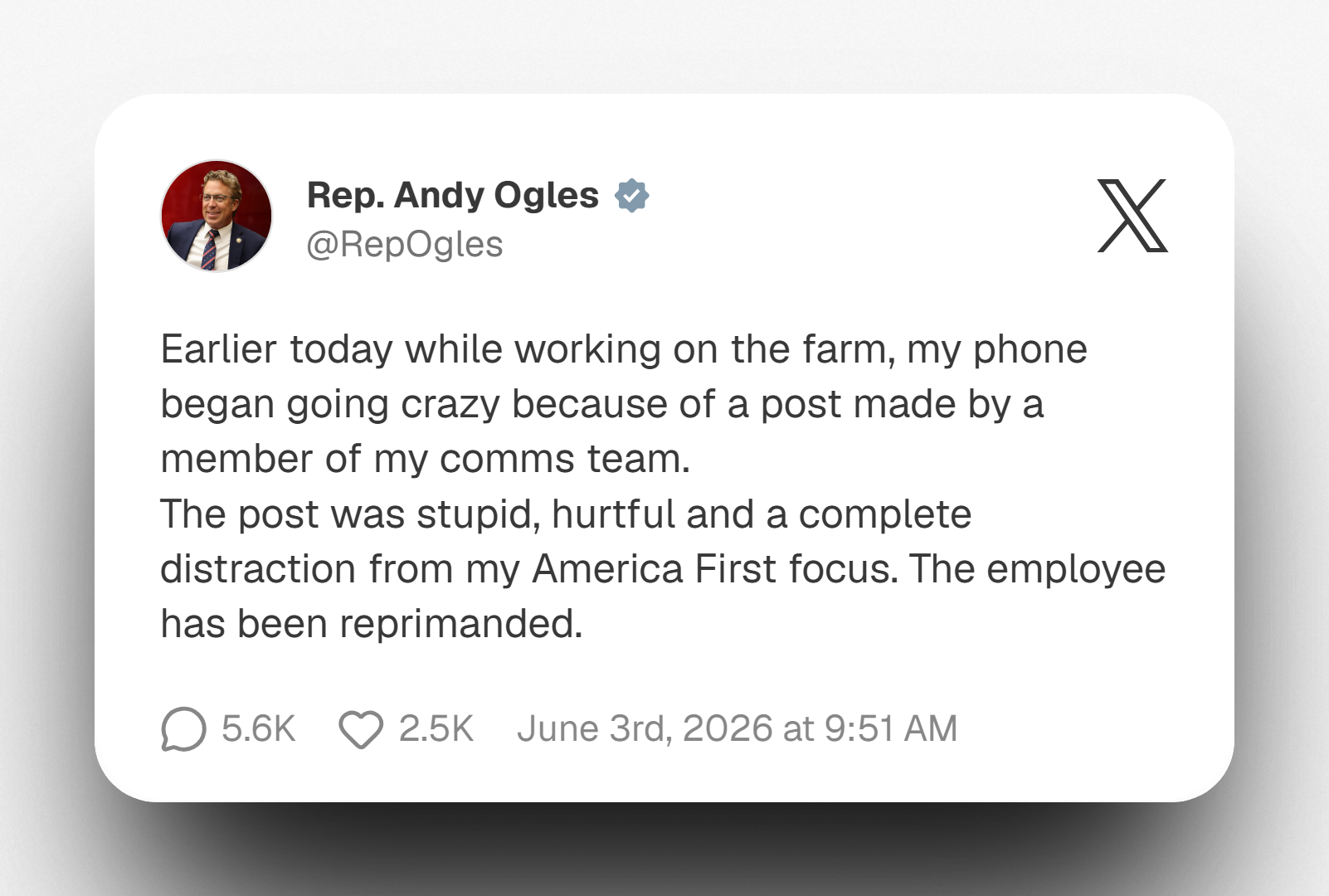
“Earlier today while working on the farm, my phone began going crazy because of a post made by a member of my comms team,” he wrote. “The post was stupid, hurtful and a complete distraction from my America First focus. The employee has been reprimanded.”
Noticeably absent: an actual apology. Instead, the explanation landed in a category that political observers know well — the increasingly common suggestion that an unnamed staffer somehow wandered onto social media and detonated a public relations crisis. Political communications teams everywhere may want hazard pay at this point.
Critics say the controversy didn’t appear out of nowhere
Part of why the backlash gained traction is that critics argue this wasn’t an isolated moment.
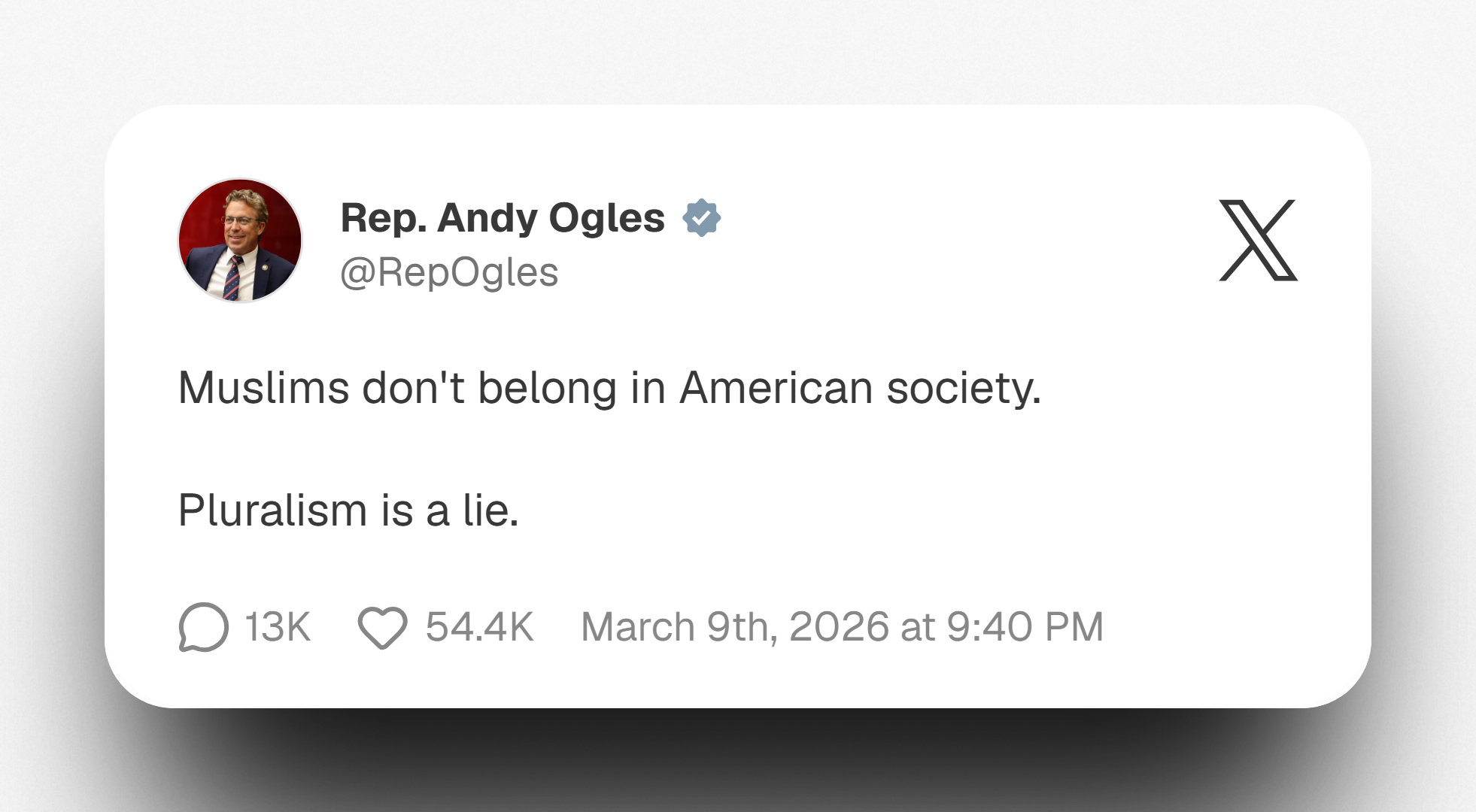
Months earlier, Ogles posted: “Muslims don’t belong in American society. Pluralism is a lie.” That message generated far less public pushback from Republicans at the time.
His history of controversy stretches beyond social posts. Last year, lawmakers from both parties criticized him for displaying “Wanted” posters targeting judges outside his Capitol Hill office — one of several moments that have repeatedly placed him at the center of bipartisan condemnation.
He was also under federal criminal investigation tied to campaign finance reporting allegations until the Department of Justice dropped the probe last month. For critics, that broader history made the deleted Pride Month post feel less like a one-off mistake and more like another entry on a growing list.
Delete buttons have limits
Social media has created an odd political ritual: post something inflammatory, delete it, explain it, move on. But posts tied to identity — especially during Pride Month — rarely disappear that neatly. The message itself lasted only hours online. The screenshots, reactions, headlines, and criticism will probably stick around much longer.
And perhaps that’s the bigger story here: not simply that a controversial post went up, but that the response crossed ideological lines quickly enough to make deleting it feel less like damage control and more like documentation.