


There was a brief, optimistic stretch between 2018 and 2022 where openly gay candidates made it look like American politics had finally entered its “we’re over this now” phase. They were winning elections. Running for president. Holding major offices. Basically doing everything except announcing they were also secretly responsible for world peace.
RELATED: Out Gay Congressman Robert Garcia May Soon Represent Huntington Beach

It even got a name: the “rainbow wave.” Which sounds like progress, feels like progress, and—according to a new Northwestern University study—comes with a lot more fine print than anyone wanted to admit. Because yes: voters are more open to gay candidates than ever.
But also yes: voters are still doing a quiet mental checklist about how gay those candidates look and sound while being elected. And that’s where things get… specific.
RELATED: Rome Pride Controversy: Jewish LGBTQ Group Barred Over Gaza Politics
Democracy, but make it a vibe check
The study, “The Right Kind of (Gay) Man? Sexuality, Gender Presentation and Heteronormative Constraints on Electability,” published in the Journal of Politics, basically asks a question political science has been avoiding like an awkward group chat:
Do voters actually accept gay candidates… or just the ones who pass as “politically straight-coded”? Lead author Martin Naunov doesn’t exactly soften the answer:
“On the left, the bias against gay candidates has moved from ‘don’t be gay’ to ‘don’t look or sound gay,'”
Which is the political equivalent of: “You’re welcome here, just… blend in better.” So yes, progress. But with a silent style guide.
The experiment: politics meets reality TV casting energy
To figure this out, researchers ran experiments on nearly 2,600 people, showing them fictional congressional candidates with headshots and short audio clips. Then they did the most science thing imaginable: gently altered how “masculine” or “feminine” the candidates appeared and sounded.
Facial softness? Adjusted. Vocal pitch? Tweaked. Partner cues like “husband” or “wife”? Swapped in. Basically: What if your ideal congressman was also slightly customizable? And voters responded like voters always do: inconsistently, confidently, and with strong opinions they would absolutely deny five minutes later.
Why Some Candidates Feel More Electable Than Others
Here’s the headline-level finding:
- Republicans: being gay drops support by about 22 points.
- Democrats: no real penalty for being gay, sometimes even a small boost (politics equivalent of a “like and subscribe”).
So far, familiar territory. But then comes the twist that makes everything slightly more awkward at brunch. Gender nonconformity—aka not fitting the “default male politician skin pack”—costs candidates about seven points across the board.
Yes. Even for straight men.
Yes. Even for Democrats.
Yes. Even if you are just emotionally expressive in a way that makes someone nervous.
So basically: you can be gay, but don’t be visibly gay-adjacent in a way that triggers feelings.
The quiet part out loud
Naunov explains the mechanism like this:
“In the real world, bias rarely operates on group identities alone. It operates on the physical markers that make identity distinctive and visible,”
“Bias often targets a substantial subset of the minority group who may face penalties even from people who reject anti-gay bias at the group level.”
Translation: people are fine with equality in theory, but still doing micro-calculations about who feels “normal enough” to be elected. Which is how you end up with a political system that says, “We support diversity,” while quietly adding, “as long as it comes in standard formatting.”
Democrats: emotionally supportive, structurally picky
One of the more uncomfortable findings is that Democrats punish gender nonconformity at basically the same rate as Republicans. Which is the political version of saying: “We love everyone equally… but also can you maybe lower your voice slightly in the campaign ad?”
Naunov doesn’t really sugarcoat it:
“What surprised me most was that Democrats punished gender nonconformity at roughly the same rate as Republicans,”
“We used to refuse to elect gay people. Now we elect them, but so long as they conform to a very particular version of masculinity,”
So the rule isn’t “don’t be gay” anymore. It’s more like: “Be gay, but in 1080p masculinity with optional subtlety settings enabled.”
Surprise subplot: straight men are also not safe
In a twist nobody ordered, the study also finds that straight men who don’t perform traditional masculinity take a hit too. So this isn’t just an LGBTQ issue. It’s a “vibes enforcement in democracy” issue.
Or as Naunov puts it:
“The study shows straight men who deviate even slightly from norms of masculinity get punished electorally too,”
“Traditional beliefs about how a person should look, sound and move in the world may privilege heterosexuality, but they also diminish the freedom and authenticity of everyone, including straight people.”
Which is academic speak for: everyone is being graded, nobody agreed to the rubric.
So… is this why Pete Buttigieg is doing well?
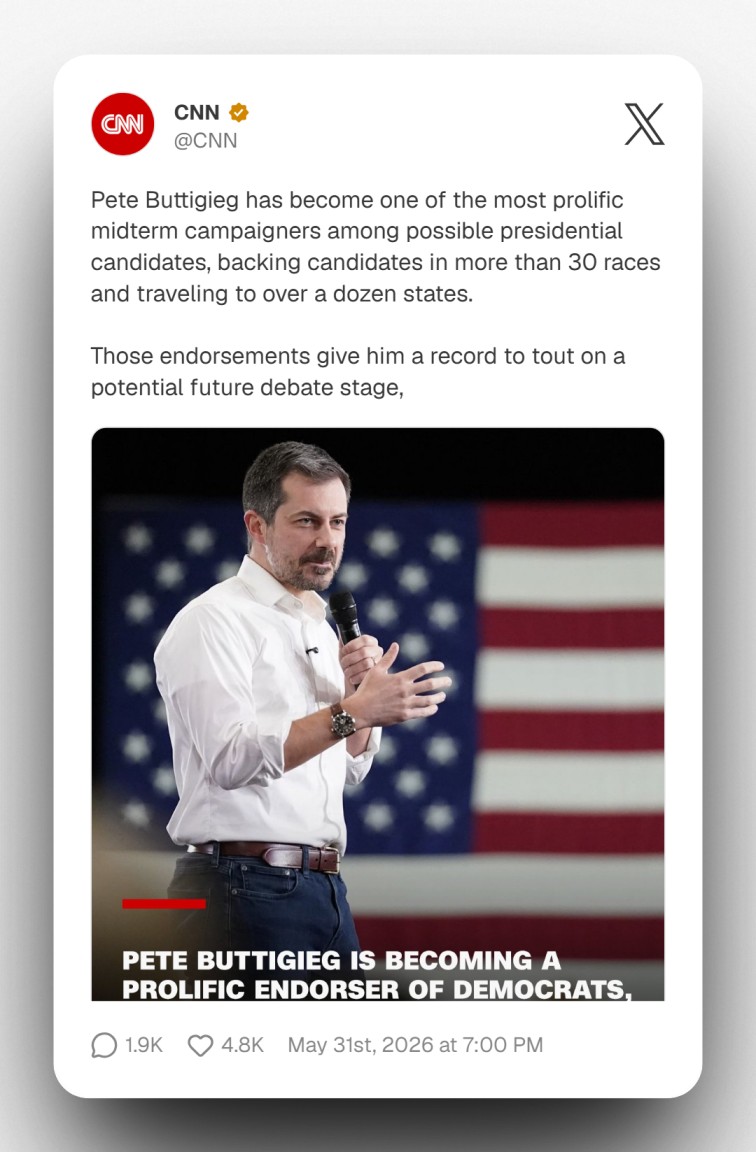
Naturally, this all leads to Pete Buttigieg. A former mayor, presidential candidate, and current U.S. secretary of transportation, Buttigieg has become the go-to example of “this works now, right?”
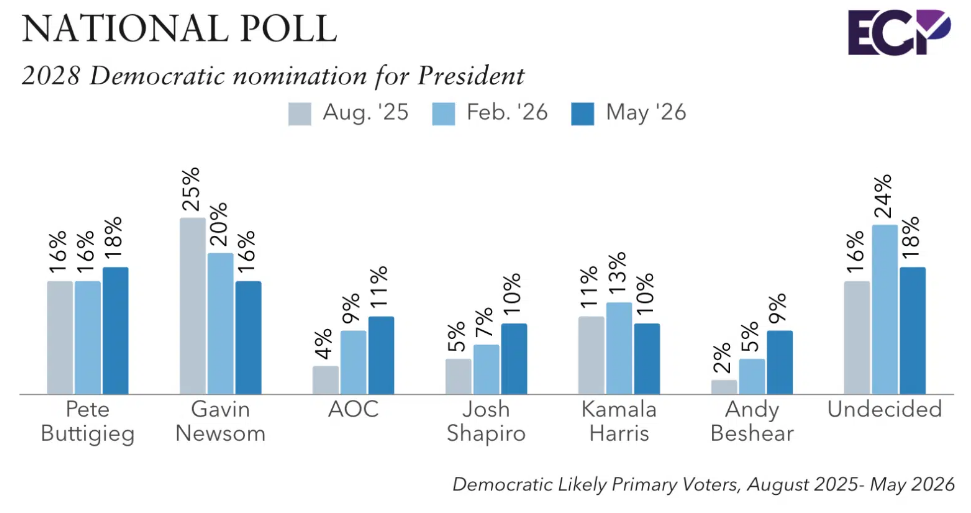
In a recent Emerson College poll of potential 2028 Democratic nominees, he topped the list at 18 percent. So is he on top because of all this? Not exactly.
But the study does help explain why certain candidates feel “electable” in a way that has less to do with policy and more to do with how easily voters can mentally file them under “acceptable leadership aesthetics.” Which is a very polite way of saying: people still vote with their eyes and their instincts about what a president is supposed to look like.
The final reality check: progress, but make it conditional
So yes, things have changed. Gay candidates can win. Straight candidates can lose. And voters will proudly say they’re beyond prejudice while still reacting strongly to anyone who doesn’t fit the unofficial “masculinity default settings.”
The rainbow wave didn’t disappear. It just came with a user agreement. And nobody really read it.
Source: PhysOrg and Emerson College
Guys I know who consider themselves to be gay feel as normal as anyone in the so-called “straight” world, except that we prefer guys. The whole objective is a preference for men and masculinity. We don’t do the “swishy” bit or anything feminine, because that defeats the purpose. I like virtually nothing feminine. I enjoy masculine activities and prefer the company of men. We go to bed with men; if the man has feminine tendencies, that is exactly why we are “gay…to enjoy a masculine world without feminism being a part of it. The people that prefer feminine behavior would turn a relationship into a “straight” one with two sexes, which is exactly what my world is acting against. My version of being gay involves a “man’s” world.