

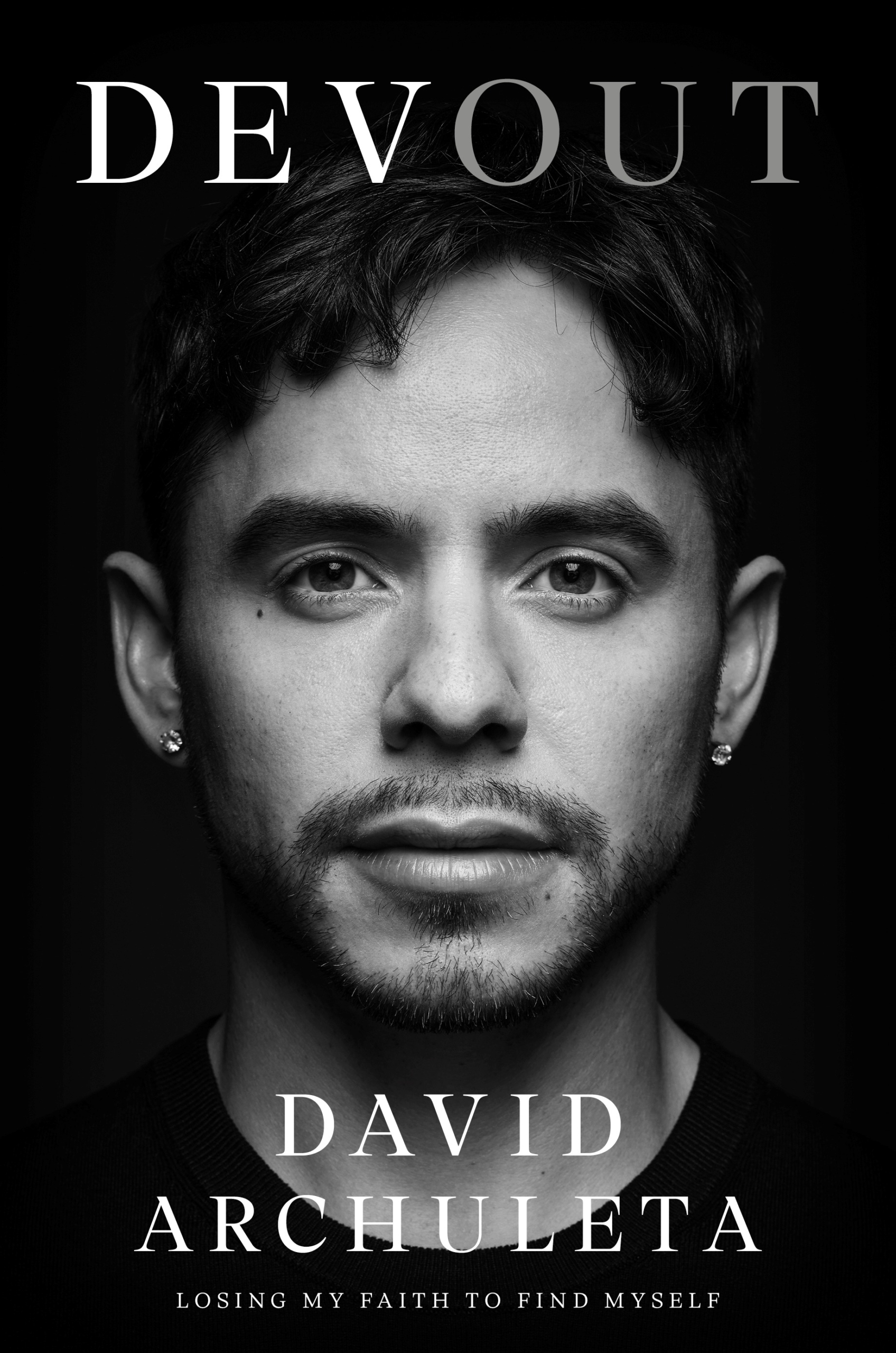
In late January 2026, having read his book DEVOUT (prior to release) I sat down with David Archuleta for what turned into one of the most honest conversations I’ve ever had. As two former Mormons who both left the Church after years of deep commitment, we shared a surprising amount of common ground—Basque heritage, multilingual backgrounds, mission experiences, temple memories, and the long, painful process of untangling identity from doctrine. David’s memoir had just laid bare much of his story, and this talk went even deeper: family dynamics, scrupulosity, coming out, healing with his father, and the quiet hope that more people can live authentically without the weight of institutional shame. What follows is that unfiltered exchange, with David’s voice and reflections given room to breathe.
Jeremy: Welcome, David. How are you doing?
David: Doing great.
Jeremy: So, what we have in common, we’ve both left the tribe. And we’re also two Basque dudes! Yeah, I’m part Basque on the French side, you’re on the Spanish side.
David: That’s cool.
Jeremy: I want to acknowledge the suffering the church and your family put you through—the abuse, the sacrifice. Your sacrifices for the church were far greater than anything American Idol cost you. That’s what came through in your book.
David: Thank you. That’s sweet of you. I appreciate that.
Jeremy: I photographed your Christmas show at the Capitol Theatre right before the pandemic. My wife and I were there. We could feel it—you hadn’t come out yet, but we knew it was coming. I made it to chapter 22 in your book. You had nerves of steel. You never masturbated through all of that pressure because you were so committed.
David: Yeah…
Jeremy: My bishops told me if I cut my hair the Lord would help me stop. They gave us laminated pictures of Jesus to take into the shower on my mission. That’s how intense it was. Did you believe going on your mission would cure you?
David: I didn’t look at it as a cure, I looked at it as, if I show my faith to God, then it will be… I will prove myself worthy of my faith, and that He will heal me, yeah. So that he will give me strength. And it was, like, I looked at it as, like, a test, like, Job. You know, like, if you put up with it, and if you are true and disciplined, even in your suffering, that God will then bless you and help strengthen you to overcome it. Like, and like the… what is that story where it’s like, in the Book of Mormon, where he made the… the burdens… I think it’s in Alma. God made their burdens so light that they couldn’t even feel them on their backs. That story, like, I would refer to that a lot of times, and just be like, you know what? This is a burden that I carry, but if I have my faith, and if I’m patient, and long-suffering, and endure to the end.
Jeremy: You came out while on your mission?
David: Yeah. I was so good at pushing it down and taking it out of my mind and not thinking about it, that I had to write it down while I was feeling it. I was like, I’m feeling something, what is this? And I would write it down, I’m like, oh my gosh, I am attracted to men. And then I would forget it.
There’s like a mental break. Like, it’s like a self-protection tactic that your brain does, where it really will push it out, and I would be like, I don’t remember what I was even thinking about. So I had to write it down because I forgot why I even wanted to talk to my mission president in the first place.
I go in to meet with him, and he’s like, okay, so what did you want to meet about? And I said, I don’t remember. But I wrote it down. If you’ll let me read it, because I know it’s important… like, that’s how disconnected I would be… it’s like you gaslight yourself.
Jeremy: Your dad was like a hovercraft parent. It reminded me of Brian Wilson and that psychologist who took over his life. Your life was sucked out of you for so long. But you championed through it. Let’s go to The Pie sometime. You love cheese, right?
David: Oh my gosh! The pie was a classic. It’s a staple. Get all of our pizzas for, like, mutual activities, like young men’s nights, or, like, birthdays, and for someone in the neighborhood, the pie.
Jeremy: After all that intensity in the book, why no pictures of your dad?
David: You know what? I didn’t even realize that, but I think it could have been a subconscious thing where it’s like, I’m talking so much about him, I don’t want to put him on the spot and put the heat on him. Like, he’s been through enough. And I already put… I already air out a lot of his… his business in the book as it is. I think he deserves a little, you know, some kind of… you know, some kind of privacy. I mean, I don’t give him much at all in the book.
Jeremy: When you were trying to “find a wife” and making out with that half-Peruvian girl—reading that part made me squirm. How uncomfortable it must have been.
David: I was terrified, you know, I was scared, I didn’t know what those feelings were… I didn’t know how to sit with those feelings of just kissing and all that. And I wouldn’t say, like… I enjoy kissing girls, like, I still do, and… That’s what’s also been confusing about coming to terms with my sexuality, that… I still find women attractive. Not always, but, like, every now and then, there’ll be a song, I’m like. Oh. Like, I question my sexuality again. Or, like, just, like, away from, okay, that’s why I don’t… that’s why I say, like, something more, like, broad, like, queer, like, bisexual, but, but I’m still mostly attracted to guys.
Jeremy: The first time you kissed a guy—did your head explode?
David: No. It felt… It didn’t feel forced, it just kind of felt like… whatever. It felt like… Honestly, it felt like swimming in, like, lukewarm water, like, just… like, it’s just, like, a nice temperature, you don’t feel too much of anything, but it feels nice. Like, it feels just smooth. It felt… it felt nice. It felt right. It did feel right. But I think also I just didn’t know what to think of it. I was kind of confused. I was like, I never thought I would be kissing a guy, you know? And I’d avoided this for so long, and… So when it happened, it was exhilarating the first moment when we went into it, but when we started kissing more. It was just kind of like… Okay. Like, I’ve never done this really before.
Jeremy: Charlotte tried to open that conversation with you because she loved you so much.
David: I… I guess I haven’t looked at that. I always took it very defensively, so I always kind of looked at it as danger, danger, danger, like, she’s trying to open up something I’m not supposed to open up. We were both obsessed together with the church, and so I think I needed some space to kind of, like, process that. I’m like, man, like, you used to be who I was basically scrupulous with. We were scrupulous together with our beliefs. We would, like, study the scriptures together on the tour bus, and… Everything, you know, like…
Jeremy: You’re living the life my father wanted but couldn’t have. I applaud you for leaving and being who you really are.
David: Thank you. It’s like, I was… in the book, I describe it as like a volcano, like… it just starts building up, and you just feel that one day you’re gonna explode, because it’s not healthy. It’s not healthy to… Keep it down. So, you know, I… the book, I hope, like, maybe… You know, hopefully it’ll… Some people don’t get to, but here’s to hoping that more people can Just be themselves. And get rid of the… the… the misunderstandings and the prejudice against the queer community within the Mormon church, because I think we’re getting to a point where a lot of people realize, huh, this doesn’t feel quite right, we should be more inclusive, but the church leaders are still… holding…
Jeremy: The leaders are still in the 19th century. Dallin H. Oaks dedicated his life to opposing this—he’d have to admit his life’s work was wrong.
David: Yeah, it really is Dallin H. Oaks, because he dedicated decades of his… not just his work, but, like, his career in the Supreme… as a Supreme Court. He dedicated it to… so, if he accepted queer people, it would… he would have to admit that he was wrong. And that his life’s work was in vain. And that it was wrong. And I don’t think he has the heart to do that.
Jeremy: This was heavy, man. Your story hit hard—even for a straight guy.
David: Thank you.
Jeremy: Cheers. All the best.
David: Thank you. Likewise, likewise. Cheers, and we’ll cheers over some pizza sometime.
Jeremy: At The Pie. Later, man.
David: See you, Jeremy. Bye.
Devout is a VERY powerful book, your Amazon check out basket is waiting for you to buy this one.
Imagine if he said ‘like” so much in his songs. He would probably agree how irritating it is & maybe stop. I just lazy language. Just like totally. Replace totally with the word, really. I really want this instead of I totally want this. Worst case scenario is, “I like totally want this”.
The “likes” are overwhelming. I really wish that David, and his generation, could hear how awful it sounds and reads…and STOP SAYING “LIKE” every few words!!! David is so talented but it was hard to get through the interview due to all of the filler “likes”.
Thank you! I couldn’t get through the interview because I kept thinking, imagine how rich I’d be if I had a dollar for every time he obnoxiously says the word “like.”
I wonder if his memoir is filled with “likes.” If so, his editor did a lousy job.