


The Los Angeles Dodgers have built a reputation as one of Major League Baseball’s most LGBTQ+ inclusive franchises, so when the team celebrated Pride Month this year, few were surprised to see rainbow-themed Dodgers caps making an appearance.
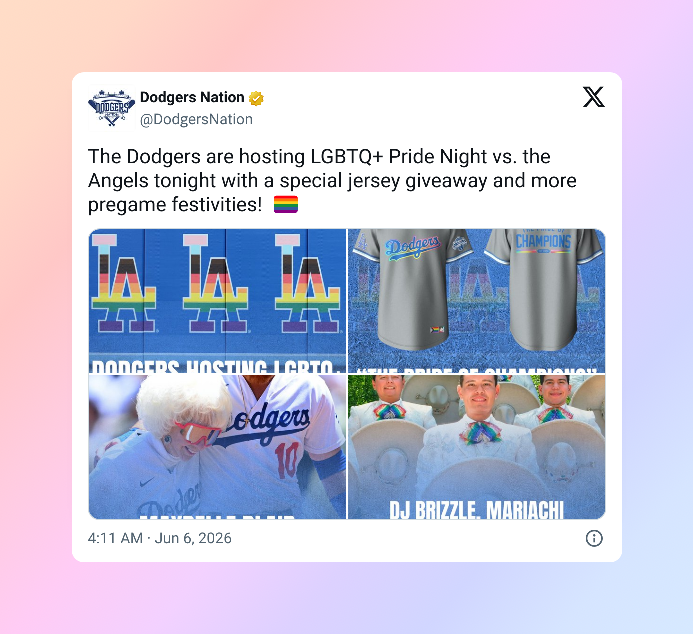
What did catch fans’ attention, however, was the fact that two players chose not to wear them.
While the overwhelming majority of Dodgers players and staff sported caps featuring the iconic “LA” logo in rainbow colors, outfielder Alex Call and relief pitcher Blake Treinen instead wore their standard Dodgers hats.
The decision quickly became a talking point among fans online, particularly because the Dodgers have consistently embraced Pride celebrations over the years.
RELATED: Dodgers Celebrate Two Gay Players Who Helped Change Baseball Forever
A Different Choice From the Rest of the Team
To be clear, nobody was forced to wear the Pride-themed cap.
Professional athletes frequently make personal choices regarding special event uniforms and accessories. Some players decline promotional gear, while others simply prefer sticking with their regular equipment and routines. Some are superstitious. We understand.
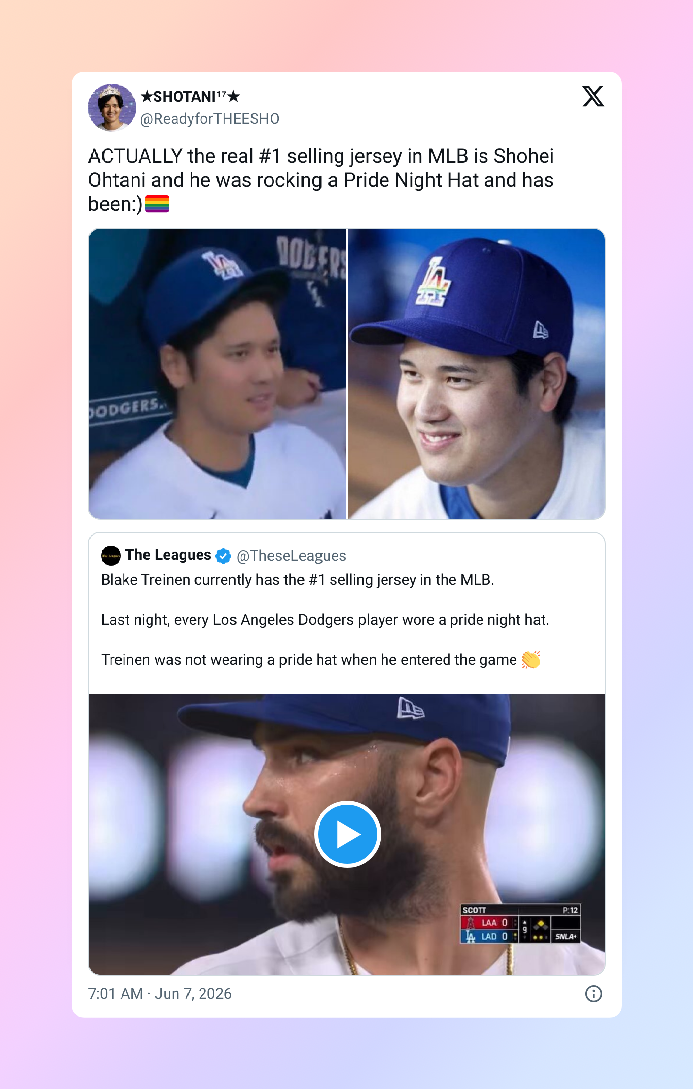
But in the case of Treinen and Call, many observers believe their decision was likely tied to their publicly expressed religious views.
Both players are known for being outspoken Christians, which led some fans to wonder whether faith influenced their decision to opt out of the Pride-themed logo.
That conversation quickly spread across social media, where reactions ranged from disappointment to support, depending on where fans stood.
Why Blake Treinen’s Decision Drew Extra Attention
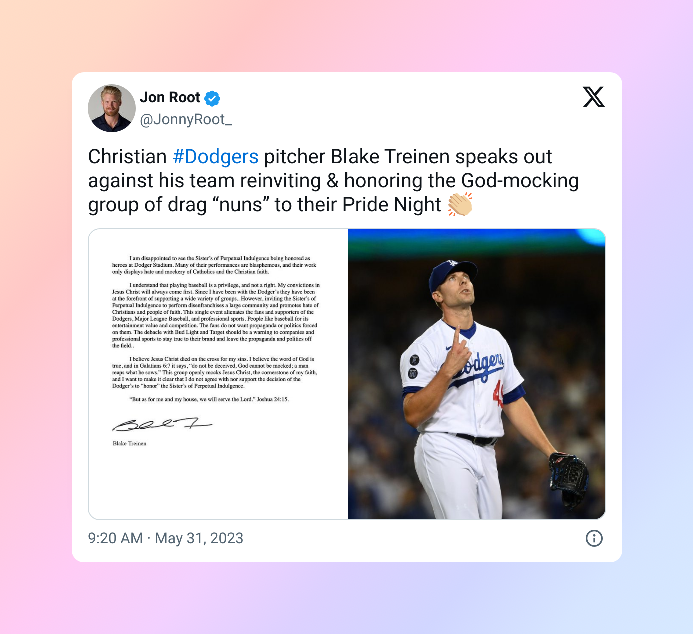
Of the two players, Treinen’s choice generated the most discussion because he has previously spoken publicly about LGBTQ+ related issues involving the Dodgers. According to Fox News, Treinen voiced his objections in 2023 when the Dodgers honored the Sisters of Perpetual Indulgence during Pride Night festivities. At the time, he stated that he was disappointed by the organization’s inclusion, arguing that some of the group’s performances mocked Catholicism and Christianity.
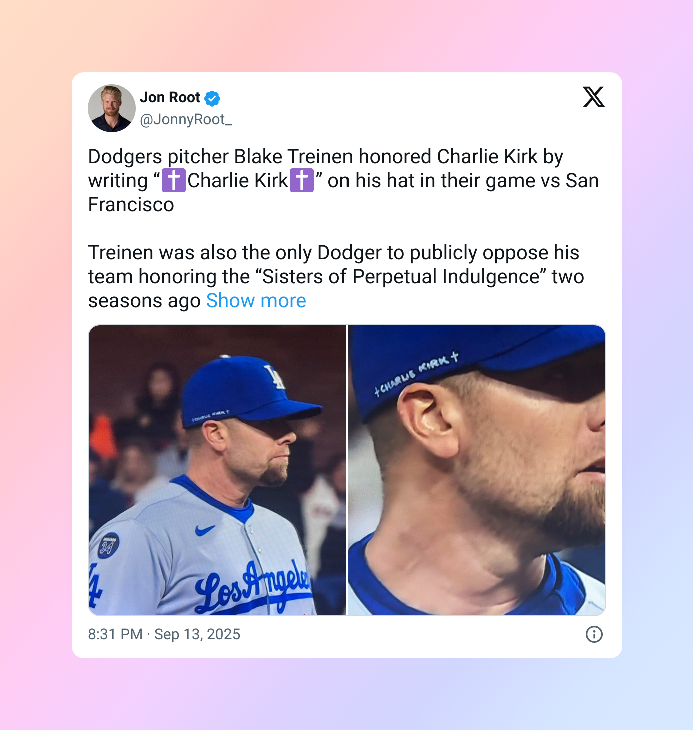
Treinen has also publicly displayed support for conservative commentator Charlie Kirk, including writing Kirk’s name on his cap alongside Christian crosses. Because of that history, many fans viewed his decision not to wear the rainbow logo as a continuation of positions he has already publicly expressed; there was no superstition involve to not wear the hat.
Faith Is Not the Whole Story
What makes the situation more interesting is that Christianity itself was clearly not the deciding factor for everyone in the Dodgers organization. Several members of the team who are also known to be Christians participated in the Pride celebration without issue.
Manager Dave Roberts wore the rainbow-themed cap. So did superstar Mookie Betts.
Their participation serves as a reminder that religious belief and support for LGBTQ+ inclusion are not necessarily opposing ideas. Christians, like any large group of people, hold a wide variety of perspectives on Pride celebrations and LGBTQ+ issues.
That reality often gets lost when conversations become polarized online.
The Bigger Picture for Dodgers Pride
Ironically, the discussion surrounding two players choosing not to wear the Pride caps ended up highlighting just how much support existed elsewhere throughout the organization.
The Dodgers did not scale back their Pride celebrations. The rainbow logos remained visible throughout the event, and the franchise continued honoring LGBTQ+ contributions to baseball, including its recognition of trailblazers Glenn Burke and Billy Bean.
In other words, the story was never really about a hat.
It was about how sports teams, athletes, faith, identity, and LGBTQ+ visibility continue to intersect in public spaces.
Fans will undoubtedly have different opinions about Treinen’s and Call’s decisions. Some will see a matter of personal conviction. Others will view it as a missed opportunity to support a marginalized community.
What remains undeniable is that the conversation reflects how far sports have come.
A generation ago, Pride celebrations in professional baseball were rare. Today, they are prominent enough that choosing not to participate becomes the bigger headline.
That alone says something about how much the game has changed.
That Alex Call and Blake Treinen are rabidly hate driven anti LGBTQ extremists is pretty well known, this isn’t new. It’s sad that such terrible disgusting human beings remain on the Dodgers roster, but great that the rest of the team are showing support. We can’t eliminate the human garbage from public life, we can cheer on our supporters!
The two men should go join a minor leage christian team then as the Dogers represet and represent ALL!!