


Florida has elected a Republican candidate whose past includes documented ties to a white supremacist movement, while New York has narrowly rejected an openly gay Democrat who wanted to bring his own brand of public service to Congress. And honestly, the contrast is difficult to ignore.
Florida Sends Marshall Rawson to the State House
Republican Marshall Rawson has won Florida’s District 10 state House seat, defeating Democratic candidate Merrillee Malwitz-Jipson in the November 3 election.
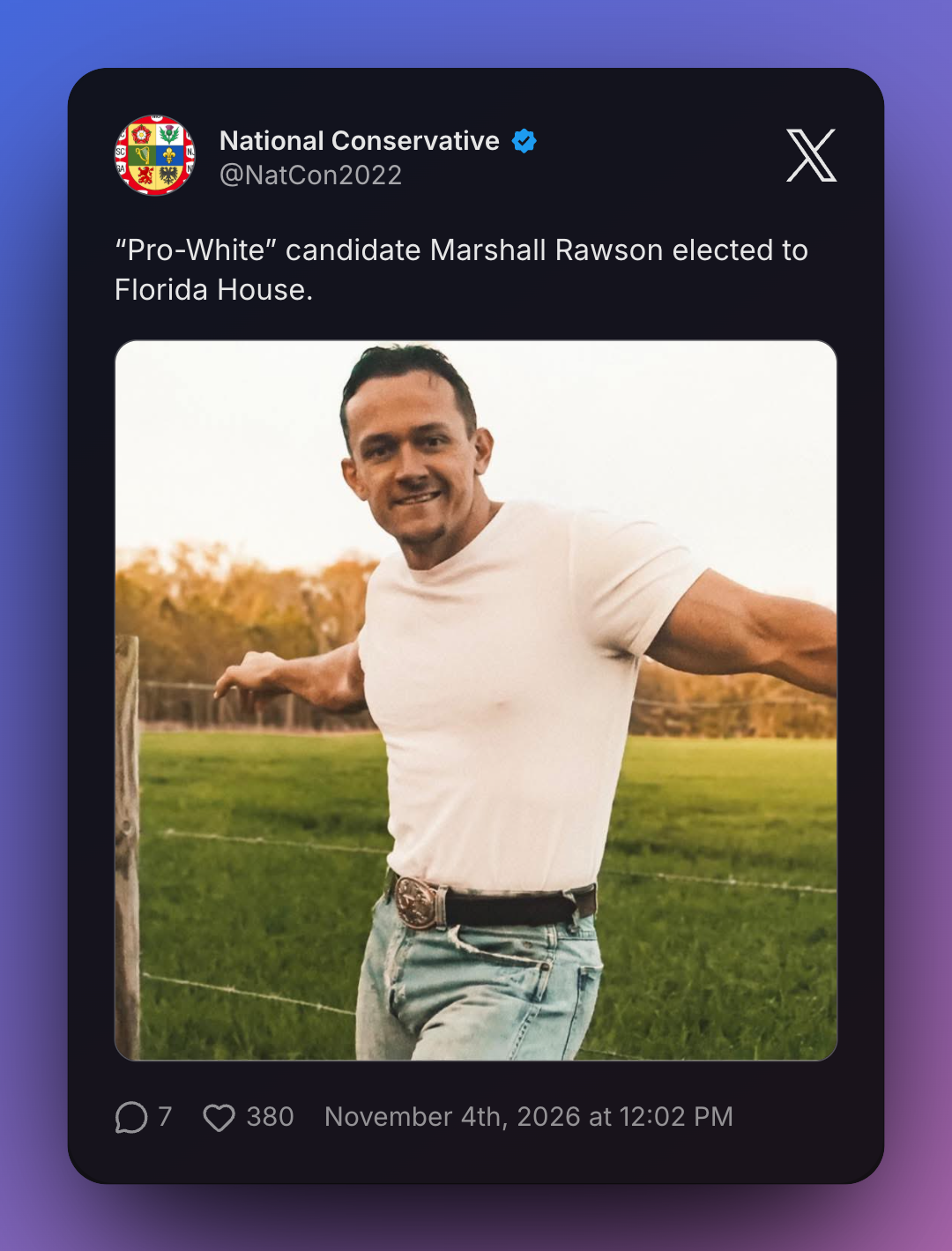
But Rawson’s political history is raising some serious concerns. According to an investigation by Talking Points Memo (TPM), video footage shows Rawson attending the deadly 2017 Unite the Right rally in Charlottesville, Virginia. The gathering brought together neo-Nazis and other white supremacists, and ended in tragedy when a white supremacist drove his car into counterprotesters, killing 32-year-old Heather Heyer and injuring dozens.
@TPM Last month Marshall Rawson won upset victory in GOP primary for seat in Florida House of Representatives. Here he is arriving at infamous 2017 Unite the Right rally. He’s greeted, by name, by members of League of the South, a white nationalist/southern secessionist group https://t.co/mxzvbGYDH4
— Christopher Mathias (@letsgomathias) September 14, 2026
TPM reported that Rawson attended alongside members of the League of the South, a racist and antisemitic neo-Confederate group that advocates for Southern secession. Footage reviewed by the publication reportedly shows him arriving at the rally and carrying the group’s flag.
Immigration enforcement and reduction — yes! Compromise — no! Defend our Florida. Defend our Home. https://t.co/XONpxUvnxi
— Marshall Rawson for Florida State House (@MarshallRawson) November 1, 2026
And there’s more. TPM also reported on social media posts attributed to Rawson in which he condoned slavery and called for LGBTQ+ people to be executed. Despite the revelations, Rawson has not renounced his past involvement with the League of the South.
The publication also contacted more than two dozen current and former Florida Republican officials, including several who had endorsed Rawson. According to TPM, none agreed to publicly denounce him.
READ: They better use all of THAT BEEF to get the work needed DONE!!!
New York’s Gay Candidate Falls Short
Meanwhile, in New York, openly gay Democrat Chris Gallant has conceded his race against Republican incumbent Rep. Nick LaLota in the state’s First Congressional District.
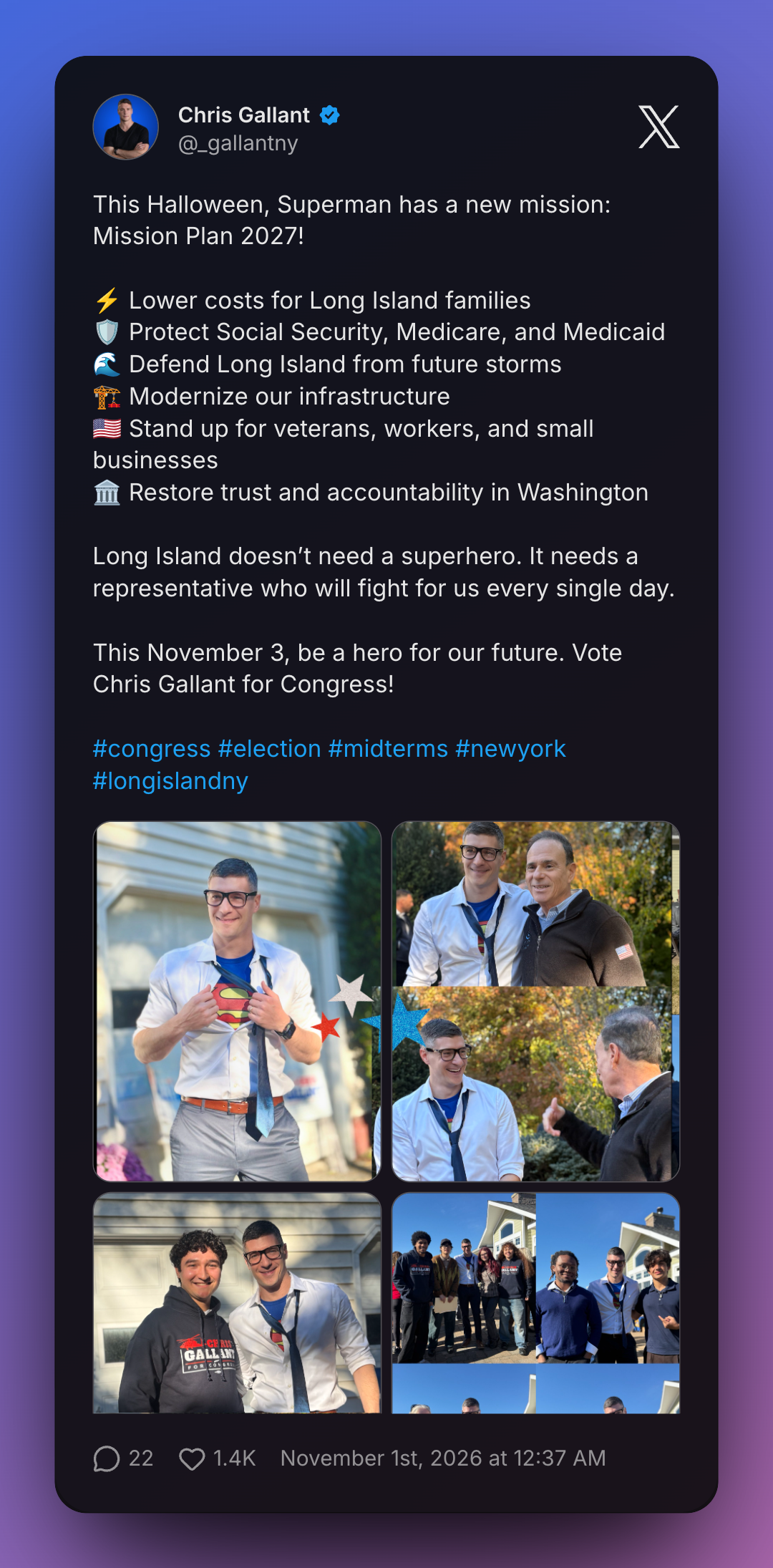
It was a close one, with LaLota receiving approximately 51.1% of the vote compared with Gallant’s 48.9%, according to unofficial results reported by local outlets. Gallant ultimately called LaLota to congratulate him.
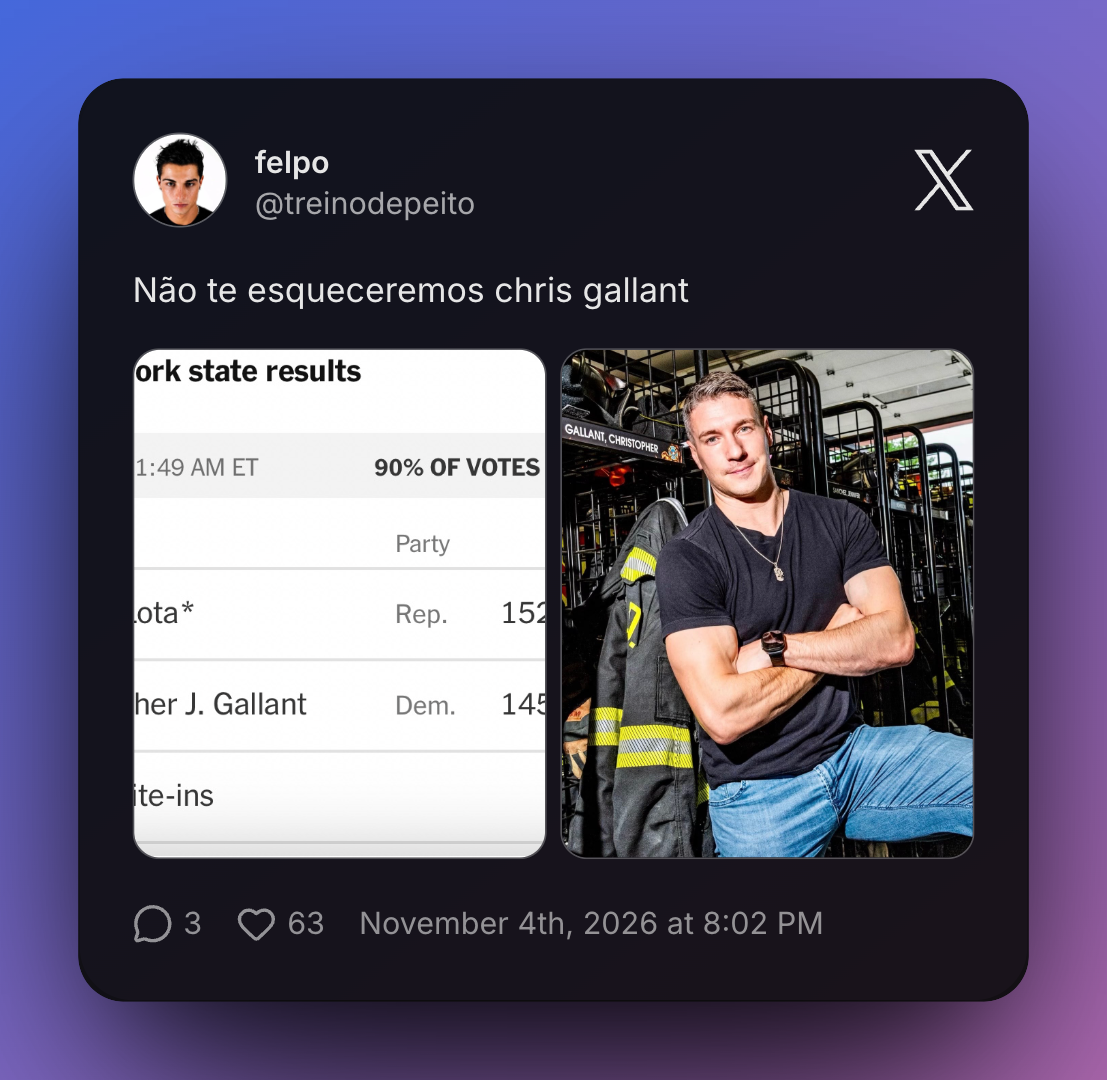
In his concession statement, Gallant said he respected the voters’ decision, despite being disappointed by the outcome. He also emphasized the values he believes leaders should bring to office: “honesty, loyalty, and steadfast commitment to serving this country and each other.”
My statement on last night’s results. Thank you to all the friends, supporters, neighbors and staff that helped make this election a historic race. Stay tuned for what’s next. https://t.co/UH7jya1Khl
— Chris Gallant (@_gallantny) November 4, 2026
A military veteran, Army National Guard pilot, former air traffic controller, and volunteer firefighter, Gallant had campaigned on issues including affordability, healthcare, and infrastructure. He also made clear that his commitment to serving his community would not end with the election.
So, What Are We Supposed to Make of This?
Two very different candidates, two very different outcomes, and one rather uncomfortable snapshot of American politics.
Gallant’s loss does not automatically mean voters rejected him because he is gay. Nor does Rawson’s victory tell us exactly why each voter supported him. But the contrast is still striking: a candidate with a documented history involving extremist groups is heading to Florida’s Legislature, while an openly gay candidate who emphasized public service has fallen just short in New York.
If anything, these results are a reminder that political representation and accountability remain ongoing battles. And for LGBTQ+ Americans watching these races unfold, the question of who gets elected — and what they stand for — matters.