


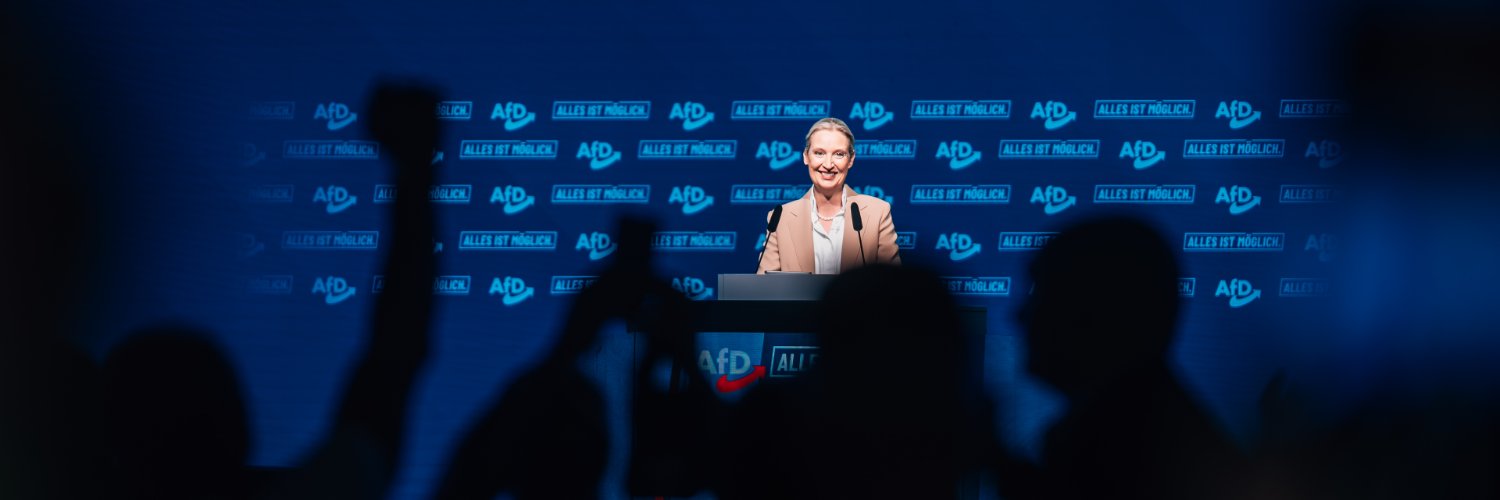
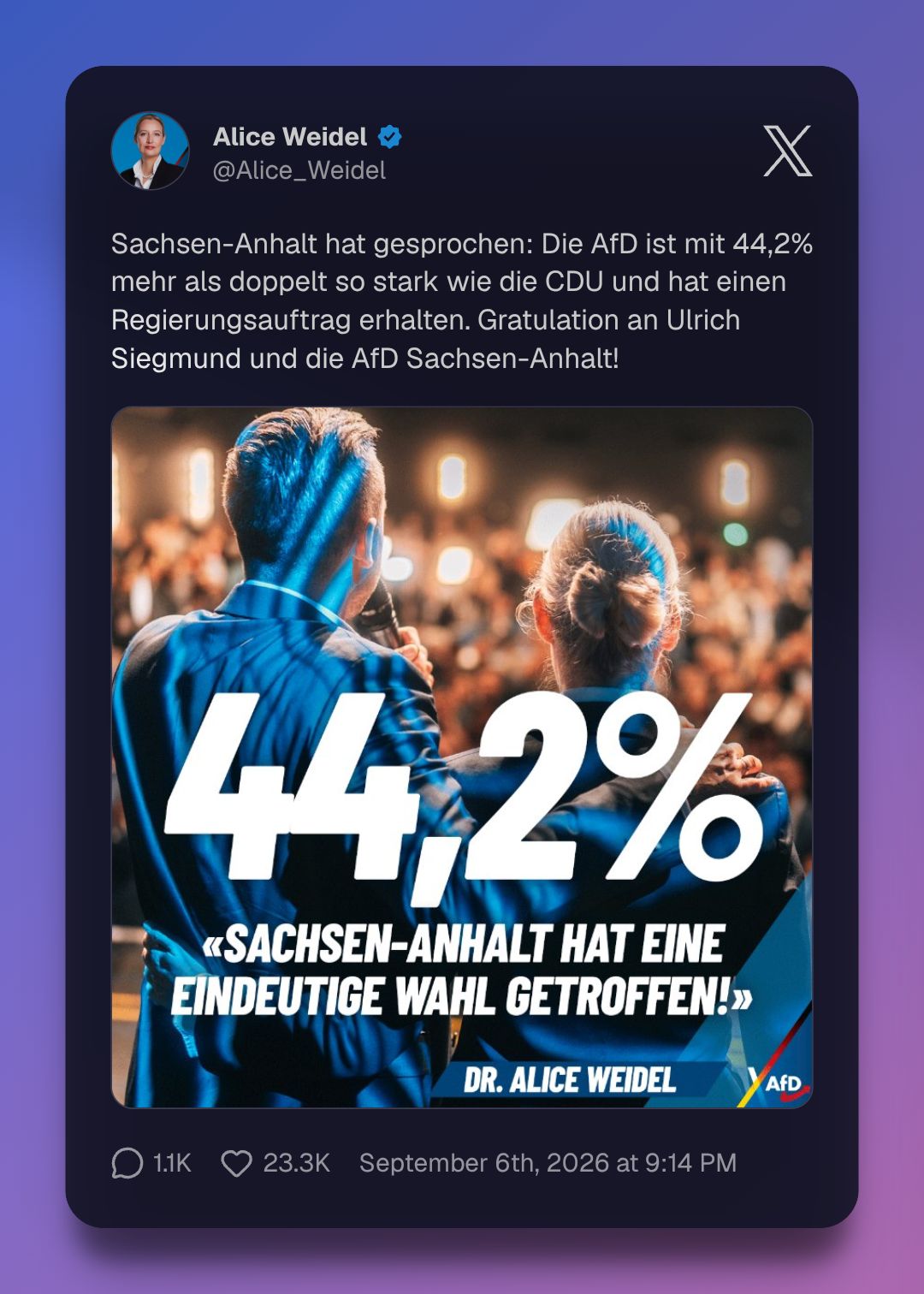
The name Alice Weidel is suddenly everywhere after the Alternative for Germany/Alternative für Deutschland (AfD) won the September 2026 election in Saxony-Anhalt. The far-right party received 44.2% of the vote, but it did not win enough seats for an outright majority.
That could still be a major moment for Germany. If the AfD eventually manages to form a state government, it would be the first far-right state government in Germany since the end of World War II.
But there is another reason Alice Weidel’s rise is especially interesting to LGBTQ readers.
She is openly lesbian.
Meet Alice Weidel
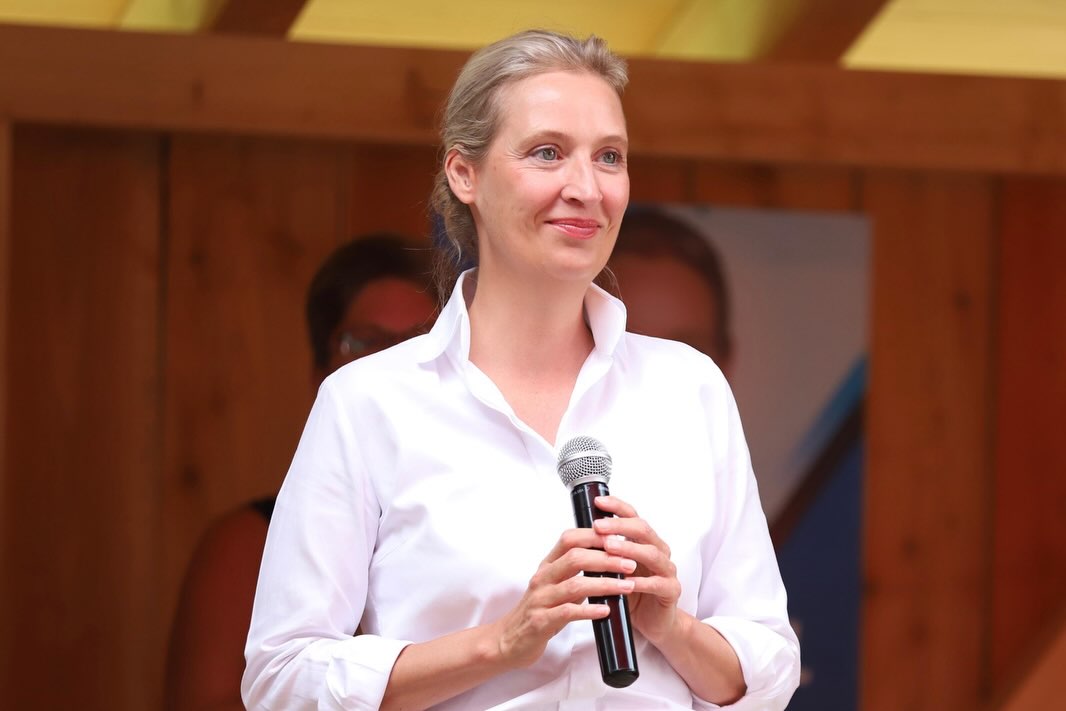
Weidel, 47, is one of the two leaders of the AfD. She has been a prominent figure in the party for years and is one of its most recognizable faces.
“Ich danke Ihnen, unseren Wählern, für das überwältigende Vertrauen gestern in Sachsen-Anhalt. Unser Traum-Ergebnis speist sich aus der extrem hohen Nichtwählermobilisierung.” pic.twitter.com/yTZOjYaGFf
— Alice Weidel (@Alice_Weidel) September 7, 2026
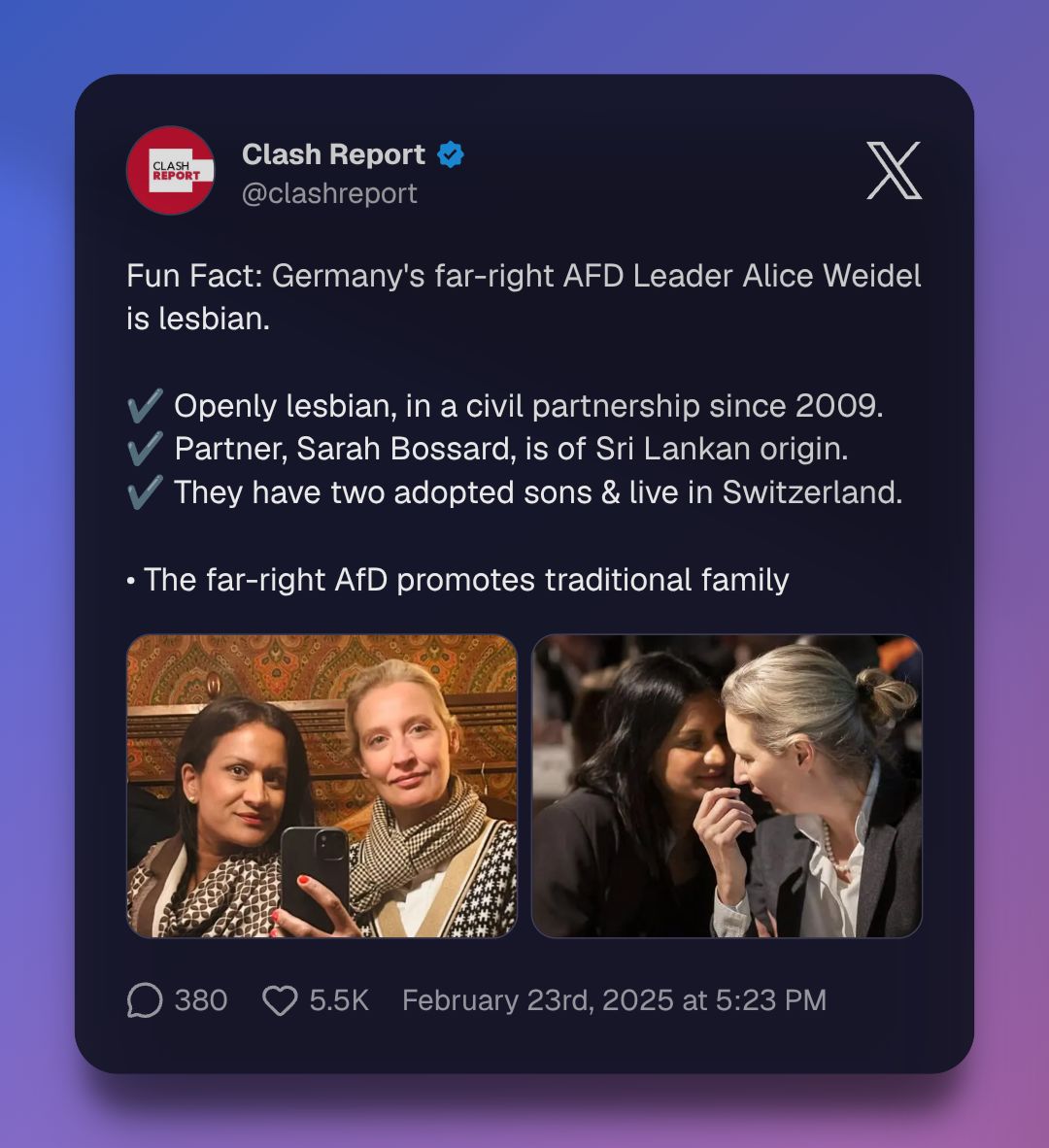
She lives in Switzerland with her longtime partner, filmmaker Sarah Bossard, who was born in Sri Lanka. The couple have two adopted sons. And yes, this is where things get complicated.
The AfD has taken strong positions against immigration and has promoted traditional ideas about family and gender. Basically, the party believes that a family should consist of a “traditional” heteronormative father, mother, and child concept. The party has also opposed the expansion of same-sex marriage and adoption and has criticized LGBTQ-related policies in schools.
So, one of the leaders of Germany’s far-right party is a lesbian woman raising two children with another woman.
The juxtaposition is hard to miss.
The Irony Behind the Situation
Weidel has addressed this contradiction herself.
In the past, she has argued that her sexuality is one reason she supports the AfD. She has claimed that gay people in Germany need protection from what she describes as “Muslim gangs,” and she has linked LGBTQ safety to stricter immigration policies. Her argument is basically this: she believes the AfD can protect gay people by limiting immigration.
That argument has made her a controversial figure within the LGBTQ community.
A 2022 study looking at the far right in Germany and Switzerland found that some far-right politics presents Muslims and immigrants as a threat to gay people. However, the study did not find that Muslims or immigrants are inherently a threat to gay people; it examined how far-right actors use the idea of “Muslim homophobia” to distance themselves from accusations of homophobia and advance their own political agenda.
This is the strange part: Weidel can point to her identity as a lesbian when arguing that the AfD protects gay people, while the party itself promotes much more traditional ideas about family and sexuality.
READ: An AIDS-Era Rule Targeting Bathhouses Has Finally Been Scrapped
There’s Also a Family History
Weidel’s own family history adds another uncomfortable layer.
Her grandfather, Hans Weidel, was a Nazi judge and a member of the SS. His past became public years after Weidel had already entered politics. Weidel has said she did not know about his Nazi connections while growing up.
Her family was also affected by the aftermath of World War II, when Germans were expelled from Silesia.
Weidel later joined the AfD in 2013, originally because of her opposition to the eurozone bailout policies. She eventually became one of the party’s leading figures as it moved further to the right.
READ: Trans Rights Activist May Face Trial. Judge Rejects Stand-Your-Ground Defense.
The Contradiction Is the Story
To be clear, being lesbian does not automatically make someone progressive, and LGBTQ people can hold a wide range of political beliefs. The issue is the contrast between Weidel’s personal life and the politics of the party she leads.
She is a lesbian woman raising children with another woman while helping lead a party that promotes traditional family values and has opposed several LGBTQ-friendly policies.
At the same time, she has used her identity as a lesbian to argue that the AfD can protect gay people from what she describes as threats linked to immigration.
That does not mean her sexuality is somehow incompatible with conservative politics.
But for many LGBTQ readers, the contrast is impossible to ignore.
Alice Weidel’s story is a reminder that politics can be painfully complicated.
And sometimes the biggest political plot twist is sitting right there in the family photo.
I get the Islamo-fascist angle. But I don’t notice any mention of love in all the right wing ideology
Alice Weidel realizes that the main threat to German gays and lesbians comes from intolerant Islamist views on homosexuality and so is standing up against those voices of intolerance.