

Mark Wahlberg’s past is revisited in FX’s Love Story: John F. Kennedy Jr. & Carolyn Bessette.
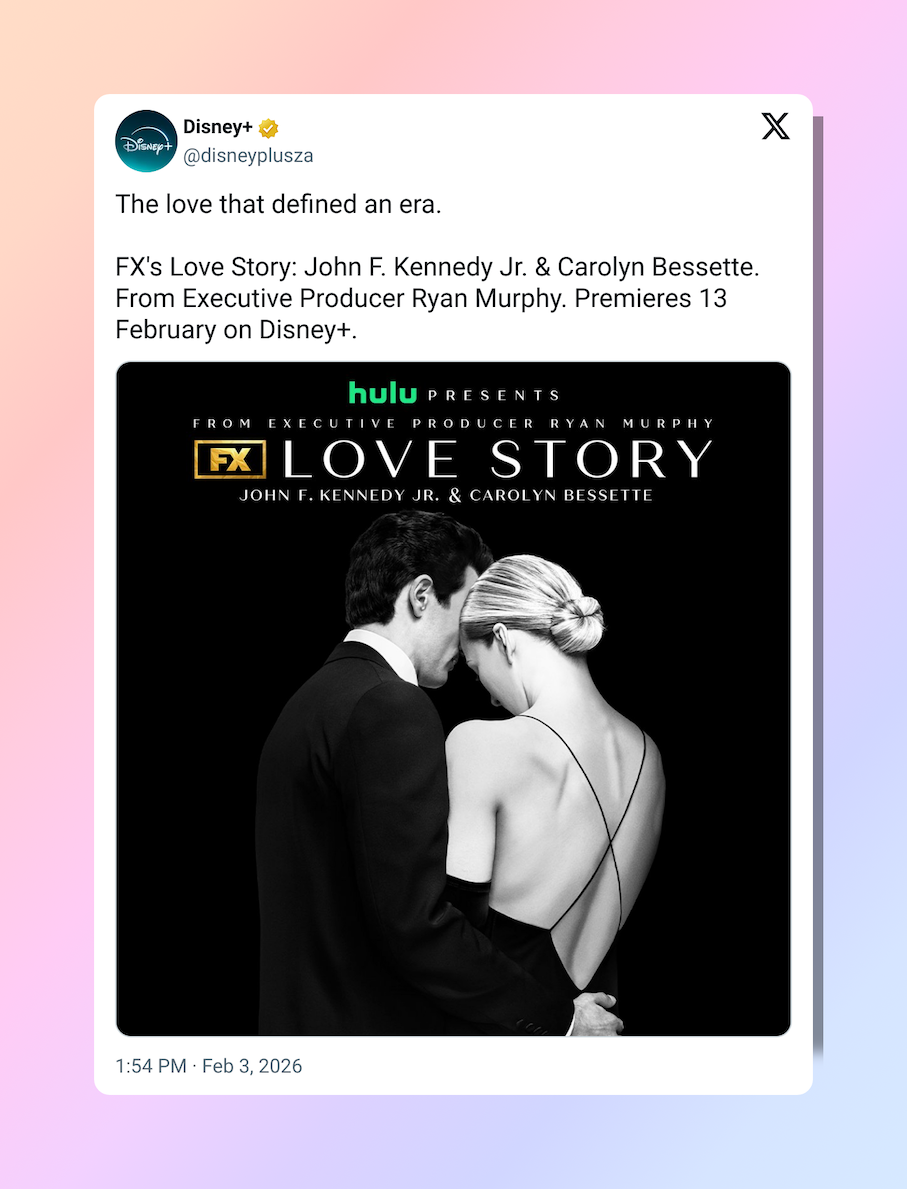
Pop culture rarely lets history stay buried for long—especially when fame, power, and accountability intersect. This week, Mark “Marky Mark” Wahlberg found his early controversies resurfacing in a high-profile way, thanks to Ryan Murphy’s latest series, Love Story: John F. Kennedy Jr. & Carolyn Bessette. For LGBTQ audiences, the moment feels less like gossip and more like a pointed reminder: the past doesn’t disappear just because a celebrity image has been successfully rebranded.
From Marky Mark to Household Name
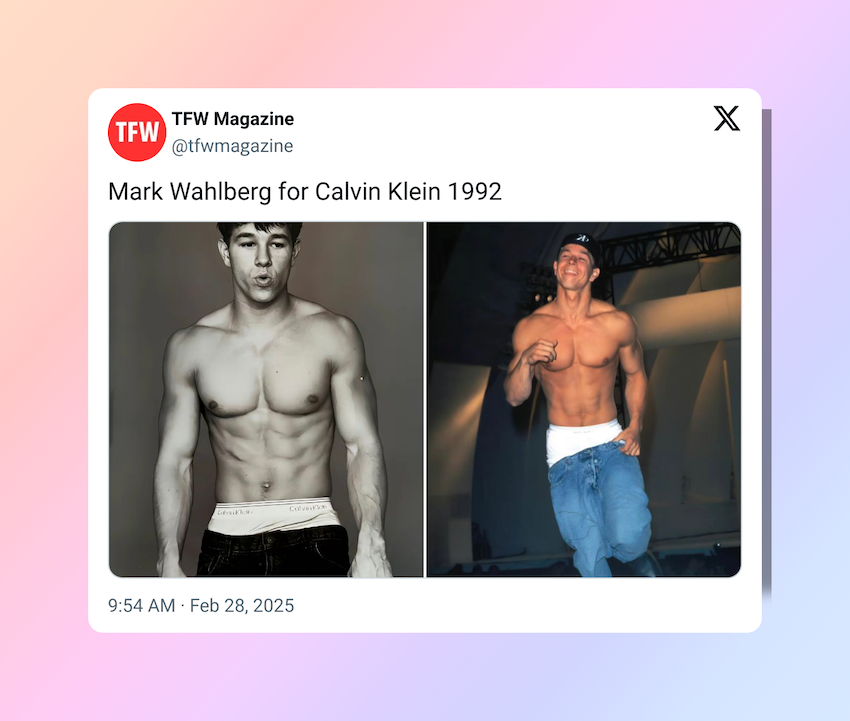
Before becoming a Hollywood mainstay, Mark Wahlberg was known as Marky Mark, the frontman of the early-1990s rap group Marky Mark and the Funky Bunch. His crossover into mainstream fame was cemented by his infamous 1992 Calvin Klein underwear campaign—images that were provocative, hyper-masculine, and instantly unforgettable.
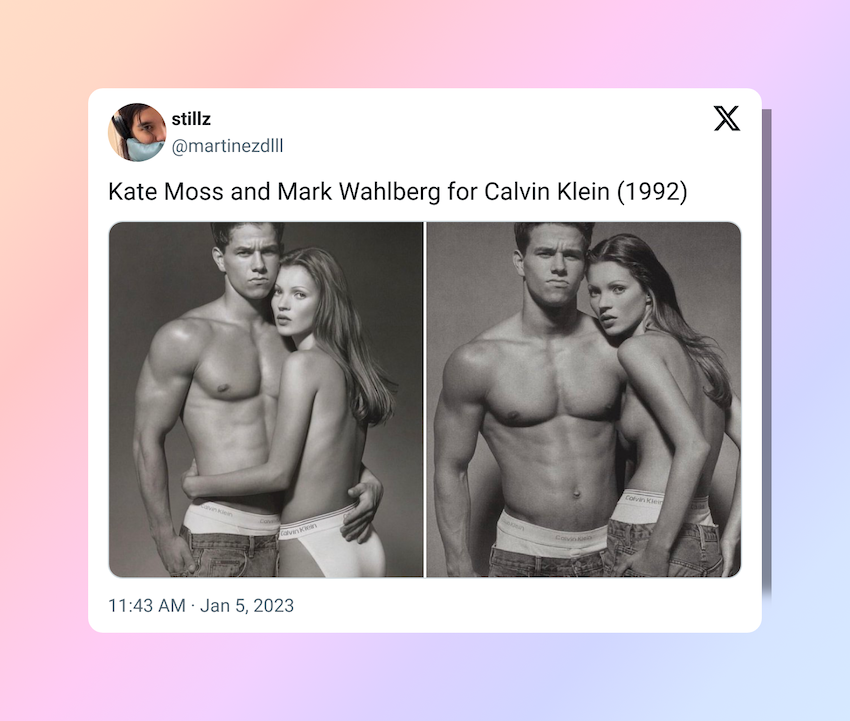
Those ads made Wahlberg a pop culture fixture, but they also coincided with a period in which his off-camera behavior attracted significant criticism. Although we do have to remember that, at the time, there was no social media to document these events at a moment’s notice. Murphy’s series draws directly from that era, reminding viewers that Wahlberg’s rise came with unresolved controversies attached.
The Scene That Sparked Renewed Scrutiny
In Love Story, a fictionalized version of fashion designer Calvin Klein—played by Alessandro Nivola—discusses Wahlberg’s alleged behavior during the early ’90s. The scene references a reported 1993 altercation involving a member of Madonna’s entourage, during which Wahlberg was accused of using a homophobic slur.
The dialogue is intentionally uncomfortable. One character minimizes the language used, while another points out what was likely meant—highlighting how casual homophobia was often dismissed during that period. Importantly, the series frames this exchange as alleged behavior and dramatized conversation, not courtroom-established fact. Still, the moment lands with weight, especially for viewers who lived through an era when slurs were routinely excused as “not that serious.”
A History That Goes Beyond One Incident
The reason this scene resonates so strongly is that it does not exist in isolation. Wahlberg’s teenage years and early adulthood include documented incidents of racial violence and harassment.
In 1986, he was subject to a civil rights injunction after repeatedly harassing Black children in his Boston neighborhood, including throwing rocks and shouting racial slurs. Two years later, in 1988, Wahlberg pleaded guilty to assaulting two Vietnamese-American men while using racist language. He served 45 days in jail for the attack.
These incidents were widely reported at the time and remain part of the public record. They establish a broader pattern of behavior that contextualizes why allegations of homophobia in the early 1990s continue to draw attention decades later.
The 1993 Apology—and Its Limits
In 1993, amid public criticism and protests from advocacy groups, Wahlberg issued a public apology via the Boston Globe, acknowledging his past racist actions. The apology was significant, particularly given the era, and marked a moment of public accountability.
However, apologies—especially those made early in a career—are often seen as beginnings rather than conclusions. For many LGBTQ audiences, the resurfacing of alleged homophobic behavior raises questions about what accountability looks like when it comes to patterns of harm, not just isolated acts.
A Complicated Turn Toward Empathy
Years later, Wahlberg starred in Good Joe Bell, portraying a father whose gay son dies by suicide after enduring severe bullying and assault at school. The film centers on the dangers of bigotry, with Wahlberg’s character traveling across the U.S. to speak about acceptance and tolerance.
The role placed Wahlberg in a narrative that is, on its face, the opposite of the behavior that defined parts of his early life. For some viewers, the casting represented growth; for others, it highlighted the uneasy space between representation and redemption. Acting in a story about anti-LGBTQ violence does not erase a harmful past—but it does add complexity to the conversation.
RELATED: ‘Joe Bell’ Tells the Story of a Father Spreading Awareness of Teen Suicide
Why Ryan Murphy’s Choice Matters
Ryan Murphy has built a career examining how systems protect powerful figures while marginalizing others. By including this moment in Love Story, he forces viewers to confront how homophobic language was normalized—and how easily it was brushed aside—during the height of Wahlberg’s early fame. He did after all establish himself as an actor after all of the aforementioned incidents.
The series doesn’t issue a verdict. Instead, it asks the audience to sit with discomfort, to recognize how cultural standards have shifted, and to question what responsibility public figures have to acknowledge the full scope of their histories.
Accountability Is Ongoing
Mark Wahlberg’s career today looks worlds away from his Marky Mark beginnings. He is a successful actor, producer, and public figure whose image emphasizes discipline, faith, and family. Yet as Murphy’s series demonstrates, reinvention does not automatically close the door on accountability.
This renewed discussion doesn’t suggest that people are incapable of change. It does, however, underscore that growth requires consistency, reflection, and continued awareness—especially for those whose early actions caused real harm.
For LGBTQ audiences, the resurfacing of Wahlberg’s past is less about cancellation and more about clarity. History matters. Language matters. And remembering both is often the first step toward ensuring it isn’t repeated and that everyone continues to take accountability for their actions.
Little quick on the draw there. Lol. Now with this Shia business. Seems the change wasn’t that much.
Mark was trash then; he’s trash now.
Agreed, We have not forgotten. And no one should believe he is any different then a homophobe pretending to hide behind religion. Now Wahlberg has enlisted two other actors as Jesus disciples’ to taunt praying over the lenition season. What a farce and a mockery of religion. One never changes their stripes but rather hide behind something like religion to make themselves feel better about their non-Christian religious ways. Don’t be fooled!
WE have NOT forgotten and I wont watch his projects