

A registered nurse based in Florida, Erik Martindale recently attracted attention online after posting that he would refuse to provide anesthesia to patients who support the MAGA movement during medical procedures. Martindale described this stance as both a personal right and a matter of ethical obligation, citing his ownership of his businesses and his authority to refuse service.
RELATED: Ethics Course Canceled Over LGBTQ and Race Topics as Professor Pushes Back
What Happened
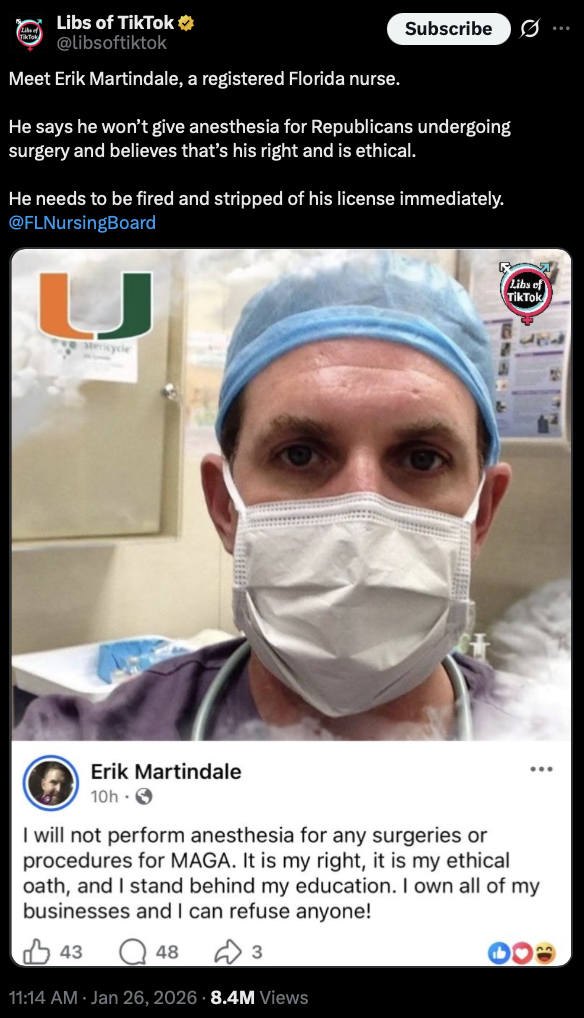
The nurse first shared his position on Facebook, posting a close-up photograph of himself in his nursing uniform alongside a statement:
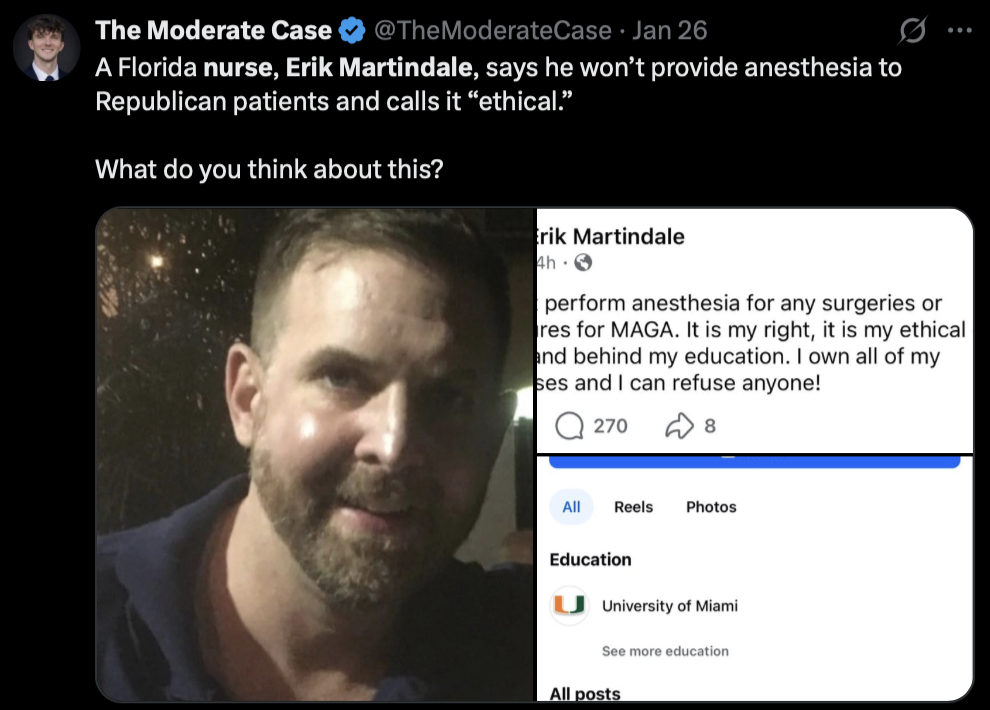
“I will not perform anaesthesia for any surgeries or procedures for MAGA. It is my right, it is my ethical oath and I stand behind my education. I own all of my businesses and I can refuse anyone!”
The post quickly drew attention on social media and sparked widespread criticism. Many individuals questioned the ethical implications of refusing medical care based on political affiliation, and some called for disciplinary action against Martindale.
Social Media Response and Account Issues
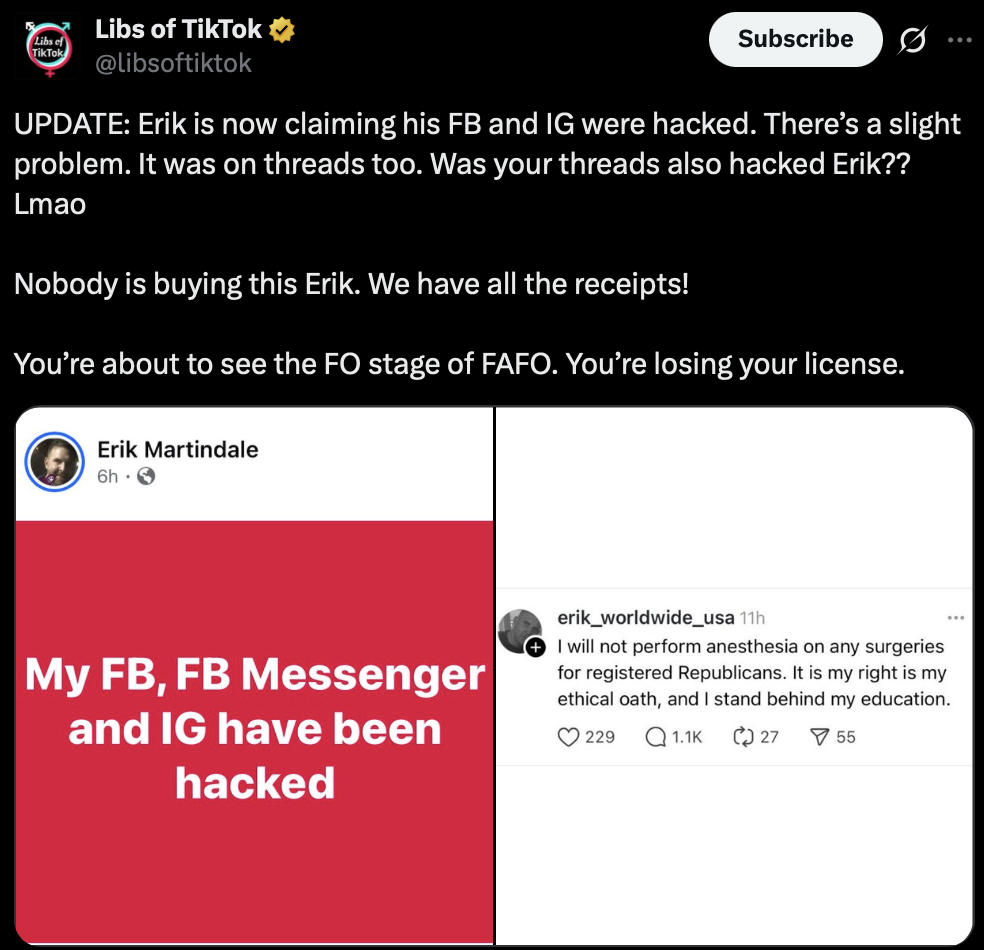
Following the initial post, the nurse deleted it from his alleged Facebook account. He later posted an update claiming that his social media accounts had been compromised, writing:
“My FB, FB Messenger, and IG have been hacked.”
The authenticity of both the original post and the photos nurse Erik Martindale shared could not be verified. Despite this, the posts circulated widely online, contributing to public debate and criticism.
Why This Is Okay and Legal
In May of 2023, Governor Ron DeSantis signed SB 1580, a “License to Discriminate in Healthcare” bill that will allow healthcare providers and insurers to deny a patient care on the basis of religious, moral, or ethical beliefs. It creates a license to discriminate by allowing healthcare employers to discriminate in hiring, and it bars medical Boards from disciplining doctors for spreading misinformation.
Reactions and Controversy
Martindale’s announcement prompted calls for suspension of his nursing license, reflecting broader concerns about professional obligations in healthcare. Many critics argued that refusing medical care based on a patient’s political affiliation could conflict with the ethical duties of healthcare providers, including principles of non-discrimination and patient safety.
Comments online definitely called out Martindale:
- “The board would come down hard on any nurse who publicly refused to treat patients of a certain race or religion. This situation is really not that different. Radical politics and contempt for any group of patients, have no place in medicine.”
- “Imagine being this petty.”
- “His career just ended because nobody is going to ask every person going thru a hospital about their political affiliation to cater to an anesthesiologist & since he’s said that, he can never do anesthesia for anyone on the Right w/out risking a massive lawsuit if it goes wrong”
Martindale, for his part, framed his decision as a matter of personal and professional ethics, emphasizing his right to make decisions about the services he provides through businesses he owns.
Legal and Professional Implications
While there has been no immediate confirmation of formal disciplinary action against Martindale, healthcare professionals are typically subject to state regulations and licensing board oversight. Refusing treatment based on political beliefs can raise legal and ethical questions, particularly if the patient’s health or safety is affected.
Experts note that nurses and other medical professionals are generally expected to provide care regardless of personal or political considerations, and violations can result in investigations, sanctions, or license suspension.
Moving Forward
The controversy surrounding Erik Martindale illustrates the ongoing tension between personal beliefs and professional responsibilities in healthcare. While Martindale maintains that he acted according to ethical principles, the incident highlights the importance of adherence to nursing codes of conduct and the potential consequences of refusing care to certain patient populations.
Public reaction demonstrates that statements from healthcare professionals, especially on social media, can quickly attract attention and scrutiny, influencing both professional reputation and regulatory oversight.
Oh how the MAGAts hate the law being used against them. This shows how little people like De Santis and the mindless bootliking Florida legislature can’t even think beyond their little minds.
Bakers aren’t licensed by the state having first taken an oath not to discriminate among their customers. Nurses are.
If you don’t want to make me a wedding cake, then you can’t have my anesthesia. Sounds fair to me.
it is interesting how MAGA prided itself for refusing service to other people because the supreme court stated a person/business/establishment has every right to refuse service.
now MAGA is facing that issue – like when the hilton hotel refuse to house ICE, and they are all crying and whining.