

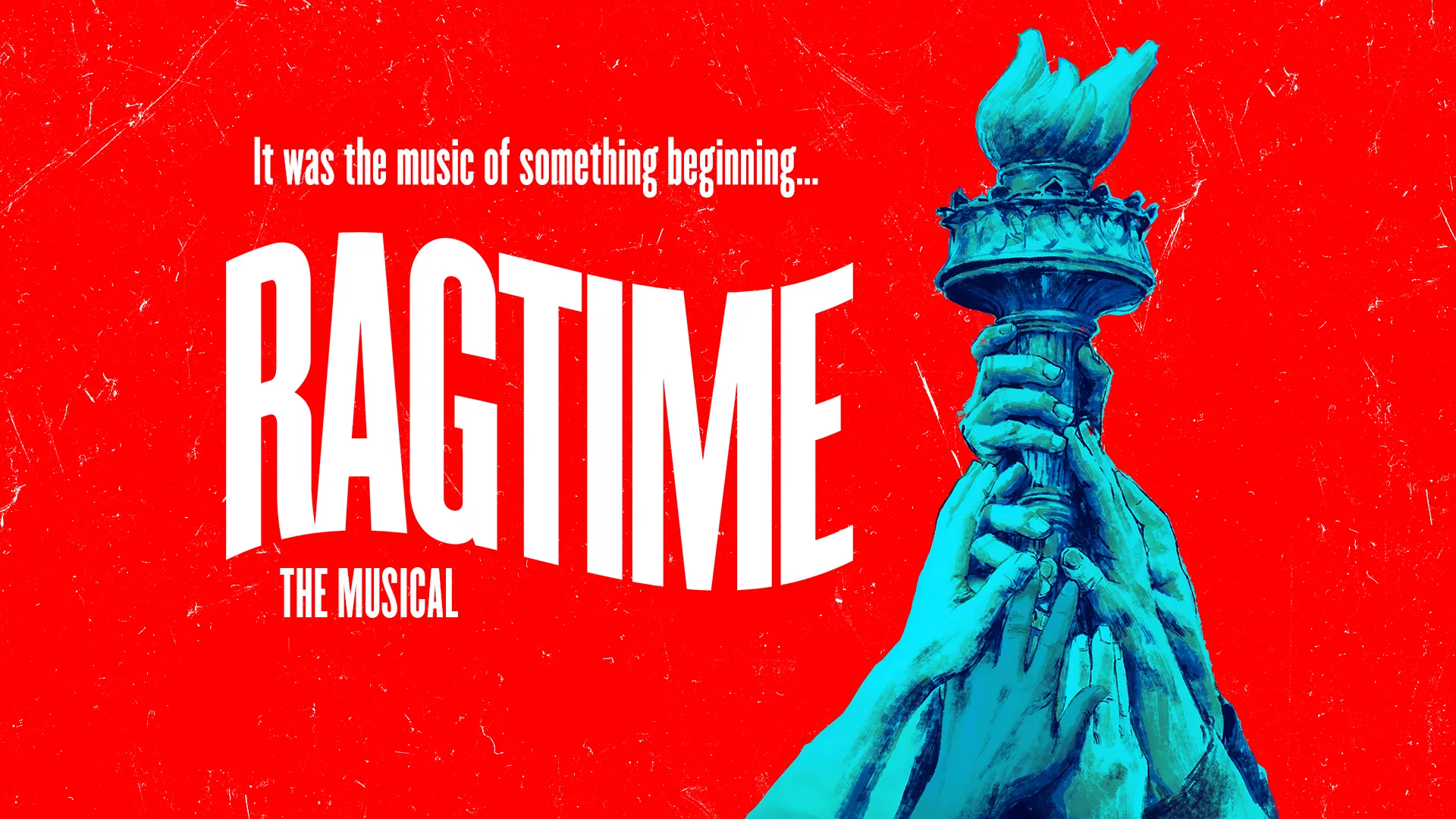
Some revivals remind us why a show matters. Ragtime, in Lear deBessonet’s breathtaking Broadway production at Lincoln Center Theater, reminds us why America matters — and why the question at its heart still haunts us: What is the status of our American Dream?
From the first haunting notes of Stephen Flaherty’s score, played by a lush 28-piece orchestra, this Ragtime feels less like a period piece and more like a living, breathing portrait of who we are now. It’s 1906, but it could be today — a nation struggling to reconcile privilege and poverty, hope and hate, compassion and cruelty. DeBessonet doesn’t so much direct the show as conduct its heartbeat, crafting an evening that is both epic in scale and intimate in emotion.
At its core, three families collide: the wealthy white household in New Rochelle, headed by the elegant, restless Mother (Caissie Levy); the immigrant dreamer Tateh (Brandon Uranowitz) and his daughter, newly arrived from Latvia with nothing but faith; and Coalhouse Walker Jr. (Joshua Henry), a proud Black musician determined to carve out his slice of dignity and joy. Their stories entwine and combust in ways that feel mythic — and, heartbreakingly, modern.
Joshua Henry delivers one of the defining performances of the decade. His Coalhouse burns with charisma, pride, and fury — a man who embodies the hope of a new century and the pain of a broken system. When he sings “Wheels of a Dream,” time seems to stop. The audience barely breathes. His voice doesn’t just fill the Beaumont; it fills your chest, your conscience. This is theatre that doesn’t ask for applause — it demands witness.
Opposite him, Caissie Levy gives Mother a radiant stillness that builds into steel. When her husband returns from his expedition to find her transformed, she refuses to retreat into silence or submission. Levy’s delivery of the line, “I had hoped to find you a kinder one,” lands like a quiet earthquake — the death knell of blind obedience and the birth of a woman with moral clarity. It’s a feminist awakening told not through slogans, but through silence, restraint, and resolve.
And then there’s Brandon Uranowitz’s Tateh — the beating heart of the immigrant story. With humor, warmth, and vulnerability, Uranowitz captures a father’s desperation and devotion as he clings to his daughter in a new land that promises everything and delivers nothing. His scenes, though grounded in early 20th-century struggle, are heartbreakingly resonant in an age when immigration remains one of America’s most divisive debates.
DeBessonet’s production succeeds where lesser revivals have failed because it never loses sight of the people behind the history. Her gift, honed through years of populist storytelling with the Public Theater’s Public Works program, is making the grand personal. Even on the vast Beaumont stage, every gesture feels human-scaled, every chorus infused with specificity and truth.
Visually, it’s a feast. David Korins’ elegant set design, all soft creams and crisp lines, evokes a world of privilege so pristine it feels untouchable — until the chaos of reality shatters it. Linda Cho’s costumes tell their own story: starched collars, tattered shawls, and, eventually, clothes that blur the lines between classes as these worlds collide. Under James Moore’s music direction, the orchestra swells and breathes like a second cast — lush, alive, and unrelenting.
Yet what truly elevates this Ragtime is its sense of urgency. DeBessonet knows we’re not watching history — we’re confronting it. Every moment of racism, every act of kindness, every dream deferred carries a sting of recognition. When Emma Goldman, played with delicious bite by Shaina Taub, rails against capitalist greed, you can feel the audience nodding. When Coalhouse’s car is desecrated, a hush falls — the kind of silence that says, we’ve seen this before, and we’re still seeing it now.
Even the finale resists easy comfort. The word “dream” closes the show, but the faces of the cast — solemn, searching — undercut the optimism. The dream doesn’t soar; it lingers, uncertain, suspended in the air. The audience leaves the theater not on a note of triumph, but of challenge. What will we do with the dream now?
In an age when cynicism too often drowns out hope, Ragtime stands as an act of faith — in art, in empathy, in possibility. It’s grand, yes, but never hollow. It’s patriotic, but not naïve. It is, in every sense, the revival we need right now.
Verdict: Five Stars. Dazzling, devastating, and deeply humane — Ragtime reclaims its place as the great American musical about who we were, who we are, and who we might still become.
‘Ragtime’ on ‘The Late Show’
Rob Shuter is a celebrity journalist, talk-show host, and former publicist who has represented stars including Jennifer Lopez, Alicia Keys, Kate Spade, Diddy, Jon Bon Jovi, Tyra Banks, Naomi Campbell, Jessica Simpson, and HRH Princess Michael of Kent. He is the author of The 4 Word Answer, a bestselling self-help book blending Hollywood stories with personal breakthroughs. Rob hosts Naughty But Nice with Rob, a top 20 iTunes podcast, and was the only entertainment columnist at The Huffington Post. A veteran of PR and magazines, he also helmed OK! Magazine. Read his latest exclusives at robshuter.substack.com