

If you’ve ever stared at the ceiling post-hookup wondering why your brain suddenly rebooted like a freshly updated phone, welcome — you’ve just experienced the cultural phenomenon known as post-nut clarity. It’s the moment when desire drains, the fog lifts, and your deepest truths — or at least your to-do list — come into high definition. And while the memes are loud, the science behind the post-orgasm brain is actually fascinating, surprisingly complex, and refreshingly sex-positive.
RELATED: Gay Anal Positions That Hit the Spot Every Time

Where the term came from — and why everyone is talking about it
The phrase “post-nut clarity” didn’t just appear out of thin air; it was popularized by Alex Cooper and Sofia Franklyn on their Call Her Daddy podcast back in 2018. They described it as the instant after orgasm when a guy’s “entire life flashes before his eyes and everything becomes crystal clear.” Since then, it’s become a staple of internet vernacular across dating apps, queer group chats, and social media confessionals.
But despite becoming a cultural shorthand, experts agree: there’s no formal body of research studying “post-nut clarity” as a clinical phenomenon. That doesn’t mean it’s fake — it simply means sexual neuroscience is still catching up.

Your brain during sex: limbic system takeover
Before orgasm, your brain is operating less like a CEO and more like a game show contestant on adrenaline. According to urologists interviewed by Men’s Health, MRI studies show heightened activity in the limbic system, the emotional center tied to memory, fear, aggression, desire, and reward. This is why sex can make us impulsive, bold, or occasionally questionable decision-makers. You’re being steered by instinct, not logic.
As one urologist explained, this emotional overdrive helps explain why people “act quite emotionally or even irrationally during the pursuit of sex.” The brain is wired for pleasure, not prudence, in the heat of the moment.
The hormone cocktail behind the clarity
During orgasm, your brain releases a chemical fireworks show:
-
Dopamine, the reward neurotransmitter, surges
-
Oxytocin, the bonding hormone, floods the system
-
Endorphins add to the bliss
-
Then prolactin spikes, helping trigger the refractory period
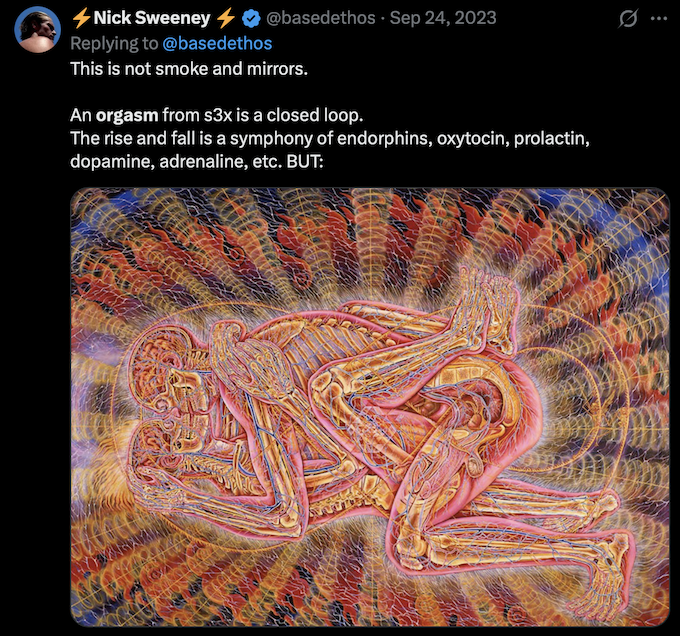
This hormonal rhythm explains why sex can be both euphoric and sobering. Once dopamine drops and prolactin rises, you return to baseline — which some people interpret as “clarity.”
One urologist put it simply: orgasms activate “dozens of regions in the brain,” and while the full picture is still unknown, the dopamine-prolactin shift is likely a major contributor.
The prefrontal cortex finally clocks back in
Dr. Rena Malik, a urologist and sex educator, explains it best: the prefrontal cortex — your brain’s decision-maker — gets less blood flow during sex. That’s why your impulses win.
After orgasm, blood returns to this region, rebooting your executive functioning. As she explains, “you’re not really thinking clearly during ejaculation,” but as soon as the PFC comes back online, the lightbulb moment happens.

Post-nut clarity vs. post-nut syndrome
According to the Austin Urology Institute, what we call “post-nut clarity” is not the same as post-nut syndrome, though both occur post-orgasm.
-
Post-nut clarity tends to manifest as guilt or self-reflection, especially if the sexual context triggers discomfort — a hookup with an ex, cheating, porn shame, etc.
-
Post-nut syndrome, however, encompasses a range of emotional reactions: sadness, crying, euphoria, irritability, or emotional overwhelm.
If these feelings repeatedly affect relationships or self-esteem, experts recommend speaking to a therapist to explore underlying patterns — a reminder that sex, pleasure, and emotion are deeply intertwined.
Not everyone gets it — and that’s normal
Despite the memes, not every guy, queer person, or non-binary babe experiences post-nut clarity. Some people feel energized and productive afterwards; others just want to pass out. As one urologist noted:
“Every guy is different, so every post-orgasm ‘clarity’ can also be different — and every orgasm will not lead to clarity.”
In short: the experience is real, but individual.
Is post-nut clarity real? Probably — but it’s still a theory
Since scientific research isn’t definitive, the answer is: the phenomenon is believable, rooted in plausible neurochemistry, but not officially proven. Still, the emotional and mental shifts people report are valid and grounded in what we know about the sexual brain.
At the end of the day, post-nut clarity is simply another window into how beautifully complex — and sometimes chaotic — human sexuality can be.
And if your “post” moment leads you to revelations, ideas, or just a sudden urge to clean your room? Hey — that’s just your brain doing its thing.
REFERENCE: Men’s Health, Hims, Austin Urology Institute