


Having been a fan of the Texas based punk band The Butthole Surfers once I heard them first in ’86, and several shows over the years, they are one of the most entertaining, and intelligent bands of all time. I was given the opportunity to speak to the drummer King Coffey, who found himself in the punk culture as it was figuring out where our LGBTQ brothers and sisters are going to sit. He corresponded with Bob Mould (Guitar God) and was able to come out and THRIVE as the culture grew.
With a singer just short of 7 feet tall, albums titled Electric Larryland or Hairway To Steven, lots of psychedelics, and legendary stage antics, The Butthole Surfers had all the weird you could imagine throughout their history and music.
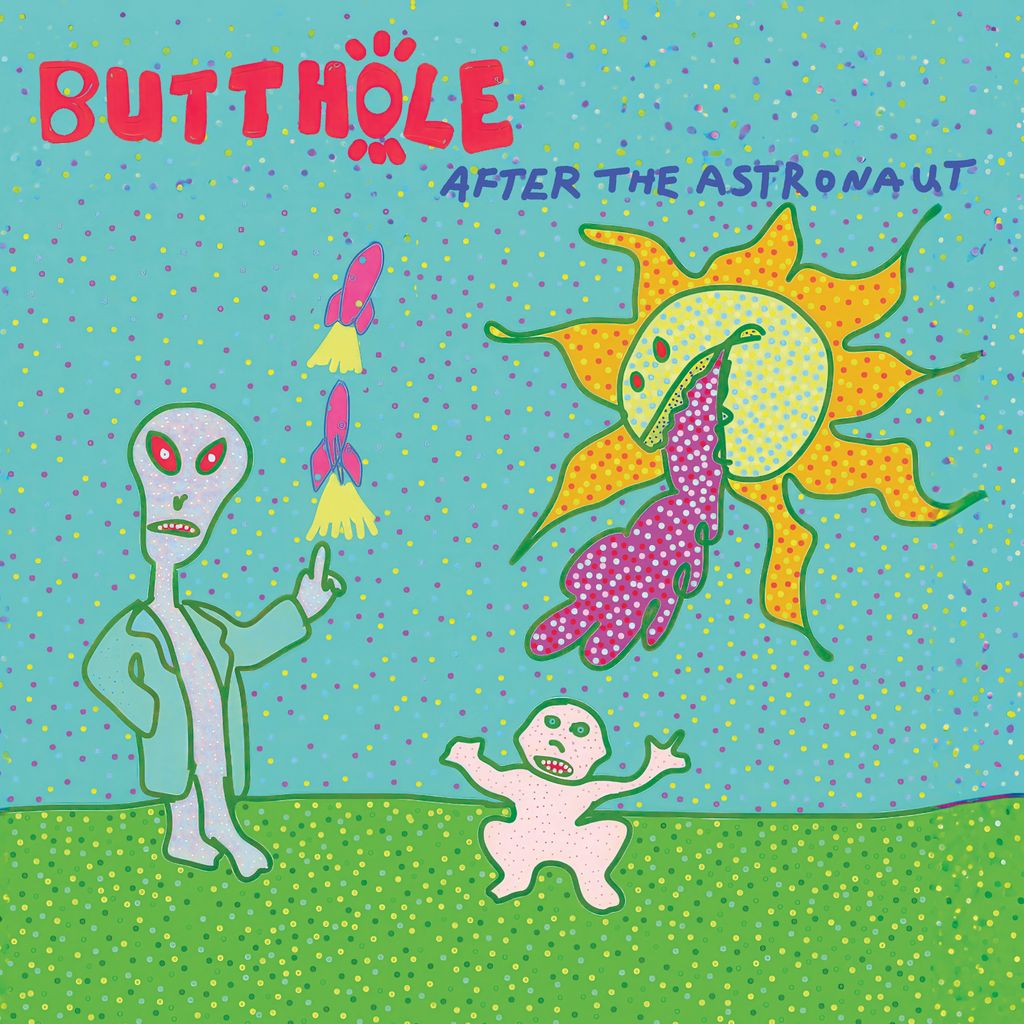
The Butthole Surfers are releasing the album we were supposed to get in the late ’90s. The release of After The Astronaut is scheduled for June 26th.
I was told what an absolute sweetheart King Coffey is, and that I was really gonna like the guy. That was true as he is one of the nicest, most genuine, sweet dudes I have ever spoken to. I am not going to lie, he made me cry in the interview, and I am not ashamed to say that. The following interview has had several tangents removed (Though so many funny stories). The album is fantastic, and I hope you all get a listen.
King Coffey Interview
Jeremy: Hey King thank you so much for taking the time to talk I’ve been a longtime fan since 1986. It was an honor to hear the original version of the new record with no label interference.
King Coffey: Yeah, it’s the record we meant to release before everything went crazy. It was the album we wanted to make. But we ran into problems with management and Capitol Records refused to release it—not because of the music, but because we were a mess as a band. They didn’t want to deal with us, which I understand. But they also refused to let us out of our contract. They owned the album but wouldn’t release it, and they wouldn’t let us release anything new either. We were trapped.
Hollywood Records eventually bought us out, but they didn’t want to release the album as it was. They didn’t hear any hits. They spent money to get us off the contract and wanted some return, so they asked the Butthole Surfers to come up with hits. That was a fool’s mission. They took out some of the cooler songs and added tracks, including one co-written by Kid Rock. And it all went downhill from there.
Jeremy: That video for the jet fighter pilot song that came out recently feels strangely current in the weirdest Butthole Surfers kind of way.
King Coffey: Some friends made that for about a hundred bucks and did a great job. As for the timing, I think about Weird Revolution, the album that After the Astronaut morphed into. It came out on September 11th with exploding planes on the cover and a single with an Arabic chorus. We were bad news in the worst possible way. If we hadn’t re-released this album, we wouldn’t be in Iran right now—it’s all our fault.
Jeremy: I learned a long time ago not to take the Butthole Surfers at face value and just dive in. You’re goofy, funny, noisy, and psychedelic, but on the whole you’re one of the most intellectual bands out there. Gibby is one of the best lyricists ever.
King Coffey: Don’t tell the band that. I joined in ’83 as a huge fan, and I’ve always kind of felt like the new guy even though I’ve been on every record since. Gibby and Paul are fucking geniuses. They met at art school—they can talk about Franz Kline while lighting their farts on fire. It’s an odd mix of punk rock in Texas and loving challenging art. Paul is a brilliant musician. Gibby can do anything he applies himself to. He’s incredibly funny. I’ve basically been a fanboy in the band since ’83.
Jeremy: I first heard of you guys, playing in DC in 86, and they wouldn’t let you use your real band name, then a DJ drove past the venue and said on the radio “Tonight and one night only “The Anal Crevices”.
King Coffey: I don’t remember the exact “anal crevices” story, but we battled that kind of thing from the beginning. When I joined at 17, I told my mom, “Good news and bad news. I joined my favorite band. The bad news is they’re called the Butthole Surfers.” She said, “I don’t care what you do, just don’t ask me for money.” We both held up our end of the bargain for forty years.
Jeremy: How did it feel when you started getting radio play and success?
King Coffey: It was exciting. On our first tour I called a college radio station in Seattle just to hear our song on the air. It felt validating. We started playing to ten or fifteen people and slowly built up. Even living in a van with no money and no prospects, we saw gradual growth every year, and that kept us going. Then it got ridiculous—Lollapalooza, major labels, MTV. At first it was fun. But once you have a hit on a major label, they expect more hits. We tried to be good company men, but we weren’t built for it.
King Coffey: After the Astronaut was us going back to our Locust Abortion Technician roots—farting around, playing with sounds and samplers. It was an art record. One of my favorite songs is “I Don’t Have a Problem With It,” inspired by the band Scanner, who would pick up random cell phone conversations. I started doing the same thing in Austin. You’d only hear one side, but it was fascinating. Everyone was either sad or horny. It was just life.
Here is one song you probably heard, if you were alive in the 90s.
Jeremy: Tell me about Junkie Jenny in Gaytown.
King Coffey: I’m pretty sure the vocal on that is Hindi, taken from a Bollywood soundtrack. We just claimed it as ours.
Jeremy: You guys were an absolute force live.
King Coffey: That era was really fun. We played constantly. Even with days off we’d get antsy and look for a place to jam. Our instincts were so dialed in—we had this collective hive mind. We could lock into any groove and flow from one thing to another. It took years to get there, but it was incredibly gratifying.
Paul and Jeff were already skilled musicians before punk. Gibby and I discovered punk and figured we could do anything. They patiently dragged us along on the weird time changes. On Independent Worm Saloon with John Paul Jones, we had so many hard-hitting songs with weird changes that my wrist literally blew out halfway through tracking.
Jeremy: When did you come out as gay?
King Coffey: I knew I was gay when I was 13 in Fort Worth, Texas in the 1970s. That was terrifying. I told close friends and my parents in high school. I was in a high school punk band called the Hugh Beaumont Experience with another gay guy. We didn’t give a fuck. Our flyers had Leathermen in bondage. It felt punk rock.
In the Austin scene, many of the key singers were gay—Gary Floyd of the Dicks, Biscuit of the Big Boys. The scene had a lot of gay and lesbian people, so I felt at home. But this was the ’80s when AIDS was exploding. I was terrified and barely having sex. It wasn’t until 1992, when I met my future husband Craig, that I started openly telling people, “This is my boyfriend.” It was a gradual process that took years.
Jeremy: Did you find acceptance in the punk world while touring?
King Coffey: Yes, because so many of us were gay. Teresa was a lesbian, so I had a sister in crime in the band. Being a Butthole Surfer already made you an outsider, so being gay was the least of our concerns.
Jeremy: Tell me about Craig.
King Coffey: We were together for 33 years. When he was diagnosed with early dementia at 42, everything changed. It was a long, slow goodbye—ten years from the first signs to the end. He died at the end of 2024.
Dementia is insidious. There’s no treatment, no drugs. You just do your best to make the person happy while trying to hold yourself together. It’s a very long, painful farewell.
When he got sick, I realized I needed every legal protection possible to take care of him. We went to New Mexico to get married because Texas wouldn’t recognize it at the time. Even after that, we weren’t considered married under Texas law until the Supreme Court ruling. Craig was so happy—he would take pictures of the marriage license and his ring and post them on Facebook, even as language started to fail him. Seeing him proud of that meant everything to me.
It was heavy, beautiful, and devastating. I was grateful I could be his caregiver through all of it. Losing someone to dementia is losing them piece by piece while they’re still here. But I would do it all over again.
Jeremy: What would you say to a young gay kid in the closet who’s struggling?
King Coffey: Love yourself. You’re amazing—you’re better than 99% of the people out there. Get the fuck out of whatever small town you’re in. Move to a bigger place, make better friends. Listen to loud horrible music or classical, whatever makes you happy. Fuck all the haters. Be yourself. Leave town. Discover yourself.
Life is so fucking good. Being alive is a freak of nature. None of this should have happened, yet here we are—able to enjoy art, good food, great beer, sex, love, and making things. Being dead seems incredibly boring. I’ve never been suicidal because I want to keep exploring. My goal is to live to 200.
Jeremy: Are you guys planning to tour again?
King Coffey: I never say never, but it’s a lot of work. Paul is finally happy in his life, and going on tour would make him unhappy. We don’t want to mess with that. But if a really good offer comes up… who knows?
Jeremy: Thank you, King. This has been an incredible conversation.
King Coffey: Thank you, man. Pleasure to talk to you.