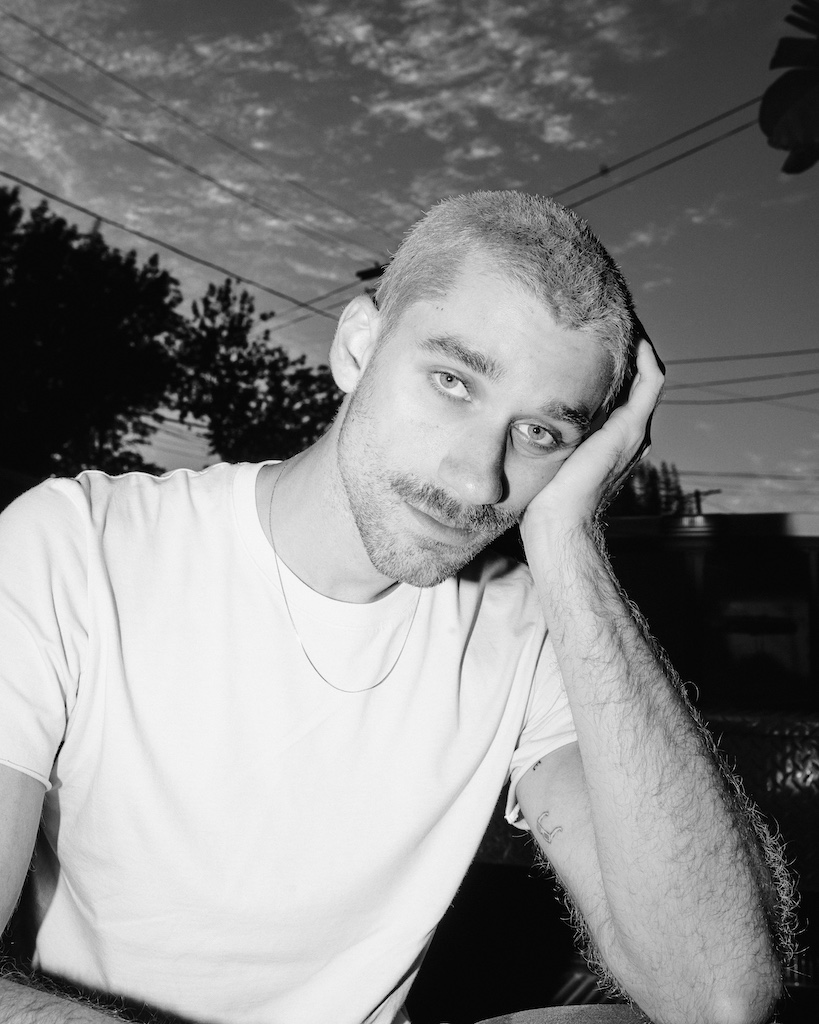
Avid supporter of the LGBTQ community, GONZO music journalist behind "The Zion Curtain" in Utah. His favourite SCI FI is DUNE,
Type-A embarrassingly straight dude, should be considered armed and dan...
Tutafarel is a queer Brazilian (LA based) electropop heart-throb with the attitude of early-2000s Peaches, the seductiveness of Nelly Furtado, the softness of PinkPantheress, and the emotional depth of Frank Ocean.
He’s releasing his new album “Monte Casanova” on December 5th. We at Instinct were given the exclusive opportunity to get to know Tutafarel and share the single “Sky Won’t Break” which gives us all the sultry vocals you can handle.
Credit: Melanie Sanchez
Tutafarel, pronounced [ˌtuː.tɑː.fəˈrɛl], is the creative alias of Brazilian-born and Los Angeles-based multidisciplinary artist Raphael Rosalen. Last month, he shared “Pineapple Diesel,” a seductive, hypnotic, and moody track inspired by the details of Rosalen’s real life experiences in Los Angeles.
We wanted to catch up with him and learn more about his “Sky Won’t Break”, so here’s our quick Q&A with Tutafarel.
Instinct: When you began writing this album, did you already envision it as part of a larger multimedia project, including the accompanying book and TikTok series? What does the world of Monte Casanova represent for you?
Tutafarel: When I first started writing the album, I didn’t yet imagine it as a full multimedia project. I just knew I didn’t want to release a record that felt like a random mix of songs. Once I found the sound of the album, I started thinking about the story behind it. And that’s when I wrote a short manifesto about a character who became Monte Casanova. From there, the whole universe began to take shape.
I finished the album while I was recovering from a scooter accident and was stuck in bed for a couple of months, so the project became the place where I put everything I was feeling. The world of Monte Casanova represents a kind of reset for me. A reminder that you can find joy and calm even when life feels completely out of control. Even when the world feels like it’s falling apart.
You’ve described “Sky Won’t Break” as one of the most vulnerable songs on the album. How do you navigate the balance between the fun and sensual elements of your work and the more intimate, emotionally raw moments?
I’m a very emotion-driven person, basically a textbook Pisces, so the intimate side of me is always present when I’m creating. I don’t think I can even separate the fun and sensual parts of my work from the vulnerable ones, because to me they’re two halves of the same thing. You can’t have a joyful, sensual moment if you’re disconnected from what’s happening inside you.
The messy, confusing parts of being human are what make the lighter moments feel real. I think of it like a yin-yang situation: the confidence and the softness coexist, and together they make the world of the album feel whole.
Much of your work unapologetically explores themes of identity — what does it mean to you to share parts of who you are in this album?
For a long time, I was afraid to show all sides of myself. Some of that comes from growing up as a gay kid in a small conservative town in Brazil. Some of it comes from religion and from the feeling of constant surveillance that social media creates. I spent years worrying about how I was being perceived and trying to present only the acceptable version of myself.
Writing this album forced me to sit still and turn inward in a way I had not done before. I realized I cannot control how people see me. I only lose if I’m living for someone else’s expectations. Once I let all of that go, I found a kind of freedom. The fun and sensual parts of me, the emotional and vulnerable parts, and the messy and uncertain parts all deserve to exist together.
So sharing pieces of my identity in this album feels like choosing honesty over fear. It feels like accepting myself fully, not only the polished parts we put online. And I hope that honesty gives other people permission to do the same.