

USA Rugby has introduced a significant update to its eligibility rules, restricting participation in the Women’s Division to individuals assigned female at birth and creating a new Open Division category.
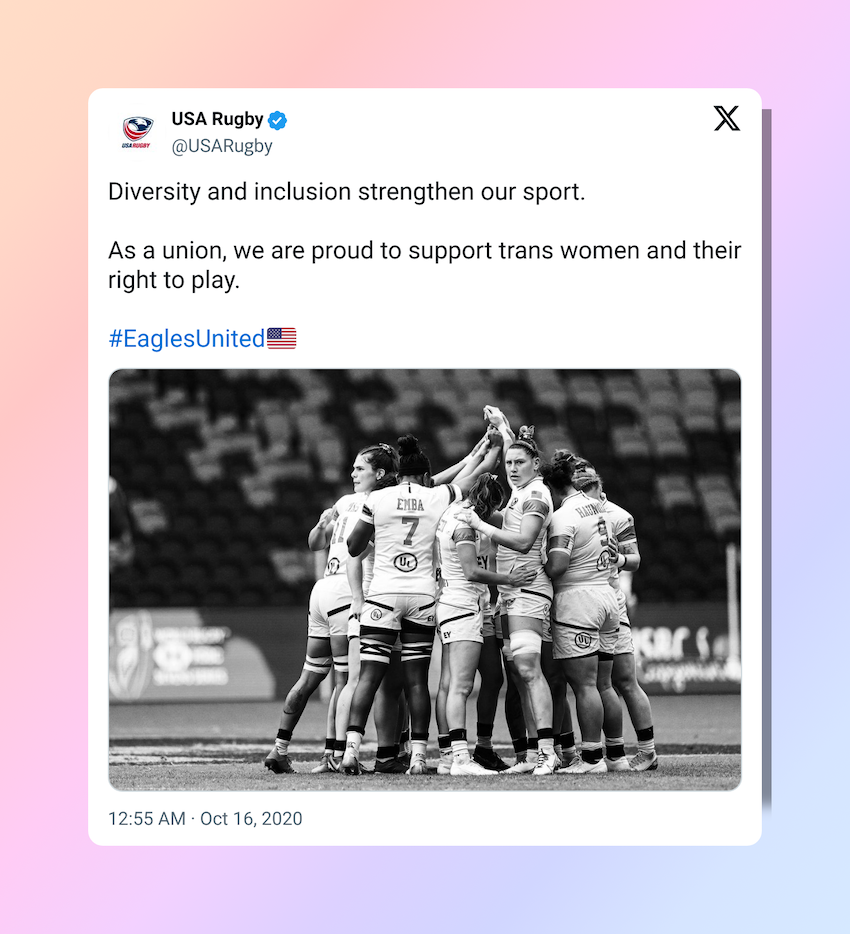
The policy took effect on February 20, 2026, and applies to all USA Rugby–sanctioned competitions. Back in 2020, the USA Rugby socials showed support for Trans athletes, specifically women, and their “right to play.”
Under the new structure, three divisions are recognized:
-
Men’s Division
-
Women’s Division
-
Open Division
The Women’s Division is now limited to athletes assigned female at birth. The Open Division, meanwhile, allows participation from athletes “regardless of gender assigned at birth and gender identity,” including full-contact and non-contact formats.
For LGBTQ+ players — particularly transgender and nonbinary athletes — the shift marks a clear structural change in how competitive placement is determined at the national level.
RELATED: Kansas Tells Trans Residents to Surrender Driver’s License Under New Law
Why the Change Happened
USA Rugby says the revision was required in response to Executive Order 14201 and direction from the United States Olympic & Paralympic Committee (USOPC).
In a public statement, the organization said:
“In response to the United States Administration’s issuance of Executive Order 14201, which the United States Olympic and Paralympic Committee has determined applies to all National Governing Bodies (NGBs), USA Rugby is required to comply and update the terms that identify eligibility for gender categories.”

USA Rugby added that failure to comply could result in sanctions from the USOPC, including the possible loss of National Governing Body status.
“Accordingly, the updated policy will apply to all USA Rugby-sanctioned competitions.”
The governing body stated that the final version of the policy was reviewed and approved by the USOPC.
SUGGESTED: 9 Best LiveJasmin Alternatives: Top Sites Like LiveJasmin for Gay Men
What the Divisions Now Allow
Under the updated framework:
-
The Men’s Division is open to athletes registered as male.
-
The Women’s Division is limited to individuals assigned female at birth.
-
The Open Division allows any athlete to compete, regardless of sex assigned at birth or gender identity.
Open Division events require review and are approved on a tournament-by-tournament basis.

USA Rugby also cited language from the USOPC’s NGB Athlete Safety Policy, which emphasizes protecting opportunities for athletes and ensuring a “fair and safe competition environment” consistent with federal law.
Recognizing Community Impact
In its statement, USA Rugby acknowledged the impact the change may have:
“While USA Rugby meets the requirements set forth by the Administration and the USOPC, we recognize this change has a meaningful impact on members of our community and may conflict with values of our game.”
The organization added:
“We understand that some athletes, teams, and clubs will be directly affected.”
For transgender women who previously competed in the Women’s Division under earlier guidelines, the policy represents a definitive eligibility shift. Nonbinary athletes may now find themselves navigating placement decisions within the Open category.
USA Rugby stated that it explored available options prior to implementation and emphasized that personal data collected during registration would remain confidential and handled in accordance with privacy laws.
A Departure From Previous Policy
Until now, USA Rugby followed the 2015 transgender participation framework established by the International Olympic Committee. That guidance allowed transgender women to compete in women’s competition if they met specific testosterone and declaration requirements.
Those standards have now been replaced in full.
What Comes Next
The update places USA Rugby among governing bodies adjusting policies in response to federal directives and USOPC compliance requirements.
For LGBTQ+ athletes and allies within the rugby community, the conversation is likely far from over. The introduction of an Open Division creates a new pathway for participation, but it also reshapes where and how transgender players can compete.
As the 2026 season unfolds, clubs, players, and advocates will be watching closely to see how the policy functions in practice — and how inclusive the sport remains at every level of play.
As a guy who used to play rugby (I still have the wounds), I support anyone wanting to get out there and get their asses kicked and have a good time. Gender identity doesn’t matter, and shouldn’t, we are all out there to donate blood and have a good time. Banning trans athletes like this is ridiculous.