


Gen Z is, understandably, having a tough time dating. Between job market frustrations, soaring living costs, and the all-too-familiar “why is rent so high?” refrain, it seems like love has taken a backseat. But as we often do in the queer community, we’ve found ways to hustle — sometimes even using our love lives as a financial strategy. Enter the world of dating apps, where romantic interests might just be another avenue for career networking, financial security, or a leg up in the social game.
RELATED: Affordable HIV Protection Arrives: Why Lenacapavir Is a Game-Changer

But Grindr CEO George Arison isn’t buying this narrative. “We have no challenge with young people on the app,” he told Fortune in an exclusive interview. “Like, it’s in no way a concern.”
Instead, Arison points to a bigger problem: the rising monetization of dating apps. Over the past decade, many dating platforms have shifted from offering a free (or almost-free) experience to one that requires users to pay for basic features—like sending an unlimited number of messages. But Arison’s Grindr hasn’t followed suit, and he’s not exactly thrilled by the direction the rest of the industry has gone.
“The other products have become so impossible to use if you want to use them as a free product, because they’re just over-monetized,” Arison says. “Now, if you don’t pay, and you’re male, the apps are basically not usable. And even as a woman, yes, you can do more things in the app without paying, but you’re still very limited.”
It’s a brutal critique of an industry that’s become synonymous with paywalls and premium subscriptions. But Grindr, as Arison sees it, isn’t about keeping you from sliding into those DMs — the free version of the app, he argues, remains “extremely robust.”
RELATED: Caught Cruising at Penn Station: Amtrak’s Pride Month Controversy
And it’s not that young people don’t want to spend money on dating, it’s that, well, why would they? Especially when Instagram (and even LinkedIn, apparently) offer a perfectly viable alternative for meeting people — and for free.
“People don’t want to spend money when they don’t have to,” Arison points out. “When you’re younger and you don’t have money, obviously it’s even more so. It’s not about, hey, I don’t see value in it. I don’t need it because I have alternative ways to get the same outcome.”
Fair enough. But if you’ve ever tried getting attention in a dating app inbox, you’ll know that the competition is fierce. And for Gen Z, the idea of using an app with a paywall when you’re already working on a side hustle to afford rent might feel… a little much.
Gen Z is Dating Up. Like, Way Up
So, what’s a queer Gen Z-er to do? Well, according to the latest TikTok dating tips and a few provocative studies, Gen Z has turned the concept of “dating up” into an art form.
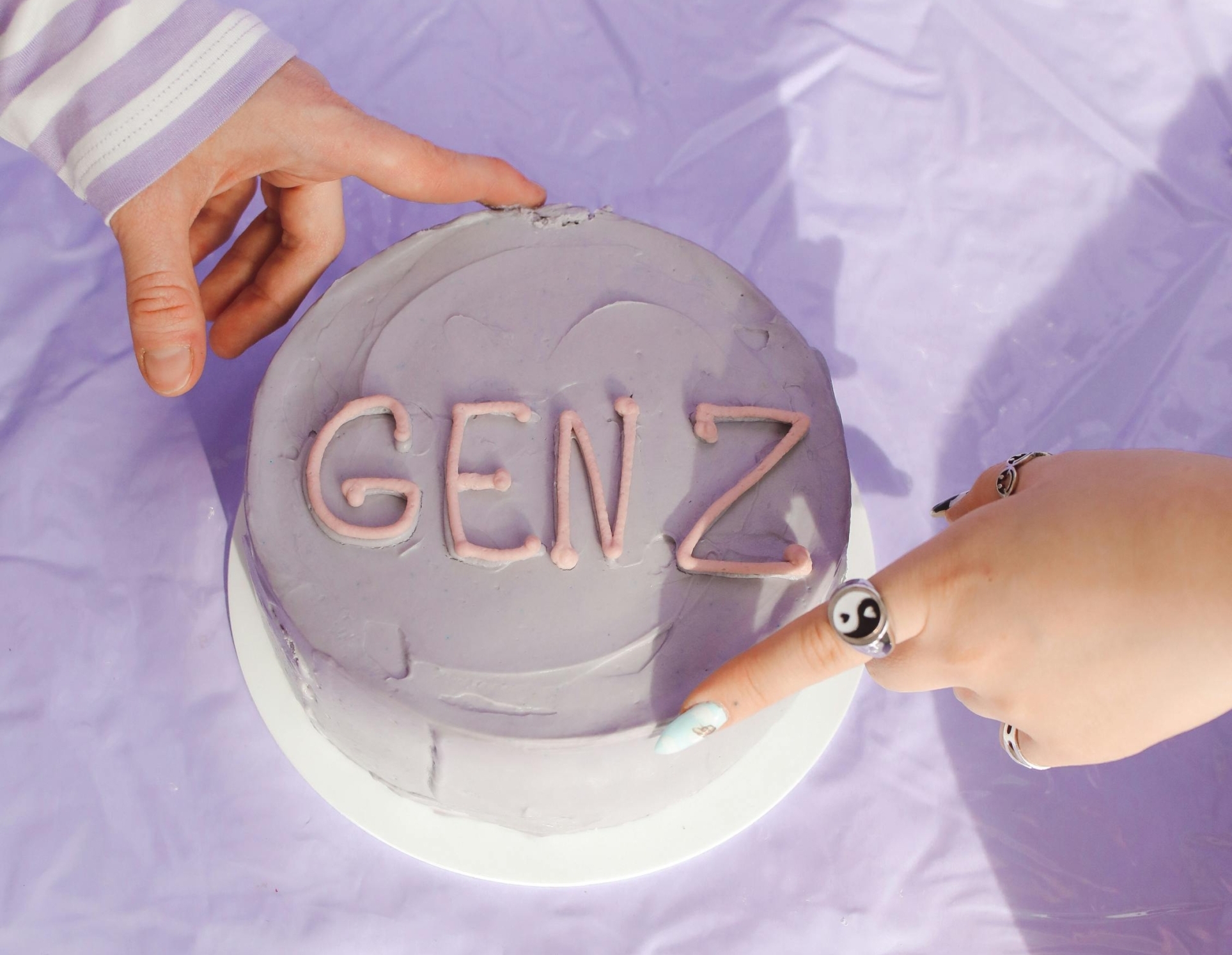
“People are dating 25% more desirable partners than they are,” one study concluded, with the most fashionable among us openly declaring the rise of “throning”—dating only those “better” than you. (Picturing a RuPaul’s Drag Race judging panel, but in real life, yeah?) And in the queer community, those age gaps we used to whisper about? They’re now very much out in the open.
Arison acknowledges this. “In the gay world, it’s completely normal,” he says. “A ten-year-plus age gap is also much more common. It happens all the time, we’ve all had those experiences.”
It’s a reality for many of us, especially given the complex history of LGBTQ+ relationships. “It’s driven by everyone before being in the closet,” Arison explains. “We kind of had to stick together because we all knew the rules of the game. And so we had to help each other because no one was helping us otherwise.”

And let’s not forget how queer spaces were often refuges for mentorship and community-building long before apps like Grindr came along. Arison himself, a former shy graduate from the Soviet Union, credits older gay men with guiding him when he arrived in the U.S. “Grindr did not exist when I was young,” he recalls. “When I finished college and I got to DC at 22, Manhunt was the primary way in which I figured out what it was like to be gay.”
For context, Manhunt (for those who don’t remember) was a telephone service that evolved into a website in the early 2000s, well before Grindr was even a twinkle in its founders’ eyes. Yet despite the flashy apps and immediate matches of today, Arison says the dynamic of mentorship and intergenerational connection remains central to gay dating culture — a core principle of the LGBTQ+ community.
Is Dating App Culture Making Us More Lonely?
But if dating apps are free and “robust,” why does the dating scene still feel a little, well, bleak?
A simple explanation: maybe we’re just doing it wrong. Are we expecting too much from dating apps, hoping that a few swipes will result in a meaningful connection? While Grindr remains an essential platform for countless users, there’s no denying the loneliness that can often permeate these apps, where profiles are often reduced to a handful of photos and a one-liner.
“We’ve all had those experiences” of using a dating app and feeling disconnected, Arison says, acknowledging that while Grindr can help people meet, it’s the work we do offline — whether it’s building real friendships or engaging in genuine emotional labor — that creates those meaningful relationships.
Still, it’s hard to argue with the fact that many people are using these platforms less for love and more for, well, anything else. And in a world where so much of our identity is commodified — from our personalities to our privacy — the question becomes: what happens to romance when it becomes just another product we need to buy?

At least for now, Arison’s vision for Grindr is clear: keep it free, keep it accessible, and (maybe most importantly) keep it real. And maybe, just maybe, Gen Z will find a way to date without sacrificing what little cash they have left. Or at the very least, find someone who understands what it’s like to try.
Source: Fortune
What the F did I just read?
This clown CEO runs an app that stops you at nearly every action with stupid game ads that never end, paywall blocks everywhere and a sharply decline in a quality experience on that crap app.
Has he never used that pos? What a naive, blind take on the state of apps and dating.
This from an app that has a market valuation of 2.9 BILLION dollars.
Who is f’ing who here – it isn’t the guys on that app.