


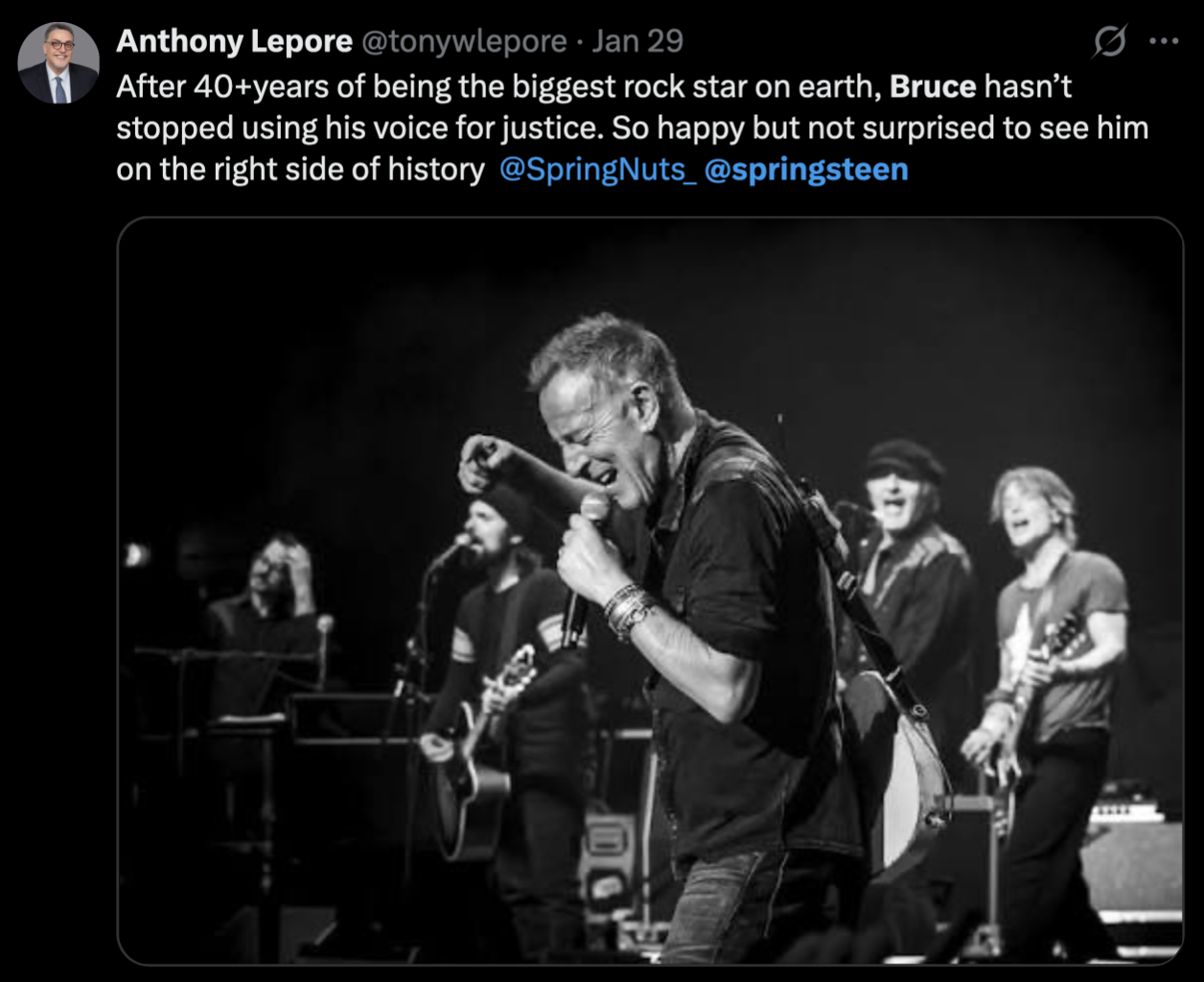
Bruce Springsteen has never been subtle about where he stands. But with the release of his new protest song, Streets of Minneapolis, the rock icon delivers one of his most immediate, urgent, and emotionally direct responses yet to state violence and political power.
Released on Wednesday, the track is a blistering condemnation of federal immigration enforcement—specifically ICE, which Springsteen refers to as “King Trump’s private army,” in his song. Written and recorded in a matter of days, the song responds directly to the killing of Alex Pretti, an ICU nurse at the Minneapolis VA who was shot and killed by federal immigration agents.
Springsteen didn’t wait for distance or reflection. He acted in real time.
Written in the Aftermath of Loss
According to Springsteen, “Streets of Minneapolis” was written on Saturday—immediately following Pretti’s death—recorded the next day, and released without delay. The speed of the song’s creation is part of its power. This is not a retrospective protest anthem. It’s a raw response to grief unfolding in the present tense.
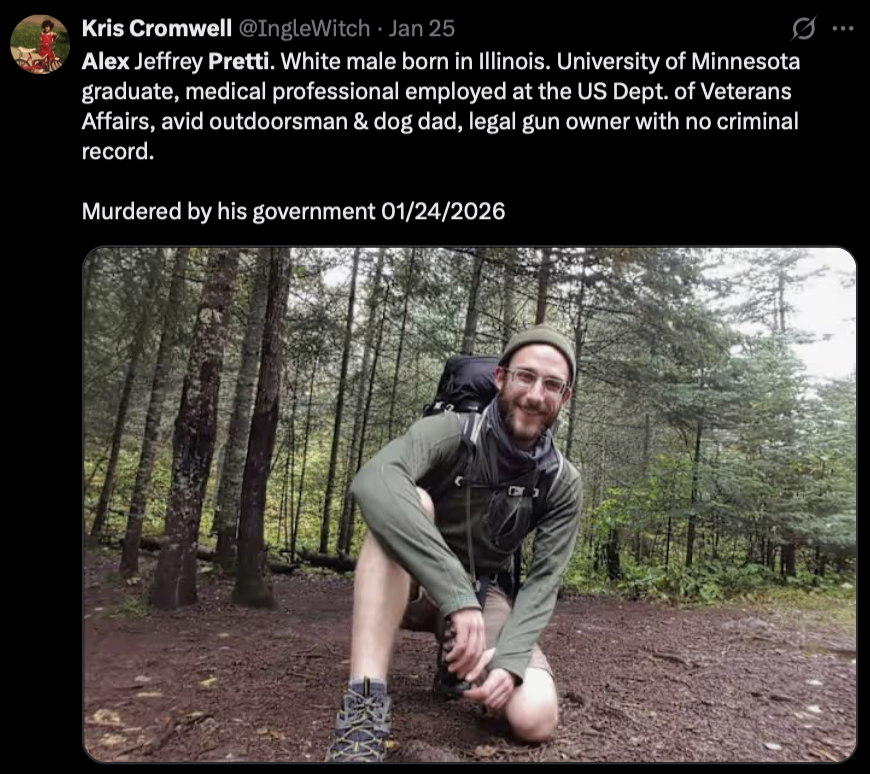
Pretti’s killing marked the second death in one month connected to federal immigration enforcement actions in Minneapolis. Just weeks earlier, on January 7, Renee Good, a poet and mother, was shot and killed in her car roughly a mile from where Pretti would later die.
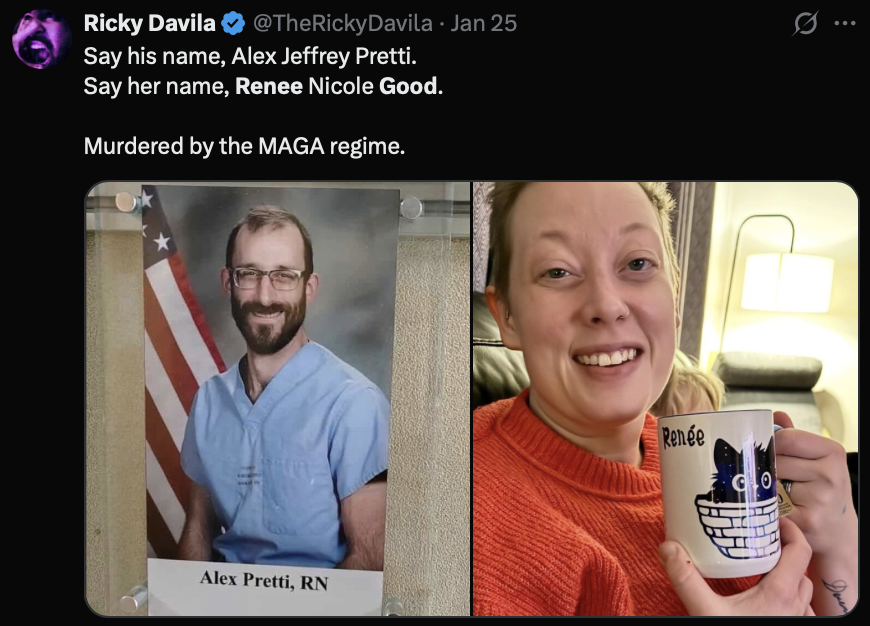
Springsteen names both victims directly in the song’s lyrics, grounding the music in real lives rather than abstractions.
“We’ll remember the names of those who died / On the streets of Minneapolis.”
RELATED: Dog Killer Noem Glorifies Murder of Woman Who Was Waving ICE Agents Along
Echoes of “Streets of Philadelphia”
The song’s title is no accident. “Streets of Minneapolis” deliberately echoes Springsteen’s 1993 Oscar-winning track “Streets of Philadelphia,” written for the film Philadelphia during the height of the AIDS crisis.
Bruce Springsteen turns 76 today. As a child of the Midwest, I’m not sure I can put into words what this man means to me. Bruce was & is a God where I grew up. He also owns an Oscar for Best Original Song for the film Philadelphia, blending my two favorite things: Bruce & film 🎂 pic.twitter.com/kEEqfJEczN
— Cinema Tweets (@CinemaTweets1) September 23, 2025
Then, Springsteen gave voice to a community abandoned by power. Now, decades later, he’s doing it again—this time for immigrants, healthcare workers, and civilians caught in what the article describes as a violent federal siege.
The parallel is striking: two cities, two crises, and the same moral throughline—human dignity matters, even when the state says otherwise. For LGBTQ+ audiences who remember Springsteen’s earlier activism, the connection feels especially resonant. It’s a reminder that protest music can age, evolve, and still matter.
Minneapolis Under Siege
The song’s release arrives amid massive resistance in Minnesota to an unprecedented federal immigration operation. According to reports, the deployment includes 3,000 federal agents and officers, making it the largest Department of Homeland Security operation ever conducted.
The operation has mobilized tens of thousands of protesters, drawn international attention, and generated widespread outrage through bystander videos documenting alleged brutality against both immigrants and American citizens.
Scenes from the Minneapolis anti-ICE protests set to the new Bruce Springsteen song called “Streets of Minneapolis” 🔥💪 pic.twitter.com/HB084xnzKT https://t.co/xJMfCOWNRa
— Wu Tang is for the Children (@WUTangKids) January 28, 2026
Local Democratic leaders have described the situation as a “military occupation,” a framing that has reportedly turned public opinion sharply against both ICE and the Trump administration.
President Trump has responded with escalation, declaring that “reckoning and retribution is coming” for Minnesota.
Symbols of Resistance
In Streets of Minneapolis, Springsteen also references everyday tools of resistance—the whistle and the phone—symbols used by civilians to warn communities and document encounters in response to what the song calls “dirty lies” from figures like Stephen Miller and Kristi Noem.
It’s a reminder that resistance isn’t always grand. Sometimes it’s a recording. A warning. A song.
A Dedication, Not a Performance
In an official statement posted to his website, Springsteen made his intentions unmistakably clear:
“I wrote this song on Saturday, recorded it yesterday and released it to you today in response to the state terror being visited on the city of Minneapolis. It’s dedicated to the people of Minneapolis, our innocent immigrant neighbors and in memory of Alex Pretti and Renee Good.
Stay free,
Bruce Springsteen”
This isn’t branding. It’s bearing witness.
@msnow Bruce Springsteen released a protest song “Streets of Minneapolis,” condemning the violence of Immigration and Customs Enforcement agents in Minneapolis. The song memorializes the lives of Renee Macklin Good and Alex Pretti, who were fatally shot by federal agents. Springsteen’s lyrics call out “King Trump” and his “federal thugs,” and promises to remember the events unfolding in the streets of Minneapolis this winter. Springsteen shared the following statement: “I wrote this song on Saturday, recorded it yesterday and released it to you today in response to the state terror being visited on the city of Minneapolis,” The Boss wrote on social media. “It’s dedicated to the people of Minneapolis, our innocent immigrant neighbors and in memory of Alex Pretti and Renee Good. Stay free.” #news
A Song That Resonated Immediately
As of January 30, 2026, Streets of Minneapolis has reached No. 1on the U.S. iTunes chart, signaling that the song’s message has struck a nerve far beyond Minnesota.
For a new generation discovering Springsteen—sometimes affectionately dubbed springteen fans online—this moment reaffirms why his voice still carries weight. He doesn’t just comment on history. He meets it head-on.
Why It Matters
Streets of Minneapolis reminds us that protest music can still move people, still name names, and still demand accountability. For LGBTQ+ communities—many of whom know what it means to be targeted, erased, or silenced—the song lands as both a warning and a call to solidarity.
Springsteen isn’t offering easy answers. He’s offering remembrance. And sometimes, that’s where justice begins.
Streets of Minneapolis Lyrics
Through the winter’s ice and cold
Down Nicollet Avenue
A city aflame fought fire and ice
‘Neath an occupier’s boots
King Trump’s private army from the DHS
Guns belted to their coats
Came to Minneapolis to enforce the law
Or so their story goes
Against smoke and rubber bullets
By the dawn’s early light
Citizens stood for justice
Their voices ringing through the night
And there were bloody footprints
Where mercy should have stood
And two dead left to die on snow-filled streets
Alex Pretti and Renee Good
Oh our Minneapolis, I hear your voice
Singing through the bloody mist
We’ll take our stand for this land
And the stranger in our midst
Here in our home they killed and roamed
In the winter of ’26
We’ll remember the names of those who died
On the streets of Minneapolis
Trump’s federal thugs beat up on
His face and his chest
Then we heard the gunshots
And Alex Pretti lay in the snow, dead
Their claim was self defense, sir
Just don’t believe your eyes
It’s our blood and bones
And these whistles and phones
Against Miller and Noem’s dirty lies
Oh our Minneapolis, I hear your voice
Crying through the bloody mist
We’ll remember the names of those who died
On the streets of Minneapolis
Now they say they’re here to uphold the law
But they trample on our rights
If your skin is black or brown my friend
You can be questioned or deported on sight
In chants of ICE out now
Our city’s heart and soul persists
Through broken glass and bloody tears
On the streets of Minneapolis
Oh our Minneapolis, I hear your voice
Singing through the bloody mist
Here in our home they killed and roamed
In the winter of ’26
We’ll take our stand for this land
And the stranger in our midst
We’ll remember the names of those who died
On the streets of Minneapolis
We’ll remember the names of those who died
On the streets of Minneapolis
Ya, Bruce! Ha ha ha Trump.