


For many LGBTQ people in Florida, Pride has never just been a party.
It’s community. It’s visibility. It’s the feeling of finding each other in a state that has often felt politically hostile. It’s where people dance, protest, heal, celebrate, and remind one another that joy can be an act of resistance.
That’s why a newly signed Florida law is causing concern far beyond city halls and legal offices.
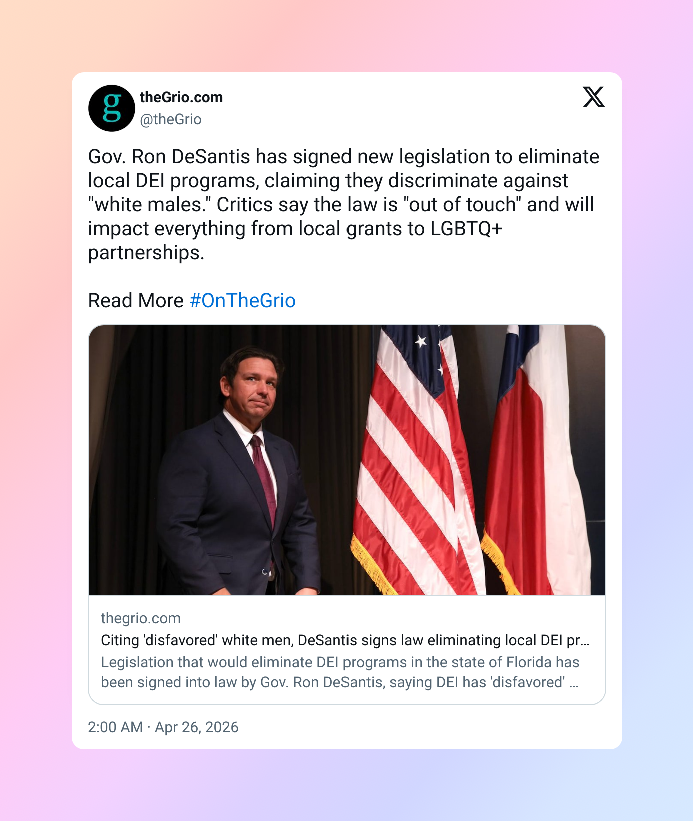
Ron DeSantis, current Florida Governor, has approved legislation that blocks local governments from creating or funding diversity, equity, and inclusion initiatives—commonly known as DEI. Supporters say the law stops taxpayer money from being used on ideological programs. Critics say it could have ripple effects reaching cultural events, local LGBTQ outreach, and Pride celebrations across the state.
In short: Pride isn’t banned. But many people are asking what support for Pride will look like moving forward.
RELATED: Homophobic Hate Crime Subway Suspect Arrested 3 Months After Evading Authorities
Why This Matters Beyond Politics
On paper, DEI can sound like a workplace acronym. In real life, it often includes city-backed outreach programs, community partnerships, health initiatives, and recognition of events that matter to residents.
That’s where concern begins.
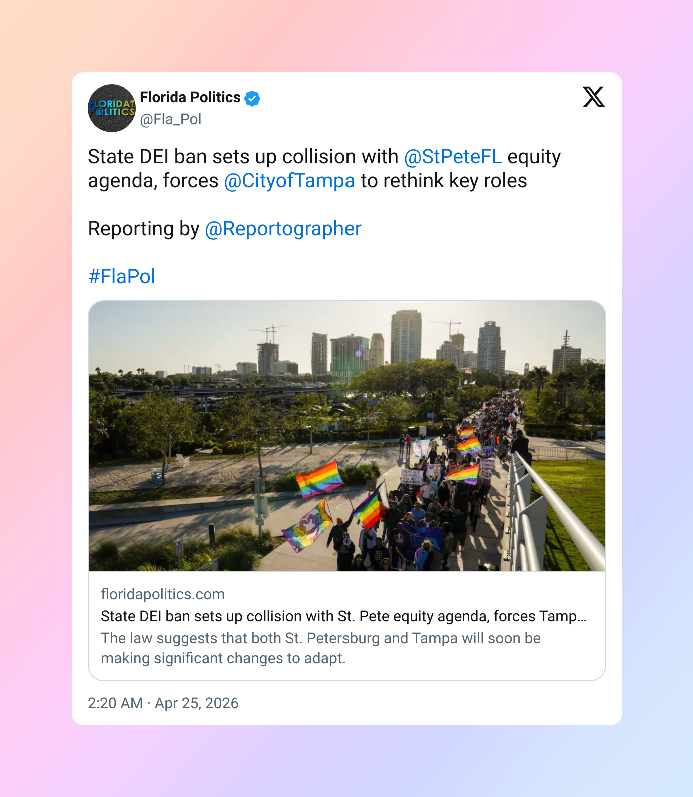
Equality Florida warned that the law could jeopardize more than internal policies. The group says it may affect nondiscrimination ordinances, specialized health programs, and official recognition of celebrations like Pride Month.
For cities that already support local Pride events through permits, messaging, sponsorships, or collaboration, the question is no longer theoretical.
Will they pull back to avoid lawsuits?
Will local officials choose silence over controversy?
Will Pride still happen—but with less public support?
Those are the fears many organizers now face.
RELATED: Gay Dads Ambushed by MAGA Interviewer Reclaim Story as Legal Fund Tops $150K
What DeSantis and Supporters Are Saying
DeSantis has made opposition to DEI a major part of his political identity, arguing such programs unfairly divide people rather than unite them.
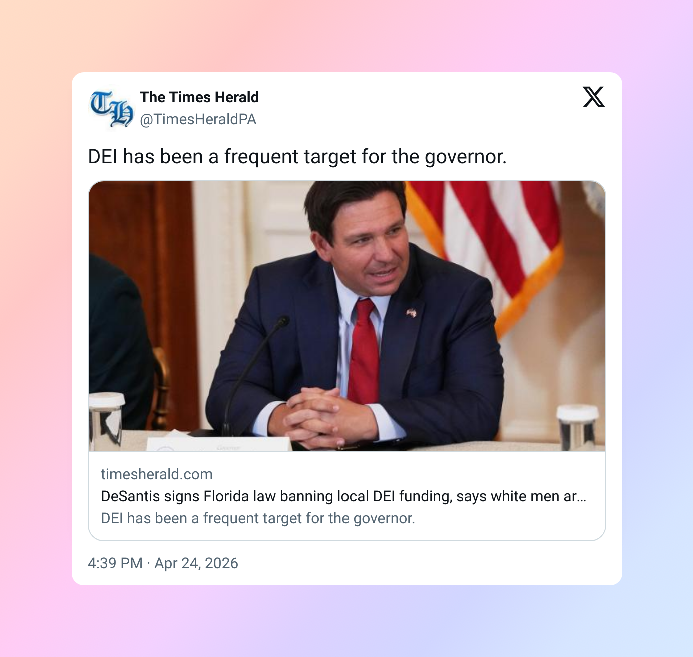
At a Central Florida signing event, he claimed white men are among those disadvantaged by DEI efforts.
Supporters of the bill say local governments have used public resources to promote what they view as divisive agendas.
Backers insist the law still allows equal-opportunity hiring and cultural events to exist. What it restricts, they argue, is government promotion of diversity programming.
That distinction, however, is exactly where critics say the danger lies.
Pride Organizers Hear the Fine Print Differently
Pride festivals don’t always rely on direct funding alone. They often depend on city cooperation, logistical help, public endorsements, street closures, permits, and partnerships that signal welcome.
Take away those relationships, and events can become harder to produce.
That’s why some activists say the threat is less about a dramatic cancellation and more about a slow erosion of support.
A parade route becomes harder to secure.
A city sponsorship quietly disappears.
A mayor’s office stops promoting attendance.
A health outreach booth never gets approved.
No single move makes headlines. Together, they change the atmosphere.
A Community That Knows How to Adapt
Before the bill’s final passage, Equality Florida said it successfully pushed for carve-outs protecting the Pulse Memorialand preserving the ability for governments to issue permits for Pride events. Even so, advocates say the broader message remains troubling.
Because Florida’s queer communities have never depended solely on politicians to exist. Pride in the state has always been built by organizers, performers, small businesses, volunteers, families, and people who keep showing up.
What Happens Next in Florida?
Come January 1, the new law officially kicks in, and many cities will likely spend months figuring out what it means in practice.
Some may continue supporting Pride with little change. Others may become more cautious. Some may face legal challenges.
But if history is any guide, Florida Pride won’t vanish quietly.
It may evolve. It may get scrappier. It may become even more community-led than before.
And for many LGBTQ Floridians, that spirit has always been the point.
Pride was, is, and will be a protest. Never forget this.
DeSantis needs to GO! C’mon Florida vote him OUT!
Here in Miami Beach DeSatan’s other initiative to tear up Pride crosswalks blew up in MAGA’s face. Same in other cities too. In a truly cruel act the first crosswalk to go was Orlando’s at the intersection where the Pulse Nightclub stood. Our city kept the bricks and reintalled them on the sidewalk next to the original site with a standing plaque. We also got 2 Pride painted police cars, several pride painted park benches, dozens of Pride banners across the city, a repainting of an iconic structure on Lincoln Road in pride colors and several pride painted bike racks. All are permanent. What started as an attempt to erase us ended up with an enormous amount of visibility. So now when these MAGA snowflakes come to our city they will be confronted with Pride everywhere they look, 24/7 all year round. Let them enjoy their clenched fists and jaws in rage and their clenched anal sphincters in irrational fear. The city of Miami Beach has already promised they will support Pride. And as our mayor put it during the dedication ceremony “You come for one of our communities, you’re coming for all of us”!