


Long before rainbow logos appeared every June and marriage equality became the law of the land, thousands of LGBTQ couples stood in line outside San Francisco City Hall hoping for something many people take for granted: the chance to say “I do.”
The moment would become known as the Winter of Love, one of the most significant chapters in modern LGBTQ history.
It began on February 12, 2004, when then San Francisco Mayor Gavin Newsom made a decision that would spark headlines across the country. Defying California’s existing marriage laws, Newsom directed the city to issue marriage licenses to same sex couples.
“Everyone deserves to love and be loved.”
History changed on February 12, 2004, when the newly elected mayor of San Francisco, @GavinNewsom, did something extraordinary: He defied the status quo by ordering the county clerk to begin accepting gay marriage license applications. pic.twitter.com/K83czVkBax
— Governor Gavin Newsom (@CAgovernor) February 12, 2024
What happened next was extraordinary.
The Lines Wrapped Around City Hall
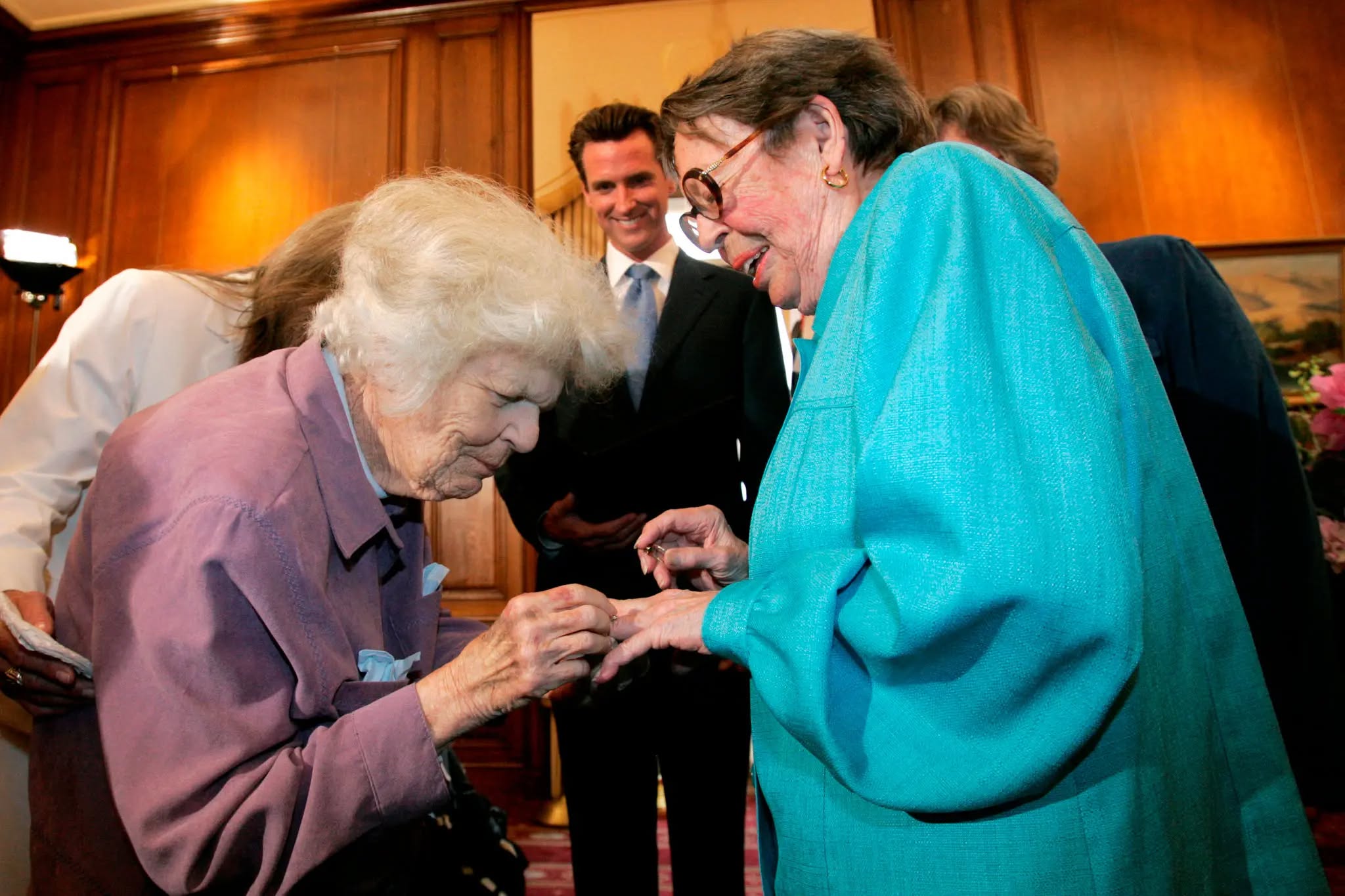
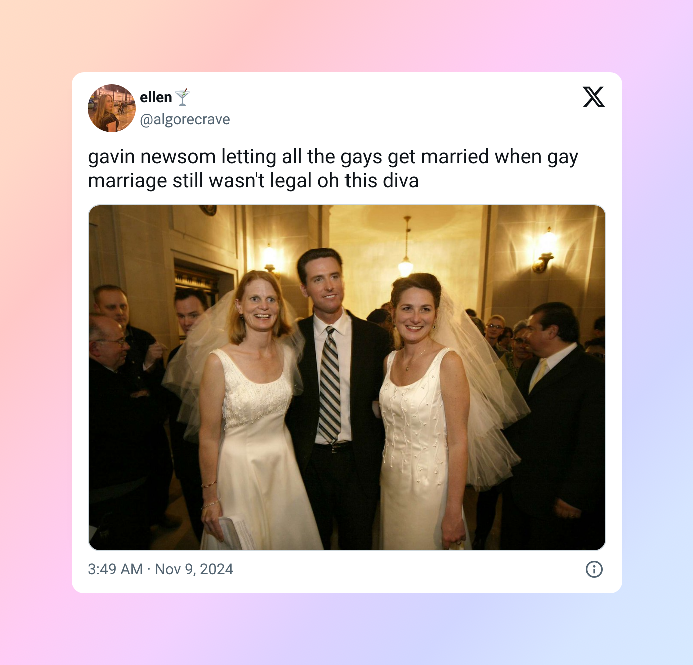
Couples traveled from all over California and beyond, eager to seize a rare opportunity.
The first couple to marry that day was legendary activist couple Del Martin, 83, and Phyllis Lyon, 79. They had been together for nearly 51 years when they finally received legal recognition of their relationship. Martin passed away in 2008 and Lyon died in 2020.
Gavin Newsom officiates the first gay marriage following the California Supreme Court ruling same-sex marriage legal (2008) pic.twitter.com/vbb1SC1EpB
— Headquarters (@HQNewsNow) June 1, 2026
By the end of Presidents Day weekend, more than 2,200 licenses had already been issued. The crowds became so large that lines stretched around City Hall. Employees stayed late to accommodate the demand.
For a few remarkable weeks, love seemed unstoppable.
By March 11, however, the California Supreme Court ordered the city to stop issuing licenses. Nearly 4,000 couples had married before the weddings were halted.
Later that year, the court ruled that the city had exceeded its authority and invalidated the marriages.
For many couples, the celebration was followed by heartbreak.
RELATED: Queer in 2026: Where to Stay Safe (and Fabulous) in Trump’s America
A Setback That Became a Spark
The story did not end there. Legal challenges continued, and LGBTQ advocates pushed forward.
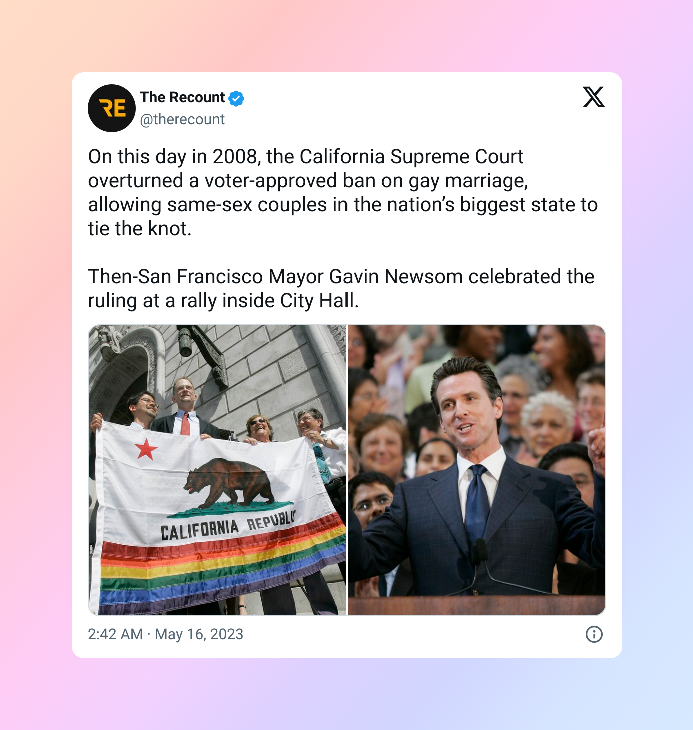
Then came a landmark moment on May 15, 2008. In a narrow 4 to 3 decision, the California Supreme Court ruled that denying marriage to same sex couples violated their right to equal respect and dignity. Marriage equality was once again legal in California.
According to Celebrate California, Newsom celebrated the ruling with words that would become famous:
“As California goes, so goes the rest of the nation.”
For a brief period, marriage equality flourished again.
Then came Proposition 8.
The ballot measure passed in November 2008, amending the California Constitution and banning same sex marriage once more. The victory was devastating for many LGBTQ Californians who had only recently gained the right to marry.
Technically, it was a Ninth Circuit decision that overturned Proposition 8, and SCOTUS refused to intervene, finding that petitioners lacked standing.
But Harris did cut through bureaucratic red tape and implemented the ruling the same day the 9th lifted its stay. https://t.co/XdVuNPGnsX
— Hunter📈🌈📊 (@StatisticUrban) April 9, 2026
The Long Road Forward
Marriage licenses stopped being issued after Proposition 8 passed and remained unavailable until June 27, 2013. That day arrived after the United States Supreme Court effectively allowed lower court rulings striking down Proposition 8 to stand. Marriage equality returned to California, this time for good.
The Winter of Love had become more than a chapter in history. It became proof that progress could survive setbacks.
RELATED: 7 Gay Hotels in San Francisco to Enjoy Gay Events in 2026
More Than Marriage
Fast forward more than two decades, and Newsom is now serving as California’s governor while continuing to support LGBTQ rights.
Recent legislation signed by Newsom includes protections that recognize chosen family relationships, safeguards for LGBTQ adoptive parents, and stronger privacy protections for people receiving gender affirming care, as noted by KQED.
These policies reflect how much the conversation has evolved since those first weddings in 2004.
Why the Winter of Love Still Matters
The Winter of Love was never just about marriage licenses.
It was about visibility. It was about dignity. It was about thousands of couples refusing to wait quietly for permission to be treated equally.
Many of those couples stood in line without knowing whether their marriages would survive legally. They showed up anyway.
More than twenty years later, their courage still echoes through every wedding photo, every anniversary celebration, and every LGBTQ person who can now imagine a future that once seemed impossible.
Sometimes history changes in grand speeches. Sometimes it changes in courtrooms.
And sometimes it changes when thousands of people stand patiently in line for love.