


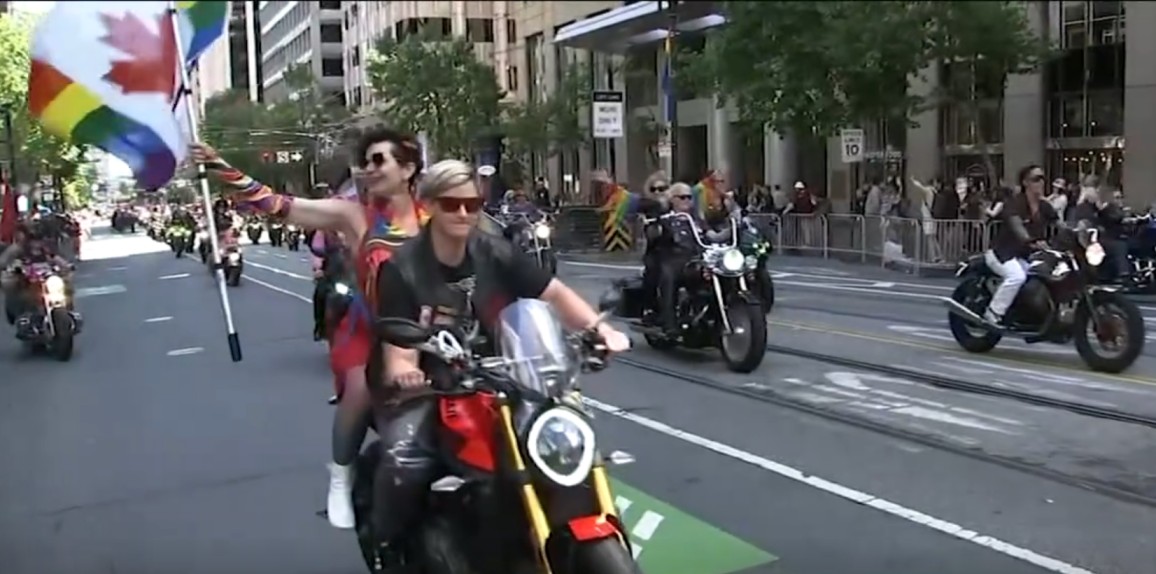
Dykes on Bikes have spent 50 years proving that the best way to make history is sometimes with a motorcycle. Leading a Pride parade takes confidence. Leading it on a motorcycle? That’s a different level entirely. Fifty years ago, a handful of lesbian riders decided they were done bringing up the rear and claimed the front of San Francisco’s Pride parade instead. The rest, as generations of Pride-goers now know, is a tradition you can hear long before you see it.
RELATED: Oregon Pride Wanted a Safer Celebration, March Canceled Instead
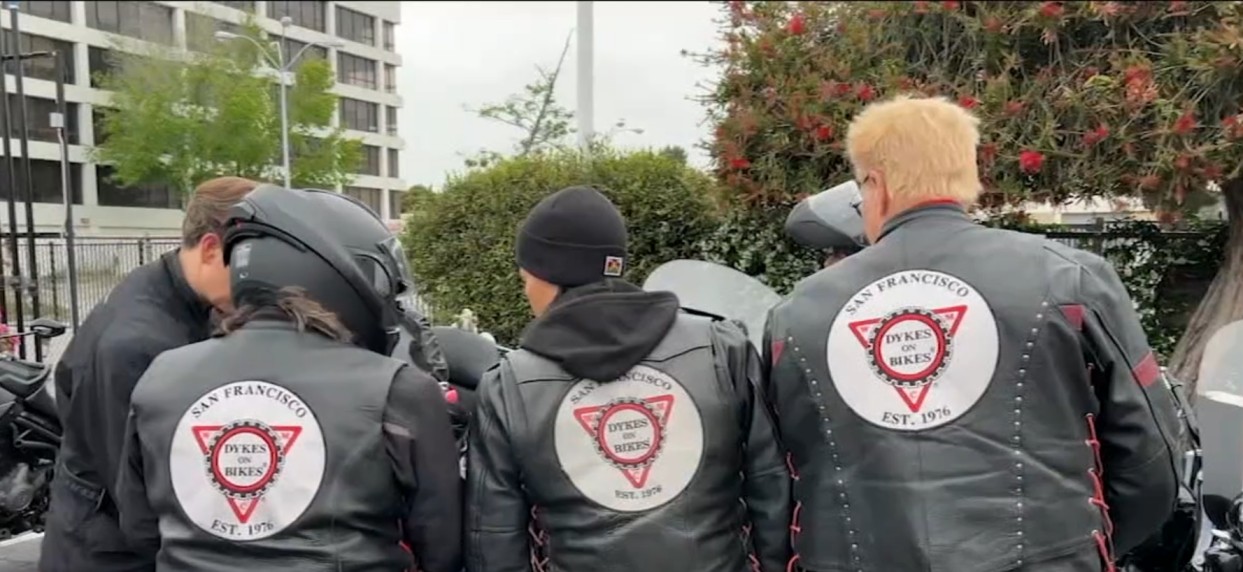
These days, the roar of Dykes on Bikes has become as much a part of Pride as rainbow flags and someone inevitably asking where the nearest portable toilet is. But behind the chrome, leather, and unmistakable entrance is a story about visibility, community, and refusing to wait for permission to take up space.
They didn’t ask for the front—they took it
For Kate Brown, becoming part of that legacy started with a moment on the sidelines.
RELATED: Rainbow Crosswalks Are Gone—Florida’s LGBTQ+ Communities Aren’t
“Before you see Dykes on Bikes, you hear them. You hear hundreds of motorcycle engines turning over, and there’s this cacophony of sound, and then you see them coming,” said Brown. “And when I experienced that it was a very palpable feeling, I was like that’s me, that’s exactly who I need to be.”
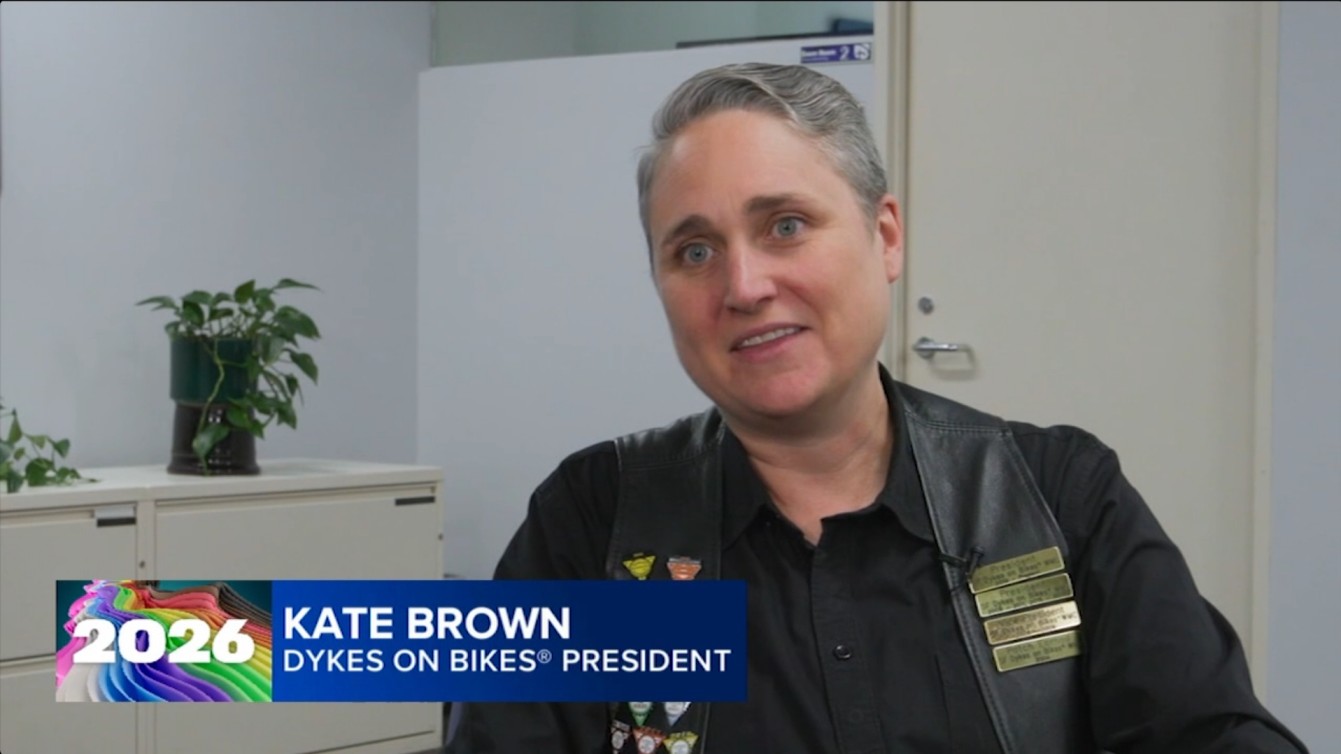
At the time, Brown had never ridden a motorcycle. Seeing Dykes on Bikes changed that. She signed up for riding lessons, bought a bike, and eventually became president of the San Francisco chapter. The group’s origin story goes back to the 1976 Gay Freedom Day March, when a small group of lesbian riders decided the back of the parade simply wasn’t for them.
“It was the Gay Freedom Day March and a small group of dykes were on their motorcycles and decided to move from the back to the very front of the march. We’ve been known as Dykes on Bikes ever since,” Brown said.
It was a bold statement in an era when lesbian visibility was often pushed aside—even within the LGBTQ movement itself.
“We didn’t want to be behind the gay men. We really wanted to claim our own space, and we’ve always been pushing that boundary and being loud and saying, ‘Here we are. See us.'”
Turns out the fastest route to visibility sometimes comes with two wheels and a very loud engine.
Dykes, freedom, and a really good leather jacket
For members of Dykes on Bikes, the motorcycles are more than a cool accessory. They’re part of the experience—and yes, they do happen to look incredibly cool while riding them.
Maria Puhakka has spent 43 years on a motorcycle and joined Dykes on Bikes four years ago. As the group’s road captain, she plans monthly rides that can stretch beyond 150 miles.
“You are smelling everything, hearing everything. You have the power. It’s just a wonderful feeling. Dykes on Bikes represents freedom: freedom of speech and freedom of existence.”
If that sounds poetic, fellow rider Sue Bolander has an even better description. She calls it “wind therapy.” After four decades of riding—including plenty of co-ed trips—Bolander says there’s something uniquely special about riding with fellow dykes.
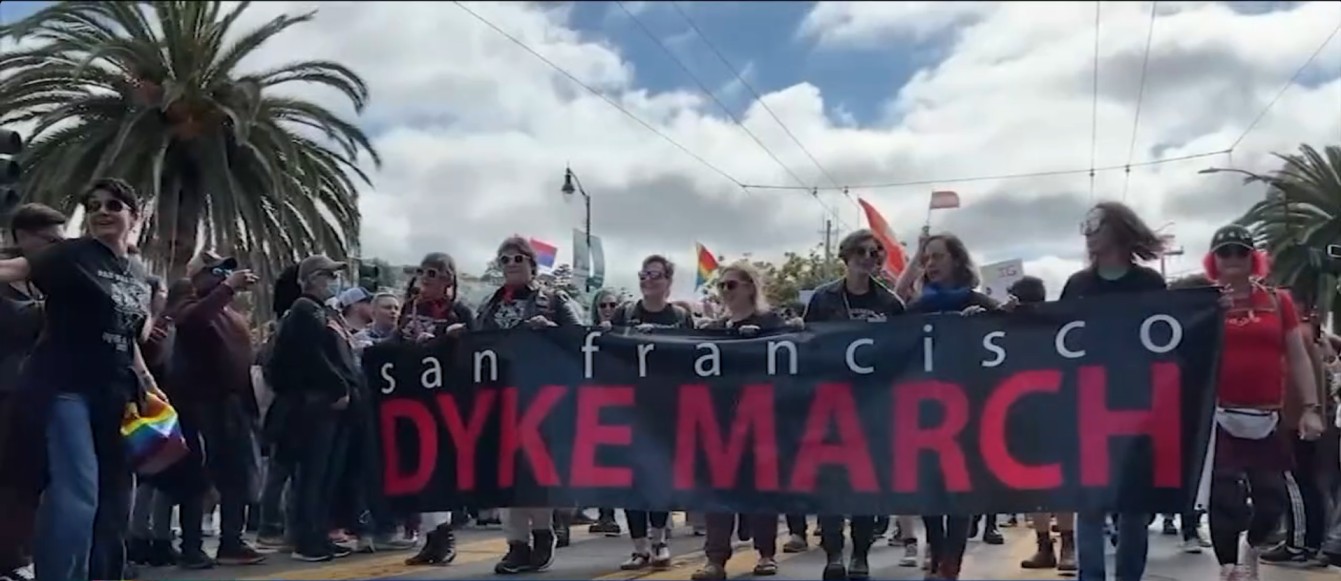
“It’s a great culture to be around when you’re with other women that have the same likes and the same interests. I just enjoy it,” said Bolander.
Sometimes community looks like a support group. Sometimes it looks like dozens of motorcycles disappearing into the horizon together.
A legal fight over one powerful word
Being loud has never just referred to the motorcycles. The organization spent years fighting the U.S. Patent and Trademark Office after officials refused to register both the word “dyke” and the group’s logo, arguing the term was disparaging toward lesbians.
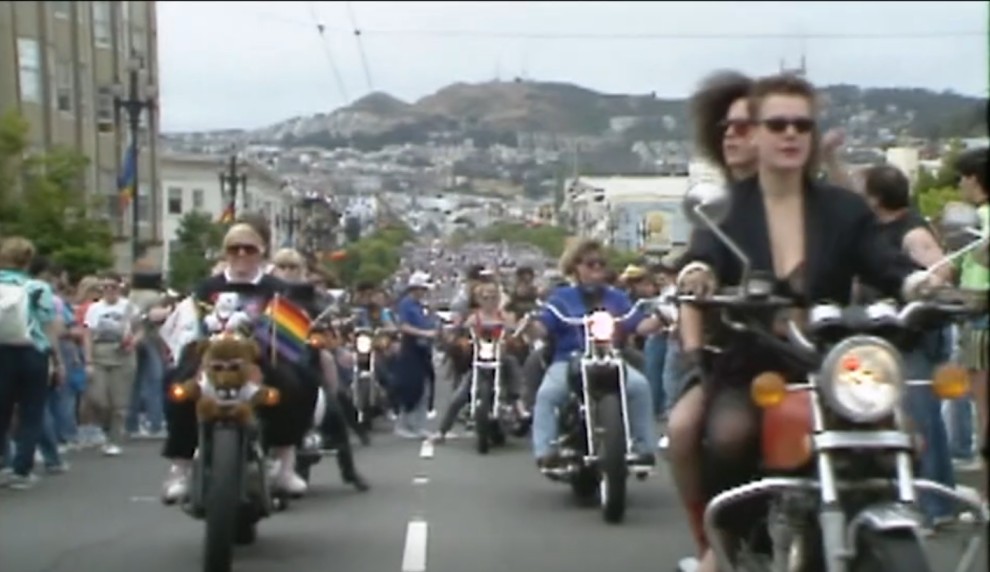
Dykes on Bikes refused to back down, challenging the government’s decisions through the federal courts until they ultimately secured the right to trademark both the name and the logo. For Brown, the legal victory was about much more than trademarks.
“It was a major victory for LGBTQ rights, for freedom of expression, for being able to take an epithet, words of hate and use them in a self-referential manner and say this is exactly who we are. ‘Dyke’ has always been a word that conveys power, that conveys strength,” Brown said.
Today, the San Francisco chapter serves as the mother chapter for Dykes on Bikes, holding the trademark and licensing chapters across the globe. It’s not bad for a group that started by politely ignoring where they were expected to stand.
Still leading Pride, one engine at a time
Many Pride celebrations around the world have borrowed San Francisco’s tradition of letting Dykes on Bikes open the festivities. It’s easy to understand why.
“As soon as the motorcycles start up, the crowd starts roaring. And to be right there in the front and have everybody see you first, it’s just a natural high. We empower each other,” said member Ann Furia.
This year’s parade will include a special tribute. Following the riders will be a flatbed truck carrying several motorcycles. On them will be Brooke Oliver, the attorney who helped defend the organization’s right to trademark the word “dyke,” honoring a legal battle that helped shape the group’s history.
She’ll be joined by one of the women who made the daring decision to ride to the very front of the parade nearly 50 years ago, bringing the story full circle for a new generation of Pride-goers.
Fifty years later, Dykes on Bikes are still impossible to miss. Not because the motorcycles are loud—although they certainly help. They’re unforgettable because every rev of the engine carries the same message it did back in 1976: we’re here, we’re taking up space, and if you hear us coming, you’re probably standing exactly where history is about to roll by.
Source: ABC7