


Politics has produced plenty of polished personalities, but Barney Frank built a career out of being gloriously unpolished. Sharp-tongued, impatient, deeply funny, and openly gay long before Washington knew what to do with that combination, he became one of the most consequential LGBTQ+ figures in American political history without ever pretending to be America’s comforting version of one.
RELATED: Jason Collins: First Openly Gay NBA Player, Dies at 47
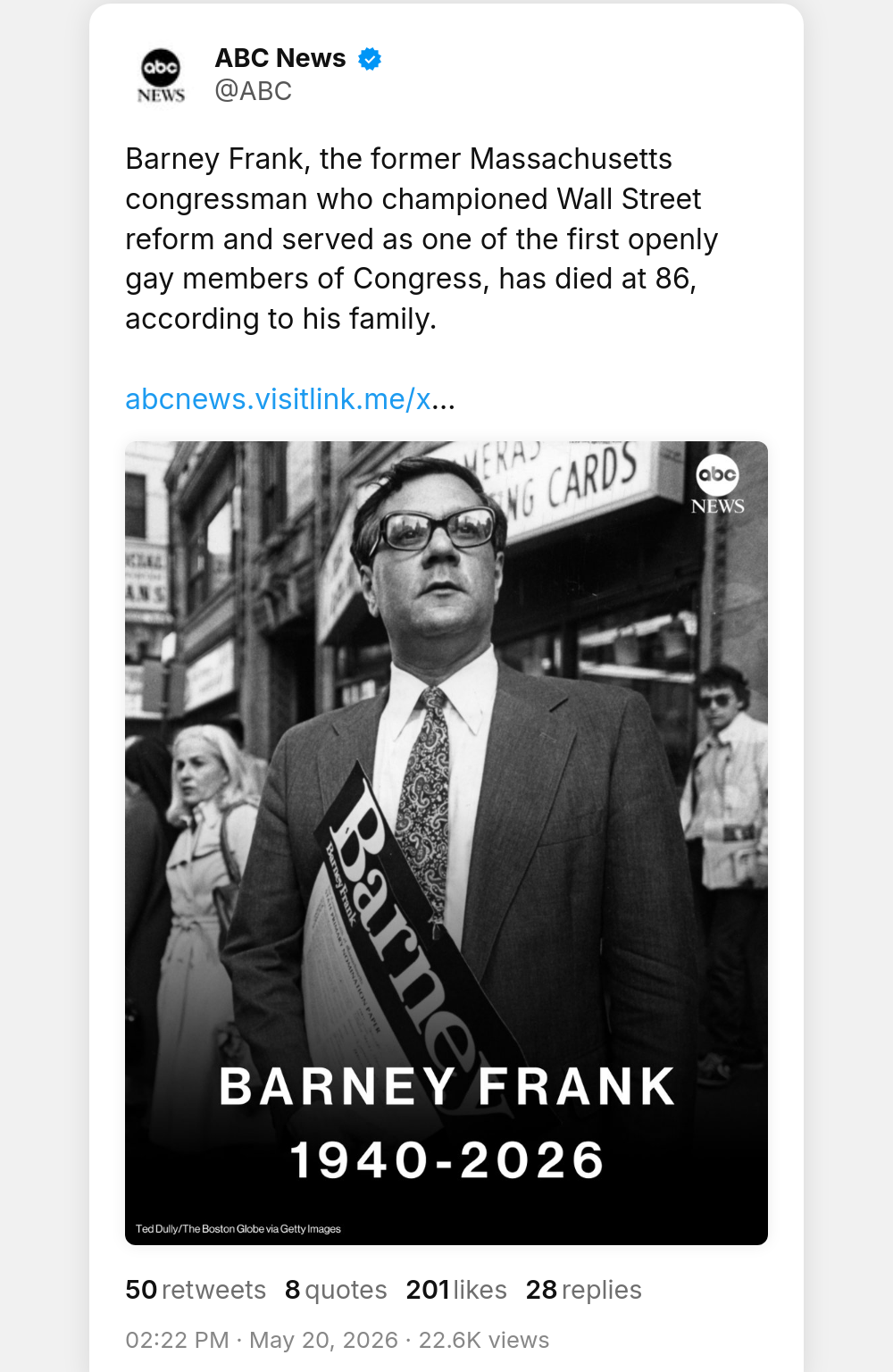
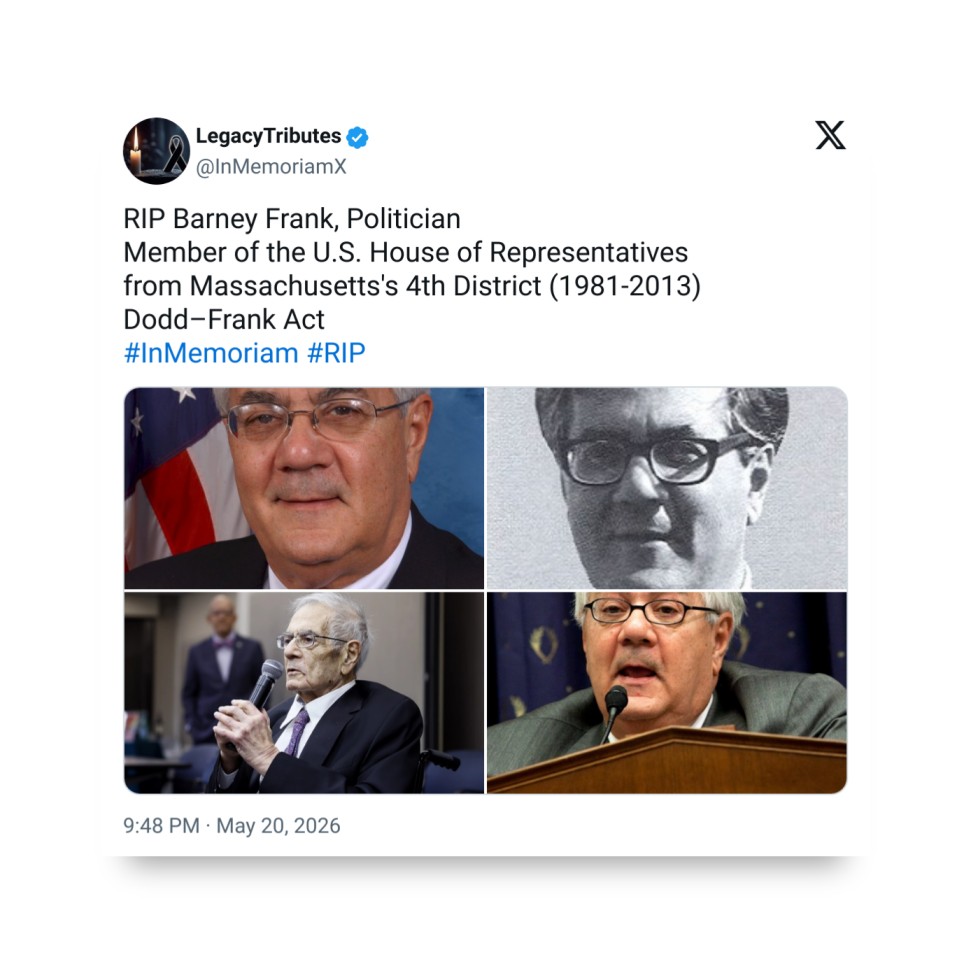
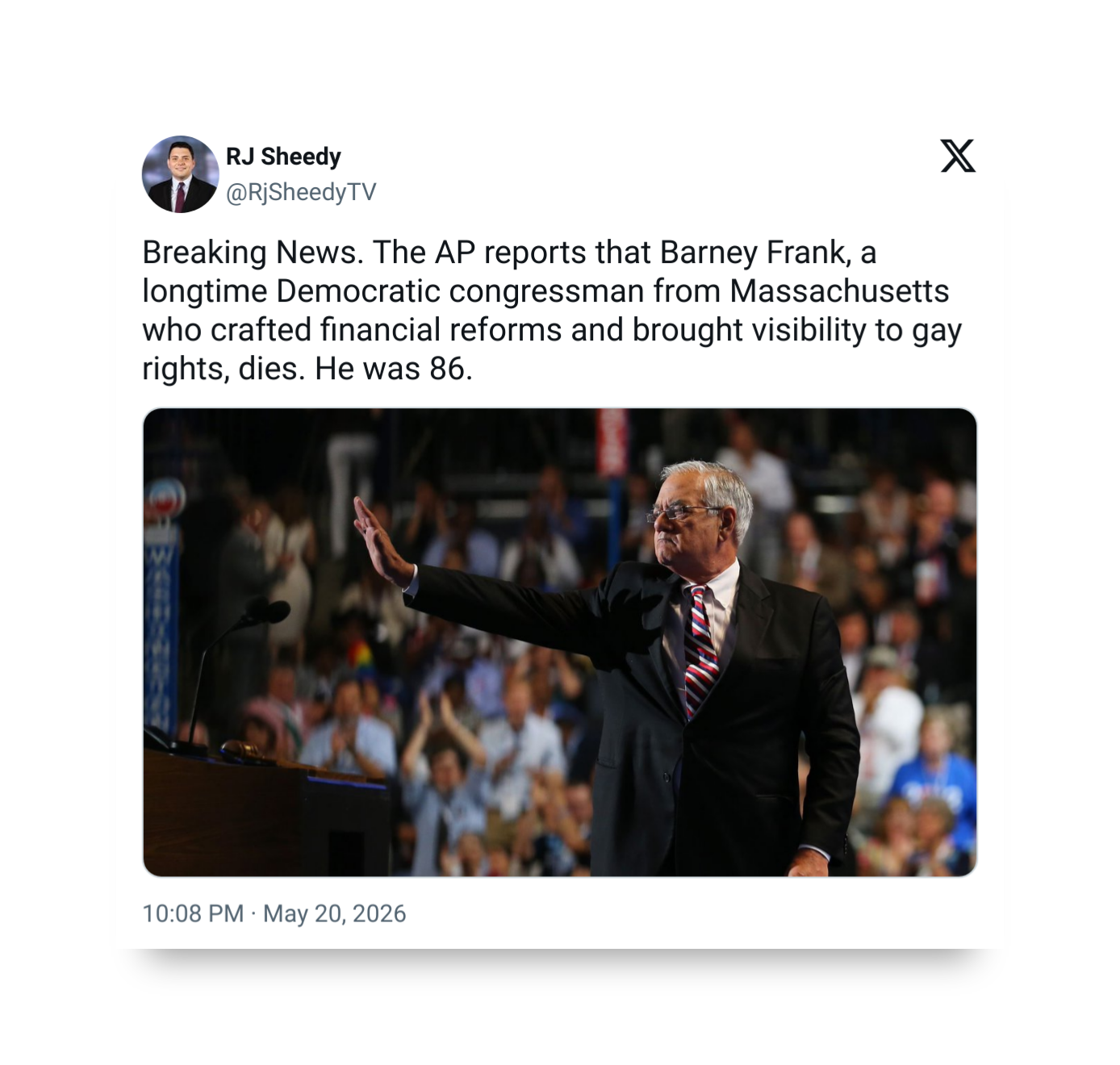
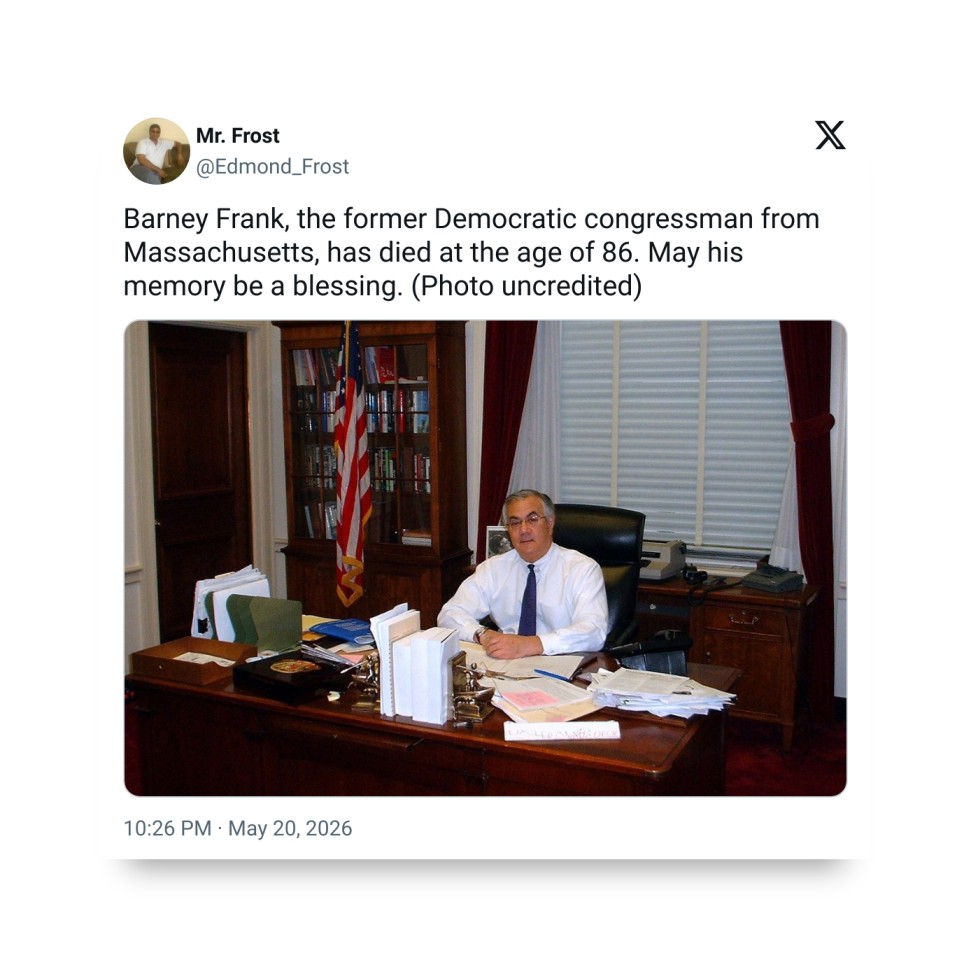
Frank has died at 86 after recently entering hospice care at his home in Ogunquit, Maine. His passing closes the chapter on a political generation that fought for gay visibility before visibility came with sponsorship deals, rainbow branding, and carefully media-trained talking points.
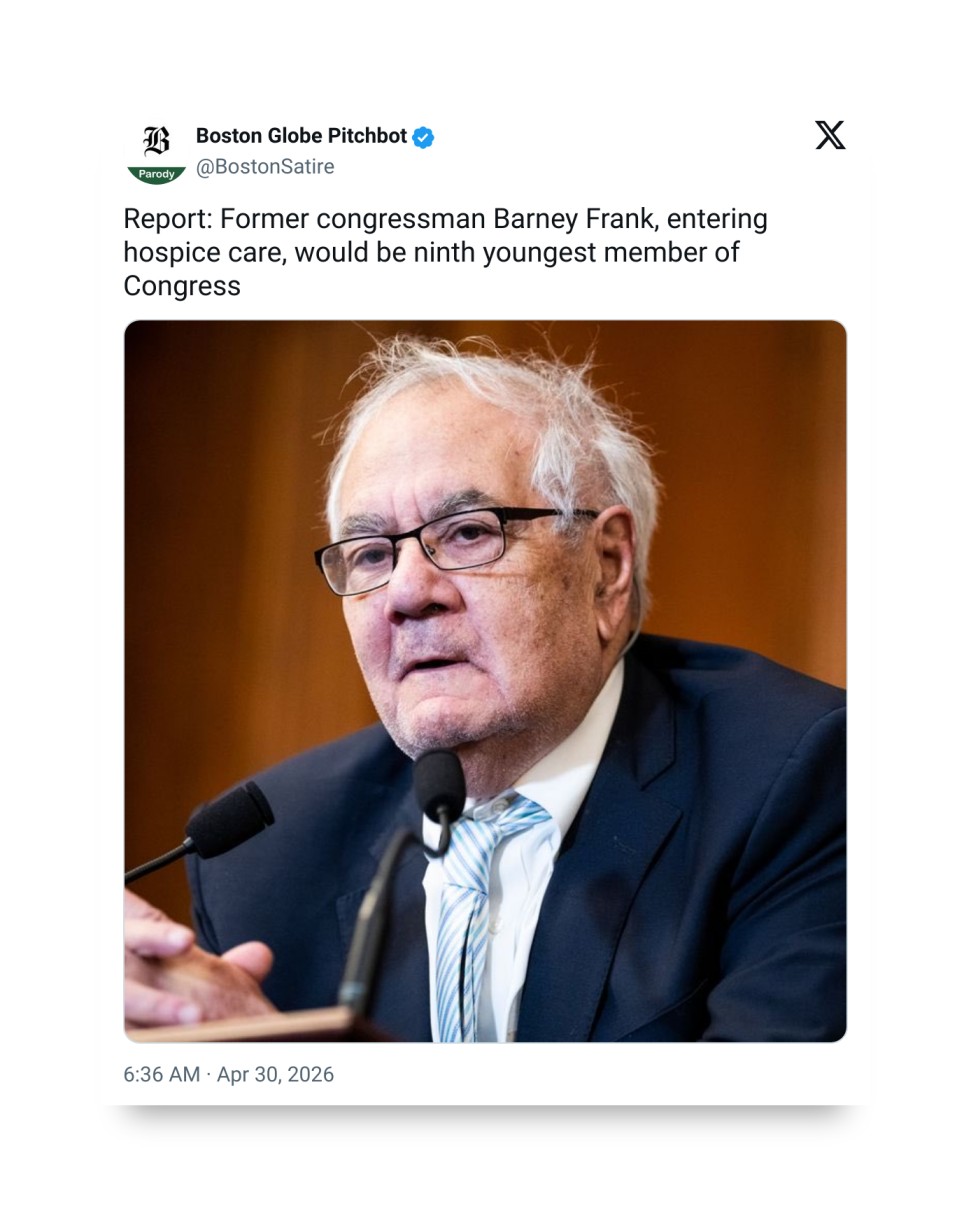
For decades, he occupied a singular role in American politics: part legislative mastermind, part cable news gladiator, part gay uncle who looked permanently annoyed somebody had asked a stupid question in public. And people loved him for it.
RELATED: Barney Frank in Hospice: Still Fighting the Left’s Agenda
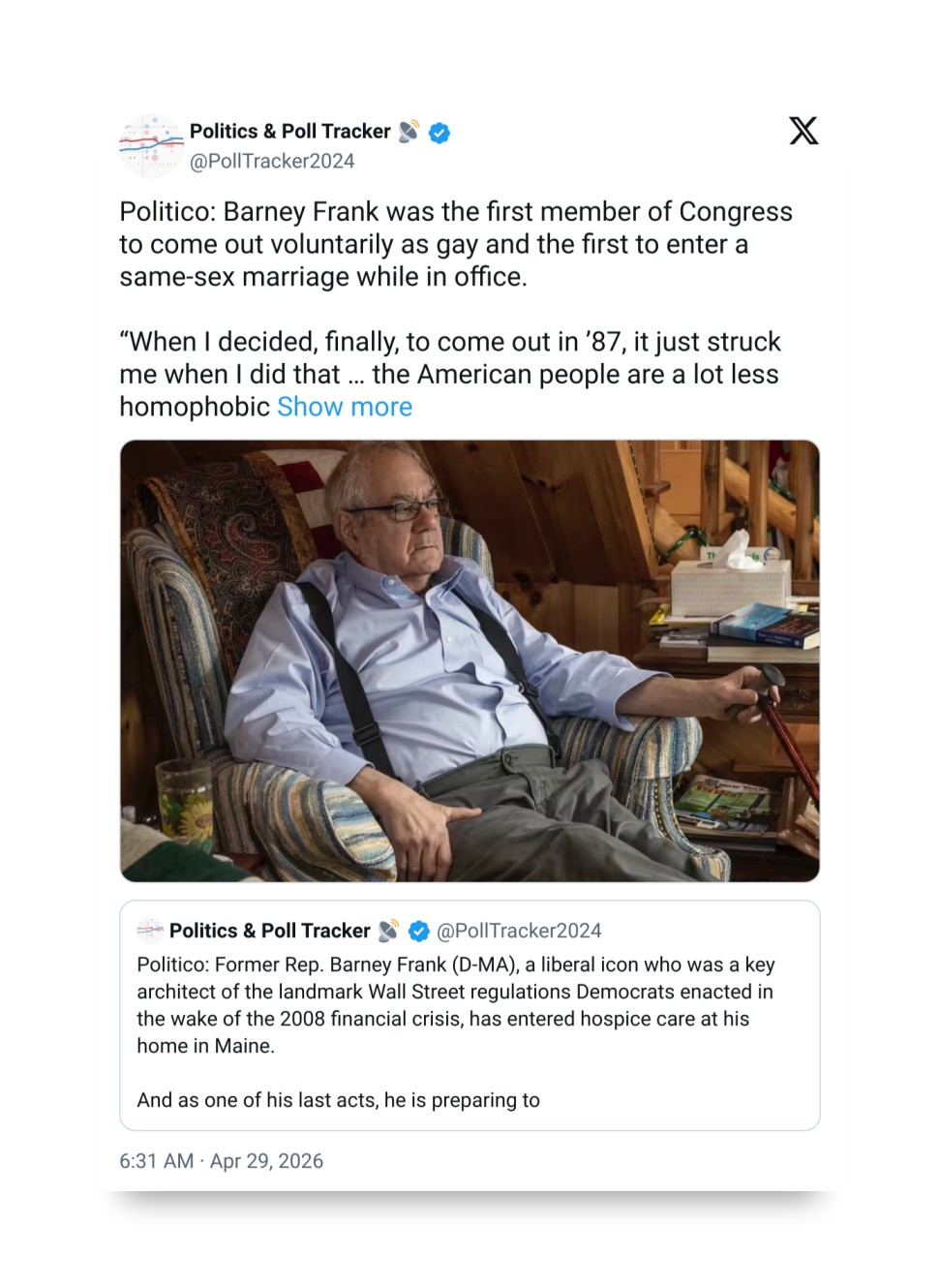
Barney Frank: The First Out Gay Member of Congress
Frank entered Congress in 1981 during a political climate that was openly hostile to LGBTQ+ people. By the time he publicly came out in 1987, the AIDS epidemic was devastating gay communities while much of the federal government remained shamefully indifferent.
His decision made history. He became the first sitting member of Congress to voluntarily come out while in office — a move that, at the time, genuinely carried career-ending risks. That kind of visibility hits differently in hindsight.
Today, openly gay politicians headline campaigns, attend galas, and casually post selfies with celebrities during Pride Month. He came out during an era when being gay in national politics could still make you radioactive. Visibility was not trendy. Visibility was confrontation. And he never approached it delicately.
He argued aggressively. He rolled his eyes publicly. He debated like somebody trying to win instead of somebody trying to become a motivational Instagram quote. Younger gays discovering old Barney Frank interviews today usually arrive at the same conclusion within minutes: oh, he was funny funny.
More Than a Symbol
His political influence stretched far beyond LGBTQ+ issues. As chair of the House Financial Services Committee during the Obama administration, he became one of the architects behind the Dodd-Frank Wall Street Reform and Consumer Protection Act following the 2008 financial collapse. That mattered culturally as much as politically.
For years, openly gay public figures were boxed into discussions about sexuality and identity alone. He shattered that limitation. He was not simply “the gay congressman.” He was one of the Democratic Party’s most influential lawmakers on banking, regulation, and economic policy.
One minute he was debating financial reform. The next he was helping push LGBTQ+ visibility deeper into mainstream American life simply by refusing to hide. That combination made him groundbreaking in ways younger generations sometimes forget.
Messy, Complicated, Human
His career was never spotless, and he never really tried to pretend otherwise. In the late 1980s, he faced one of the biggest controversies of his political life after revelations involving Stephen Gobie, a former partner who operated a male escort service out of Frank’s Washington apartment. Conservatives seized on the scandal aggressively during a period when anti-gay stigma already dominated political discourse.
For many LGBTQ+ people watching at the time, the reaction exposed an ugly double standard: gay public figures were expected to be flawless just to be treated as legitimate. He survived the scandal and kept moving.
That refusal to collapse under public pressure became central to his legacy. He remained intellectually combative, coalition-minded, and often frustrating even to people politically aligned with him. Including in his final weeks.
Still Debating Until the End
Even after entering hospice care, he continued weighing in on the political battles reshaping both the Democratic Party and the LGBTQ+ movement.
In interviews earlier this month, including one with Jake Tapper, Frank argued Democrats should rethink some messaging strategies around transgender rights and sports participation, suggesting politically difficult issues risk becoming ideological “litmus tests.”
The comments drew criticism from some LGBTQ+ advocates and transgender activists, while others defended him as a veteran strategist shaped by decades of hard-fought political battles. Whether people agreed with him or not, the moment felt undeniably true to who Barney Frank always was: engaged, argumentative, complicated, and unwilling to simply nod along for applause.
A Legacy Bigger Than One Era
He retired from Congress in 2013 after serving for 32 years. In 2012, he married his longtime partner, Jim Ready, becoming the first sitting member of Congress to enter a same-sex marriage. That milestone alone would have secured his place in LGBTQ+ history.
But his legacy stretches much further than symbolism. Organizations like the Human Rights Campaign credited him with helping build momentum toward the repeal of “Don’t Ask, Don’t Tell,” advancing federal hate crimes protections, and pushing LGBTQ+ representation further into the center of American public life.
HRC President Kelley Robinson said in a statement: “Barney Frank was nothing short of a trailblazer. At a time when being openly gay in public service could cost you everything, he chose visibility.” That visibility changed American politics permanently.
Not because Barney Frank tried to become universally beloved. Quite the opposite, really. He changed politics because he walked into rooms that were never designed for openly gay men, took up space anyway, and argued like hell once he got there.
Source: Boston Globe
He was a trailblazer! But he wasn’t the first to come out. On July 14th, 1983, Gerry Studs of Massachusetts came out first.
Yes, he was a trailblazer in every sense of the word and passionate about defending the rights of the elderly, the disabled, and the LGBT community. I knew him when he represented to Back Bay in Boston. One moment I’ll never forget is when, at his instigation, myself and Polly Dow (who was later to serve on his staff in DC) cleaned an elderly woman’s apartment on Beacon who lived in a rent-controlled apartment. The landlord was going to evict her but Barney interceded on her behalf, and after an inspection, she was able to remain in her rent-controlled apartment.