


Billie Jean King made a career out of winning on the tennis court, but changing an entire sport while keeping a deeply personal part of her life out of the headlines was another battle altogether. She managed both, although the second came with a price she never should have had to pay.
RELATED: Football, Foul Play, and Homophobia: FIFA’s Latest Findings Are Ugly
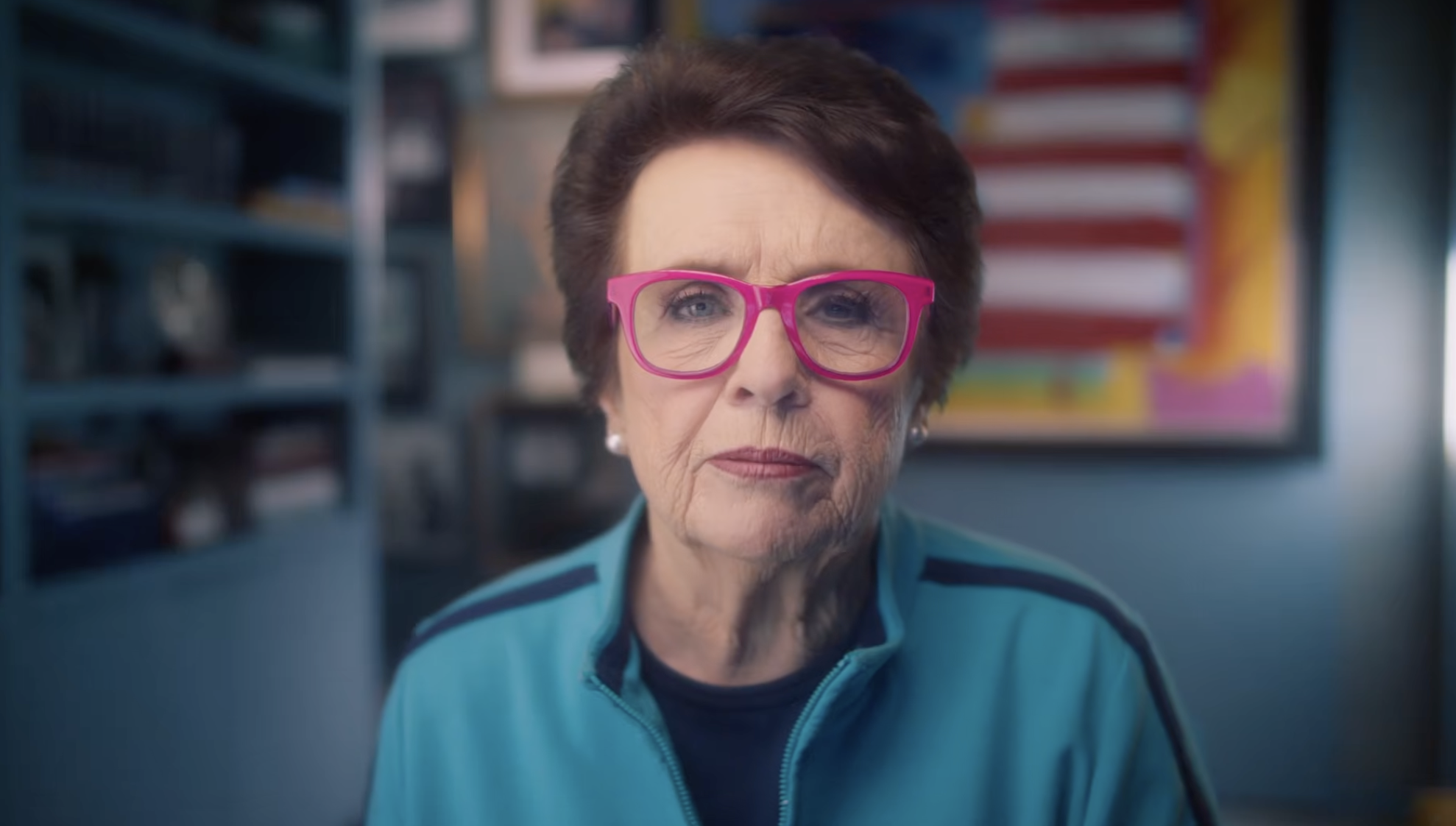
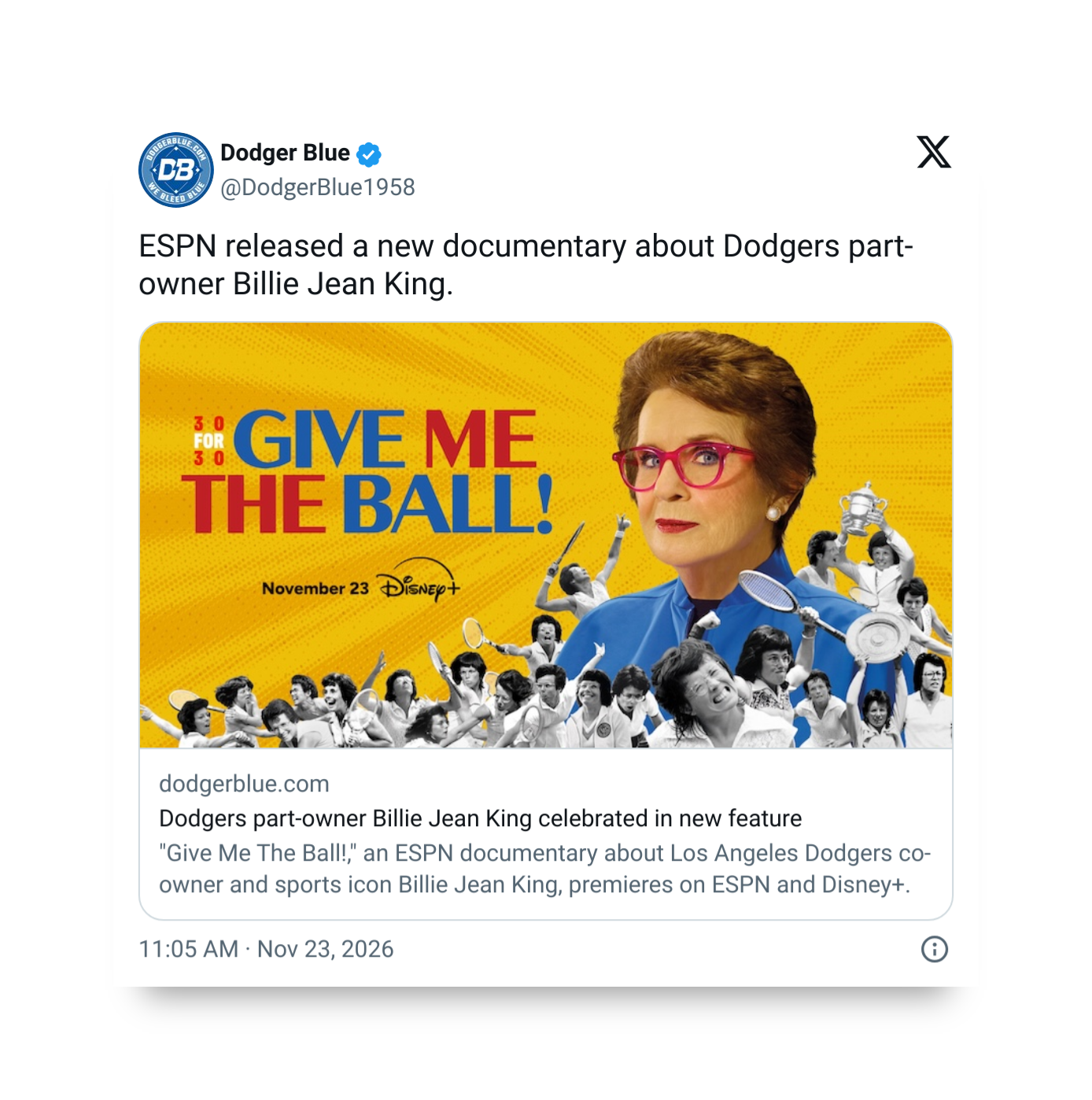
The tennis legend is the subject of Give Me the Ball!, a new ESPN 30 for 30 documentary that looks beyond her celebrated victories to revisit the personal struggles behind her extraordinary career. For LGBTQ+ audiences, it’s a particularly meaningful watch because King’s story isn’t simply about becoming one of the greatest players in the sport. It’s about navigating a world that wasn’t ready for a woman who refused to know her place, both on the court and in her personal life.
And if there’s one thing King’s life makes clear, it’s that being a trailblazer doesn’t mean you get to choose every battle.
Winning Was Never the Only Point
Long before equal pay became a regular talking point in professional sports, King was already making noise about the financial inequalities facing female players.
RELATED: Mika Brunold Thanks João Lucas Reis for Inspiring Him to Come Out
She understood that talent alone wouldn’t change a system that consistently undervalued women. So she didn’t just collect titles and hope the sport would eventually catch up. She helped establish the Virginia Slims women’s tour, creating opportunities for female players while taking on the demanding business of securing sponsorships and promoting the women’s game.
It was a considerable amount of work for someone who was also expected to train, compete, and win. Apparently, being one of the best wasn’t enough. She also had to help build the playing field.

Her 1973 Battle of the Sexes showdown against Bobby Riggs became one of the defining moments of her career. The televised match attracted enormous attention, but its significance went beyond the result. King was challenging the assumption that women were inherently inferior athletes, and she did so in front of an audience that had plenty of reasons to doubt her.
She won. The message was considerably bigger than the match.
The Closet Was Another Court She Had to Navigate
King’s professional life was increasingly public, but her sexuality was something she struggled to reconcile privately.
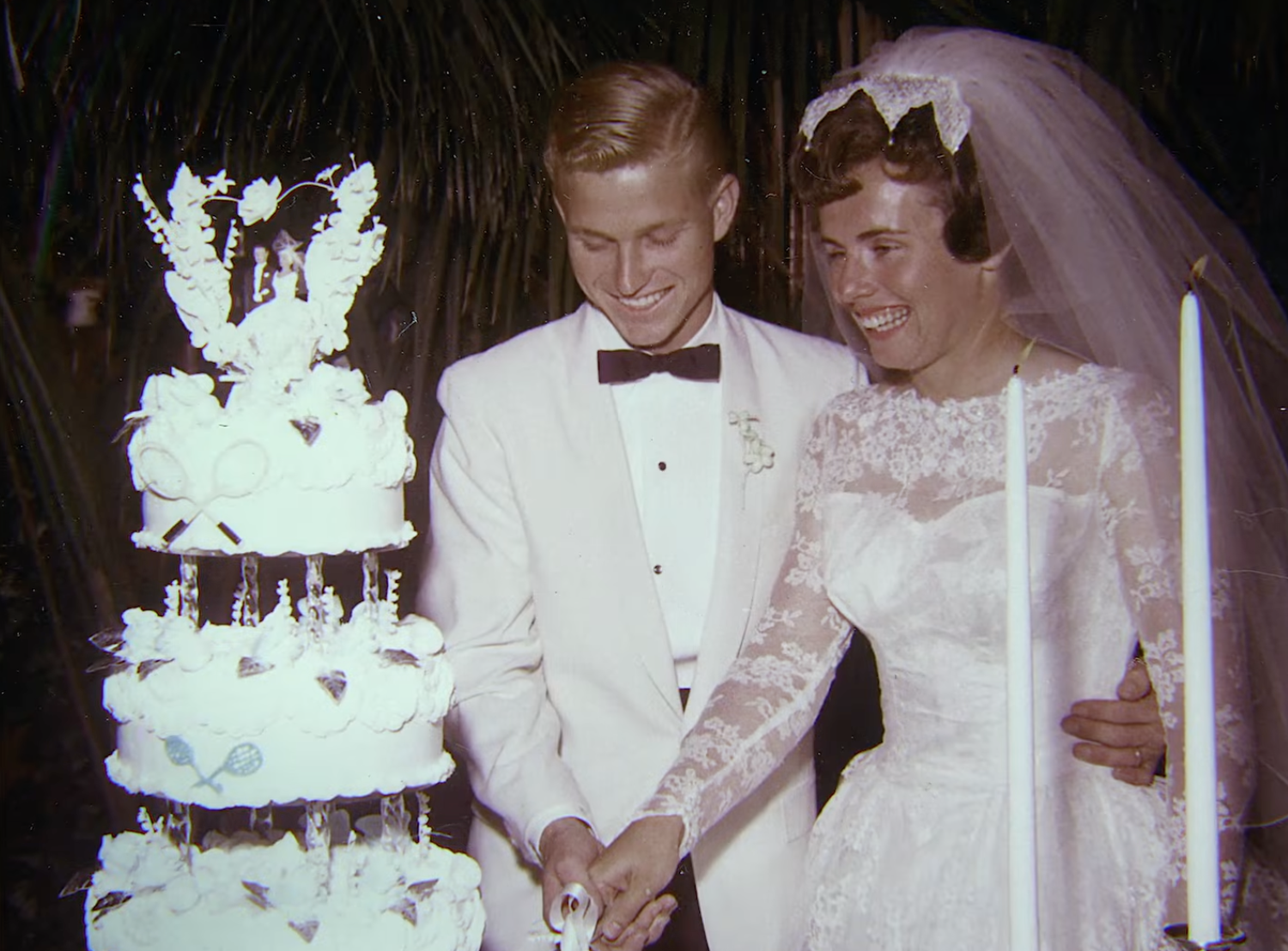
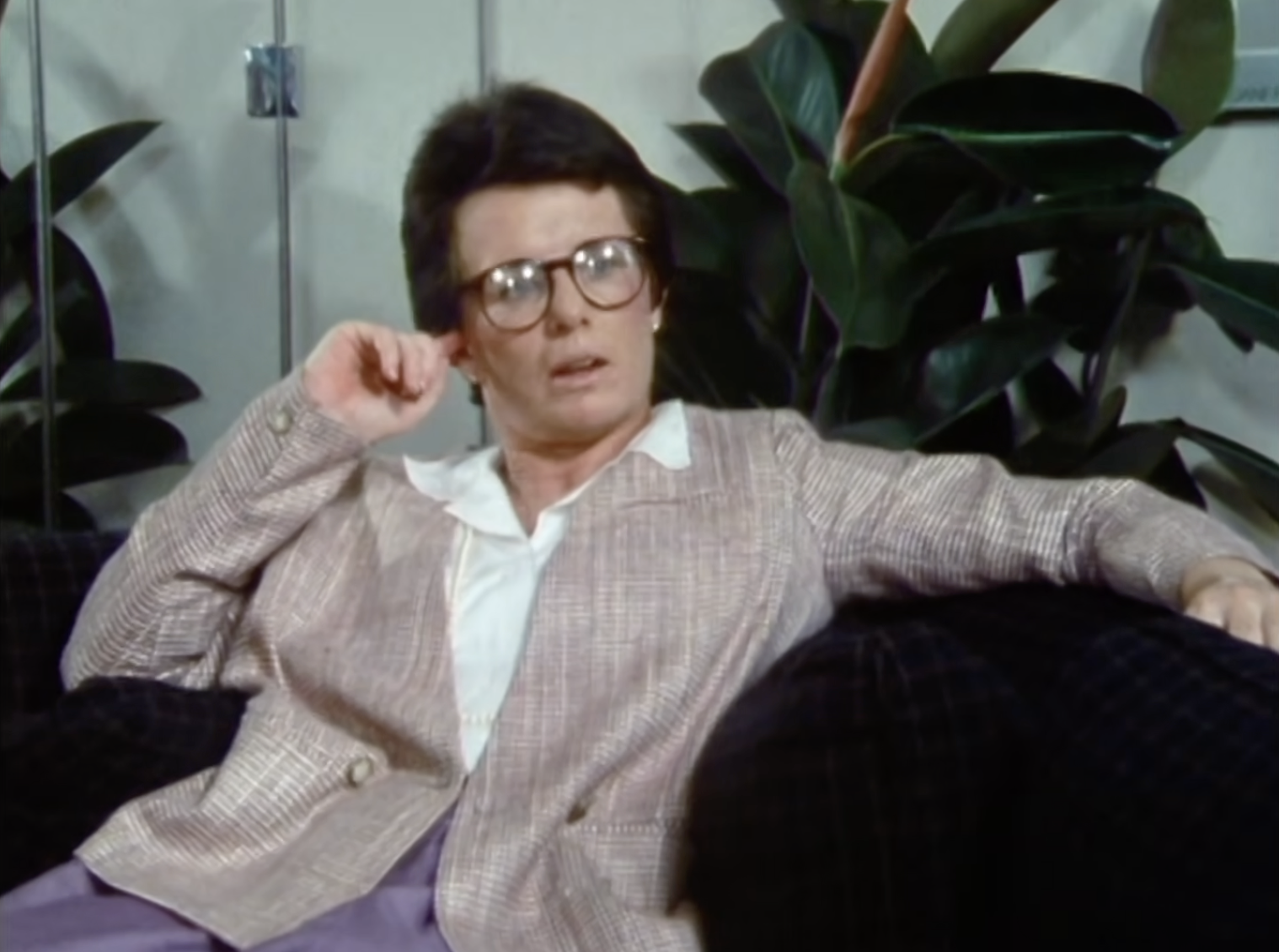
Married to Larry King, she spent years navigating her attraction to women while living in an era when being openly gay could carry serious professional and personal consequences. Her relationship with Marilyn Barnett eventually became public in 1981 after Barnett filed a palimony lawsuit, exposing King’s sexuality without giving her the opportunity to control the conversation.
Suddenly, a tennis superstar who had spent years commanding the attention of stadiums and television audiences was being forced to explain her private life to the press.
It’s an especially uncomfortable chapter because she had already spent so much of her career fighting for women to be treated with respect. Yet when it came to her own identity, the public wasn’t necessarily prepared to offer her the same courtesy.
Give Me the Ball! revisits that experience alongside the emotional difficulties she faced throughout her life, including an eating disorder. The documentary also explores her hopes that sharing her story might help younger gay and trans people feel less alone.
There’s an important distinction here: King didn’t become a public LGBTQ+ figure through a carefully planned coming-out moment. Her sexuality was exposed through a legal dispute, and she had to deal with the consequences in front of the world.
For LGBTQ+ viewers, that part of her story may hit harder than any championship footage.
A Life Bigger Than the Scoreboard
Of course, King’s story isn’t all difficult memories. The documentary also explores her friendships, including her longstanding relationship with Elton John, and her role in mentoring younger generations of players.

Her career includes 39 Grand Slam titles across singles, doubles, and mixed doubles. But her influence can’t be measured by trophies alone. The opportunities available to women in professional tennis today owe something to the battles she was willing to take on decades ago.
And while the sporting achievements are impressive, it’s the opportunity to hear King reflect on her own life that gives the documentary its emotional weight.
Speaking to People after attending the film’s Hollywood premiere, King said, “I was very emotional because it was kind of like your whole life walking by in an hour and a half.”
She also made it clear that she wanted the filmmakers to tell the story without her interference. “I wanted to be truthful, so I did not get involved,” she told the magazine.
That willingness to let the difficult parts remain makes the film particularly worthwhile. King’s life wasn’t a perfectly packaged story of triumph, and pretending otherwise would do a disservice to everything she experienced.
The Game Has Changed. Her Story Still Matters.
It’s easy to celebrate LGBTQ+ visibility today without considering the people who lived through a time when being open could cost them almost everything.
King’s experiences offer a reminder that progress in sports hasn’t happened simply because attitudes changed overnight. People challenged institutions, questioned expectations, and sometimes paid a deeply personal price for refusing to fit into the roles assigned to them.
Give Me the Ball! is therefore more than a retrospective of a tennis champion. It’s a look at a woman who helped change the rules of her sport while trying to figure out how to live honestly in a world that wasn’t ready for her truth.
She may have spent much of her career telling the world to give women a fair shot. Looking back, she also helped make room for LGBTQ+ people who wanted to compete, succeed, and live without having to hide.
That’s a pretty impressive game plan.
Source: ESPN, LA Times, and The Guardian