


Gay history was made on a tennis court in Austria on Sunday (13 September), when Mika Brunold defeated João Lucas Reis da Silva in a historic ATP Challenger Tour final. And after collecting his first Challenger title, Brunold made sure his victory speech included a very personal thank-you to the man on the other side of the net.
RELATED: WTA’s New Sex Testing Policy Shakes Tennis as Trans Women Are Barred
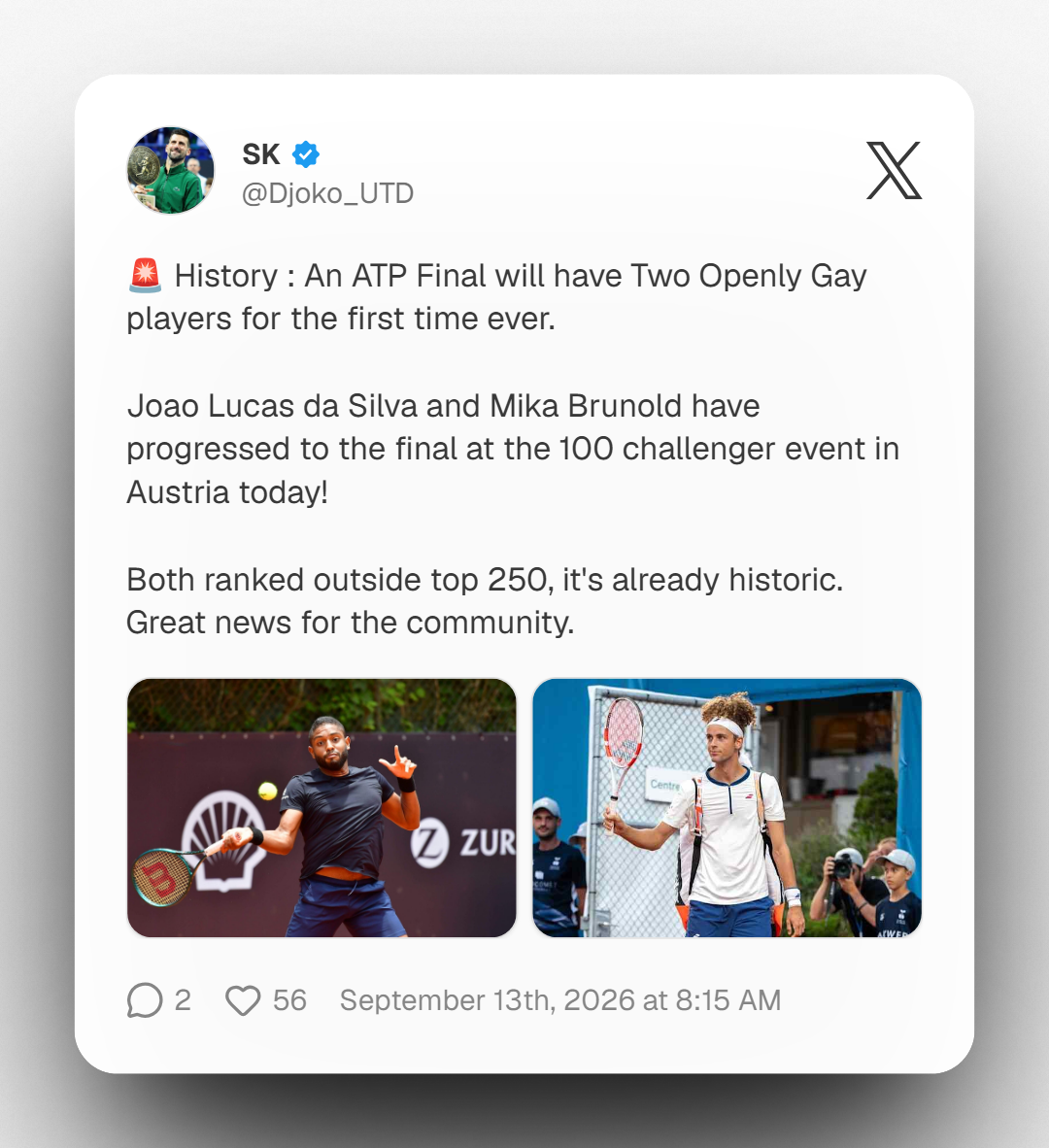
The 21-year-old Swiss, ranked No. 410 in the world, beat 26-year-old Brazilian Reis da Silva 6-4, 6-3 to win the Tulln Challenger. The trophy was nice. The significance was even nicer.
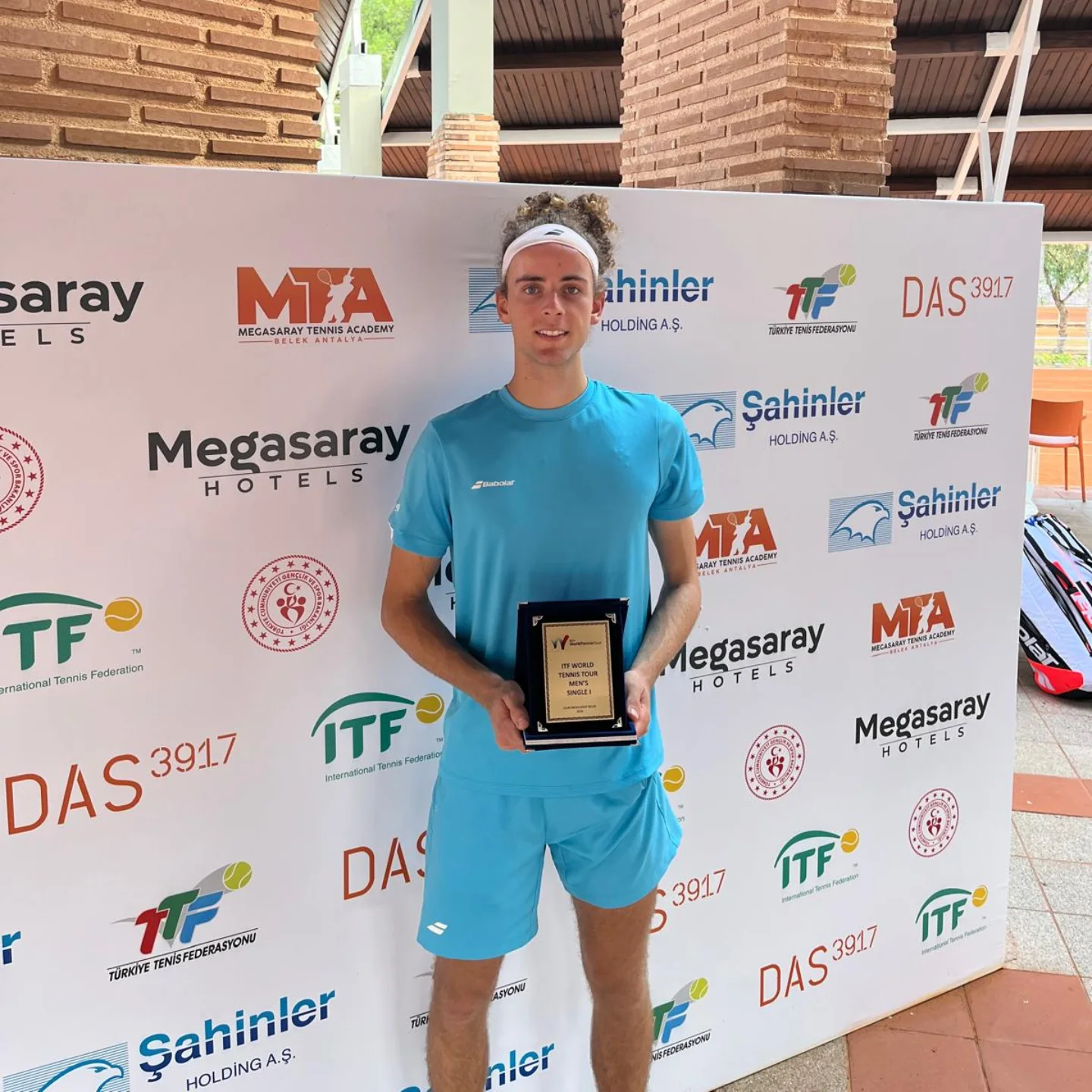
Mika Brunold had a very personal thank-you
During the trophy ceremony, Brunold turned to Reis da Silva and credited him with helping give him the courage to come out as gay.
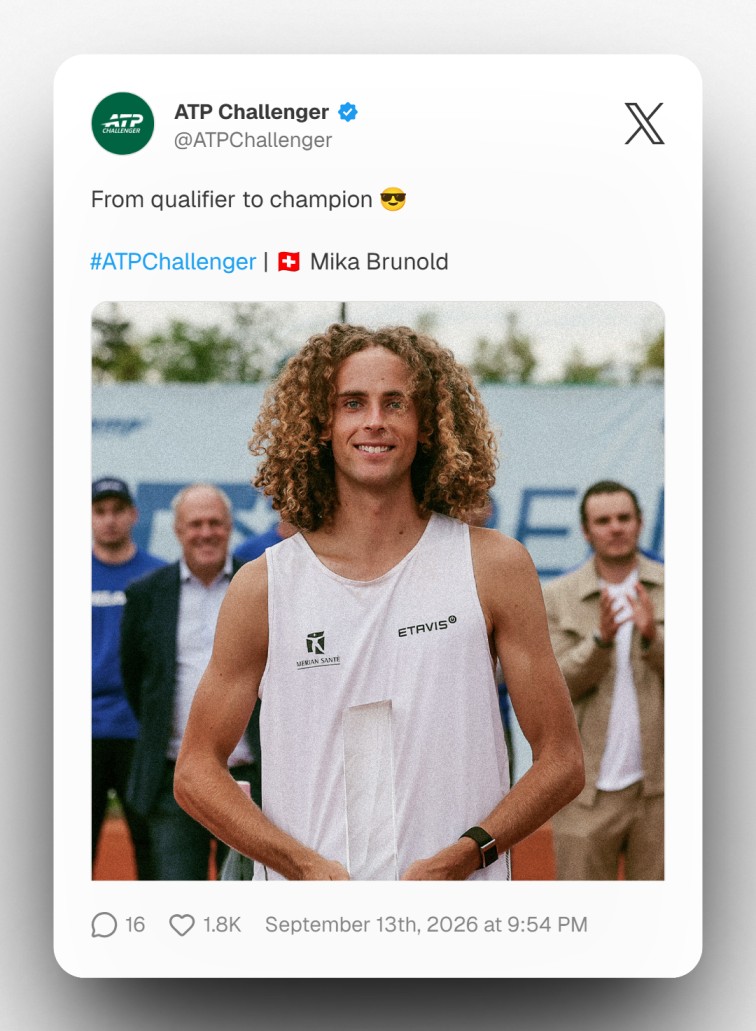
“I want to thank you,” Brunold told Reis da Silva during the trophy ceremony. “One year after your coming out, I did too. You were a big inspiration for me and I’m really proud of us.”
Honestly, try getting through a tennis trophy ceremony without getting a little emotional after that.
RELATED: Two Olympians Are Taking Up Space — And Neither Is Apologizing For It
WHAT A MOMENT 🎾🏳️🌈❤️
During the Tulln Challenger trophy ceremony, Mika Brunold thanks Joao Lucas Reis da Silva for inspiring him to come out and says they can help people struggling with their sexuality.
Never thought I’d see the day! pic.twitter.com/NOKsT2Q6bk
— The Gay Tennis Pod (@thegaytennispod) September 13, 2026
Reis da Silva became the first active male professional tennis player to publicly come out as gay in December 2024, before Brunold became the second in November 2025.
Their meeting in Tulln was therefore the first professional men’s final contested by two out gay players. A historic tennis milestone, yes — but also a pretty extraordinary reminder of how much visibility can matter when someone is trying to figure out whether there is a place for them in the sport.
Brunold said the pair could be role models for people struggling with their sexuality before thanking his opponent and wishing him luck for the future. Not exactly your standard “great match, good luck next time” ending.
João Lucas Reis da Silva knows what visibility can mean
Reis da Silva made his sexuality public through an Instagram post celebrating the birthday of his then-boyfriend, actor and model Gui Sampaio Ricardo.
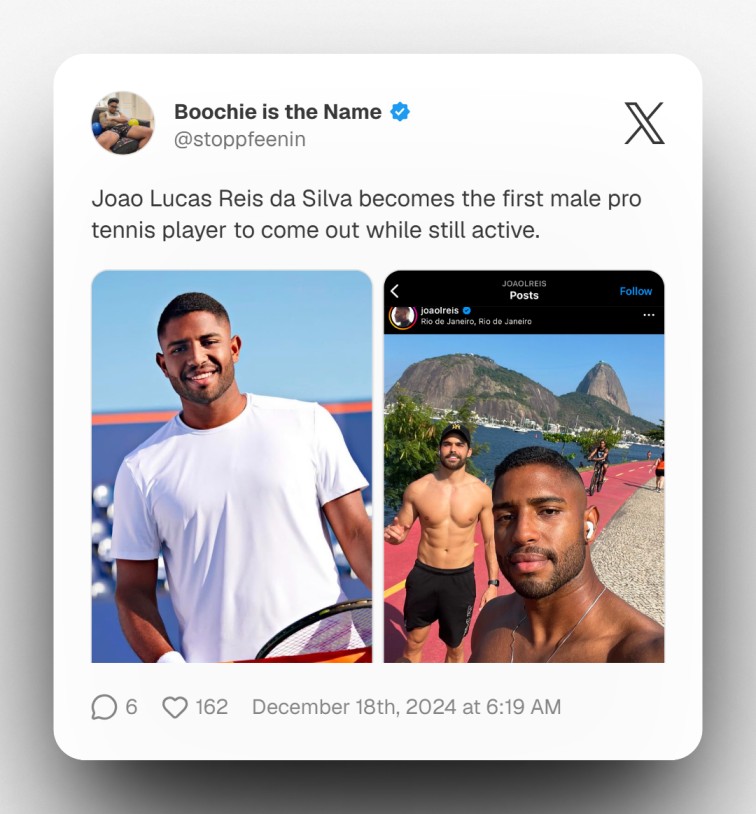
During an interview later that month, Reis da Silva said he had not intended to make a wider statement with the post, but hoped his visibility could make it easier for others.
“Maybe if I had had someone playing saying, ‘I’m gay, I’m here, I’m competing for the big tournaments,’ it would have been easier for me to accept myself and to love myself,” Reis da Silva said.
“People have told me that they admire me. That I inspire people. So it’s a big deal for me and them.”
And now we know exactly what that kind of visibility can look like.
One player sees another openly living his life and competing at the highest level, and suddenly the idea of doing the same doesn’t seem quite so impossible. For Brunold, Reis da Silva’s example clearly meant enough to become part of his own story.
A historic final with a very gay footnote
Brunold did not exactly stroll into the final, either. He came through qualifying in Tulln and won seven matches during the tournament to secure the title. Reis da Silva reached the final without dropping a set before Brunold finally ended his run with that 6-4, 6-3 victory.
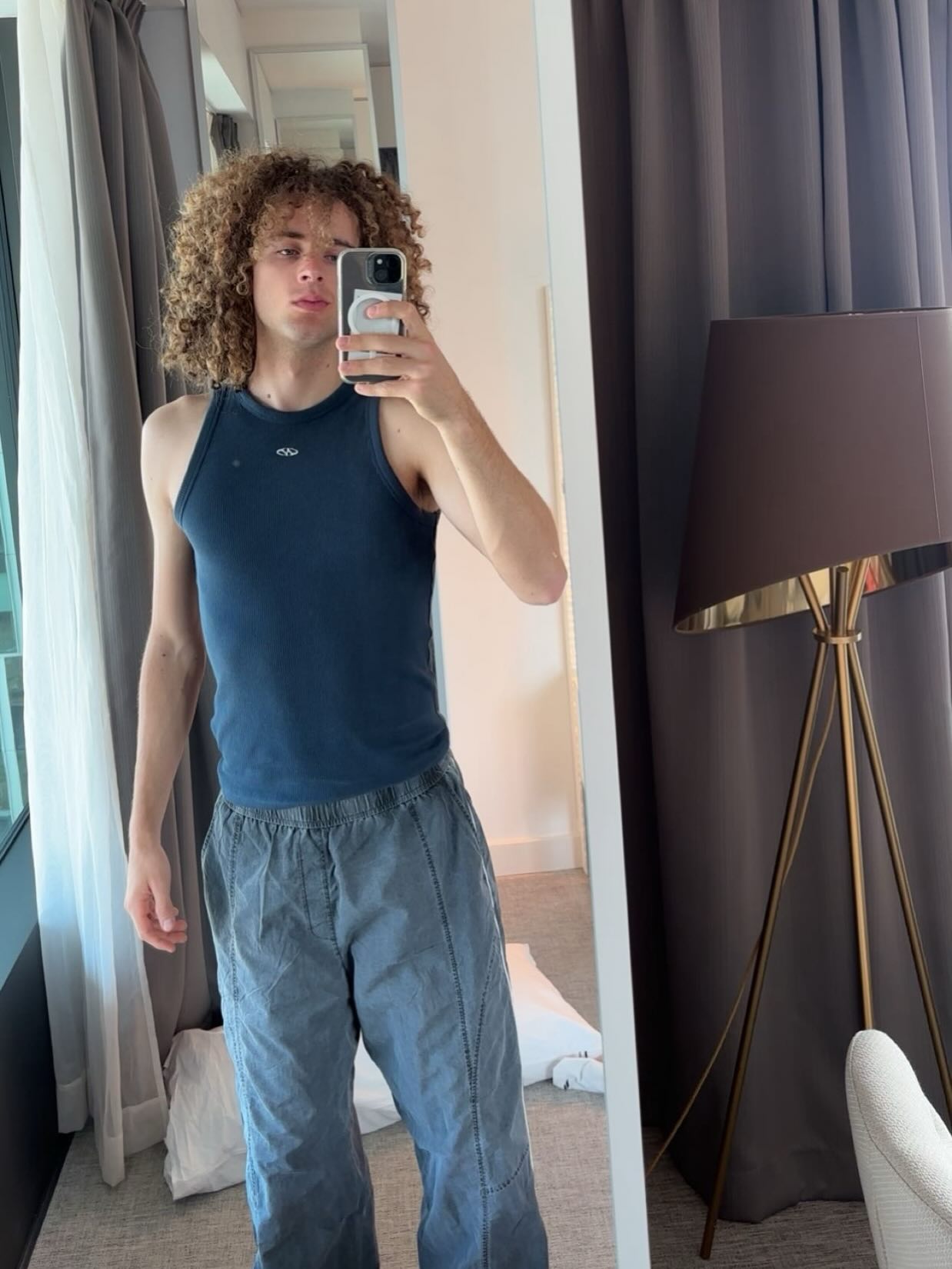
On the scoreboard, one player won and one player lost. At the trophy ceremony, however, both players had already made history.
Their final marked the first professional men’s final contested by two out gay players, while Brunold’s words gave the occasion another layer entirely. The player who once helped him see that coming out was possible was now standing across from him in a championship match. And yes, we absolutely love a little emotional plot twist with our tennis.
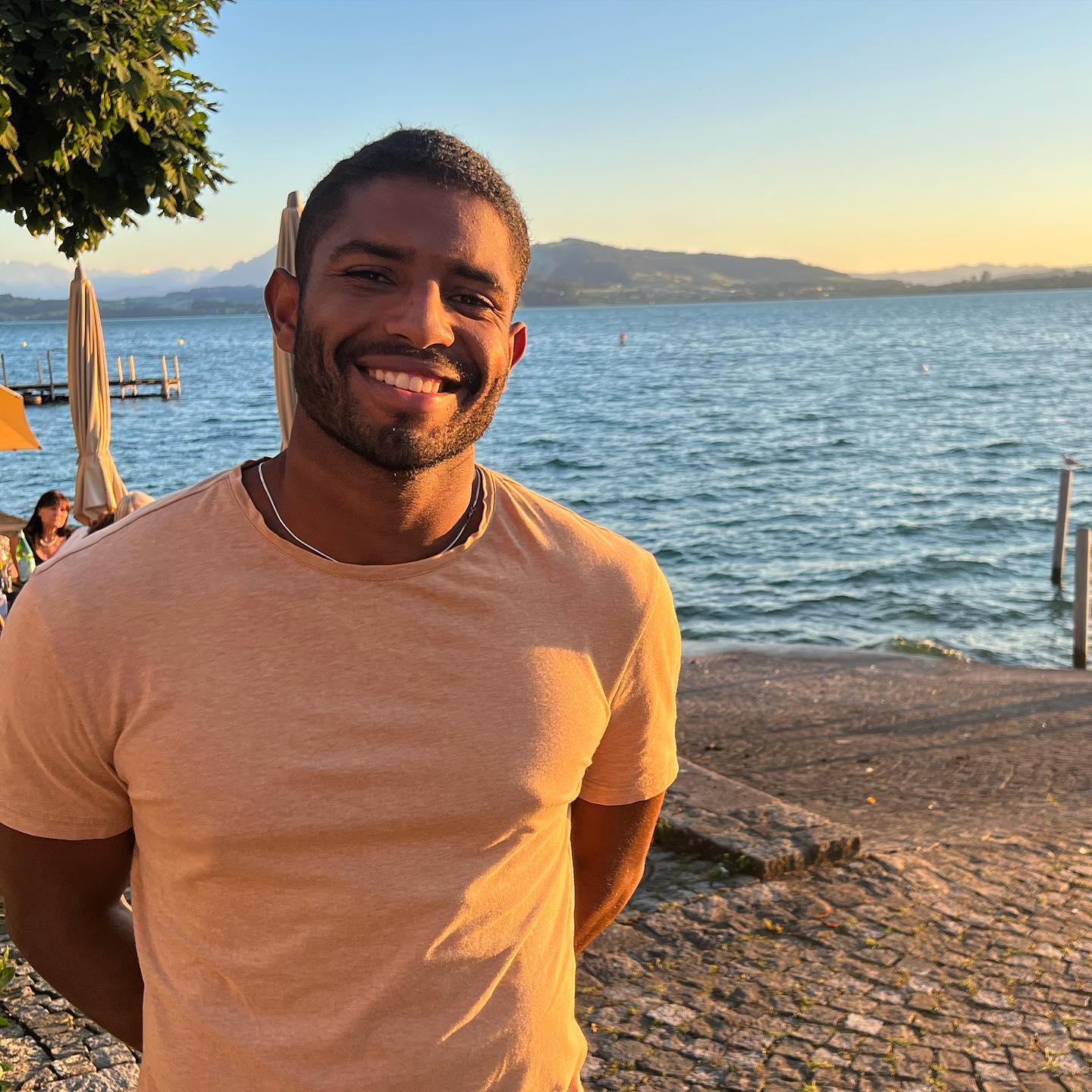
For gay fans, the moment is bigger than a statistic. Representation can mean seeing someone who looks like you, lives like you or has faced the same questions you have — and realizing they can still step onto the court, compete, win, lose and take up space without hiding who they are.
Reis da Silva wanted his visibility to make things easier for others. In Tulln, Brunold made it pretty clear that it already did.
Source: NY Times