


Britain may need to check whether its collective libido is on airplane mode. People are having sex less often than they used to, younger adults are increasingly inexperienced, and the country’s bedroom habits appear to be undergoing a rather significant slowdown. But amid all that abstinence-adjacent news, there’s one curious development: more people are reporting same-sex sexual experiences.
RELATED: Ace Banner’s Photos Fuel 1.4 Million Dollar Romance Scam Nightmare
Apparently, fewer trips to the bedroom don’t necessarily mean fewer discoveries once people get there.
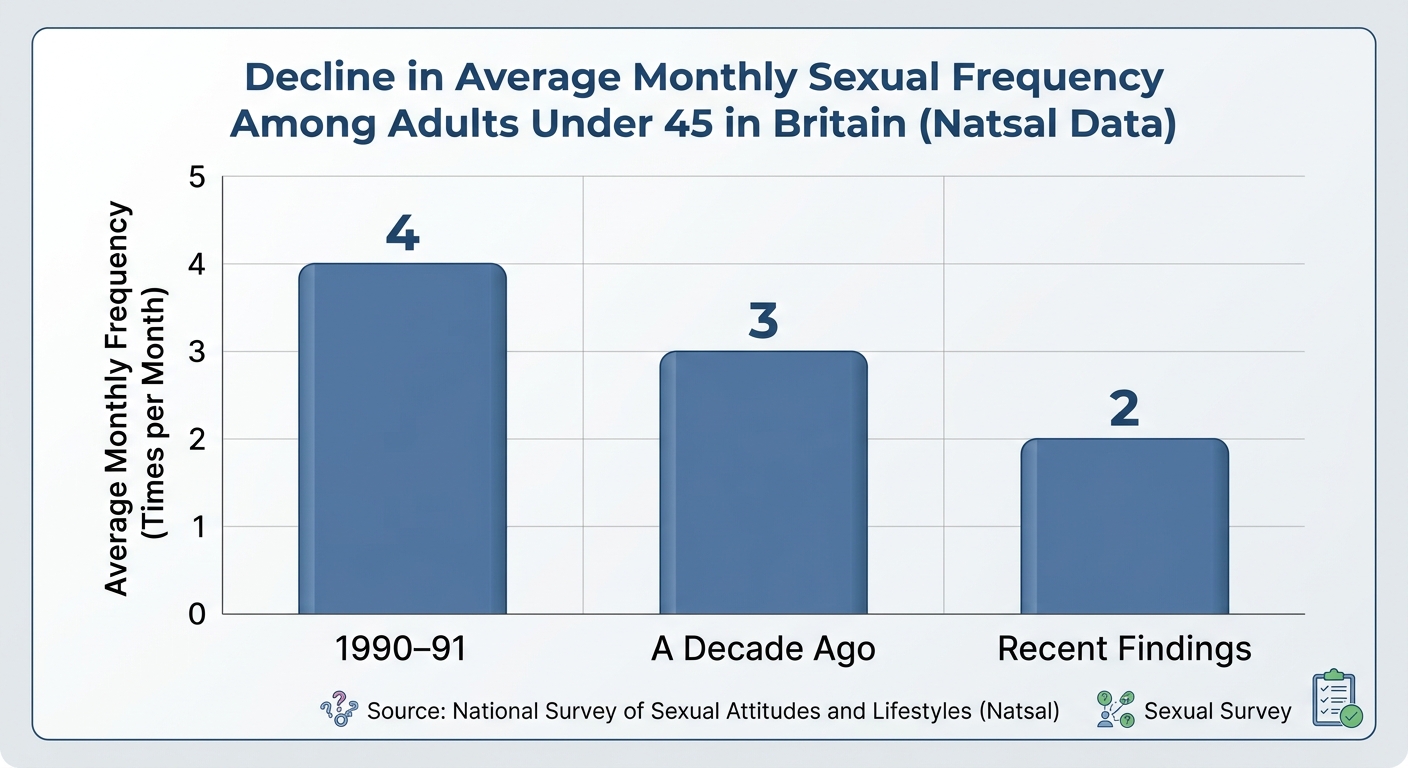
According to new findings from the National Survey of Sexual Attitudes and Lifestyles (Natsal), adults under 45 in Britain are having sex an average of twice a month, compared with four times monthly in 1990–91. Even a decade ago, the average was three times a month, meaning Britain’s sex life has continued to cool off.
The numbers might not exactly inspire anyone to cancel their plans and head straight for the nearest hookup, but the changing attitudes and experiences behind them are considerably more interesting.
RELATED: HIV Rates Are Falling — And Gay Men Are Leading the Charge
The Bedroom Is Getting Quieter, but Curiosity Isn’t
The decline in sexual frequency is particularly noticeable among younger adults. Around one in three people aged 16 to 24 have never had sex, compared with approximately one in five in earlier surveys conducted between 1990 and 2010.
Whether that’s down to dating fatigue, changing priorities, economic pressures, technology or some combination of life’s many libido-killing inconveniences isn’t something the survey can definitively answer. Researchers have also found online sexual behaviours are common, although whether they’re replacing partnered intimacy remains uncertain.
So Britain might be spending less time having sex, but that doesn’t automatically mean people are becoming less interested in exploring what they want.
Same-Sex Experiences Are on the Rise
Here’s where the figures get particularly interesting for LGBTQ+ readers. While the frequency of sex has declined, the proportion of people reporting same-sex sexual experiences has increased considerably over the past decade.
Among adults aged 16 to 44, the share of women who said they had ever had sex with a same-sex partner doubled from seven percent to 14 percent. For men, it tripled from four percent to 12 percent.
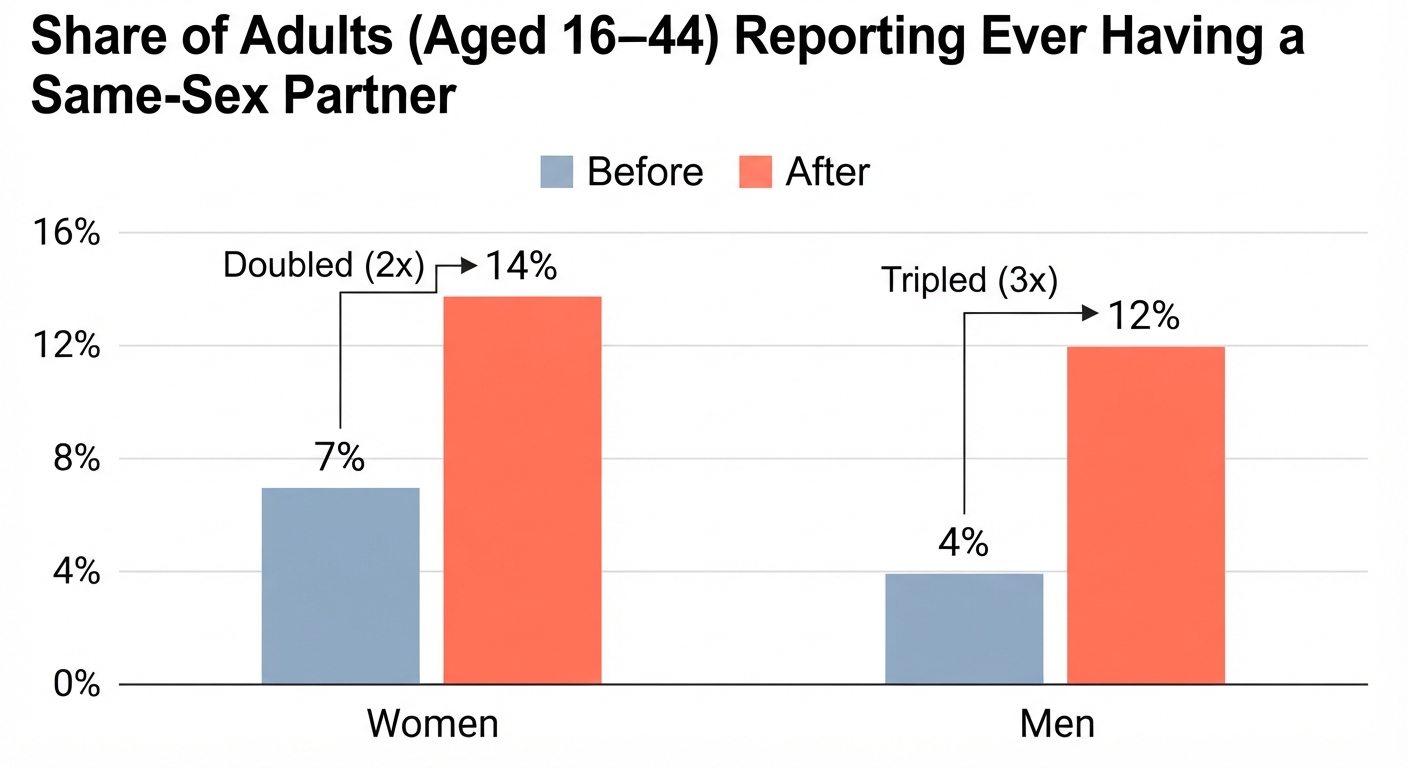
That’s a sizable shift in reported experiences, although it shouldn’t automatically be interpreted as an equivalent increase in people identifying as gay or bisexual. Sexual experience and sexual identity aren’t necessarily the same thing, and the researchers cautioned that differences in survey participation may have influenced the figures.
Still, it’s an intriguing contrast. The country might be having fewer sexual encounters overall, but the experiences people report are becoming more varied. The traditional assumptions about who people sleep with aren’t necessarily telling the whole story anymore.
Less Sex Doesn’t Automatically Mean Better Sex
The survey also looked at sexual wellbeing for the first time, with low scores particularly widespread among younger people, sexual and gender minorities, and people on lower incomes.

Which is perhaps the more important conversation to have. Sex isn’t a monthly quota, and nobody needs to turn their bedroom into a performance review. Frequency alone doesn’t tell us whether someone is satisfied, comfortable, fulfilled or even interested in having more sex.
Britain’s declining numbers may make for a dramatic headline, but the rise in reported same-sex experiences offers another perspective on how people’s sexual lives are changing.
The country may be doing it less, but the conversation about who, how and what people want is far from finished.
Source: UCL News