


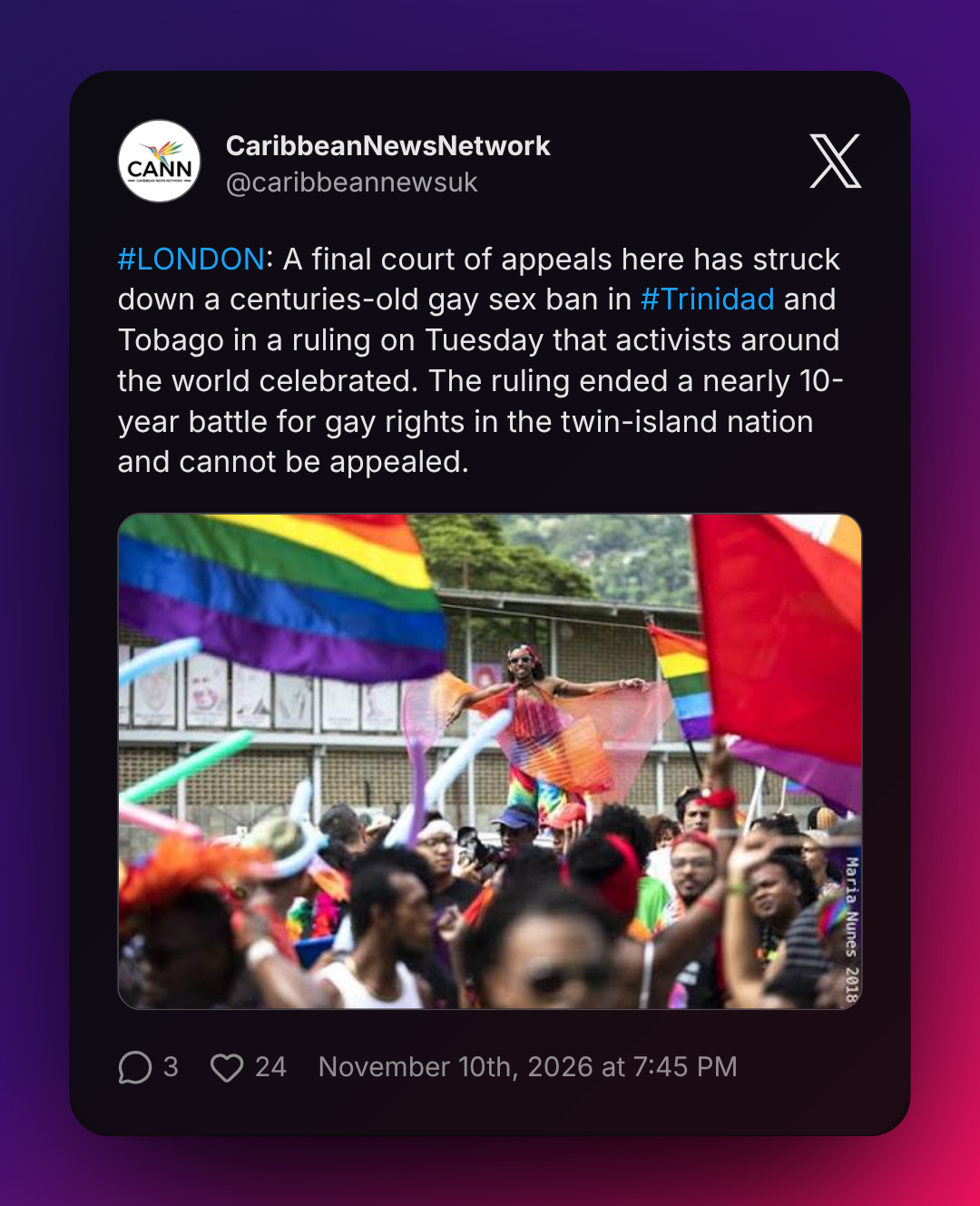
For LGBTQ+ people in Trinidad and Tobago, getting rid of a law criminalizing same-sex intimacy has been anything but a straight line. What began as a colonial-era restriction became a decades-long legal battle, complete with a landmark court victory, an unexpected reversal, and a final appeal to Britain’s highest court for the Caribbean nation.
Now, in November 2026, the country’s LGBTQ+ rights history has reached another major milestone. Here’s how we got here.
The 1500s: Where the Law Began
The origins of the ban can be traced back to England during the reign of King Henry VIII, when the British Parliament introduced the Buggery Act in the 1500s. The law criminalized certain sexual acts, and similar restrictions were eventually carried across the British Empire.
READ: January 6 Rioter Mistakes Cat Convention for Furry Event
1925: Colonial-Era Restrictions Enter Trinidad
The British colonial government introduced the Offences Against the Person Act in Trinidad and Tobago in 1925. Sections 60 to 62 criminalized buggery, attempted buggery, and acts of gross indecency between men. The penalties included up to five years in prison for buggery and two years for gross indecency.
Even after gaining independence from Britain in 1962, Trinidad and Tobago retained these restrictions.
1986: The Law Gets Tougher
Parliament replaced the earlier legislation with the Sexual Offences Act of 1986, introducing Sections 13 and 16. These provisions criminalized buggery and serious indecency, including consensual same-sex activity between adults in private.
The new legislation increased the potential penalties, with buggery carrying up to 25 years in prison and serious indecency up to five years. It also extended the indecency provision to women.
2017–2018: Jason Jones Takes the Fight to Court
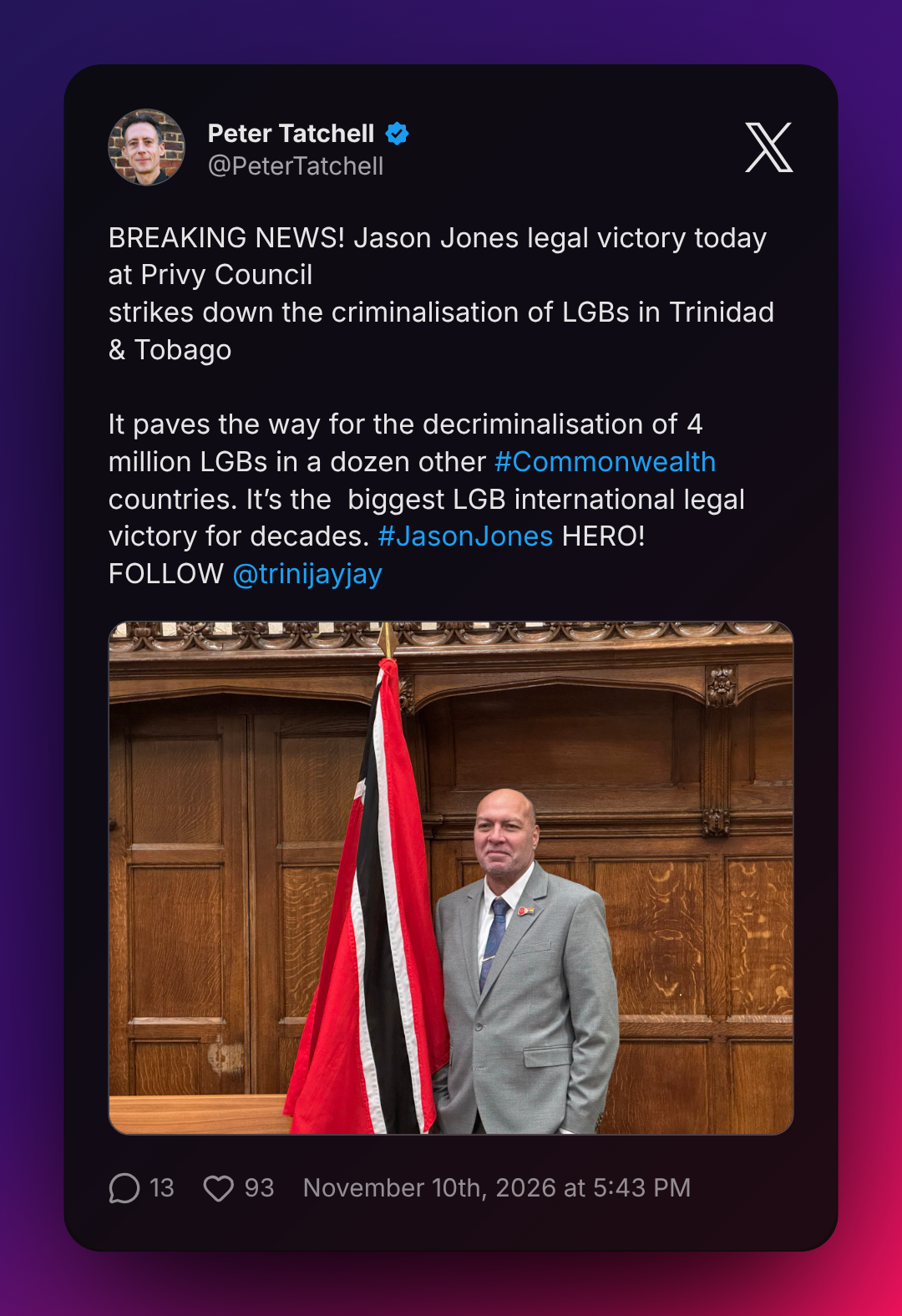
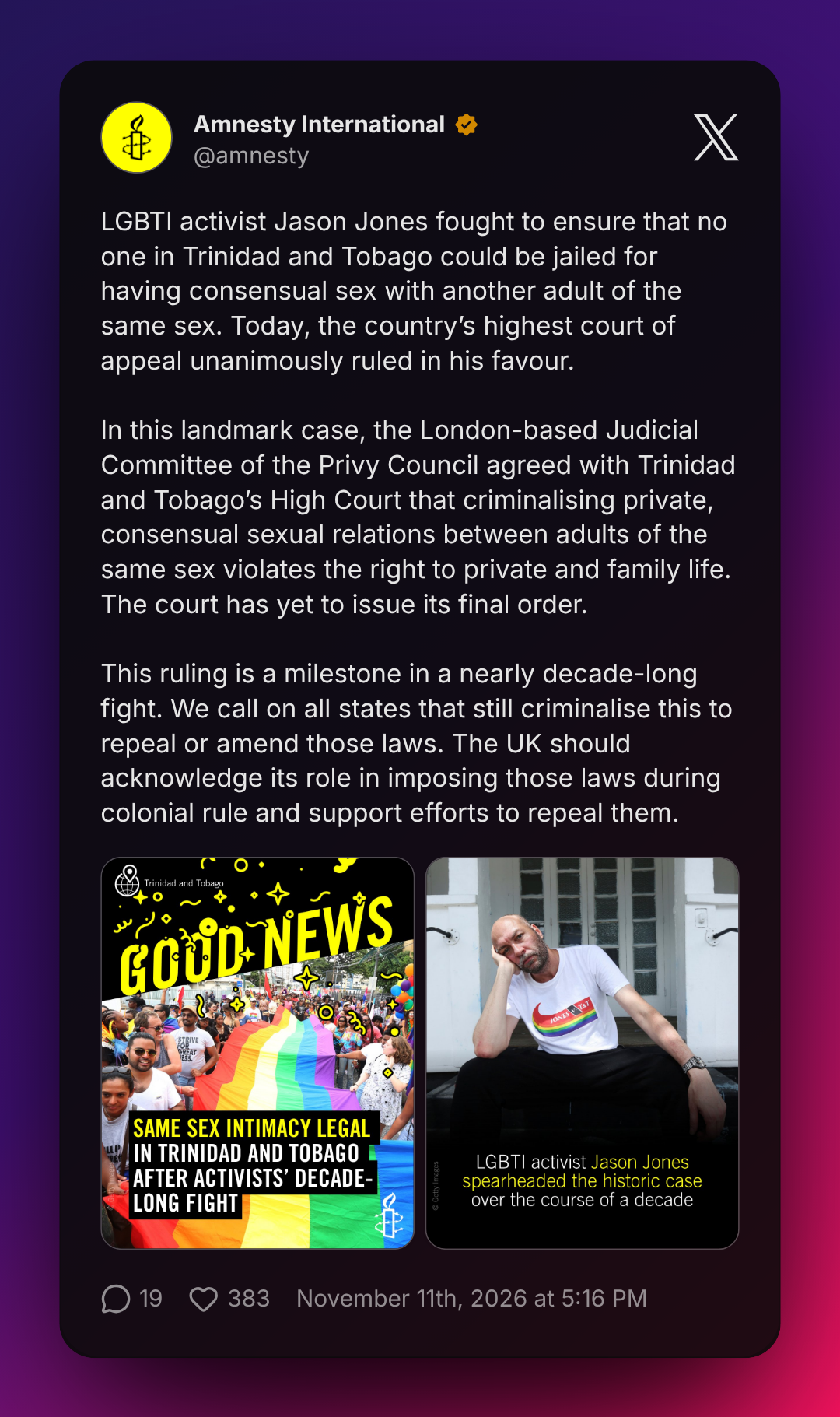
Trinidadian LGBTQ+ activist Jason Jones challenged the law, arguing that it violated his constitutional rights, particularly his right to private and family life.
In April 2018, the High Court ruled in his favor, finding Sections 13 and 16 unconstitutional insofar as they criminalized consensual sexual activity between adults. It was a significant victory for LGBTQ+ rights in the country.
However, the government appealed.
2025: A Major Reversal
In March 2025, the Court of Appeal overturned the High Court’s central ruling, relying on a constitutional provision known as the savings clause. This provision protects certain laws inherited from before the country’s 1976 Constitution.
The court concluded that the older prohibitions had survived the introduction of the 1986 legislation. It effectively restored the criminal restrictions, although with the lower penalties from the earlier law: five years for buggery and two years for gross indecency.
Jones refused to let the fight end there and took his case to the Judicial Committee of the Privy Council in London.
November 10, 2026: The Privy Council Rules
The Privy Council unanimously allowed Jones’s appeal and rejected the government’s cross-appeal.
The court found that Sections 13 and 16 were not protected by the constitutional savings clause and could not be justified as reasonable restrictions on individual rights.
Lord Sales, delivering the judgment with Lord Burrows, said the criminalization of private, consensual same-sex relations interfered with a particularly important part of a person’s identity and private life.
The court has requested further submissions before issuing its final remedial order, but its provisional view is that the original High Court ruling should be upheld.
For Trinidad and Tobago’s LGBTQ+ community, the decision marks a historic turning point in a legal battle that has spanned generations. And after years of court victories and setbacks, the fight against this colonial-era restriction has finally reached a defining moment.