


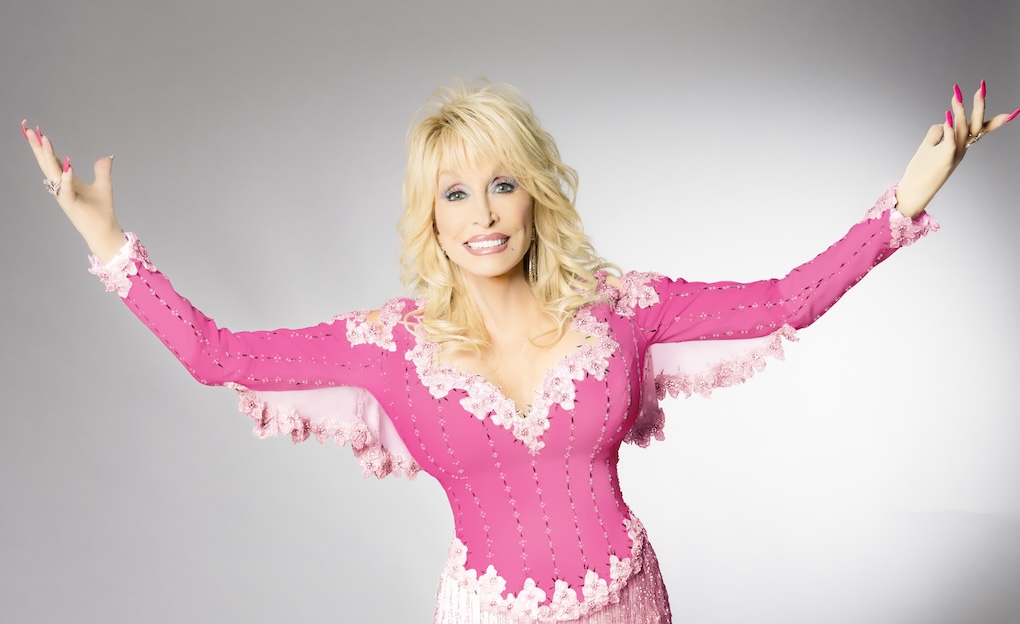
There are celebrities, there are icons, and then there is Dolly Parton.
The singer, songwriter, actress, philanthropist, businesswoman, and undisputed patron saint of rhinestones has died at the age of 80, according to an official announcement released Tuesday. Parton died peacefully in Nashville, Tennessee, leaving behind a seven-decade career that made her one of the most beloved entertainers in history.
For LGBTQ+ fans, Dolly was always more than a country music superstar. She was a safe space wrapped in sequins. A woman whose music, humor, kindness, and unapologetic larger-than-life personality made generations of queer people feel seen, welcomed, and celebrated.
And frankly, who else could make a country song about a desperate blonde rival named Jolene feel like required gay bar karaoke?
View this post on Instagram
A Gay Icon Who Actually Showed Up for LGBTQ+ People
Dolly’s appeal within the LGBTQ+ community was never simply about the wigs, the rhinestones, the camp, or the towering blonde hair.
Although, let’s be honest, those certainly didn’t hurt.
What made Dolly truly beloved by LGBTQ+ fans was that her support for the community went beyond simply enjoying a devoted gay following. Over the years, she repeatedly spoke about acceptance, individuality, and the belief that people should be allowed to live as their authentic selves.
In a 2009 interview with Joy Behar, Dolly was asked why she believed she had such a large gay following. Her answer was surprisingly personal. She said that LGBTQ+ fans understood what it was like to feel different and to struggle to be accepted.
Dolly explained that she believed people appreciated the fact that she loved them for who they were and did not believe in trying to change them. “We should allow people to be who they are and love them as they are,” she said.
For many LGBTQ+ people, especially those who grew up feeling different in communities where acceptance was harder to find, that message mattered.
A lot.
She Supported Marriage Equality—With Classic Dolly Humor
Dolly also made her position on same-sex marriage perfectly clear.
When asked during that same interview whether she supported gay marriage, she responded with one of the most Dolly Parton answers imaginable: “Sure, why can’t they get married? They should suffer like the rest of us do.”
The joke was vintage Dolly, but the message underneath it was serious. She believed LGBTQ+ couples deserved the same right to marry as everyone else.
She also pushed back against religious judgment of LGBTQ+ people, saying that she believed God made people as they are and that it was not for others to judge them.
“I Don’t Judge Nor Criticize People”
Dolly spoke openly about her LGBTQ+ friends and colleagues throughout her career.
In a 2009 interview with Larry King, she explained that she believed LGBTQ+ people had connected with her because she had always been herself and refused to judge or criticize others. She said she had gay and lesbian friends and worked with many LGBTQ+ people, adding that everyone had the right to be who they are.
That spirit of acceptance continued throughout her life.
In a 2016 interview with Vogue, Dolly was asked about the diversity of her audience—described as bringing together people who were gay and straight, Black and white, country and city. Her response was simple: she said people knew she was not judgmental and that she not only accepted differences but celebrated them.
That may be one of the clearest explanations for why queer people loved her so fiercely.
Dolly did not ask people to tone themselves down. She did not tell them to become more acceptable to others. She celebrated difference.
And coming from a woman who built an empire by being unapologetically, gloriously, unmistakably herself, that message carried serious weight.
From the Smoky Mountains to Global Superstardom
Born in Sevier County, Tennessee, on January 19, 1946, Dolly Rebecca Parton grew up as one of 12 children in a humble one-bedroom home in the Smoky Mountains. She began writing songs as a child and eventually moved to Nashville, where she built one of the most remarkable careers in entertainment history.
Then came the hits.
“Jolene.” “Coat of Many Colors.” “9 to 5.” “Islands in the Stream.” “Here You Come Again.” “I Will Always Love You.”
That last song, of course, became even more legendary when another beloved queer icon, Whitney Houston, transformed it into one of the biggest songs in music history.
But Dolly’s career was never just about music. She conquered Hollywood with 9 to 5 and Steel Magnolias, became a television personality, launched Dollywood, and built a business empire that stretched far beyond the recording studio.
Her Legacy Was Bigger Than the Stage
Perhaps Dolly’s greatest achievement was the way she used her extraordinary success to help others.
Her charitable work supported education, healthcare, disaster relief, and countless communities. Through Dolly Parton’s Imagination Library, she helped provide hundreds of millions of books to children around the world, helping inspire a love of reading for generations.
That was the thing about Dolly: she could give us a glamorous look, a perfect punchline, and an unforgettable song—and still remind us that kindness mattered.
She proved that being wildly successful did not mean you had to stop caring about people.
Why Dolly Meant So Much to LGBTQ+ Fans
Dolly Parton became a gay icon because of the wigs, the glamour, the sass, the camp, and the endless parade of unforgettable one-liners.
But she became beloved by LGBTQ+ people because she showed up.
She spoke about acceptance. She supported marriage equality. She rejected religious judgment of LGBTQ+ people. She celebrated difference. And she repeatedly made it clear that people should be allowed to be themselves.
For LGBTQ+ fans, Dolly represented something powerful: the idea that you could be unapologetically yourself, love who you love, sparkle as brightly as you wanted—and still deserve to be treated with kindness and dignity.
So yes, Dolly Parton was a gay icon.
But her legacy with the LGBTQ+ community was about much more than rhinestones and camp.
She didn’t just inspire us to be fabulous. She reminded us that we had every right to be ourselves.
A Legend Who Will Always Be With Us
Dolly Parton collected Grammys, Country Music Association Awards, American Music Awards, a Kennedy Center Honor, and inductions into both the Country Music Hall of Fame and Rock and Roll Hall of Fame. Her career included more than 100 million albums sold worldwide and hits across country, pop, rock, dance, and other genres.
But numbers cannot fully explain Dolly Parton.
They cannot explain the woman who made people laugh with a single sentence. The performer who could break your heart with a song she wrote in a few minutes. The woman who turned rhinestones and big hair into high art.
And they certainly cannot measure the number of LGBTQ+ people who found joy, comfort, confidence, and perhaps a little extra fabulousness because Dolly showed them that being yourself was always the best look.
Dolly Parton may be gone, but her voice, her music, her humor, and her enormous heart will continue to live everywhere people sing along to “Jolene,” clock in for “9 to 5,” or remind themselves that no matter what life throws their way, a little sparkle never hurts.
Because some legends never really leave us.
And if anyone was ever going to prove that “I Will Always Love You” was more than just a song, it was Dolly.
Rest in rhinestones, queen. The world is a little less fabulous without you.
A small, private service will be held for immediate family, and fans are being encouraged to share tributes to Dolly through her official social media channels and website.
Very well written. If only there were more wonderful people like her in this Country what a great place we would live in.
I wasn’t ready for this. We’ve lost a very bright spot in darkness. Dolly was everything you wanted in a human being. She represented class, grace, dignity, intelligence, humor, and simple human decency.
Rest in Heaven, Dolly, where you belong.
Dolly Parton will be heavily missed.
A true legend