


Long before rock ’n’ roll had perfected the art of leather jackets, hip swivels and parents clutching their pearls, there was Johnnie Ray: a partially deaf, wildly emotional, piano-playing teen idol who could turn a microphone into a full-body emotional crisis. He cried onstage. He threw himself around. He sang like heartbreak had personally wronged him. And for a few glorious years in the early 1950s, America absolutely ate it up.
RELATED: Two Olympians Are Taking Up Space — And Neither Is Apologizing For It
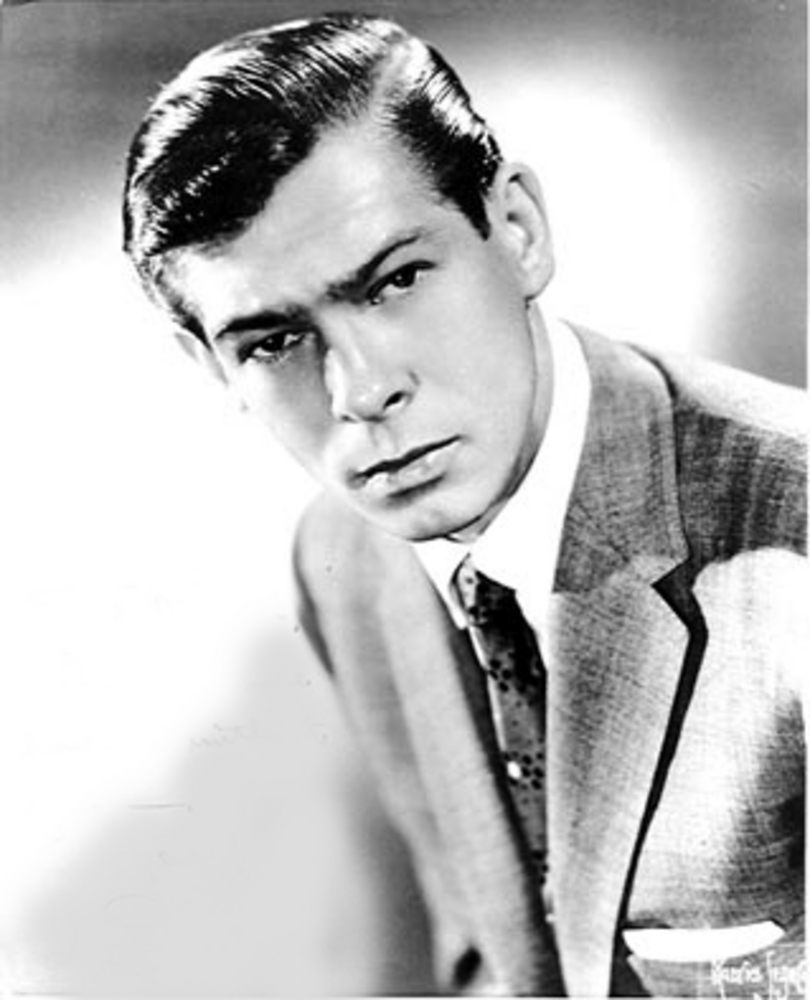
That makes filmmaker John Waters’ description of Ray especially delicious: “He was deaf, gay, and cried in all his songs.” Waters added that Ray “got busted in a men’s lavatory, and he can really sing. He cries and cries.”
The line is wonderfully blunt, although “gay” needs an asterisk the size of a 1950s billboard. Ray never publicly identified as homosexual, and he married women. People around him nevertheless alluded to possible bisexuality, while singer Rosemary Clooney once wrote: “Johnnie might be gay, as people said, but clearly not all the time.”
So rather than stamping a modern label on Ray with absolute certainty, it may be more accurate to see him as a figure whose sexuality remained complicated — which, frankly, is often where history gets far more interesting.
RELATED: Phillip Picardi Is Giving the Bunny a Gay Makeover
And what a history it was.
Before Elvis had entered the building, Johnnie Ray was already making teenagers scream
In the early 1950s, Johnnie Ray wasn’t some obscure cult curiosity waiting patiently for the internet to discover him. He was enormous.
Ray was born in Dallas, Oregon, in 1927 and became a major musical star in the post-war years. He developed a reputation for an intensely physical performance style, singing with his entire body rather than merely standing behind a microphone looking handsome and respectable. He jumped, bent his knees, tugged at his hair, fell to the floor and, most famously, cried. This was not exactly how male pop stars were expected to behave.
Ray’s performances were dramatic, excessive and deeply emotional, helping create a bridge between the polished pop world of singers such as Frank Sinatra and the more physical rock ’n’ roll that Elvis Presley and others would soon take to another level.
Tony Bennett considered Ray the “father of rock ‘n’ roll.” In other words, the man was not merely “that crying guy before Elvis.” He was the crying guy who helped show Elvis what was possible.
Cry was basically emotional rock ’n’ roll before rock ’n’ roll knew what to call itself
Ray’s signature song, Cry, arrived in October 1951 and became a phenomenon. It sold two million copies and turned its singer into an instant teen sensation. And the title was not exactly false advertising. Ray did not merely sing Cry. He embodied it.
His performances were full of trembling intensity, theatrical anguish and actual tears. At a time when male singers were still largely expected to project composure, Ray looked as though someone had just informed him that feelings were, in fact, real. Teenagers loved it. The adults, naturally, had questions.
Critics dubbed him the “Prince of Wails,” while his exaggerated emotional style became one of the things that separated him from traditional crooners. Ray wasn’t simply singing about heartbreak; he looked like heartbreak had hired him as its spokesperson.
The song itself was unusual, too. Susan Sontag later described hearing it as a “revelation,” while a young Bob Dylan would eventually say Ray was “the first singer whose voice and style I totally fell in love with.”
That is quite a legacy for a man whose main musical instruction appeared to be: please suffer dramatically into this microphone.
Johnnie Ray’s deafness shaped the performer — and the outsider
There is another reason Ray’s story feels remarkably modern. Ray was deaf or partially deaf from childhood and wore a hearing aid. He said his hearing loss was caused by an accident, although that explanation was disputed, and academic Cheryl Herr argued in 2009 that his condition was likely congenital.
Whatever its precise origin, Ray’s hearing loss was an important part of his story and appears to have influenced his performance style. Ray himself connected his emotional intensity to his childhood experiences:
“Maybe there’s a sadness in me, from when I was a boy,” he said. “I was half deaf and I still wear a hearing aid. As a kid I couldn’t hear the teachers very well. Other kids got tired of shouting. I was left by myself.”
That isolation mattered. Ray became an introspective child, but also an ambitious one. His performance style made no attempt to hide awkwardness. Instead, he turned his unusual physicality into part of the spectacle. His movements could be strange, dramatic and almost startlingly vulnerable.
He wasn’t smoothing out his differences for the audience. He was turning them into a show.
And yes, there was a men’s-room scandal
This is where the Johnnie Ray story becomes considerably messier. Before he was famous, Ray was arrested in Detroit after sexually propositioning a man who turned out to be an undercover police officer. The incident later became part of the public story surrounding Ray, particularly as rumors about his sexuality followed him into fame.
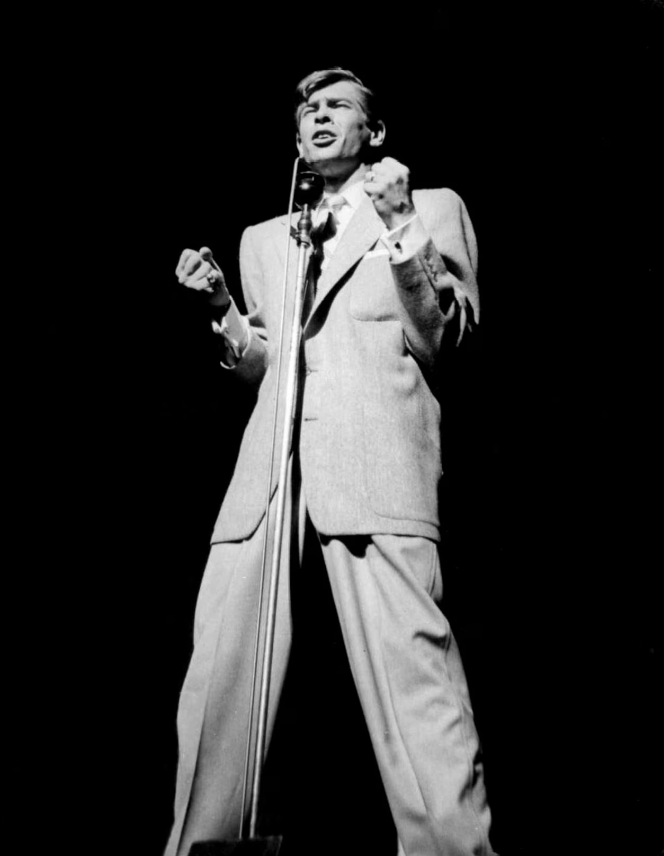
That history matters because the story wasn’t simply celebrity gossip with a vintage filter slapped over it. Ray was navigating a period when sexual encounters between men could bring police attention, arrest and public scandal. And the rumors didn’t stop there.
According to his manager Bill Franklin, Ray explored relationships with both women and men. Franklin recalled:
“There were women and there were men. He was a cute little kid with a big dick. He liked to talk about that and people liked to hear about it.”
The quote is certainly not subtle. Then again, neither was Johnnie Ray.
The closet, the stage and the very complicated love life
Ray’s private life was hardly conventional. He married Marilyn Morrison in 1952, at the height of his fame, but the marriage eventually ended in divorce. At the same time, people close to him described relationships with both women and men.
Few connections generated as much attention as his relationship with Dorothy Kilgallen, one of the most famous journalists in the United States. Their connection was long-lasting, and there was speculation that Ray may have been the father of Kilgallen’s youngest child. That claim remains speculation, rather than established fact.
Ray was also arrested on other occasions by undercover police officers for what were then described as “indecent acts” involving attempts to have sex with men in bars and public places.
The result was a career increasingly tangled up with scandal, changing musical tastes, divorce and his struggles with alcohol. Basically, Ray’s private life had enough intrigue for several seasons of television, and Hollywood somehow still hasn’t ordered the pilot.
Hollywood wanted Johnnie Ray, too
At the height of his fame, Ray made the leap into movies. In 1954, he appeared alongside Marilyn Monroe in There’s No Business Like Show Business. It was his only major Hollywood film role and a pretty useful reminder of just how famous he had become.
For a moment, Ray had everything: hit records, screaming teenagers, international fame, movie-star status and the kind of celebrity that made people want to know what he was doing when he wasn’t onstage. But fame has an expiration date, and rock ’n’ roll was about to get louder.
Elvis Presley and other emerging rock ’n’ roll performers helped reshape the musical landscape. Ray’s intensely emotional pop style, once revolutionary, began to look increasingly out of step with the new generation.
His career declined, while his struggles with alcohol continued. He died in 1990 at 63 from liver failure. The man who had once seemed impossible to ignore gradually became much easier to forget.
So why did we forget him?
That’s the strangest part. Johnnie Ray wasn’t merely a footnote on the road to Elvis. He was a major star who helped establish some of the emotional and physical vocabulary that rock performers would soon take to another level.
Yet his legacy has become oddly fragmented. Elvis remained Elvis. Sinatra remained Sinatra. Ray became “the guy who cried.”
That’s wildly unfair to a performer whose emotional, theatrical approach helped demonstrate that a male singer could be vulnerable, dramatic and completely unafraid of looking ridiculous in pursuit of a feeling. And, yes, that last bit feels particularly queer.
Ray’s legacy isn’t necessarily that he was secretly a modern gay icon waiting to be claimed. It’s that he was a complicated outsider whose life and work can now be examined through a queer lens without pretending we know more about his identity than the historical record allows.
He had relationships with men and women according to accounts from people around him. He was arrested over encounters with men. He never publicly confirmed a homosexual or bisexual identity. And he performed in a way that challenged the era’s expectations of what a male star was supposed to look and sound like.
He made melodrama masculine. He made crying sexy. He made vulnerability a spectacle. Then he helped make room for Elvis.
The queer icon hiding in plain sight
There is a temptation with forgotten artists to turn their lives into tidy redemption stories: overlooked genius, tragic downfall, rediscovered icon. Ray deserves something more complicated than that.
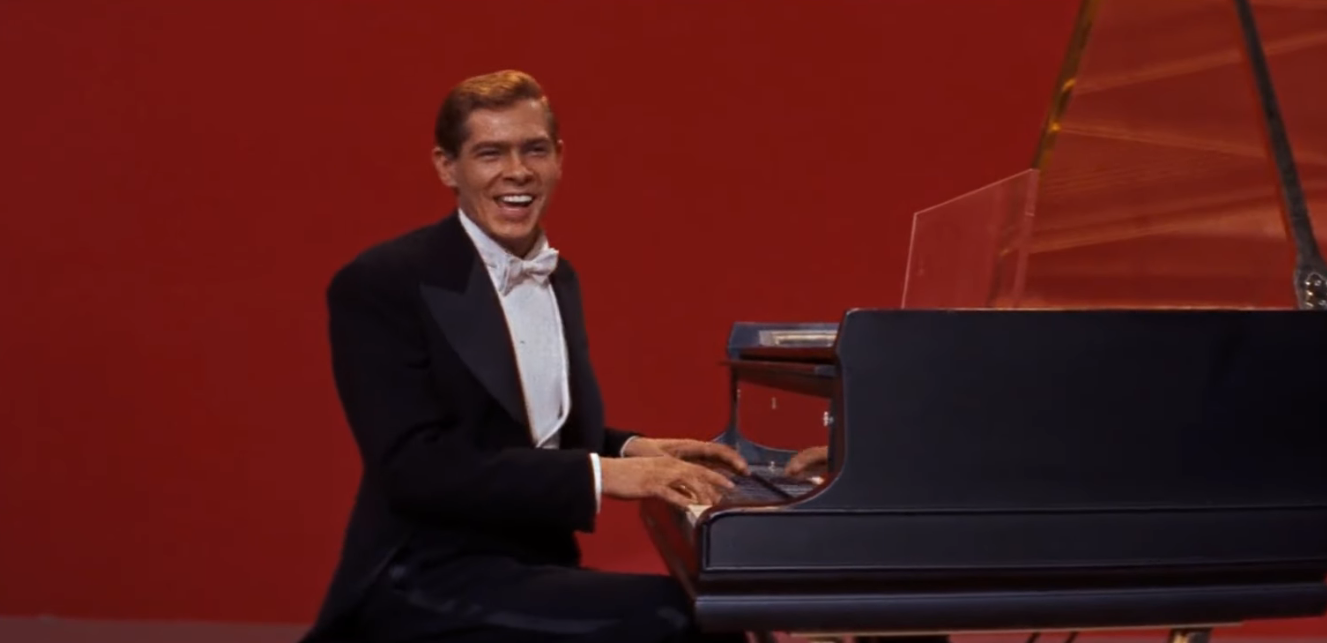
He was enormously successful and deeply troubled. He was a pioneer and, eventually, a relic of the musical world he had helped transform. He was celebrated by teenage fans while his private life became fodder for scandal. And although modern queer audiences may understandably recognize something familiar in his story, his sexuality should not be rewritten into certainty where the historical record remains complicated.
But perhaps that’s precisely why Johnnie Ray is worth rediscovering. He doesn’t fit neatly into the boxes.
He cried when men weren’t supposed to cry. He performed desire without making it tidy. He lived through a period when encounters between men could put a celebrity in handcuffs. And he helped move popular music away from stiffly controlled crooning toward something physical, messy and gloriously excessive.
That is a pretty good queer legacy even without pretending we know exactly what label Ray would have chosen for himself. And if John Waters’ description is what finally gets people curious enough to press play on Cry, well, consider the assignment completed.
After all, the man spent decades waiting for his comeback. He might as well make us cry again.
Source: El Pais
LOL those are my videos! thanks for the feature.