


Phillip Picardi has officially taken the reins at Playboy, and suddenly the Bunny has a gay man, a Catholic upbringing and a former Teen Vogue editor’s eye for culture running the show. For decades, Playboy was the magazine men hid under their mattresses. Now it is apparently something you can leave on a coffee table, take on the train and discuss at dinner without everyone assuming you have just emerged from puberty.
RELATED: Grindr CEO Finally Explains the $500 Subscription Mystery
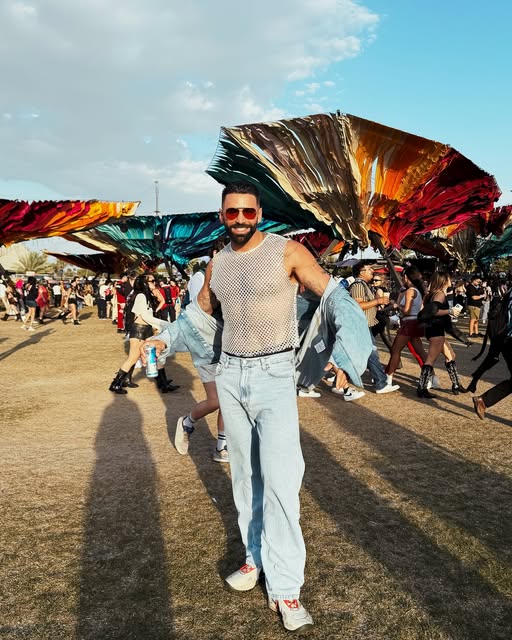
Because apparently the road from Catholic guilt to nude magazines was always there. It just needed better editorial direction.
Picardi wants to make Playboy “playful again,” but his version of playful is less “secretly flipping through the pages” and more “actually having something to say after looking at them.”
RELATED: Nicholas Hoult in ‘Harry Potter’: Stars Have Spoken Out. Is He Next?
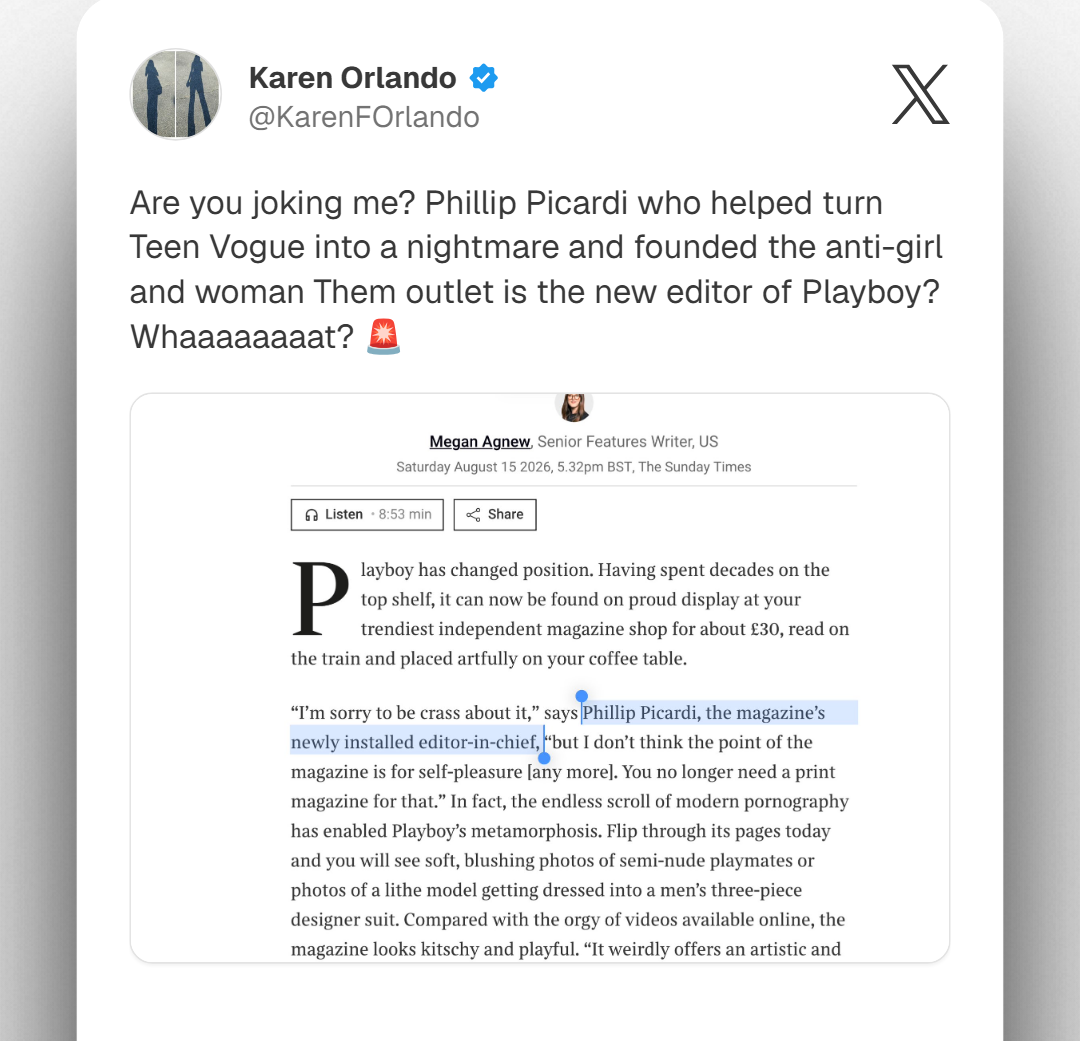
The magazine now costs around £30 and is increasingly positioning itself as a glossy cultural publication rather than a piece of contraband for the bedside drawer. The nakedness is still there. The point of the nakedness, however, is getting a serious rethink.
From Teen Vogue to Playboy: Talk About a Career Pivot
Picardi is no stranger to complicated conversations about identity, culture and sexuality. Before taking over at Playboy, he served as editorial director of Teen Vogue and founded Them, Condé Nast’s LGBTQ-focused publication. Now he has walked into one of the most famous names in men’s publishing and been handed the keys to the Bunny. That is quite the career trajectory.
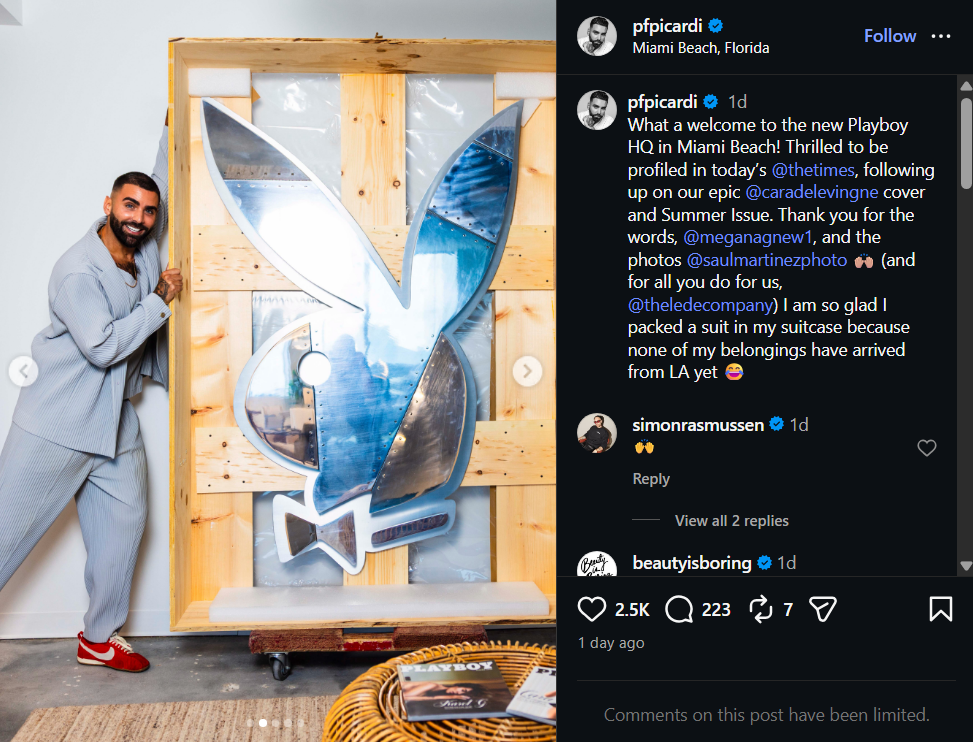
Playboy has been published since the 1950s and built its reputation around a mix of nude photography, interviews, fiction and cultural commentary, traditionally aimed at men.
Picardi’s challenge is to make that formula feel relevant to people who did not grow up thinking a bunny logo automatically meant “hide this from your parents.” The magazine’s updated mission says “all people can pursue pleasure,” which is a fairly ambitious upgrade from the old-school Playboy fantasy.
And Picardi isn’t interested in treating women’s rights and LGBTQ+ rights as separate conversations.
“Queer rights don’t exist without women’s rights,” Picardi told a media outlet. “These things are connected, and Playboy has always been very engaged with that.”
The Bunny, it seems, has discovered intersectionality.
The Naked Truth: Playboy Doesn’t Need to Beat Porn
There is one tiny problem with trying to sell a magazine full of naked bodies in 2026: the internet exists. Why pay £30 for a few carefully curated pages when your phone can summon approximately seven billion naked people before you’ve even finished your coffee? Picardi knows this.
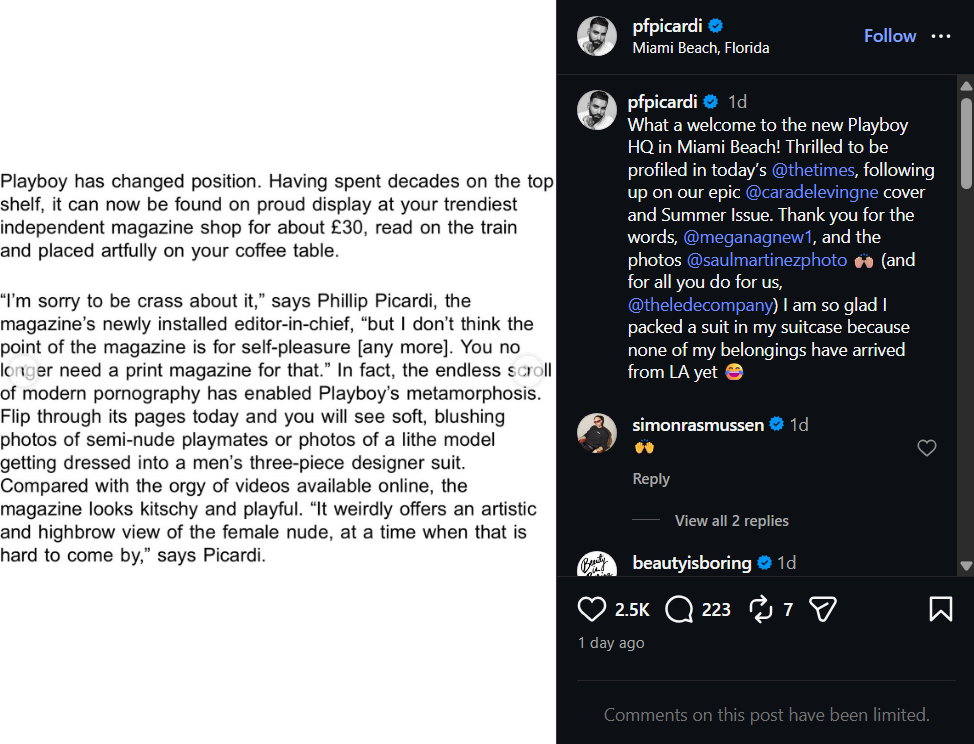
“I’m sorry to be crass about it,” says Phillip Picardi, the magazine’s newly installed editor-in-chief, “but I don’t think the point of the magazine is for self-pleasure [any more]. You no longer need a print magazine for that.”
That changes the assignment completely. Instead of competing with online pornography, Playboy can concentrate on the thing a phone screen cannot quite replicate: a physical object with photography, writing, design and cultural context that people might actually want to keep. Or, as Picardi puts it:
“It weirdly offers an artistic and high-brow view of the female nude, at a time when it is hard to come by.”
High-brow nudes. Somewhere, a queer art critic has just sat up very straight.
High-Brow Playboy Is Apparently a Thing Now
The magazine’s recent features have ventured into subjects including trans pornography and reclaiming sexuality, reflecting Picardi’s desire to make Playboy part of a bigger conversation about sex rather than simply a publication about sex.
“Our moment right now is both extremely prudish and extremely pornographic,” he told Adweek. “The idea that we need a publication that is able to explain sexuality as a cultural force, especially as our younger folks are facing a sex recession and loneliness epidemic—it felt like the right challenge.”
It is a surprisingly serious mission for a publication whose most recognizable mascot is a rabbit wearing a bow tie. But that contradiction is part of the fun. The old Playboy was selling fantasy. The new Playboy seems increasingly interested in asking why we have those fantasies in the first place.
And yes, there are still beautiful people taking their clothes off. This is Playboy, not The Economist.
Cara Delevingne Fits the New Playboy Mood
The magazine’s cover featuring Cara Delevingne makes the shift particularly obvious.
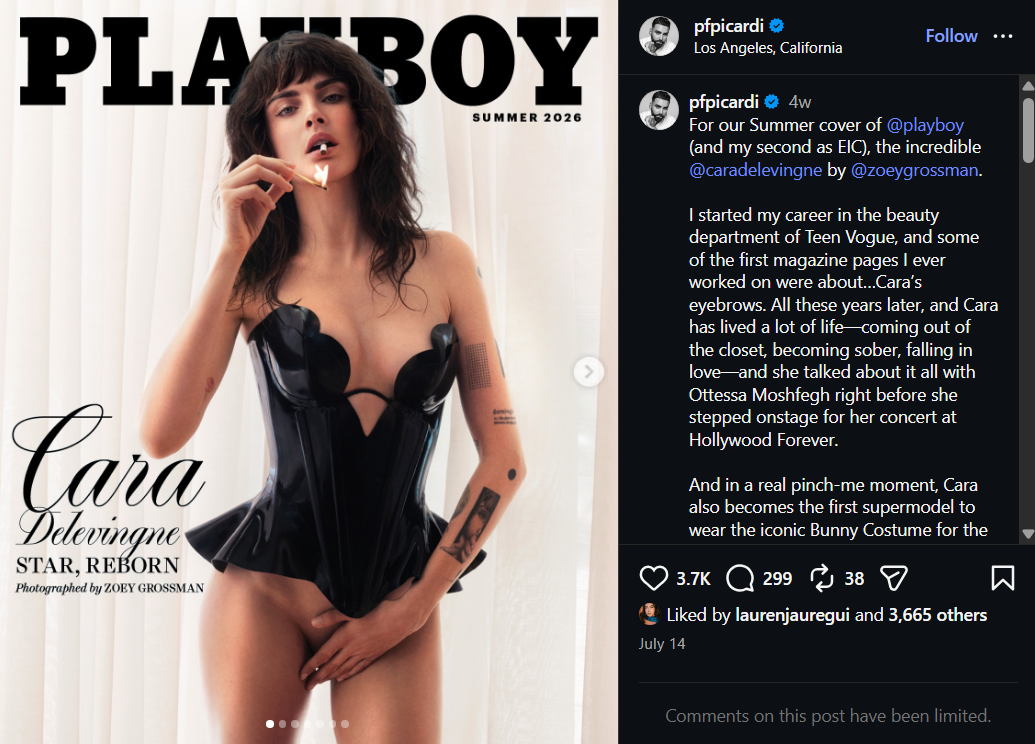
Delevingne became the first openly lesbian model to land the Playboy cover, bringing fashion, celebrity, sexuality and queer visibility into a publication that was once much more rigidly associated with heterosexual male fantasy.
That does not magically turn Playboy into a gay magazine. But having an openly gay editor-in-chief overseeing the brand certainly changes the lens through which the magazine talks about sex, pleasure and identity.
And let’s face it: if you are going to reinvent Playboy for a modern audience, you might as well start with someone who understands that sexuality has never been as simple as “men like naked women.”
Gay people have been waiting decades for somebody to explain this to the straight world.
Yes, Phillip Picardi Is Catholic Too
Then there is the detail that makes the whole thing even more delicious: Picardi is Catholic.
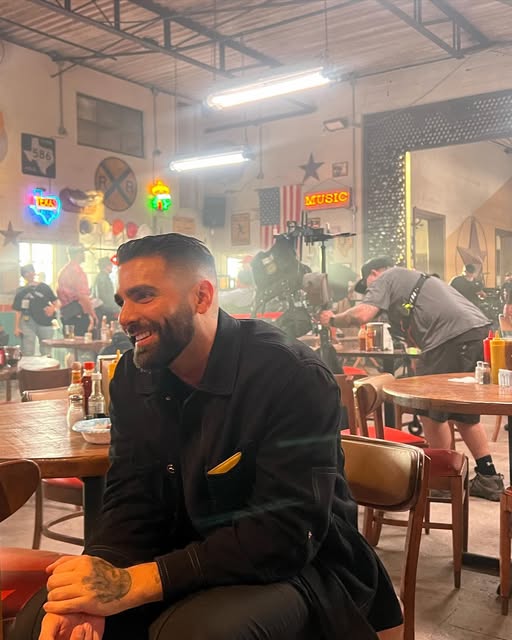
An openly gay Catholic man running Playboy sounds less like a résumé and more like the setup to a joke at a very specific dinner party. But Picardi has spoken warmly about his family’s immigrant history and his grandmother, who fled Italy for America and worked in a factory sewing buttons onto coats.
“When my grandmother spoke to us about wrong or right, or voting, or God, she reminded us of her experience living without much money, or feeling displaced in a new country. She wanted us to understand, even after she left us, that we, too, come from the dirt—but also, and in a more complicated way, that the dirt is what connects us to the stars,” Picardi wrote in a heartfelt post.
It is a remarkably poetic philosophy to bring into a magazine famous for telling the world to take its clothes off. But perhaps that is exactly why Picardi’s version of Playboy is interesting.
There is room for faith, sexuality, immigration, identity, art, pleasure and complicated feelings about all of the above. You know, the stuff humans actually spend their time thinking about.
So What Happens When a Gay Man Gets the Bunny?
Picardi is not turning Playboy into a queer publication. He is doing something potentially more interesting: trying to make the magazine less trapped by the audience it was originally built for.
Women are part of the target audience. LGBTQ+ readers are part of the conversation. Younger readers are being asked to think about sexuality in a world where pornography is everywhere but meaningful conversations about sex can still feel strangely scarce.
And the nudes? They are still there, because obviously. But now they come with art direction, journalism and cultural commentary attached. Which means Playboy has gone from “hide this magazine” to “who left this on the coffee table?” That is quite a glow-up for a rabbit.
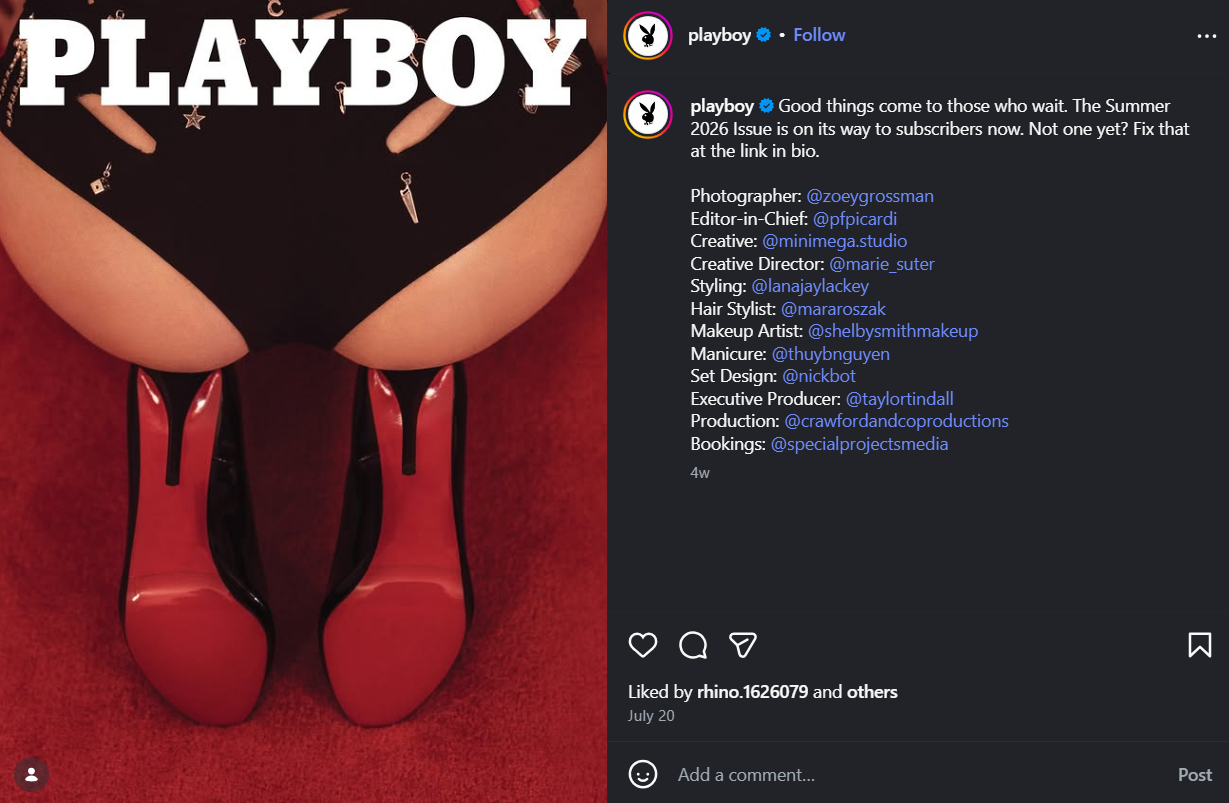
And if an openly gay, Catholic former Teen Vogue editor can walk into Playboy headquarters and decide the Bunny needs to become more thoughtful, more inclusive and, above all, more playful, then perhaps the strangest part of this whole reinvention is not that a gay man is running Playboy.
It is that he might actually be the person best equipped to make everyone interested in it again. Besides, nothing says modern masculinity quite like a £30 magazine you buy “for the articles” and then genuinely read.
Source: The Times