

Kesha did not hold back.
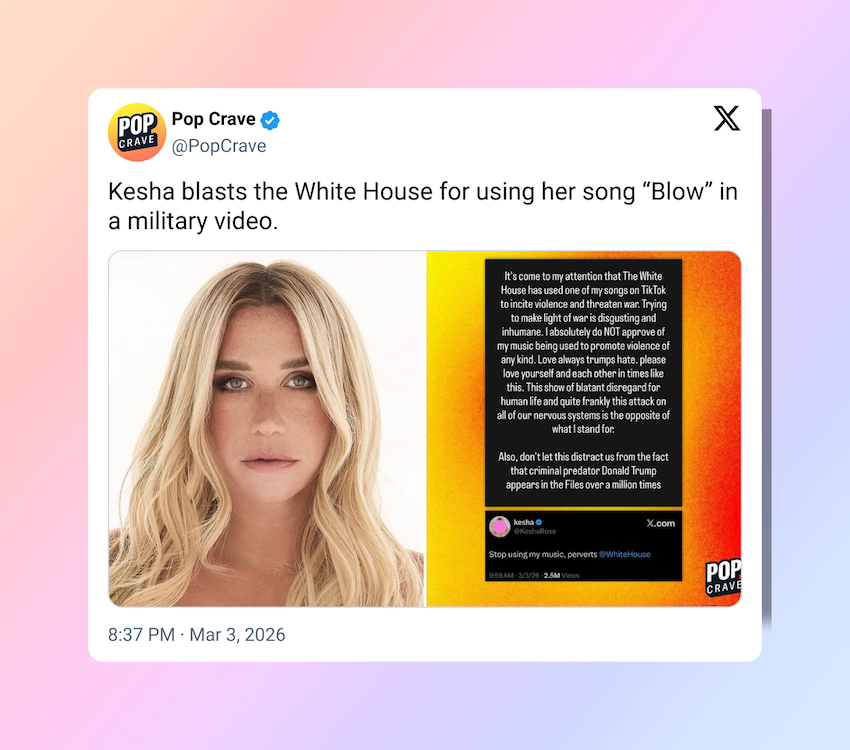
After discovering that the White House used her 2011 hit “Blow” in a TikTok video featuring U.S. military footage, the pop star publicly condemned the move, accusing officials of using her music to “promote violence.”
The now-viral video reportedly showed U.S. military aircraft and weaponry, captioned with the word “Lethality.” As the lyric “this place about to blow” drops in the song, the clip cuts to a missile descending. The contrast between glitter-era dance-pop and images of warfare was jarring — and for many viewers, deeply unsettling.
The TikTok has amassed more than 2.3 million likes at the time of writing, fueling a wave of backlash across social media.
@whitehouse Lethality 🔥🦅
Kesha Responds: “Trying to Make Light of War Is Disgusting”
Kesha addressed the situation directly on Instagram Stories, making it clear she had no involvement — and no approval.
“It’s come to my attention that The White House has used one of my songs on TikTok to incite violence and threaten war. Trying to make light of war is disgusting and inhumane. I absolutely do NOT approve of my music being used to promote violence of any kind.”
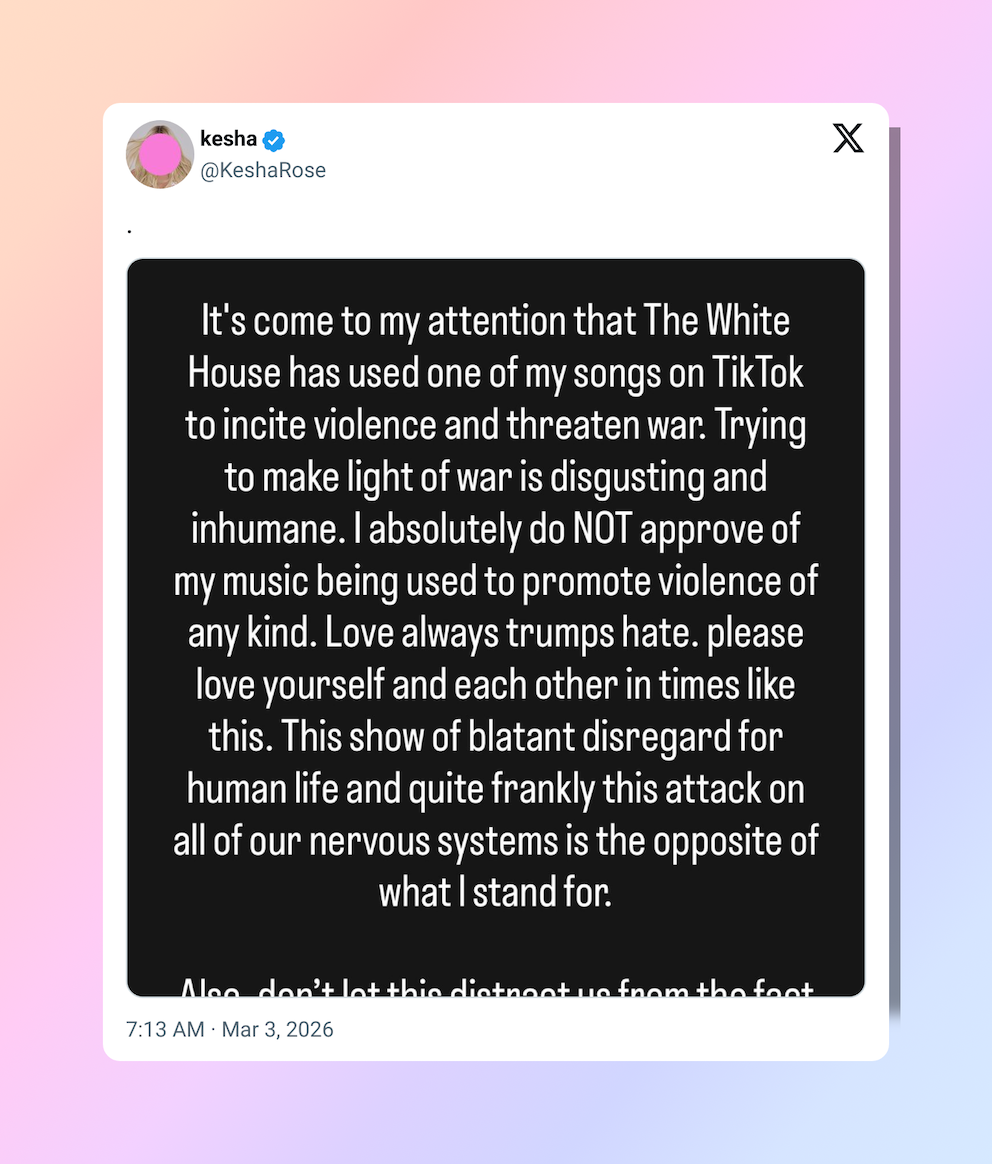
She continued:
“Love always trumps hate. please love yourself and each other in times like this. This show of blatant disregard for human life and quite frankly this attack on all of our nervous systems is the opposite of what I stand for.”
Kesha also added a pointed political remark at the end of her statement referencing Donald Trump and recently released documents tied to Jeffrey Epstein.
For fans of Kesha — long familiar with her messaging around healing, survival, and radical self-love — the response felt on brand. Glitter and chaos? Yes. Missiles and war propaganda? Not so much.
A TikTok Edit — Or Something More?
The comments under the White House’s video reflect widespread discomfort:
-
“America is literally the only country that will make a tik tok edit about war”
-
“Kesha gonna be FURIOUS”
-
“promo videos for war.. thats were we are now”
-
“This is absolutely not okay?!”
-
“Bruh, the song choice is crazy”
-
“People are dying btw. This is honestly so sad”
The criticism isn’t just about music licensing. It’s about tone. In a digital culture already saturated with meme edits and trending audios, pairing a nostalgic dance anthem with real-world military action struck many as dystopian.
And the timing matters.
RELATED: Orville Peck and Kesha Pay Tribute to Dolly Parton in First Collaboration
Rising Death Toll in Iran
According to the Iranian Red Crescent, 787 people have died since U.S.-Israeli attacks began. Against that backdrop, critics argue that stylized TikTok edits risk trivializing devastating loss of life.
Kesha’s statement taps directly into that concern — the emotional whiplash of seeing a party anthem soundtrack footage tied to real, gruesome casualties.
Trump, Epstein Files, and Political Fallout
In her Instagram story, Kesha also referenced Donald Trump’s appearance in the released Epstein-related documents.
Documents released in late January 2026 reportedly include Trump’s name multiple times in connection to allegations, including claims of sexual assault made by a then 13-year-old girl. Trump has denied any wrongdoing and has rejected all allegations connected to the Epstein files.
While Kesha’s main focus was condemning the use of her song, the added political commentary ensured the situation would remain part of a larger national conversation.
Pop Stars and Political Boundaries
This isn’t the first time artists have pushed back against political entities using their music without consent or context alignment. Musicians across genres have objected to their songs being played at rallies, in campaign ads, or in promotional materials they disagree with.
For Kesha, whose career has evolved from carefree party-pop to deeply personal empowerment anthems, the line appears clear: her music is not a weapon.
Whether the White House removes the video remains to be seen. But one thing is certain — Kesha has drawn a boundary.
And she did it loudly.