


“I just don’t think we should have kink at Pride.” And just like that, Pride Month’s annual tradition of collective discourse panic was back on the menu. Because every June, alongside the parades and rainbow everything, comes the same question: what exactly is Pride supposed to be in 2026?
RELATED: Dodgers Pride Caps Spark Discussion After Two Players Opt Out
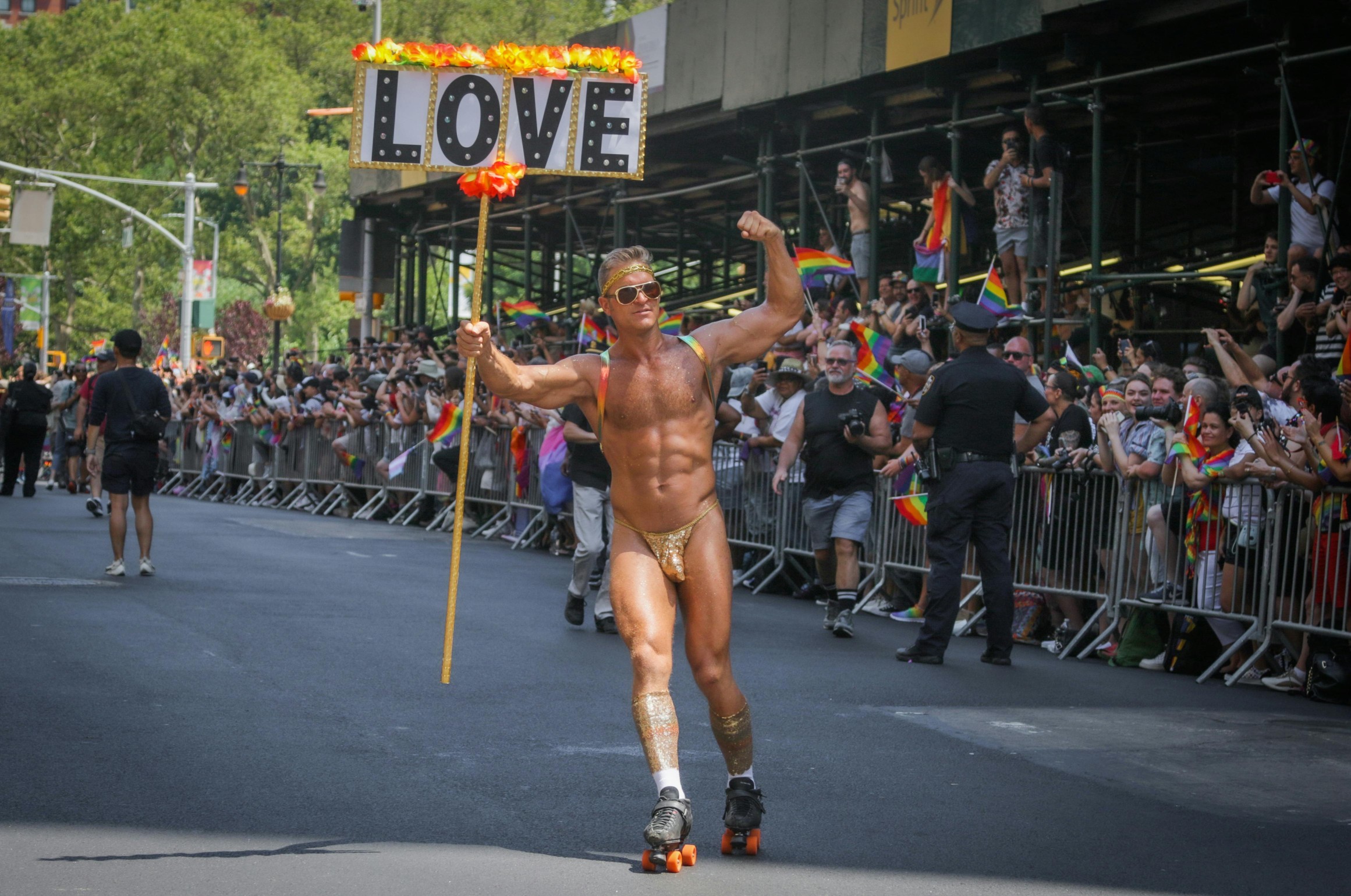
This time, the lightning rod is kink at Pride—splitting LGBTQ+ spaces between those who want to feel open, public, and broadly accessible, and those who see kink as part of queer history and visibility that was never meant to be politely edited down.
Consent, comfort, and a very loud disagreement
The conversation comes from a skit-style video uploaded online, quickly blurring the line between performance and real-world discourse. The first argument frames it as a simple boundary issue.
“Nah, it’s not being prudish. It’s about consent.”
In this view, it is still a public event. Nobody is “consenting” to being confronted with explicit sexual expression just because they showed up to a celebration. For many, it should be something you can attend with your kids, your friends, your Nana, and your emotional stability intact. But that’s exactly where the pushback kicks in.
Because for others, this line of thinking sounds less like “comfort” and more like the old familiar pressure for queer people to make themselves easier to look at.
“Kink was at Pride since the start. Why should we censor ourselves just because you’re uncomfortable?”
And suddenly the debate isn’t about outfits anymore—it’s about who gets to define acceptable queer expression in the first place.
RELATED: Texas Targets ‘Big Gay Swim Day’ With Lawsuit Ahead of Pride Event
History keeps crashing the party
No Pride argument survives without a history lesson showing up uninvited.
“Because 50 plus years ago, Pride was a riot against the police, against having to live our lives in the shadows.”
That perspective treats it less like a parade and more like a reminder: visibility was never supposed to be polished, brand-safe, or filtered for general audiences. Which makes today’s version—corporate floats, family zones, rainbow merch aisles—feel like a very different universe entirely.
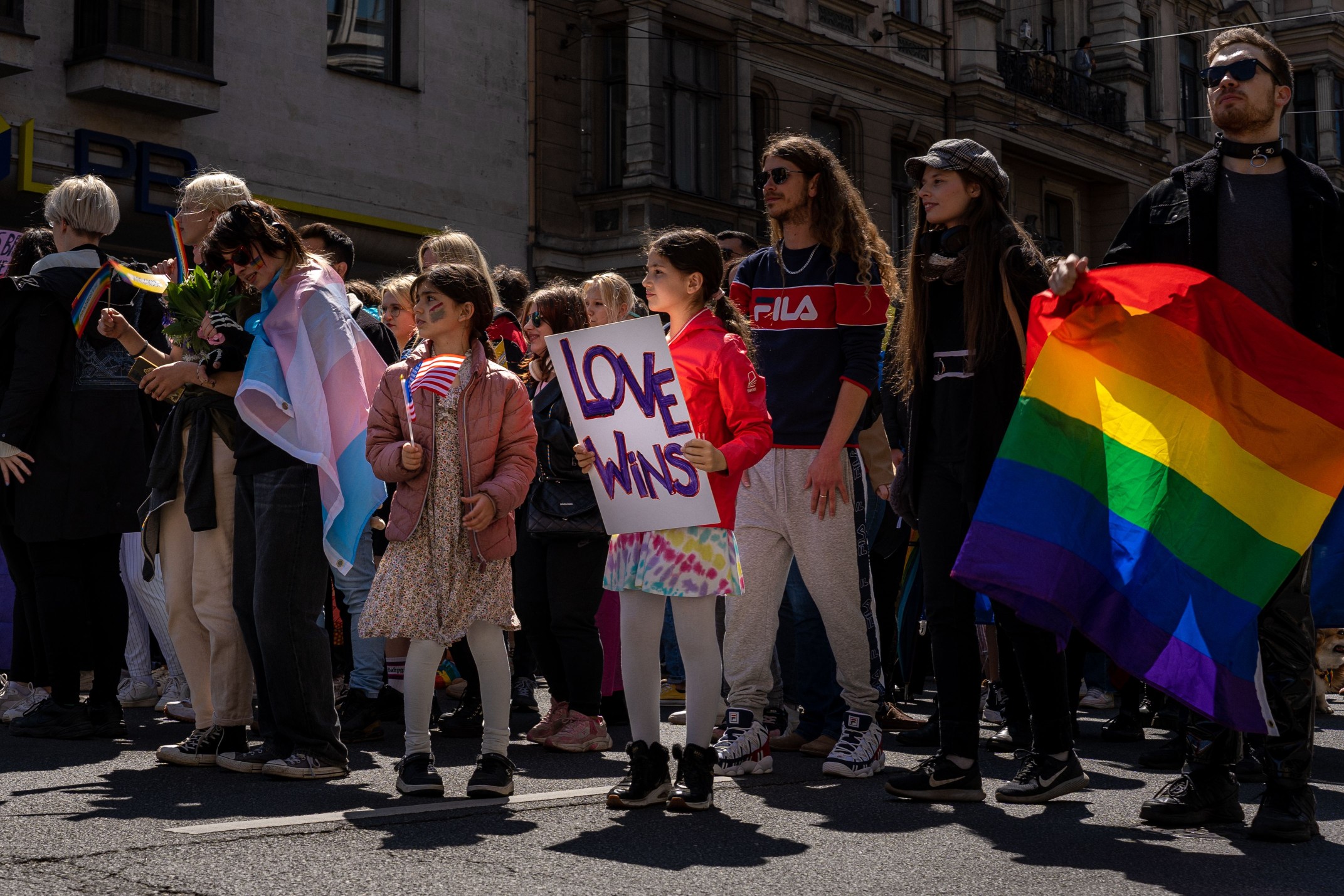
One person put it a bit more bluntly:
“I’m sorry, but Pride wasn’t always rainbows and butterflies and Citibank buttplugs.”
Which, frankly, is both a joke and a historical summary in one sentence.
So what is Pride now?
Underneath the chaos, nobody is actually debating whether Pride should exist. The disagreement is about what it should prioritize. Is it a public celebration meant to be inclusive and comfortable for as many people as possible? Or is it a space where queer people don’t have to constantly translate themselves into something more “acceptable”?
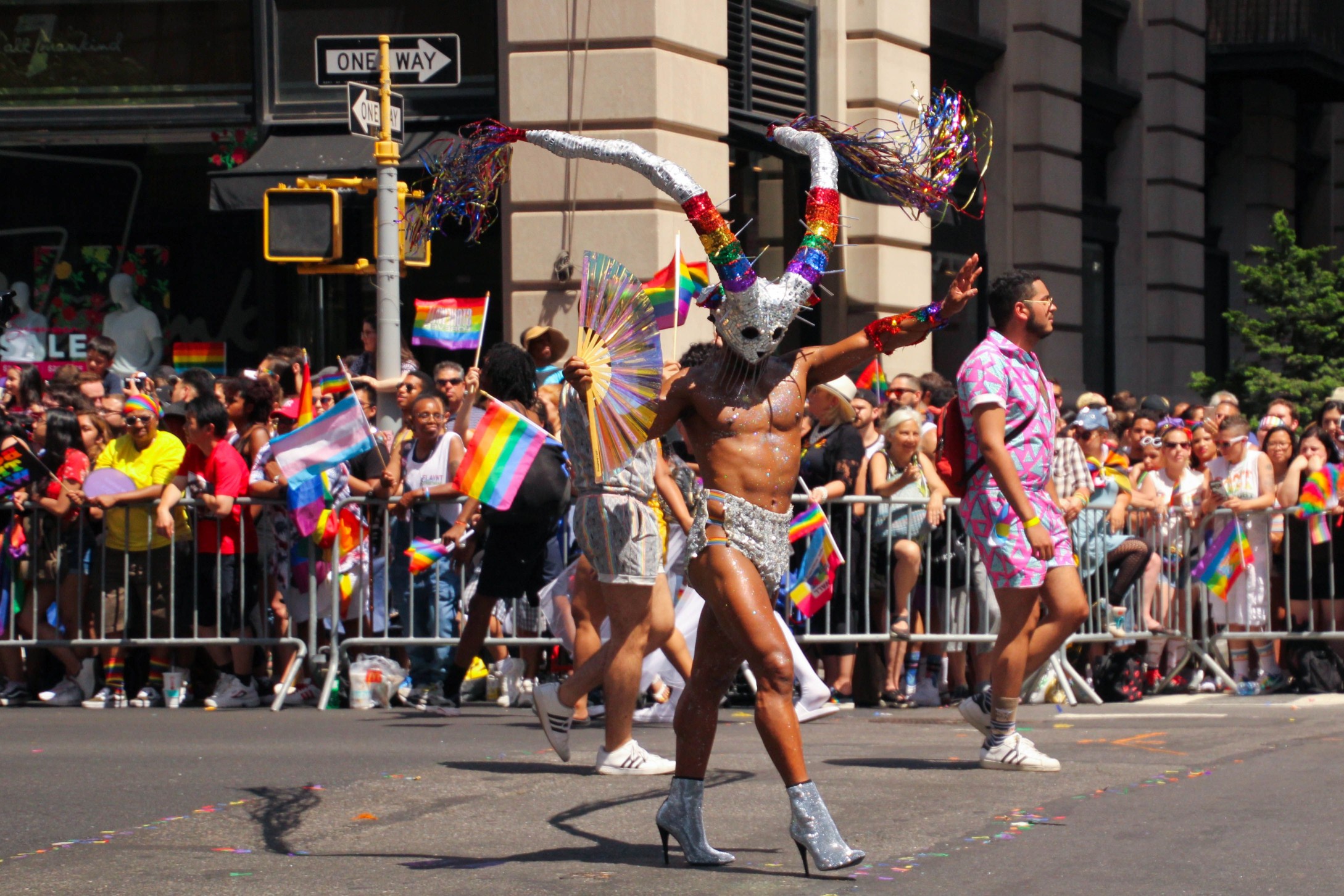
Both sides think they’re protecting Pride. Both sides think they’re reacting to its history in good faith. Neither side seems particularly interested in backing down. So the debate returns every year, slightly rebranded, slightly louder, and immediately familiar. Because the event may change, but the discourse? That’s apparently permanent.
Maybe the real question isn’t who’s “right” in this debate—but what kind of Pride we’re actually building every year when we show up.
So where do you land: is Pride meant to be a public, family-friendly celebration of visibility—or a space where queer expression, including kink, shouldn’t have to ask for permission first, even when kink is part of the culture some are trying to defend?
It’s things like this that make me understand why we are bordering on losing the fight fought by so many before us. I am a proud, gay man, but I think kink has no place in the streets. That is between you and the sheets. Frankly, it’s disgusting to see how in your face this has become. You will call this internalised homophobia, I am okay with your opinion, but being gay in this day and age, is no longer something to be proud of. The kink side is disgusting. You all go out of your way to ensure that all gay people become hated even more. The harder we fight for equality, the more you push your disgusting fetishes and ways which makes people hate us more and more. Why are we even still having Pride events when every event just makes people hate us more? We are doing this to ourselves. There is being gay and then there is everything else. Surely you can understand why being gay is viewed as a mental illness? Kind and being so bloody extra forces people’s perception so they think we are all supposed to be locked up in institutions and I do agree that those that are so far gone, are probably gay with severe mental issues and they need to get the help they deserve. Let us ‘normal’ gays fight the fight as we are better equipped and more socially accepted so that we can retain equality, not fight for more rights than others.
Ben, I completely disagree with this take. Reducing Pride down to what you consider “socially acceptable” misses the entire point of why the movement exists—especially for the most vulnerable members of our community.
Pride is not just a party or a political march for the adults who have already figured things out; it is a literal lifeline for gay youth and teens.
LGBTQ+ youth constantly grow up in spaces where they are told, implicitly or explicitly, that they don’t belong. Seeing an unapologetic, massive celebration of *all* facets of the community shows them they are not alone.
For a teenager struggling with their identity, Pride is often the very first time they see a world where they don’t have to filter or shrink themselves to make straight society comfortable.
The idea that we should only show the “normal” or “palatable” versions of ourselves to win rights is a trap. History shows us that those who wish to strip away our rights do not care how “polite” we are. If we start censoring our own community to please critics, we teach gay youth that they should continue to hide in the shadows if they don’t fit a specific mold.
We don’t protect equality by cutting off parts of our own community. We protect it by standing together, showing up authentically, and proving to the next generation that they have a right to exist exactly as they are.
By all means, please disagree. It does not detract from the fact that we are now hated more than ever.
Where has this hatred come from? What happens when hate starts boiling over and your ideology causes all our efforts to go to waste and we get forced back into the closet all because you really wanted to show off your d*ck to innocent bystanders including children because you really, desperately wanted to have so much attention lavished on you by “adoring crowds of onlookers” in your really small and ill fitting pink underwear whilst wearing a butplug and screaming Yasssss Queeeeennnn whilst popping your fan repeatedly…..
What do you think is causing this increase in hate towards the LGBTQ community?
I’ll tell you…. It is kink, it is being super extra, it is wanting more rights, it is refusing to see what you look like from a different perspective. It is trying to normalise being vile, and bitchy, thinking it is cute.
Before you proceed to blame MAGA….. Consider them a symptom of Gay behaviour as that is a group of people who have simply had enough of our bullsh*t. I don’t support them, but I sure as he’ll see their point.
The reality is, the Gay community is getting worse and pushing every button they physically can because *FOR NOW*, they are still protected by Constitutional Law.
The more you cause estrangement from alies and the more you stir up hate and divisions in the communities that up to now have turned a blind eye (maybe an eye roll here and there), the quicker you will find yourself in hot water that could have been avoided just by normalising your sexuality and fitting in.
From someone who “fits in” with people from all walks of life, I promise you, life is just as good. You don’t lose any part of your identity. You simply express yourself differently when the time calls for it.
If you hold yourself to equal standards as straight people, you stop seeing yourself as better or more deserving or repressed, the world opens up for you.
You do not need a rainbow and glitter for the world to see you. Simply try a personality that is polite and kind and respectful and the world will reflect that back at you.
I respectfully ask that you consider the damage you are doing with your view points as our “Gay Rights” are not guaranteed. Don’t poke the bear that will always have the upper hand with the power to destroy everything you are, and everything you love.
It’s always fascinating when someone writes several paragraphs about how hate is wrong, then spends those paragraphs justifying it.
For the record, the examples you described aren’t things I personally participate in. I’m not walking around in fetish gear, and I’m not interested in the kink culture you’re referencing. But whether I personally engage in it is irrelevant. I don’t need to share someone’s interests, fashion choices, hobbies, or form of self-expression to believe they deserve the same rights and respect as everyone else.
If someone’s support for LGBTQ people disappears because they saw a drag queen, a Pride parade, or someone expressing themselves in a way they don’t personally like, then their support was conditional from the start.
The rights I enjoy are not dependent on being quiet, blending in, dressing a certain way, or making other people comfortable. Rights aren’t rewards for good behavior. They’re rights.
You keep talking about “fitting in” as if that’s the goal. For decades, gay people were told to fit in, stay quiet, hide their relationships, tone themselves down, and be grateful for whatever scraps of acceptance they were given. That’s not equality. That’s compliance.
And blaming LGBTQ people for anti-LGBTQ hatred makes about as much sense as blaming women for sexism or immigrants for xenophobia. The responsibility for hate belongs to the people choosing to hate.
You don’t have to like every expression of queer culture. I don’t like every expression of straight culture either. The difference is I don’t use that as justification for taking anyone’s rights away.
The moment someone’s equality becomes contingent on how well they conform to your personal standards of acceptability, it stops being equality at all.
And this is where I think you’ve fundamentally misunderstood my position.
I don’t see myself as better than straight people. I don’t see myself as more deserving than straight people. I simply see myself as equal to straight people.
Acknowledging that LGBTQ people have faced discrimination, violence, exclusion, and legal inequality isn’t claiming victimhood or superiority—it’s acknowledging reality.
The irony is that you’re asking me to hold myself to the same standards as straight people while simultaneously asking me to accept standards that straight people are never expected to meet.
Straight people aren’t told their rights depend on how well they “fit in.” They’re not told that the behavior of the most flamboyant members of their community determines whether they deserve equal treatment. They’re not told that they need to earn acceptance by being less visible.
Equality means being judged as an individual, not being held responsible for every person who shares your sexuality.
So yes, I hold myself to the same standards as straight people. That’s precisely why I reject the idea that my rights, dignity, or acceptance should be contingent on how comfortable other people are with LGBTQ expression.
Ben, the fact that you blame your own community for the hatred directed at us instead of the people actually perpetuating the bigotry is the real tragedy here.
To answer your question about where this hatred comes from: it doesn’t come from a leather harness or someone being “too extra.” It comes from systemic prejudice. Historically, homophobes have always used the “save the children” narrative to weaponize fear against us, whether we were fighting for marriage equality, the right to teach in schools, or simply the right to exist in public.
Let’s get the facts straight: absolutely no one is condoning or advocating for explicit sexual acts or nudity in front of children. You are conflating entirely different spaces to build a convenient strawman. Massive, explicit kink celebrations—like the Folsom Street Fair—are completely separate, permitted, adult-oriented events. They are not the daytime, city-permitted Pride parades where public decency laws apply and nudity is strictly not allowed. Dragging that hyper-sexualized caricature into a discussion about a standard Pride march is just parroting right-wing talking points.
But your final warning about “poking the bear” is where your argument completely collapses into cowardice. Telling queer people to blend in, stay quiet, and remain “palatable” so we don’t upset the majority isn’t a strategy for retaining equality—it’s a plea for conditional permission to exist.
History has proven time and again that compliance will not save you. The forces trying to strip away our rights do not care if you wear a business suit or a jockstrap; to them, your “normal” gay life is just as unacceptable. We didn’t gain our rights by being polite, hiding in the shadows, or tiptoeing around a “bear.” We gained them by standing together, refusing to apologize for our existence, and demanding equality—not begging for it. If you want to live your life on your knees hoping the bear doesn’t notice you, that’s your choice. But don’t expect the rest of the community to join you there.
Seems like a bunch of corporate sponsors and moms for liberty types trying to cut Pride off at the knees. Remember your history and keep kink. It’s always been there, and has done a heck of a lot more for the LGBTQA+ community than the sponsors or the “family friendly” crowd ever have. In fact, it’s always been them who’ve tried to destroy LGBTQA+ rights. Why should we be listening to them in the first place?
Do you think marriage equality would have passed if we had leather daddies in harnesses and jock straps at the altar? It took straight appearing plaintiffs to get that passed.
Absolutely. Very well put Adam.
Being extra and being inappropriate has become a trademark of the Gay community which is setting us back. The community is not looking for equality, they’re looking for superiority. They want to be treated better than the rest, more privilege, more favouritism.
This is why I love the Bears, no qualms, fit in anywhere, just regular guys not causing a scene.
I think if ‘kink’ (and btw, would someone like to define that?) is something that is part of your identity or regularly in your life, go for it! You shouldn’t be censored by a bunch of control freaks and nervous nancys! But I do think there’s room for some self-control in terms of being as sexually explicit as you can be at Pride parade simply because you can, though it’s not really part of your identity. This aint Mardi Gras folks — Pride is a political march for rights. Nothing is more political than kink, and it certainly has its place in Pride, expressed by those who are actually part of the kink community or it’s part of their identity.
I think Kink is a part of our community and has been from the very beginning at Stonewall. Stonewall established writing, throwing bricks, injuring people people being thrown in jail as part of our community. Also, we don’t include that in today’s pride parade today the Folsom Street fair in San Francisco, the leather community to share their can go firmly with the city of San Francisco. It is different from the San Francisco pride. Pride meant for the general public year is a very good goal in my opinion for some parades and some locals. This is the type of pride parade that I would want my children, grandchildren, and row friends to see me in celebrating. I don’t necessarily want all of these people being exposed to explicit kink bodies/dress or act in this more general parade. For these explicit acts bodies dressed exposed beyond what a normal speedo, or perhaps jockstrap exposes, which honestly are included in pride, parades intended for the general public, I would recommend separate locations venues for kink pride. I may happily join my friends and neighbors who enjoy this in that type of event/parade however I’m not going to invite my family to this.
Kink is part of the LGBTQ+ community and the LGBTQ+ community is part of kink, full stop.
If kink is unacceptable then who else is on the chopping block? Drag queens? Fem guys? Butch women? Trans folk? The people who hate us even if we are pared down to the most acceptable people possible.