


The Church at the center of a Maine custody battle has become part of a much bigger conversation about religious freedom, parental rights, and a child’s well-being.
On September 1, 2026, the Maine Supreme Judicial Court unanimously upheld a lower court’s decision giving Matthew Bradeen final decision-making authority over certain aspects of his daughter’s religious upbringing. The case involves Bradeen, Emily Bickford, and their daughter, Ava, who is now 13.
The parents had agreed in 2013 to share parental rights and responsibilities, including decisions about Ava’s religious education and upbringing.
READ: Someone Tried to Shut LGBTQ+ People Out. This Church Said, Not Today.
How Did the Dispute Start?

The conflict began in 2021, when Bickford started bringing Ava to Calvary Chapel Greater Portland in Westbrook, Maine, without first informing Bradeen.
Bradeen became concerned after noticing changes in Ava and began researching the Church himself. According to the court record, he watched roughly 50 to 60 hours of Calvary Chapel services posted online. He was particularly concerned about sermons discussing Hell, demons, spiritual warfare, the Second Coming of Christ, and the Anti-Christ.
Bradeen said Ava developed fear and anxiety around these teachings, including worries about which family members would go to Heaven or Hell. He also testified that she experienced panic attacks and left notes around his home because she feared the Rapture was coming and that her father might be left behind.
What Did the Lower Court Find?

In December 2024, District Court Judge Jennifer Nofsinger gave Bradeen final decision-making authority over Ava’s religious upbringing and certain medical decisions.
The judge heard testimony from both parents, Calvary Chapel pastor Travis Carey, and Dr. Janja Lalich, who was accepted as an expert on “cults.”
The court considered the Church’s teachings, but its concerns went beyond religious beliefs themselves. One particularly important incident involved a church service during the custody dispute.
Carey led a roughly six-and-a-half-minute prayer focused on the case, mentioning Bradeen, Bickford, and Ava by name nearly 30 times. He described Bradeen as needing salvation and characterized the proceedings as an attack on God’s Word. Ava was present for the prayer.
The lower court found that this kind of messaging risked damaging Ava’s relationship with her father.
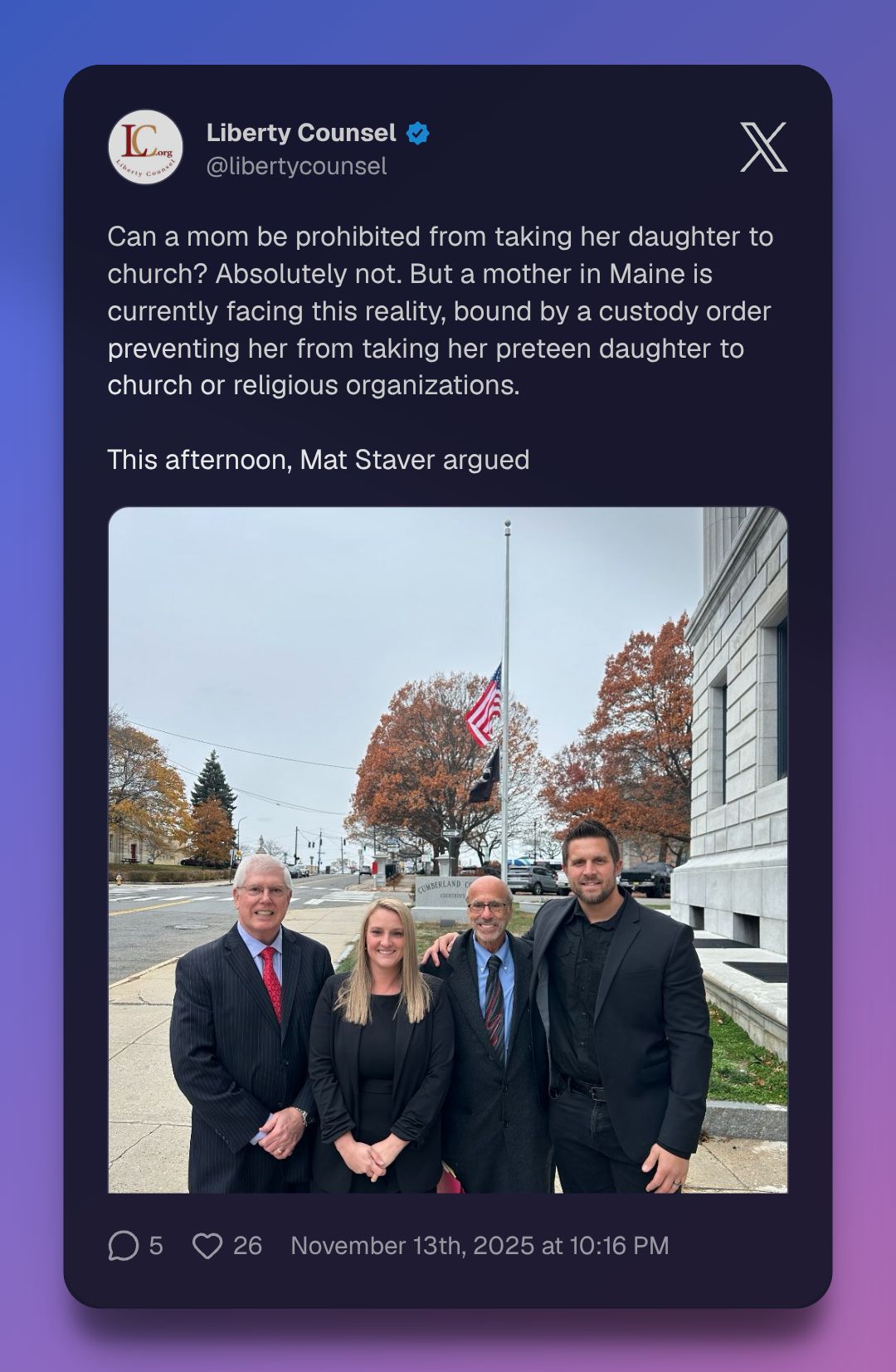
What Did Maine’s Highest Court Actually Rule?
This is where the story gets more complicated.
The Maine Supreme Judicial Court did not declare that Calvary Chapel’s religious beliefs were harmful or that Bickford was prohibited from practicing Christianity simply because of her faith. Instead, the court said the custody decision was based on Ava’s best interests and the parents’ inability to successfully co-parent about religion. The court recognized, after all, that both parents loved Ava.
The court specifically said it was focused on the effect of the messaging on Ava, including the risk of “demonizing a child’s parent” and psychologically damaging the child.
Bradeen therefore has final authority over whether Ava attends Calvary Chapel or participates in its activities. For other religious organizations, the parents are generally required to research and discuss whether Ava’s participation is in her best interests.
Bickford argued that the restrictions violated her constitutional rights to religious freedom and parental decision-making. The Maine Supreme Judicial Court rejected those arguments and upheld the lower court’s order.
The case could still continue. Bickford’s attorneys have indicated that they plan to ask the U.S. Supreme Court to review the decision.
For now, the Maine ruling stands.
And that leaves the most important distinction in this unusual custody battle: the court did not say a mother cannot raise her child in her chosen faith. It said that, in this particular family, the child’s emotional well-being and the parents’ inability to agree on religious upbringing justified giving one parent the final say.