

Military registration is about to become automatic—and if you’re a man between 18 and 26, you may already be on the list without realizing it.
A new policy tied to the U.S. military registration system means eligible men will soon be automatically added to the database used in case of a draft, without needing to sign up themselves. It’s a quiet shift, but one that’s raising big questions: Are you on the list? And can you actually say no?
The short answer is simple. Most eligible men will be registered whether they take action or not—and no, opting out isn’t really an option under current law.
That doesn’t mean a draft is happening. The United States hasn’t enforced one since the Vietnam War. But the system behind it, managed by the Selective Service System (SSS), is still very much in place—and now becoming more automatic than ever.
RELATED: Step Into Boot Camp with ‘Boots’—Where Gay Identity Gets Tested
What Is the Selective Service System?
The Selective Service System (SSS) is the federal agency responsible for maintaining a list of individuals who could be called upon if a military draft is ever reinstated.
Registering does not mean you are joining the military. It simply places your name in a pool that could be used in the future if Congress and the president authorize a draft.
Who Gets Registered?
The rules about who must register are not changing—but how they are registered is.
Under federal law, the following groups are required to be included:
- Men ages 18 to 26
- U.S. citizens and many non-citizens living in the country
- This includes green-card holders, refugees, asylum seekers, and undocumented men
Those on nonimmigrant visas, such as student or tourist visas, are generally exempt.
Even men with disabilities who may not qualify for military service are still required to register. However, they will be required to undergo medical and physical exams that would disqualify them from enlistment should they not be physically or medically eligible.
For LGBTQ individuals, the policy is based on sex assigned at birth. Transgender women assigned male at birth are still required to register, while transgender men are not.
Is It Mandatory—or Can You Say No?
This is where things get very clear: registration is required by law.
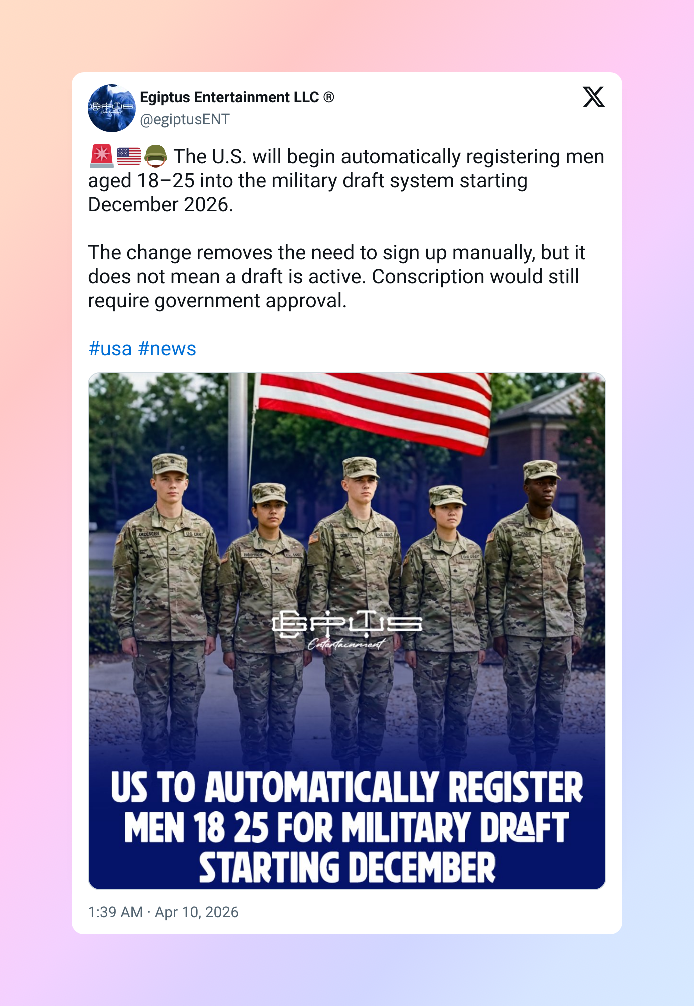
There is no simple opt-out option. Under the updated system, individuals won’t even need to sign themselves up—the government will handle registration automatically using federal data.
Failing to register can carry consequences, including:
- Losing access to certain federal student aid
- Ineligibility for some government jobs
- Potential legal penalties, including fines or imprisonment
While enforcement varies, the requirement itself remains in place under the Military Selective Service Act.
Trump: “Kamala would get us into World War III…All of your sons and daughters will end up getting a draft notice, a thing called the draft. ‘Dad, what’s this?’ ‘Oh, congratulations, you’ve been drafted into the military. You’re going to fight a war.'” https://t.co/OH4eZRqDXV pic.twitter.com/D4L8i6PCNF
— Home of the Brave (@OfTheBraveUSA) March 8, 2026
What’s Actually Changing in 2026?
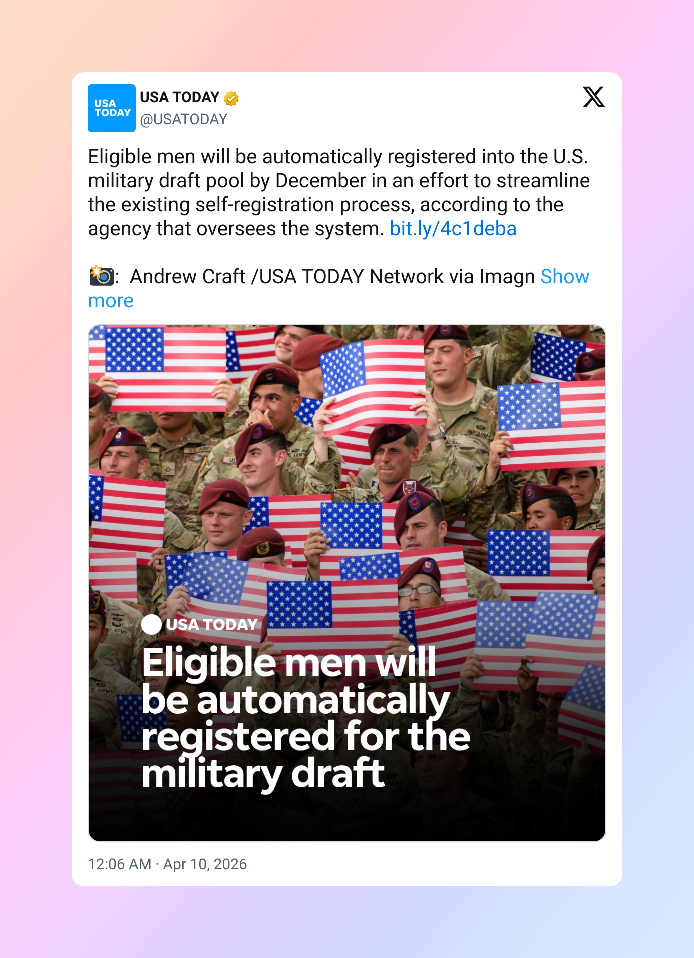
Previously, men were expected to register themselves—either online, by mail, or sometimes automatically through state systems like driver’s license applications. Now, the process is shifting entirely.
Under the updated policy, eligible individuals will be:
- Automatically registered within 30 days of turning 18
- Notified that they’ve been added to the system
- Given instructions if they believe they qualify for an exemption
This change does not expand who must register—it simply removes the need to do it manually.
What Happens After You’re Registered?
For many, the biggest fear is immediate enlistment—but that’s not how the system works.
Being registered does not mean:
- You are joining the military
- You will be called to serve
- A draft is currently happening
For a draft to occur, Congress would need to pass new legislation and the president would need to approve it.
If that were to happen, the process would involve:
- A random lottery based on birthdates
- A call-up order determining who reports first
- Medical and eligibility screenings before any induction
Can You Be Exempted Later?
If a draft were ever reinstated, there are still pathways for exemption or deferment.
One option is applying as a “conscientious objector”—someone who opposes war based on deeply held ethical, moral, or religious beliefs. However, this requires strong documentation and consistency in belief.
Other exemptions may apply depending on health, personal circumstances, or other qualifying factors.
Why This Matters for LGBTQ Readers
Military policies have historically had a complicated relationship with LGBTQ individuals. While many restrictions have been lifted over time, systems like Selective Service still operate under older frameworks—particularly when it comes to gender classification.
The move to automatic registration removes the choice to engage with the system, which can raise concerns about autonomy, identity, and inclusion.
So, Are You on the List—and Can You Say No?
For most eligible men, the answer is yes—and no.
Yes, you’re likely already on the list or will be automatically added soon.
And no, you cannot simply choose not to register under current law.
But being on that list does not mean a draft is imminent. It simply means your name is part of a system that exists “just in case.”
For now, the change is about process—not activation. Still, it’s a reminder that even long-dormant policies can shift quietly—and affect millions overnight.