


Coming out has changed since 1988, but being open about your identity still isn’t equally safe or easy for everyone. That’s why National Coming Out Day remains relevant in 2026, even as LGBTQ+ visibility has grown and younger generations find new ways to express who they are.
RELATED: Ohio Anti-LGBTQ+ Billboards Sparked an Unexpected Pride Movement
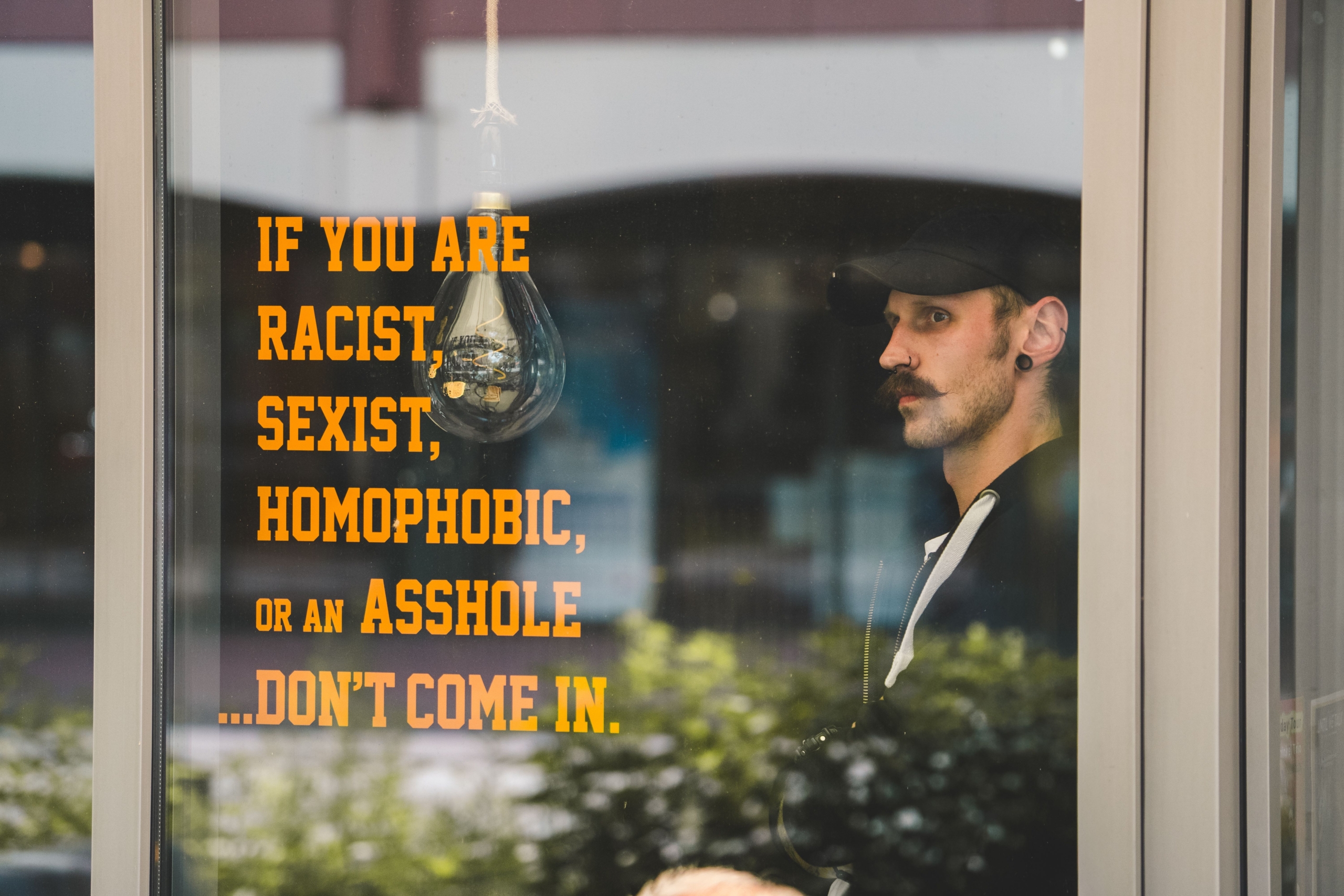
For straight people, mentioning a partner at work or introducing a spouse at a family gathering rarely requires a second thought about what that revelation might mean. LGBTQ+ people, however, may still find themselves weighing whether to correct an assumption, disclose their relationship or keep personal details to themselves. Sometimes, even a casual conversation can become a decision about safety and acceptance.
Observed annually on October 11, National Coming Out Day celebrates those who choose to live openly while recognising the challenges that can come with doing so. But in a world where LGBTQ+ representation is more visible and sharing personal experiences online has become commonplace, it’s fair to ask whether we still need a dedicated day for coming out.
RELATED: Gender Identity Ranks Last as Voters Prioritize Inflation
The answer is yes, though perhaps not for the reason you might expect. National Coming Out Day isn’t about pressuring everyone to make a grand announcement. It’s about understanding why visibility matters, acknowledging that acceptance hasn’t caught up everywhere, and protecting everyone’s right to decide when, how and whether to share their identity.
What Is National Coming Out Day, and How Did It Start?
National Coming Out Day began in the United States on October 11, 1988, established by psychologist Robert Eichberg and LGBTQ+ activist Jean O’Leary. The date marked the first anniversary of the 1987 National March on Washington for Lesbian and Gay Rights.
The thinking behind the campaign was that visibility could challenge prejudice in a way abstract arguments about equality sometimes couldn’t. When LGBTQ+ people were largely stereotyped or pushed out of public life, letting others know a gay friend, colleague, neighbour or family member could challenge the assumptions they had about an entire group.
In other words, discrimination becomes harder to rationalise when the people being discriminated against are no longer strangers.
That idea was particularly significant during a period when many LGBTQ+ people faced serious social stigma and discrimination. Coming out could carry consequences for relationships, employment and personal safety. Choosing to be open was not necessarily a private decision; it could also be a political act.
National Coming Out Day grew from that belief in the power of personal visibility. Its purpose was not simply to encourage individual honesty, but to make LGBTQ+ people more visible in a society that often preferred not to acknowledge them.
Nearly four decades later, that purpose remains relevant, even though the ways people come out have changed.
Why Coming Out Still Matters When Society Seems More Accepting
One reason National Coming Out Day remains relevant is that visibility and acceptance are not the same thing.
An LGBTQ+ person might see more representation in television, encounter supportive friends and live somewhere with legal protections, yet still feel uncomfortable disclosing their identity to relatives or colleagues. Progress in one part of life doesn’t automatically eliminate prejudice in another.
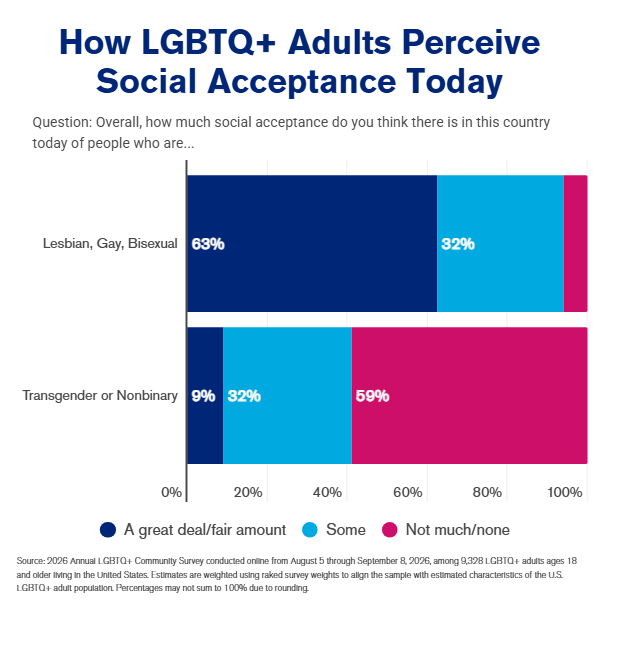
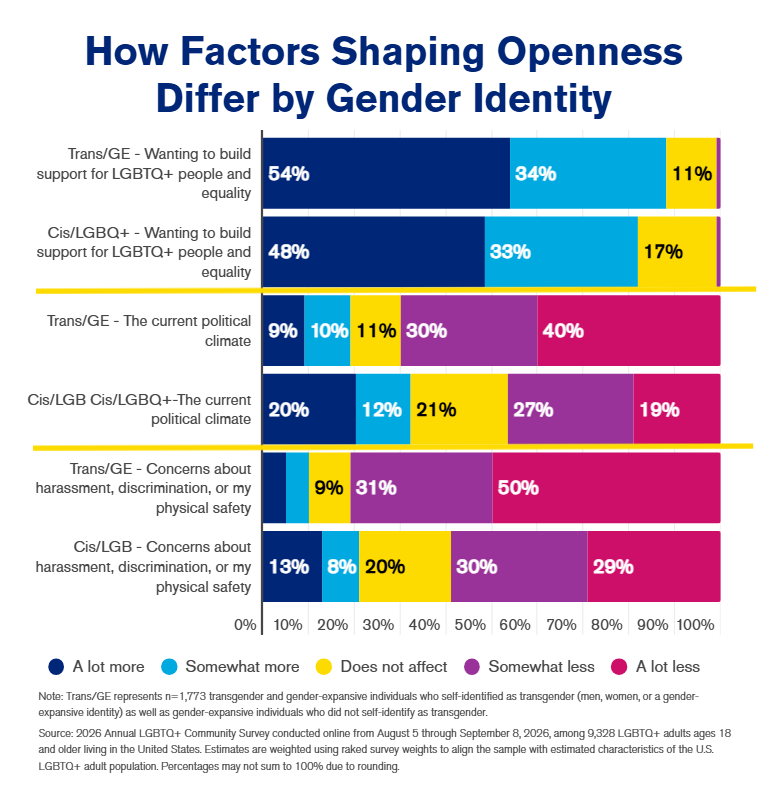
The Human Rights Campaign (HRC) Foundation’s 2026 Annual LGBTQ+ Community Survey illustrates this tension. Among 9,328 LGBTQ+ adults surveyed in the United States, approximately 85% said they were at least somewhat open about their identity. Yet 56% said the political climate made them less likely to be open.
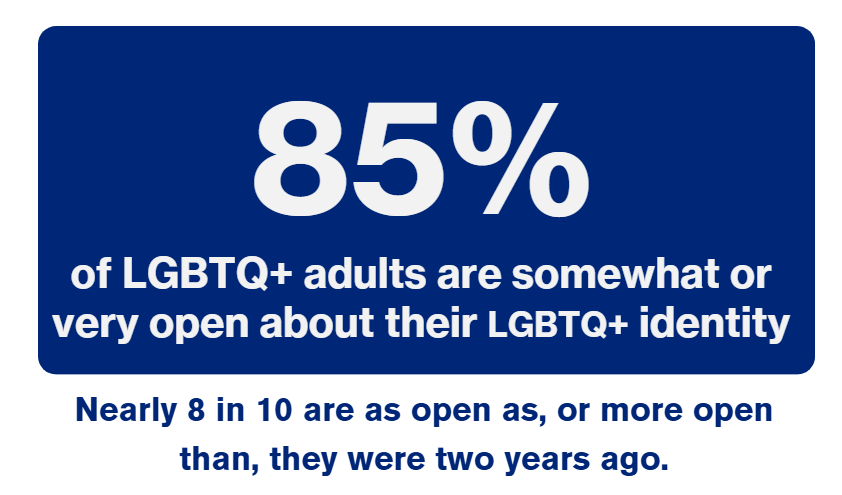
The figures suggest that being out is not necessarily a permanent state of confidence. People can feel comfortable expressing their identity in one setting and become more cautious in another.
Consider how often heterosexuality is assumed without anyone having to announce it. A colleague asks a man whether he has a wife. A relative asks a woman when she plans to have children with her boyfriend. Nobody necessarily intends harm, but these everyday assumptions can leave LGBTQ+ people deciding whether to correct the conversation, explain themselves or let the moment pass.
For someone who is openly gay, that decision might be relatively easy. For someone who depends on an unsupportive family, fears discrimination at work or lives in a hostile environment, the calculation can be considerably more complicated.
National Coming Out Day helps bring those experiences into public conversation. It reminds people that greater visibility doesn’t mean everyone has the same freedom to be visible.
Coming Out Has Changed, but It Hasn’t Disappeared
For previous generations, coming out could mean sitting down with family members for a serious conversation or making a deliberate announcement to friends. Today, some LGBTQ+ people don’t experience one defining moment at all.
They might mention a same-sex partner in passing, introduce someone they’re dating or allow their identity to become known gradually. For others, coming out happens through a series of conversations with different people over many years.
Neither experience is more authentic than the other.
The important distinction is that coming out isn’t necessarily a single event with a clear beginning and end. It can be an ongoing part of everyday life, particularly when people move between workplaces, social circles and unfamiliar environments.
That also helps explain why National Coming Out Day can remain meaningful to younger LGBTQ+ people even if they don’t identify with the dramatic coming-out stories often associated with earlier generations. They may not want a grand announcement, but they still deserve to live in a world where mentioning a partner doesn’t require a second thought.
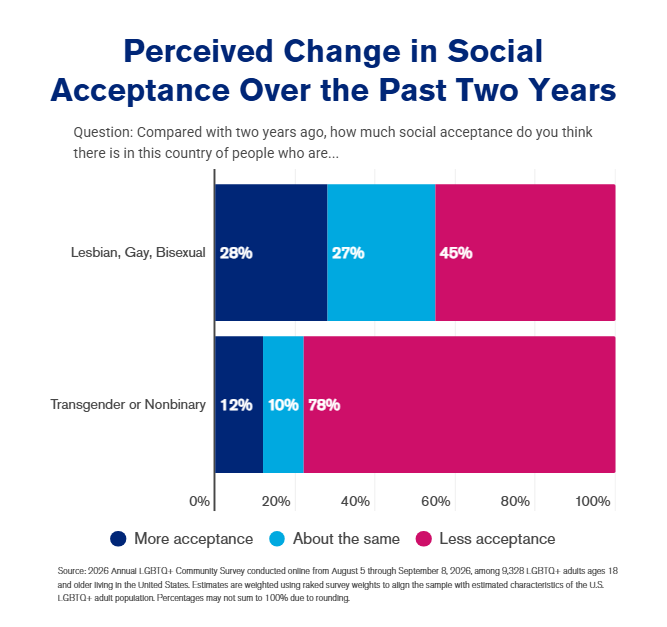
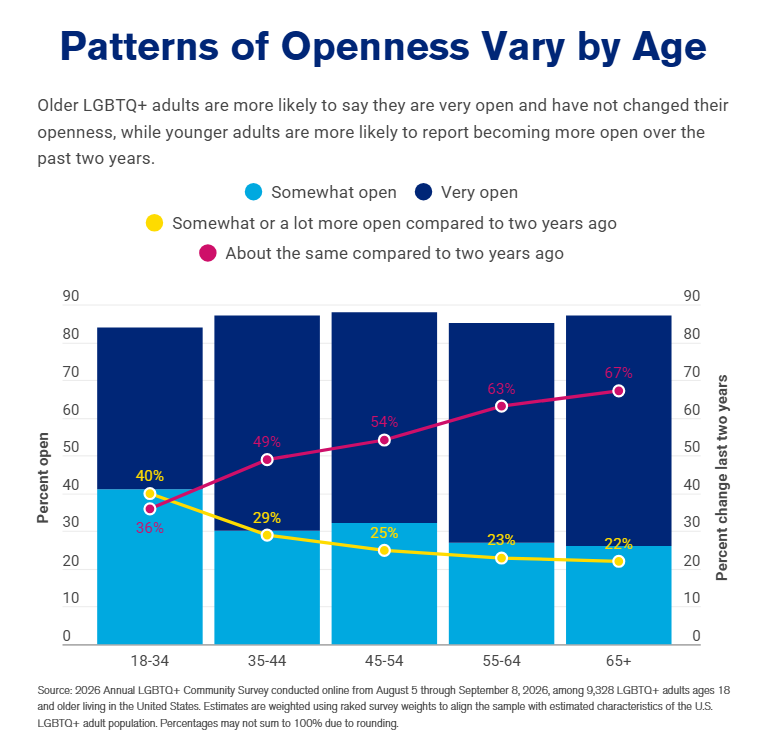
The HRC Foundation survey found that 33% of respondents had become more open about their identity over the previous two years, while 22% had become less open and 45% reported no change. Approximately four in 10 respondents aged 18 to 34 said they were more open than two years earlier.
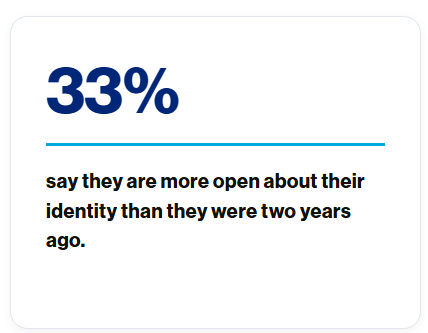
Those numbers don’t describe every LGBTQ+ person’s experience, but they show that openness can change over time. Coming out isn’t a straightforward march toward greater confidence. People may become more comfortable in some circumstances and more guarded in others.
And sometimes, choosing not to disclose your identity is simply the decision that makes the most sense for your life.
Why Visibility Can Change More Than One Person’s Life
National Coming Out Day also raises a bigger question: What happens when people get to know LGBTQ+ people beyond stereotypes?
Personal relationships can make a difference because they put real lives and experiences into conversations about equality. It’s one thing to have an abstract opinion about LGBTQ+ rights; it’s another to consider how those opinions affect a sibling, friend, colleague or neighbour.
That doesn’t mean every LGBTQ+ person should feel responsible for educating others. Nobody owes strangers a personal story, and no one should have to disclose their identity to persuade someone to treat them with respect.
Instead, visibility works best when people have the freedom to share their experiences without being expected to represent an entire community.
The HRC Foundation’s 2026 survey found that 92% of respondents agreed that having more openly LGBTQ+ people helps build public support for equal rights and protections. Meanwhile, 65% said they felt connected to the wider LGBTQ+ community.
These findings point to two important aspects of visibility: its potential to influence public attitudes and its ability to help people feel less alone.
Representation can reassure someone who is still figuring out their identity that a future is possible. Seeing openly LGBTQ+ people living ordinary, fulfilling lives can challenge the idea that being gay, lesbian, bisexual, transgender or nonbinary must define every aspect of someone’s existence.
But visibility isn’t a substitute for equality. A society can celebrate LGBTQ+ representation while people continue to experience discrimination. Public support matters, but so do the protections and practical changes that allow people to live safely.
The Freedom Not to Come Out Matters, Too
There’s a potential problem with celebrating coming out: the occasion can unintentionally make openness sound like an obligation. It isn’t.
Some people aren’t ready to tell their families. Others have considered the risks and decided that keeping their identity private is safer. Some simply don’t want to discuss their personal lives with everyone they meet. All of those choices deserve respect.

The issue becomes even more complicated for transgender and gender-diverse people. Not everyone can control when others become aware of their identity. Appearance, gender expression and other people’s assumptions can affect how much privacy someone has, potentially exposing them to unwanted attention or hostility.
For some people, the decision to come out is less about finding the right words and more about assessing whether they will be safe afterward.
That’s why National Coming Out Day should never be treated as a deadline for disclosure or a test of courage. Living authentically doesn’t look the same for everyone, and privacy doesn’t make anyone less proud of who they are.
A meaningful celebration of LGBTQ+ visibility must also recognise those who cannot safely be visible, those who aren’t ready and those who simply choose not to be.
The responsibility for creating a more accepting world shouldn’t rest on LGBTQ+ people alone. Allies, employers, families, institutions and governments all have a role in making openness less risky.
So, Do We Still Need National Coming Out Day in 2026?
Yes, but not because everyone needs to come out.
We need National Coming Out Day because the freedom to live openly remains uneven, even as LGBTQ+ visibility has grown. We need it to remember the activists who challenged prejudice when being seen carried enormous risks. We need it to recognise people who are still working out when, how or whether to share their identities. And we need it to remind those who have never had to think twice about being open that not everyone enjoys the same freedom.
The day is also an opportunity to reconsider what progress should look like. Success isn’t measured by how many people make public declarations about their identities. It’s measured by whether people can talk about their relationships, express themselves and participate in everyday life without fearing rejection or discrimination.
Perhaps the ultimate goal is a world where National Coming Out Day becomes less necessary because nobody has to make a calculated decision about whether revealing their identity will put their safety, relationships or livelihood at risk.
Until then, the day serves a purpose that goes beyond visibility. It asks us to build a society in which being known doesn’t have to be dangerous, being different doesn’t mean being excluded, and belonging doesn’t come with conditions.
Coming out should always be a personal choice. Being treated with dignity shouldn’t be.
Source: HRC and Ohio History Connection