

For decades, Nancy Pelosi has been inseparable from San Francisco politics—and, by extension, from national conversations about LGBTQ rights. Representing California’s 11th congressional district, Pelosi has long framed San Francisco as both a cultural beacon and a political proving ground for equality. On her official website, she describes the city as “blessed with a vibrant LGBTQ community” that has consistently led the charge for justice, particularly during moments when that leadership came at great political cost.
Pelosi’s record places LGBTQ advocacy not at the margins, but at the center of Democratic identity. From the HIV/AIDS crisis to landmark civil rights legislation, her messaging reflects a broader philosophy: progress is not passive, and equality requires sustained legislative muscle.
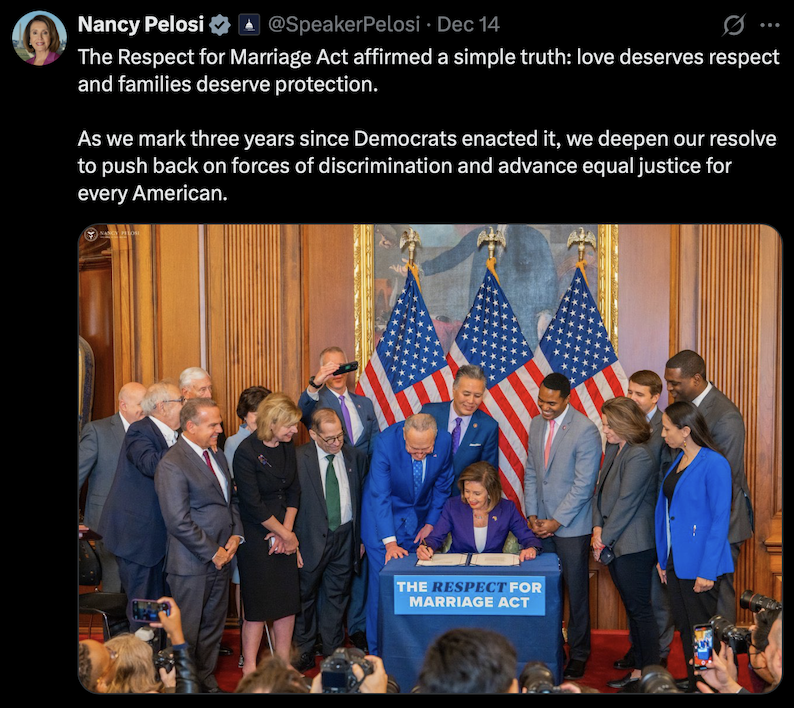
RELATED: President Biden Signs Respect For Marriage Act Into Law
Fighting Back: HIV/AIDS, Hate Crimes, and Federal Action
Pelosi has repeatedly emphasized that her commitment to LGBTQ Americans dates back to her earliest days in Congress. During the height of the HIV/AIDS crisis—when fear, stigma, and government inaction devastated queer communities—Pelosi aligned herself with activists demanding funding, research, and humane public health responses.
That advocacy later expanded into federal protections. Democrats, including Pelosi, have pointed to milestones such as the Matthew Shepard and James Byrd Jr. Hate Crimes Prevention Act, which strengthened federal authority to prosecute bias-motivated violence. The repeal of “Don’t Ask, Don’t Tell” further symbolized a shift away from institutionalized exclusion and toward open service.
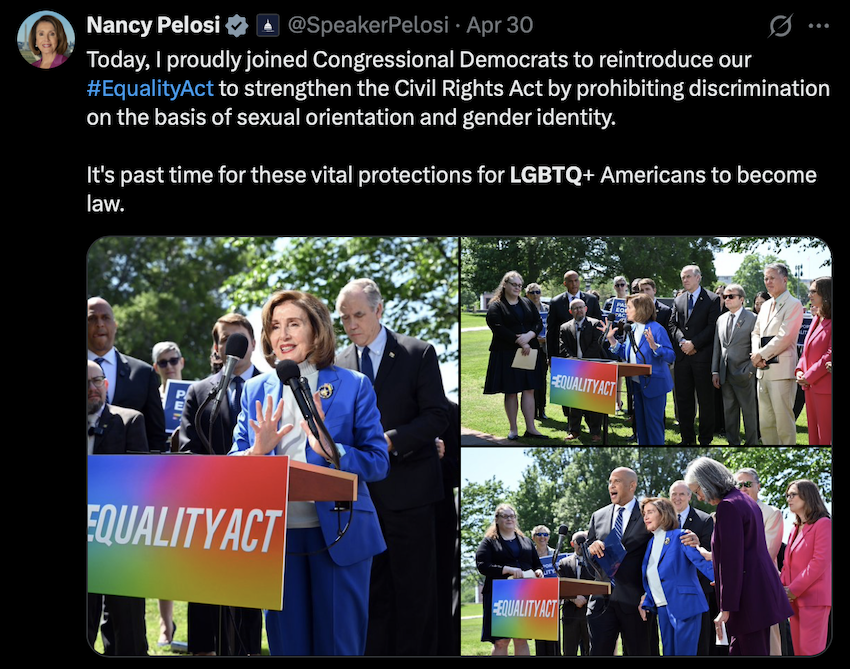
More recently, Pelosi has highlighted the Equality Act, passed twice by the House since 2018. The legislation seeks to extend Civil Rights Act protections to LGBTQ Americans in employment, housing, education, credit, jury service, and public accommodations. While stalled at the federal level, its repeated passage underscores where House Democrats—particularly under Pelosi’s leadership—have drawn their line.
A Farewell to Congress, Not to Influence
Pelosi’s announcement that she will not seek another term marks the end of almost 40 years in Congress. For LGBTQ advocates, the moment feels less like a closing chapter and more like a generational handoff. Her departure does not erase her influence; it reframes it.
In San Francisco, attention has shifted quickly to who carries that legacy forward—and how explicitly LGBTQ issues remain part of the political platform.
Enter Scott Wiener: Policy, Visibility, and Controversy
That future now points toward Scott Wiener, a California State Senator representing much of San Francisco. Wiener has been endorsed by five major LGBTQ organizations, including national and state-level advocacy groups that prioritize civil rights, representation, and legislative action.
Wiener’s political career has been marked by a willingness to foreground LGBTQ issues, sometimes controversially. In 2014, he publicly disclosed his use of PrEP (Truvada) in an essay, aiming to reduce stigma around HIV prevention and expand access to the medication. His advocacy extended into budgetary priorities, including funding for HIV/AIDS services and San Francisco’s “Getting to Zero” initiative, which targets the elimination of new HIV infections.

Legislatively, Wiener has authored or co-authored several high-profile bills. These include reducing criminal penalties related to HIV exposure, creating a non-binary gender option on government documents, and strengthening protections for LGBTQ seniors in long-term care facilities. Some measures drew criticism and legal challenges, underscoring the tension between progressive policy goals and broader public debate—but they also solidified Wiener’s reputation as a lawmaker willing to legislate from lived experience.
Beyond California: LGBTQ Alliances in Texas
While California often dominates LGBTQ political narratives, similar themes are playing out in redder territory. In Texas, the Democratic primary for a U.S. Senate seat has become a litmus test for where the party stands on transgender rights and broader human rights issues.
The race features U.S. Representative Jasmine Crockett and state Representative James Talarico—both widely described as allies to the LGBTQ community. Polling suggests Crockett holds a narrow lead among likely Democratic primary voters, with particularly strong support among women, older voters, and Black voters.
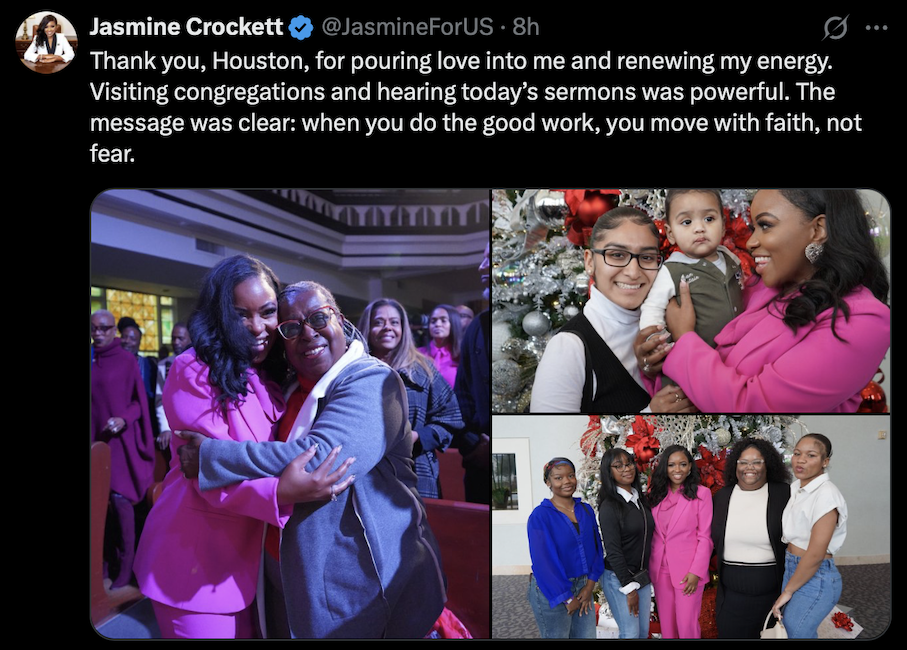
Despite differences in background and political style, both candidates emphasize affordability, civil rights, and support for transgender Americans. The contest highlights a broader reality: within the Democratic Party, support for LGBTQ rights is increasingly treated not as a niche issue, but as a baseline expectation.

What the Pelosi Era Leaves Behind
Pelosi’s exit from electoral politics invites reflection rather than nostalgia. Her career illustrates how LGBTQ advocacy moved from protest to policy, from the streets of San Francisco to the floor of Congress. Yet it also raises questions about what comes next.
As figures like Scott Wiener advance in California and candidates like Crockett and Talarico define Democratic futures in states like Texas, one thing is clear: LGBTQ rights remain a defining measure of political identity. Pelosi may be stepping back, but the debates she helped normalize are far from settled—and the next generation of leaders seems ready to keep them front and center.