

“I am not a fan of Pope Leo,” Trump said while talking to reporters on Sunday when asked why he attacked Pope Leo on Truth Social.
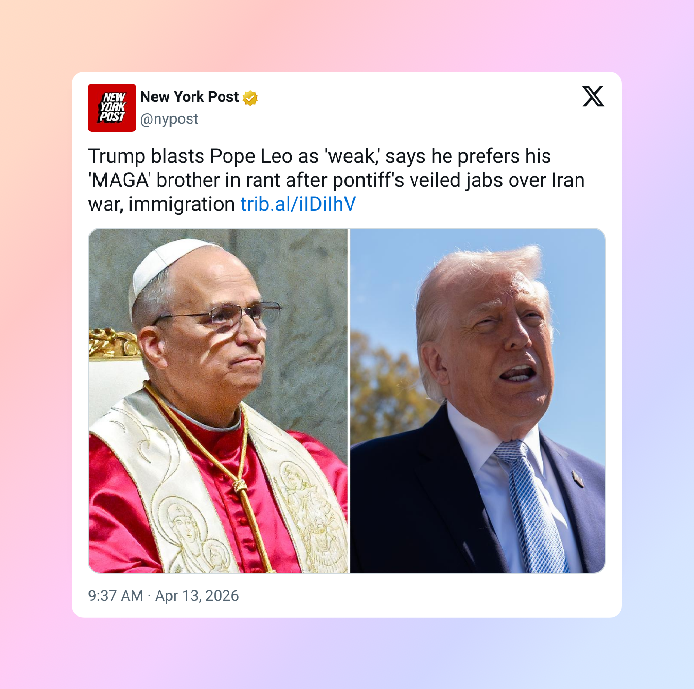
When Donald Trump called Pope Leo XIV “weak on crime” and “terrible for foreign policy,” it didn’t take long for headlines to spiral into something bigger: did a U.S. president just threaten the Pope?
Short answer: no. Longer answer: it’s complicated—but not in the way the internet might have you believe.
What unfolded over the past week wasn’t a direct threat, but rather a high-profile, deeply ideological clash between political power and moral authority—played out in real time, across statements, reports, and one very unfiltered social media post.
RELATED: Holy Doors, Open Hearts: Pope Leo Opens the Vatican Doors to the LGBTQ+
How the Story Took Off
The confusion began with a report from The Free Press, which described a meeting between U.S. defense officials and Vatican representatives in unusually stark terms. Anonymous sources characterized the exchange as tense—framed almost like a warning about U.S. military dominance and expectations of alignment.
That framing lit a match online.
Suddenly, speculation surged: had the Pentagon issued a veiled threat? Was the Pope being pressured behind closed doors?
But within days, that narrative began to unravel.
Reality Check: What Officials Actually Said
U.S. defense officials pushed back quickly, calling the report’s characterization “highly exaggerated and distorted.” According to them, the meeting was routine—a “respectful and reasonable discussion” between two long-standing diplomatic partners.
The Vatican, for its part, didn’t dramatize the moment either. Its April 10 statement emphasized that such meetings are standard practice, part of ongoing dialogue between the Holy See and global governments.
No threats. No ultimatums. Just diplomacy—albeit under a microscope.
Where the Real Tension Lies
If there’s no confirmed threat, why does this feel so explosive?
Because the real friction isn’t behind closed doors—it’s out in the open–on the President’s social media account of all places.
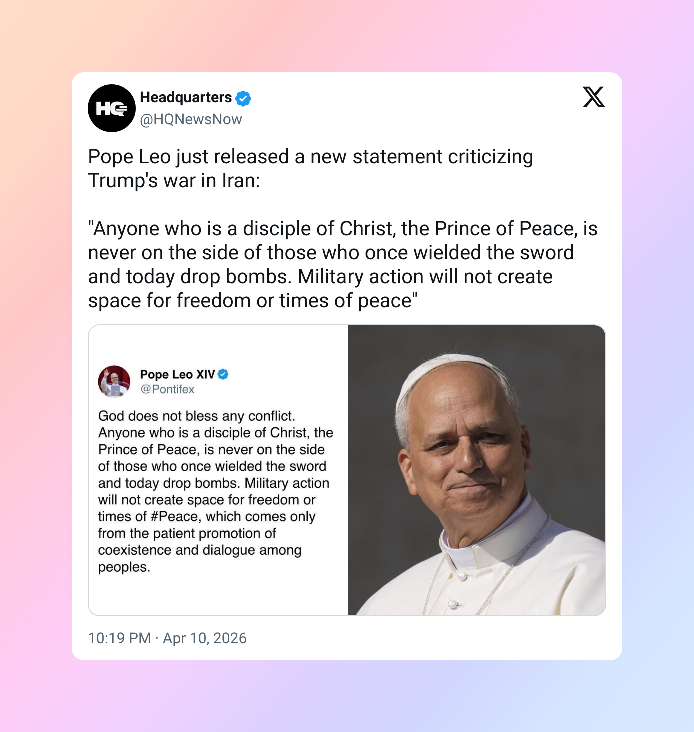
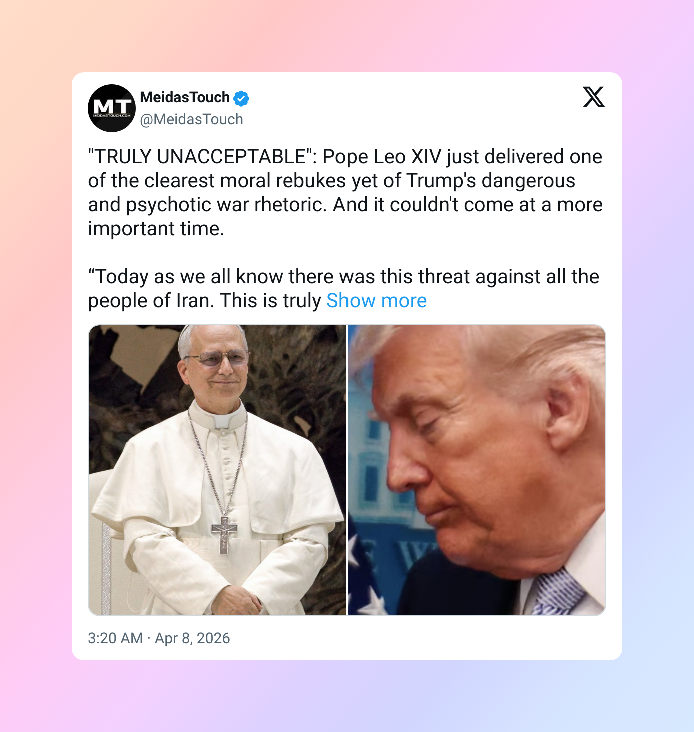
The leader of the Catholic Church has taken a firm stance against war, directly challenging the idea that faith can be used to justify military action. In a pointed message, he emphasized that peace—not power—defines moral leadership.
Trump, who posted an AI-generated image depiction of himself as Jesus Christ, fired back—sharply and publicly—casting the Pope’s views as “weak” and misguided simply because the Pope does not agree with his view points.
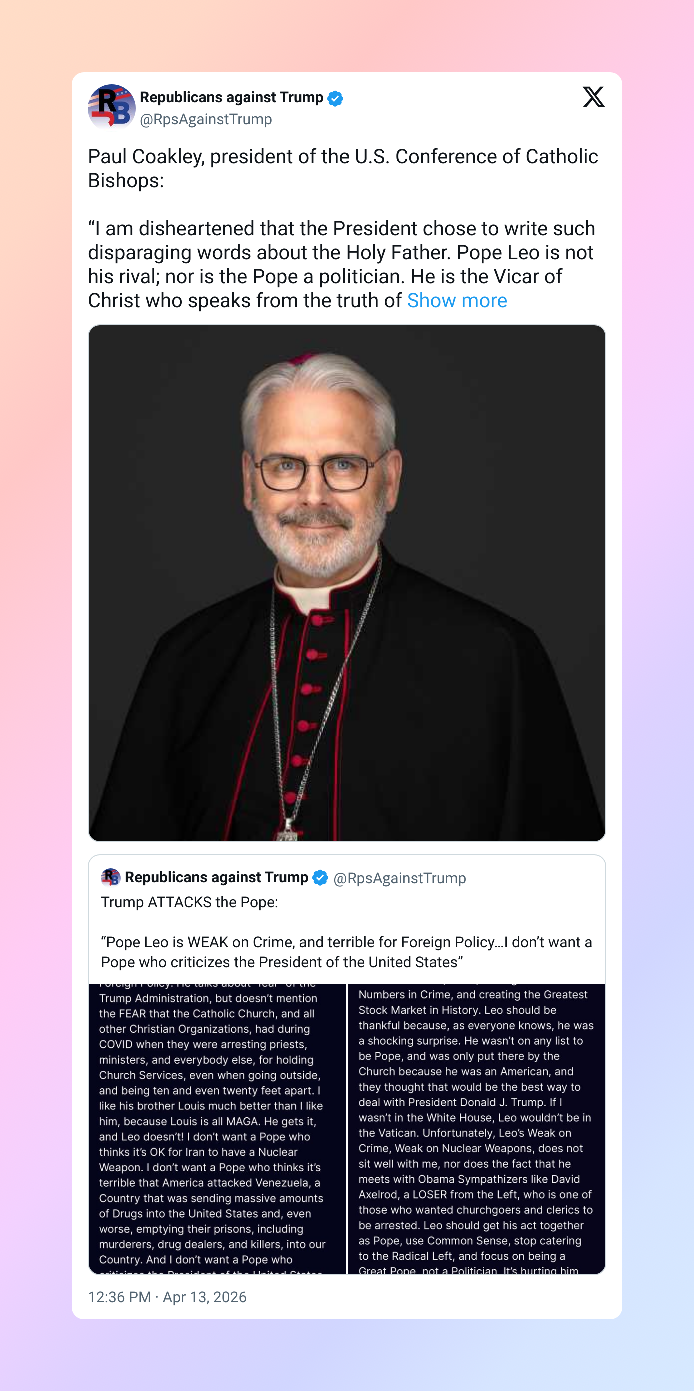
“I don’t want a Pope who criticizes the President of the United States.”
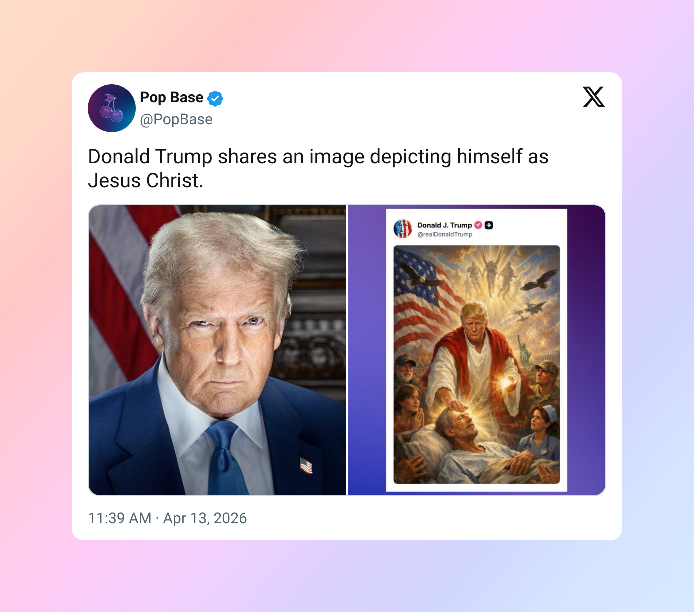
Trump even so far as alleged that the sitting Pope would not have been chosen had Trump not been President of the United States of America on his Truth Social post.
“Leo should be thankful because, as everyone knows, he was a shocking surprise. He wasn’t on any list to be Pope, and was only put there by the Church because he was an American, and they thought that would be the best way to deal with President Donald J. Trump. If I wasn’t in the White House, Leo wouldn’t be in the Vatican. “
The Post That Fueled the Fire
Trump’s Truth Social post didn’t mince words. He criticized the Vatican leader’s views on crime, nuclear policy, and global conflict, framing them as out of step with what he believes leadership should look like.
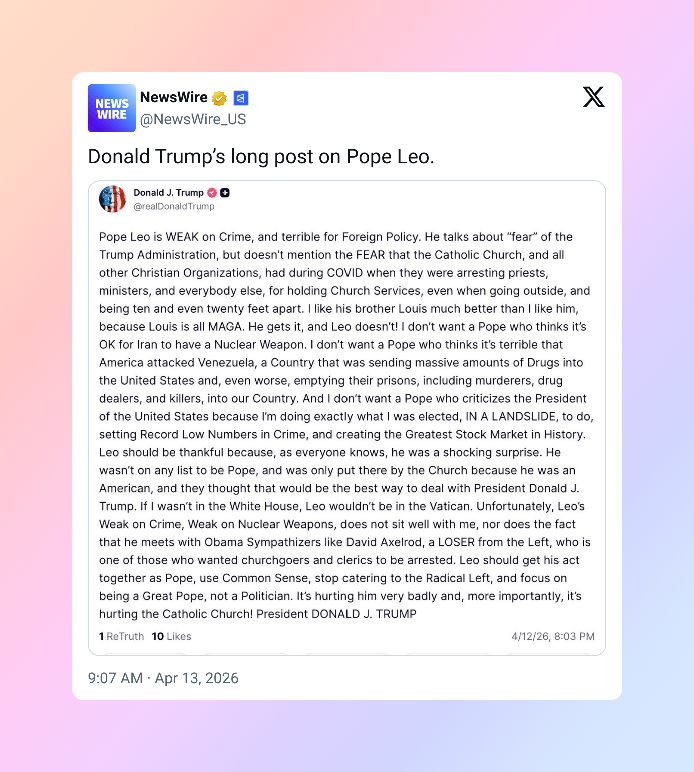 It was blunt. It was personal. And for many, it was uncomfortable to see a sitting political figure speak about a papal leader in those terms.
Asked why Trump attacked the Pope on his Truth Social post, Trump told reporters:
“I don’t think he’s doing a very good job. He likes crime I guess. We don’t like a pope who says it’s ok to have a nuclear weapon. We don’t want a pope that says crime is ok. I am not a fan of Pope Leo.”
Reporter: Why did you attack Pope Leo?
Trump: I don’t think he’s doing a very good job. He likes crime I guess. We don’t like a pope who says it’s ok to have a nuclear weapon. We don’t want a pope that says crime is ok. I am not a fan of Pope Leo. pic.twitter.com/cj3oh1jSIL
— Acyn (@Acyn) April 13, 2026
More Than Just Headlines
At its core, this isn’t a story about intimidation—it’s about influence.
The head of the Catholic Church urging peace. A president defending power. Two global figures, two vastly different philosophies, colliding in public view.
And in a media landscape that thrives on escalation, it’s a reminder that sometimes the loudest stories aren’t about what actually happened—but how quickly perception can take on a life of its own.