


Ron DeSantis is back in the headlines after a federal appeals court struck down key portions of Florida’s Stop WOKE Act, a law that many LGBTQ advocates have viewed as part of a broader effort to limit discussions surrounding identity, race, gender, and inclusion in the classroom.
In July 2026, the 11th U.S. Circuit Court of Appeals ruled that the higher education provisions of the law violate professors’ First Amendment rights, marking a major setback for one of Governor Ron DeSantis’ most recognizable policies.
Also known as the Individual Freedom Act, the legislation was signed into law in 2022 and quickly became a lightning rod in America’s culture wars.
Florida @GovRonDeSantis announces the “Stop Woke Act,” putting FL’s ban on CRT into statute.
It also includes a “private right of action” for parents to sue if they think their kids are being taught CRT.
Parents can collect attorneys fees if they are successful in their suit. pic.twitter.com/wqzrnN8QHN
— American Principles Project (@approject) December 15, 2021
A law that became a symbol
Although the Stop WOKE Act does not exclusively address LGBTQ issues, it became closely associated with them during DeSantis’ time in office.
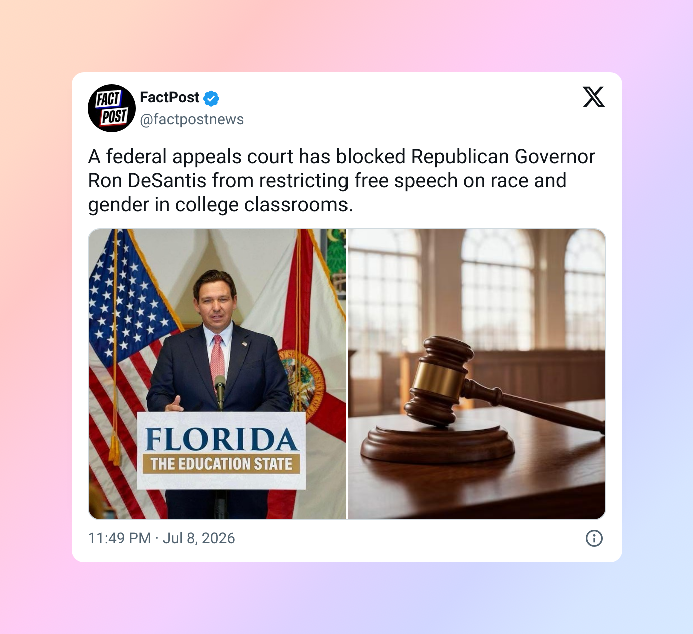
For many Floridians, the law arrived alongside other measures championed by DeSantis, including restrictions on classroom discussions involving sexual orientation and gender identity. Together, the policies fueled concerns among LGBTQ organizations, educators, and students that conversations about identity were increasingly becoming political battlegrounds.
Critics argued that the legislation created a chilling effect in classrooms, leaving educators uncertain about what could safely be taught or discussed. Part of the appeals read in part describing the Stop WOKE Act:
“The State of Florida legislated a broad set of speech restrictions banning certain viewpoints relating to race, color, sex, and national origin in various settings. The provision at issue here bars Florida’s educators from promoting or endorsing those disfavored ideas when instructing students.
Its prohibition applies not only in primary and secondary education, where states traditionally exercise a great deal of control, but also in public colleges and universities, where the state government’s role has been far more limited.”
RELATED: DeSantis To Hand Out Abercrombie Bags and International Male Magazines
Judges say the Constitution still applies
In a 2-to-1 ruling, the appeals court did not mince words. Judge Britt C. Grant, a Donald Trump appointee, wrote, “If the First Amendment offers any boundary of protection at all for public university classrooms, this statute crosses it.”
The court went even further, describing the law as “dystopian” and calling it “a breathtaking assertion of power to ban unpopular ideas from public discourse.”
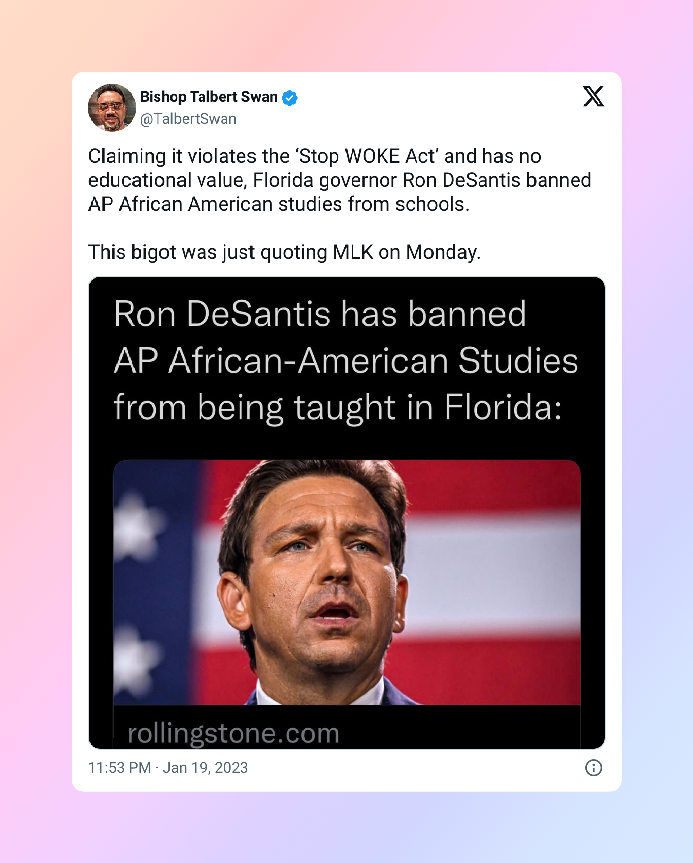
The ruling emphasized that public universities should remain places where students and professors can explore difficult topics, debate competing ideas, and pursue the truth without fear of government interference.
The legal battle took years
The decision follows years of litigation.
According to POLITICO, one lawsuit was filed by the Foundation for Individual Rights and Expression on behalf of a University of South Florida professor, a student, and a student organization. Another was brought by the ACLU of Florida, ACLU, and the Legal Defense Fund to represent both students and educators.
The plaintiffs argued that the law unlawfully restricted speech related to race, gender, and systemic inequality.
Judge Barbara Lagoa, a Trump appointee and former Florida Supreme Court justice selected by DeSantis, dissented, arguing that the First Amendment “does not compel all viewpoints to be worthy of state-sponsored endorsement.”
Why LGBTQ communities are paying attention
For LGBTQ Americans, the ruling carries significance beyond higher education.
Over the past several years, DeSantis became one of the country’s most visible political figures associated with legislation affecting LGBTQ communities. As a result, each legal challenge to those policies has been closely watched by advocates nationwide.
The appeals court’s decision does not erase the Stop WOKE Act entirely, nor does it end the broader debate over what belongs in America’s classrooms.
But for many educators, students, and LGBTQ advocates, the ruling serves as a reminder that discussions about identity, equality, and lived experiences remain protected speech.
And in a political era increasingly defined by culture wars, that distinction may be more important than ever.
GOOD! About time judge in Florida had some balls!