


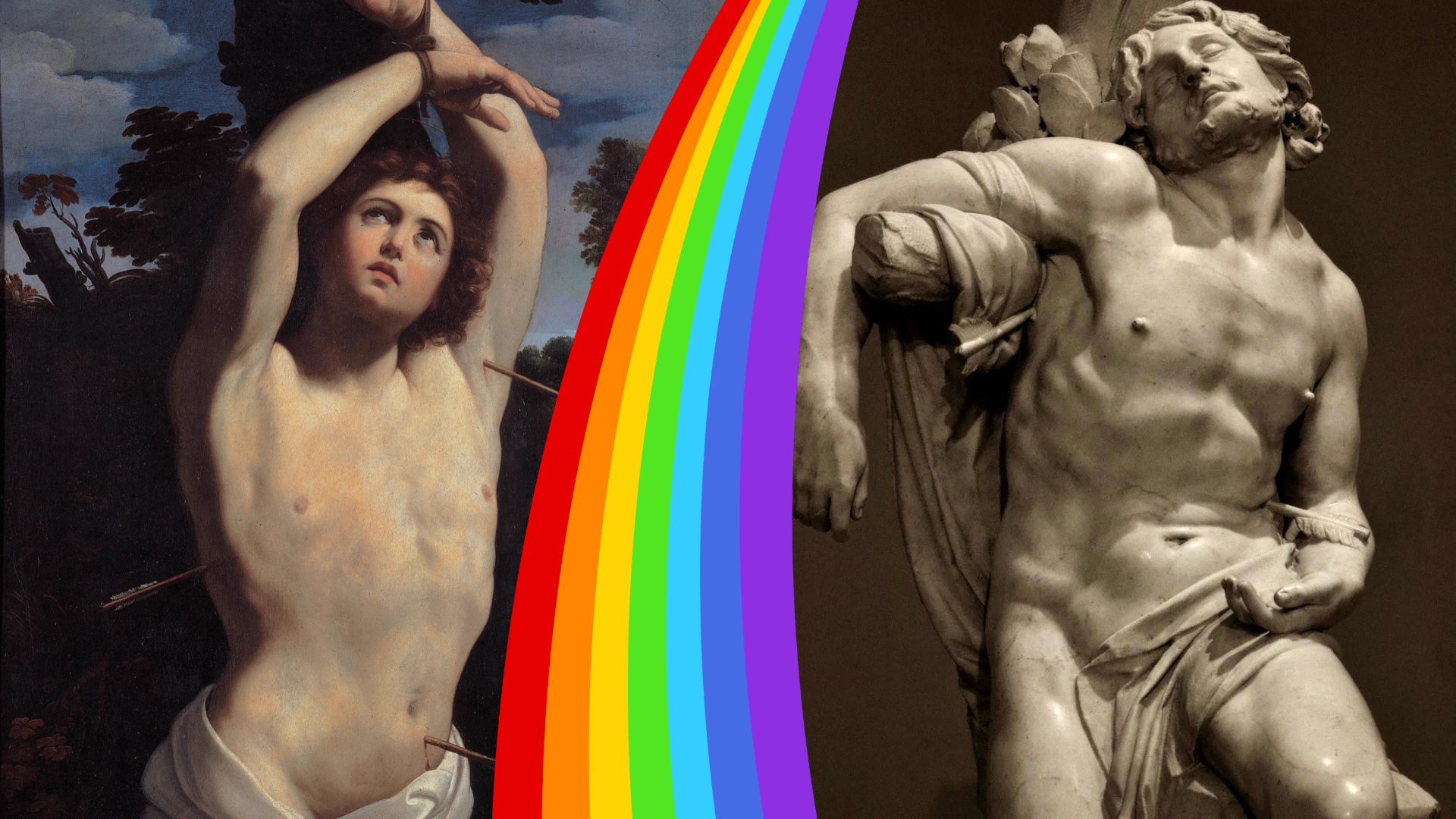
Guitarricadelafuente singing “La Nieve” and “BABIECA!” at the 2026 LOS40 Music Awards has been circling around the internet and we’re ready to learn more. The performance took place at the Palau Sant Jordi in Barcelona during the 21st edition of the LOS40 Music Awards Santander 2026. This marked Álvaro Lafuente’s (Guitarricadelafuente) debut performance on the LOS40 stage and his first time singing “La Nieve”—the original theme from La Bola Negra—live in Spain following the film’s premiere. You may not understand the song, but the symbolism of Saint Sebastian cannot be missed. But who is Saint Sebastian and how did he become a gay icon? We’ll get into that after you watch this amazing teaser of his performance. We’ll include the whole performance at the end of the post.
welcome back Saint Sebastian https://t.co/uAzba9joGo
— Alex Naser-Hall (@anaserhall) November 20, 2026
We’ve come to know Saint Sebastian as something of an LGBTQ+ icon, with his image appearing in queer art, photography, literature, and even pop culture. But how did a third-century Christian martyr become one of the most recognizable symbols of gay identity? Well, the story is actually quite fascinating, and it involves beautiful Renaissance paintings, forbidden desire, and a whole lot of arrows.
Related Post: Trailer for ‘La Bola Negra’: Generations of Gay Longing, Repression, Survival
From Christian Martyr to Renaissance Heartthrob
Saint Sebastian was a Roman soldier who secretly practiced Christianity during the reign of Emperor Diocletian. According to Christian tradition, he was sentenced to death for his faith and tied to a post before being shot with arrows by fellow soldiers. Miraculously, he survived the attack, only to be executed later after confronting the emperor.
His transformation into a gay icon, however, began centuries later.
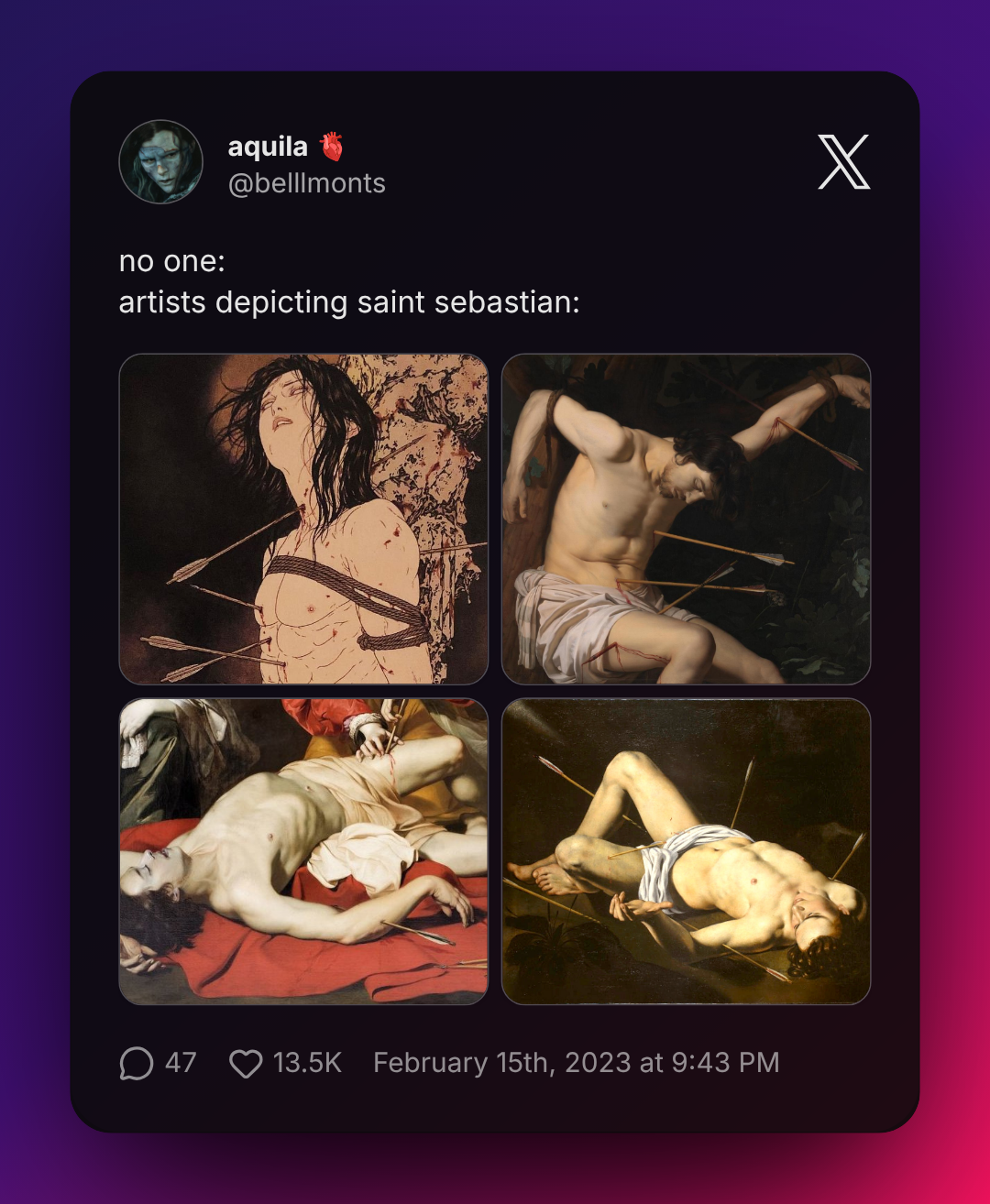
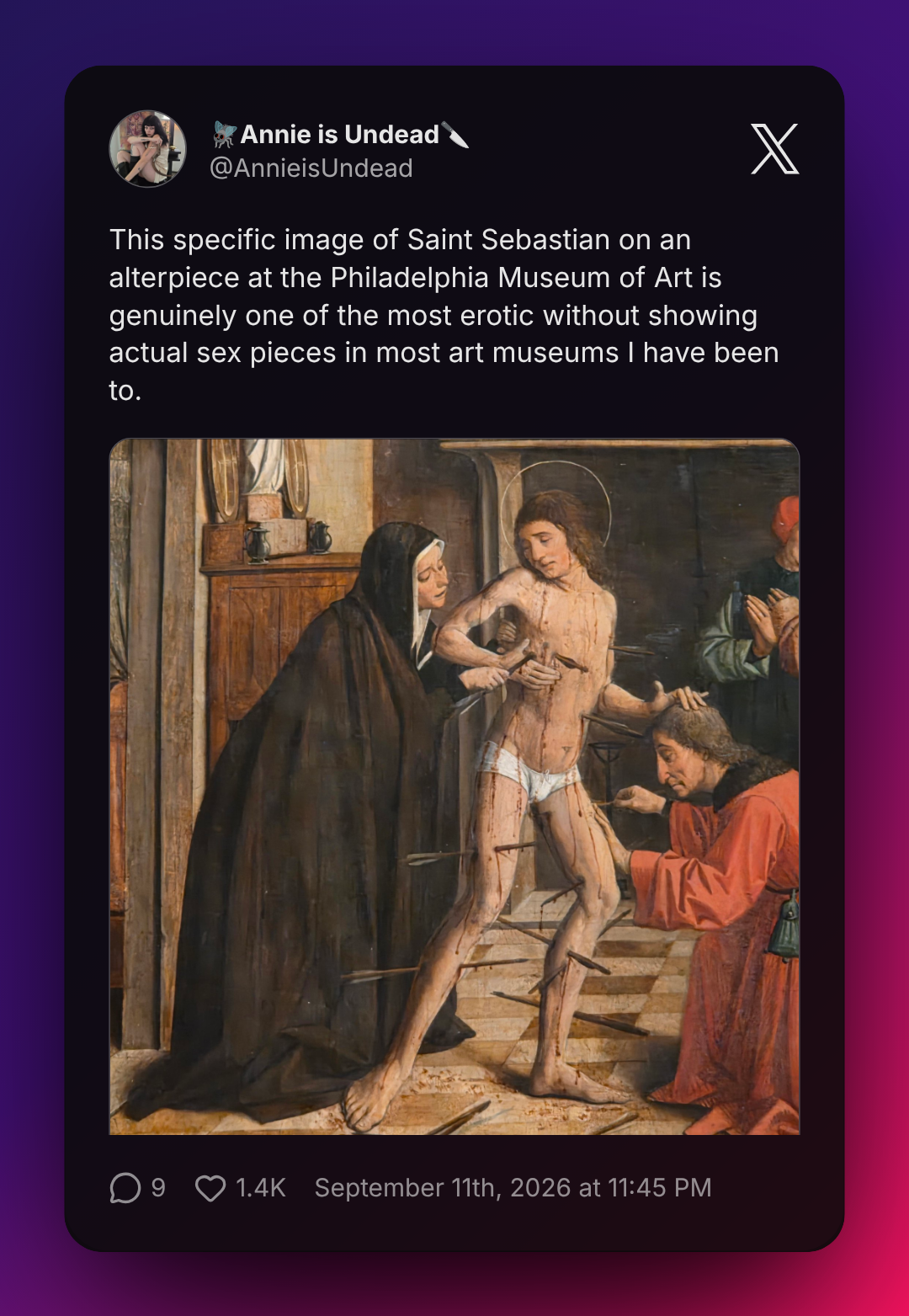
According to Outreach Faith, during the Renaissance and Baroque periods, artists such as Guido Reni, Sandro Botticelli, and El Greco began portraying Sebastian as a beautiful, youthful man, often nearly naked and tied to a tree. Rather than depicting nothing but agony, many paintings gave him dreamy, almost ecstatic expressions.
And let’s just say the imagery left plenty of room for interpretation. His exposed body, suggestive poses, and arrows piercing his flesh eventually took on homoerotic meanings for queer viewers. Some art historians and critics have even interpreted the arrows as phallic symbols, adding another layer to his association with gay desire.
RELATED: Pope Leo XIV Says the Church Will Welcome LGBTQ+, but Doctrine Won’t Change
A Symbol of Forbidden Desire and Survival
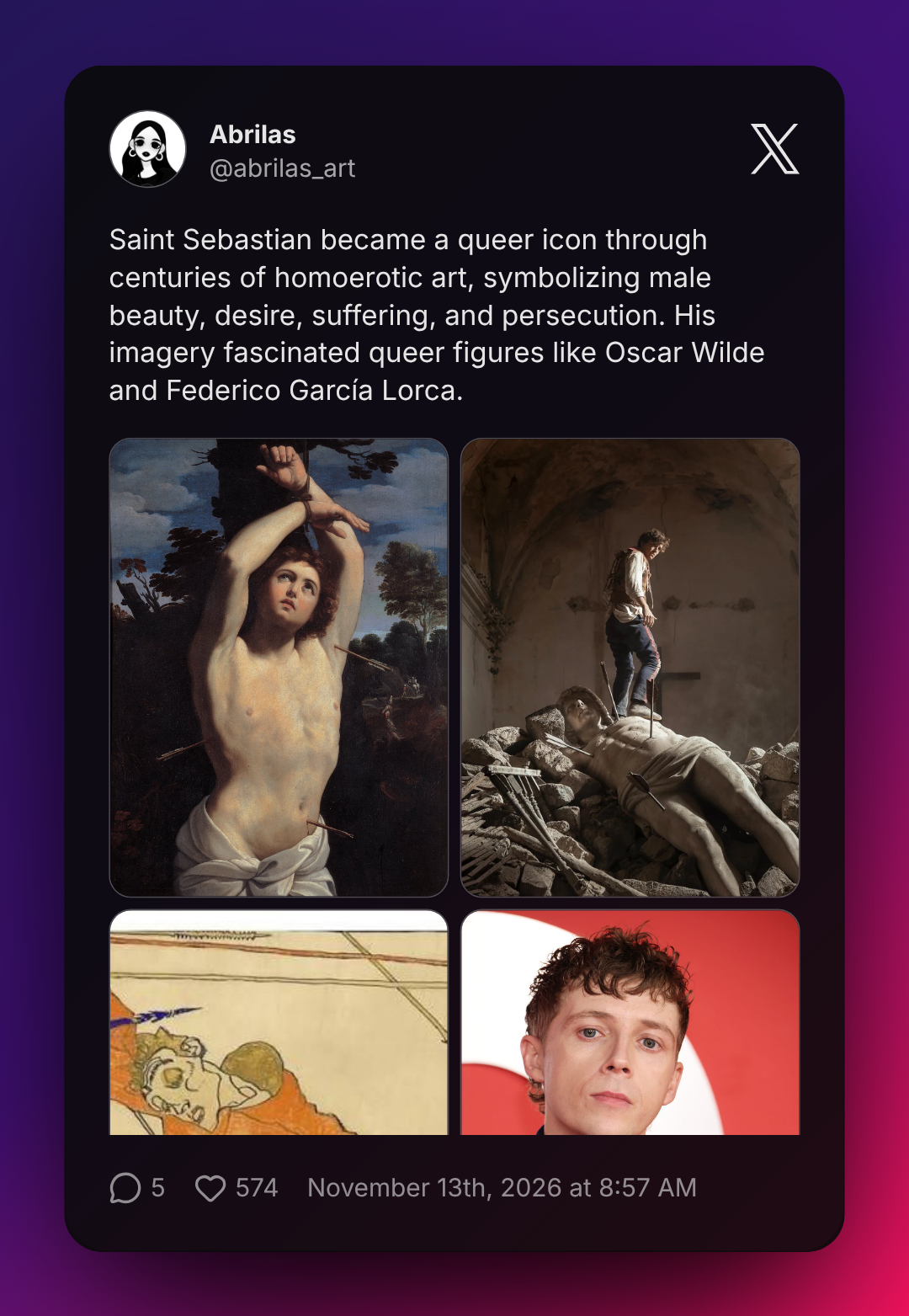
By the late 19th century, Saint Sebastian had become a recognizable reference among gay men and queer artists. His story of concealing his Christian identity before facing persecution resonated with people who understood what it meant to hide parts of themselves in an intolerant society.
Even Oscar Wilde embraced the symbolism. Following his imprisonment, the writer adopted the name Sebastian Melmoth while living in exile in Paris. Japanese author Yukio Mishima also famously recreated Guido Reni’s depiction of the saint in a photographic portrait, while his novel Confessions of a Mask references the painting as part of its protagonist’s sexual awakening.
The connection continued into cinema, most notably through Derek Jarman’s 1976 film Sebastiane, which explored the saint’s story through an explicitly homoerotic lens. Even La Bola Negra features Saint Sebastian in their poster for the film.
From the Plague to the AIDS Crisis
There’s another important reason Sebastian holds such significance. Long before becoming a queer icon, he was venerated as a protector against plague and epidemics. During the HIV/AIDS crisis of the 1980s, that association took on renewed meaning.
📹Actuación completa de Guitarricadelafuente cantando ”La Nieve” y ”BABIECA! en Los 40 Music Awards. https://t.co/7ST3VCKUKa
— Info Guitarricadelafuente (@guitarricainfo) November 20, 2026
Queer artists, including Keith Haring and David Wojnarowicz, revisited Sebastian’s imagery as a symbol of suffering, illness, protection, and perseverance. His story became a way to remember those lost to AIDS and reflect the community’s struggle for survival.
So, while Saint Sebastian’s connection to the LGBTQ+ community wasn’t part of his original religious story, generations of queer people have given his image new meaning. Today, he represents desire, resilience, persecution, and the freedom to exist unapologetically. Not bad for a saint with a rather unfortunate relationship with archery.