


Because apparently out of nearly 180 arts organizations, the two that suddenly need to prove their “artistic merit” are the gay ones.
RELATED: When an LGBTQ+ Safe Space in Sacramento Doesn’t Feel Safe Anymore
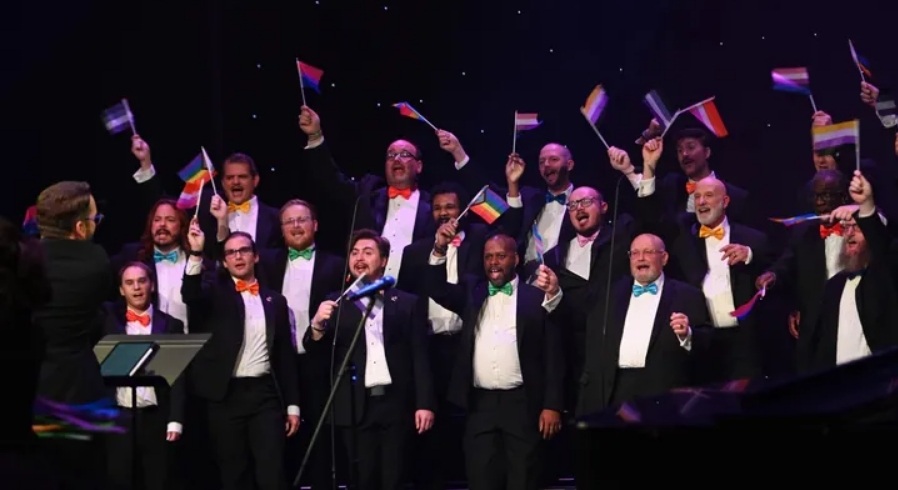
The South Carolina Arts Commission (SCAC) voted August 20 to approve $3.7 million in grants for nearly 180 arts organizations across the state. Then it made a very curious exception: The Greenville Gay Men’s Chorus and Spartanburg-based Proud Mary Theater Company, two organizations with an LGBTQ+ focus, had their funding withheld pending further review while the rest of the organizations moved forward.
The commission said the two groups need to demonstrate their “artistic merit.” And if that explanation sounds a little different from the one previously given, well, welcome to the plot twist.
RELATED: Texas’ Anti-Drag Law Gets Another Judicial Read: “Just Don’t Go.”
When “Artistic Merit” Suddenly Enters the Chat
The SCAC had previously delayed its vote on the grants in June. According to The Post and Courier, the commission’s reasoning for withholding the money changed after the South Carolina ACLU sent a letter to the agency in mid-August.
Emails obtained through a public records request and reported by the newspaper in June offered a rather different explanation.
Board member Jessica Rourke told interim commission director Ashley Kerns Brown and former director David Platts that she would not fund “organizations structured around specific sexual orientations, nor should public funds support drag performances.”
South Carolina does not currently have a ban on drag performances, although lawmakers considered one in 2024. Across the country, lawmakers in more than a dozen states have considered similar legislation, with some states adopting laws concerning drag or broadly defined “adult” performances.
Another SCAC board member, Russell “Rip” Parks, expressed a similar view in an email to Brown and Platts.
“While these organizations have every right to promote their agendas privately, it is not the role of a state funded agency to promote them,” Parks wrote, per the emails obtained by the Post and Courier.
Which leaves the arts community with a fairly obvious question: if the concern is supposedly artistic merit, why were these particular organizations singled out after concerns about their LGBTQ+ identity and programming had already been documented?
The Gay Groups Somehow Have Homework
The August 20 meeting reportedly began with a 45-minute closed executive session. When the board returned, it had a resolution ready to go.
The resolution stated, “No person or entity that receives grant funding from the Commission shall, in any work funded in whole or in part by grant funds administered by or received from the Commission, promote any ideology without regard to what that ideology might be,” according to The Post and Courier. The vote passed 5-2.
For LGBTQ+ arts advocates, the timing and the two organizations affected were hard to ignore. Ed Madden, the former poet laureate for the city of Columbia, told the Post and Courier that the groups are effectively being subjected to a different standard.
“They’re forcing explicitly LGBTQ organizations to do more work to prove themselves than any other organization,” Madden said. “That in itself is discriminatory.”
Jeff Robinson, executive director of the South Carolina Arts Alliance, similarly questioned why the two organizations suddenly have to prove something they had already demonstrated through the normal grant process.
“The organizations have already proven their artistic merit through a rigorous grant application process,” Robinson said. “Why was this process good enough to approve nearly 200 other organizations while these two specifically require further review?”
Honestly, that is the kind of question that tends to linger when nearly everyone gets a green light and the gay organizations are handed a surprise oral exam.
The Money Isn’t Huge. The Message Is.
Financially, the grants at stake are relatively small compared with the commission’s overall $3.7 million allocation. Proud Mary Theater Company was slated to receive $2,063 in grants, plus $1,803 in bridge funds intended to cover short-term needs. That amounts to less than 1% of the total grant funding.
The Greenville Gay Men’s Chorus was slated to receive $13,050, also less than 1% of the overall funding.
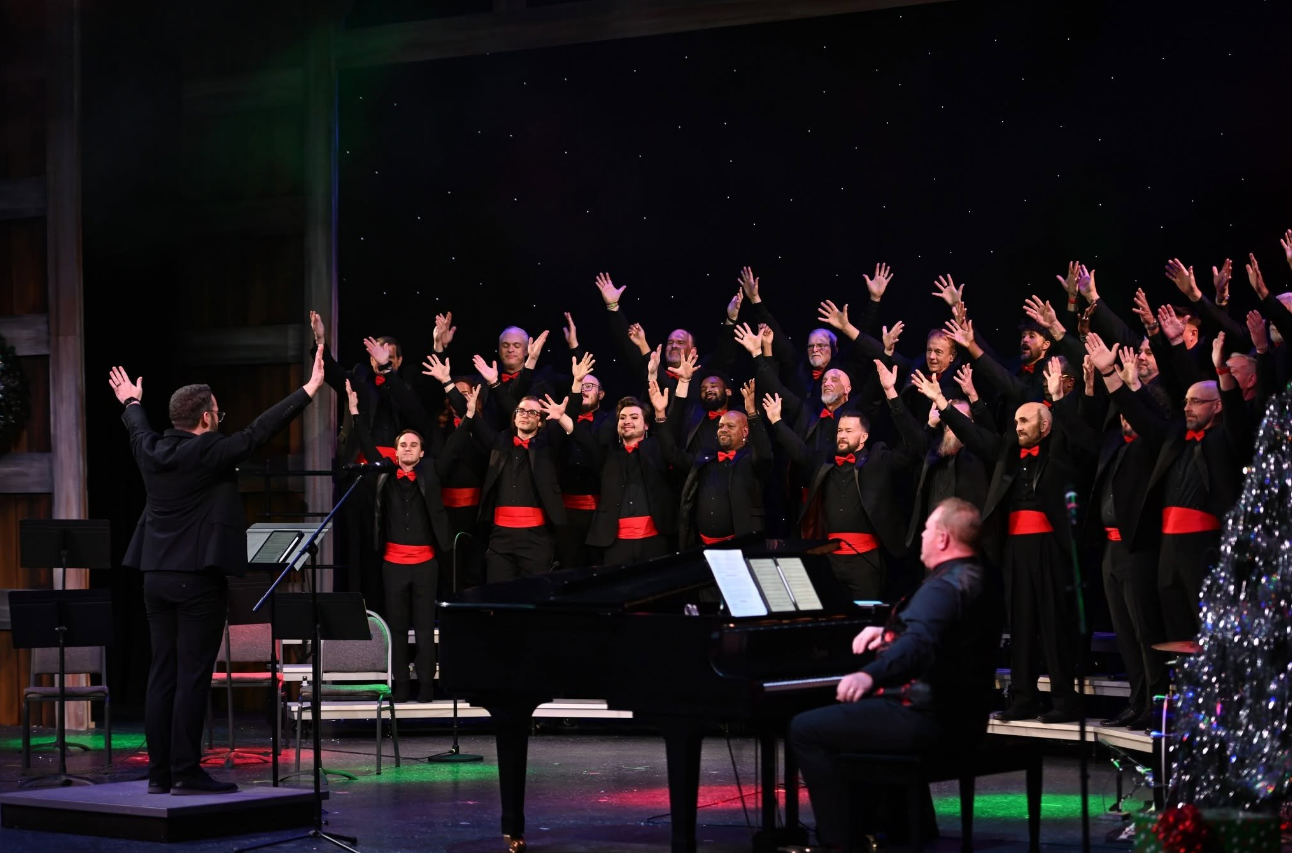
But for organizations operating on nonprofit budgets, losing even a relatively modest grant can have consequences. And the larger concern for advocates is not simply the dollar amount. It is who gets to decide which art deserves public support — and whether LGBTQ+ organizations are being judged by a different yardstick.
Sally McClellan, secretary and grants coordinator for Proud Mary Theater Company, pointed out another obvious detail.
“Estimates are that there are about 200,000 queer people in our state, all of whom would be taxpayers,” McClellan said.
Exactly. The queer people buying groceries, paying rent, filing taxes and generally participating in society did not magically become imaginary just because their theater company has LGBTQ+ programming.
Arts Funding Shouldn’t Become a Vibe Check
Lee Snelgrove, a former director of South Carolina-based arts nonprofit One Columbia, told the Post and Courier that the emails suggest personal beliefs may be influencing the commission’s decisions.
“Those emails specifically… pointed out to me that those commissioners do’’t really see the mission and vision of the Arts Commission in the same way that the arts organizations, and the arts community that worked hard to develop that mission with the commission staff see it,” Snelgrove said. “[It] feels very similar to when commissions have appointees that are there for specific political reasons, and they sort of enforce those political reasons.”
He added that the decision “undermines” the commission’s work. For the Greenville Gay Men’s Chorus, the issue goes beyond whether $13,050 lands in its budget.
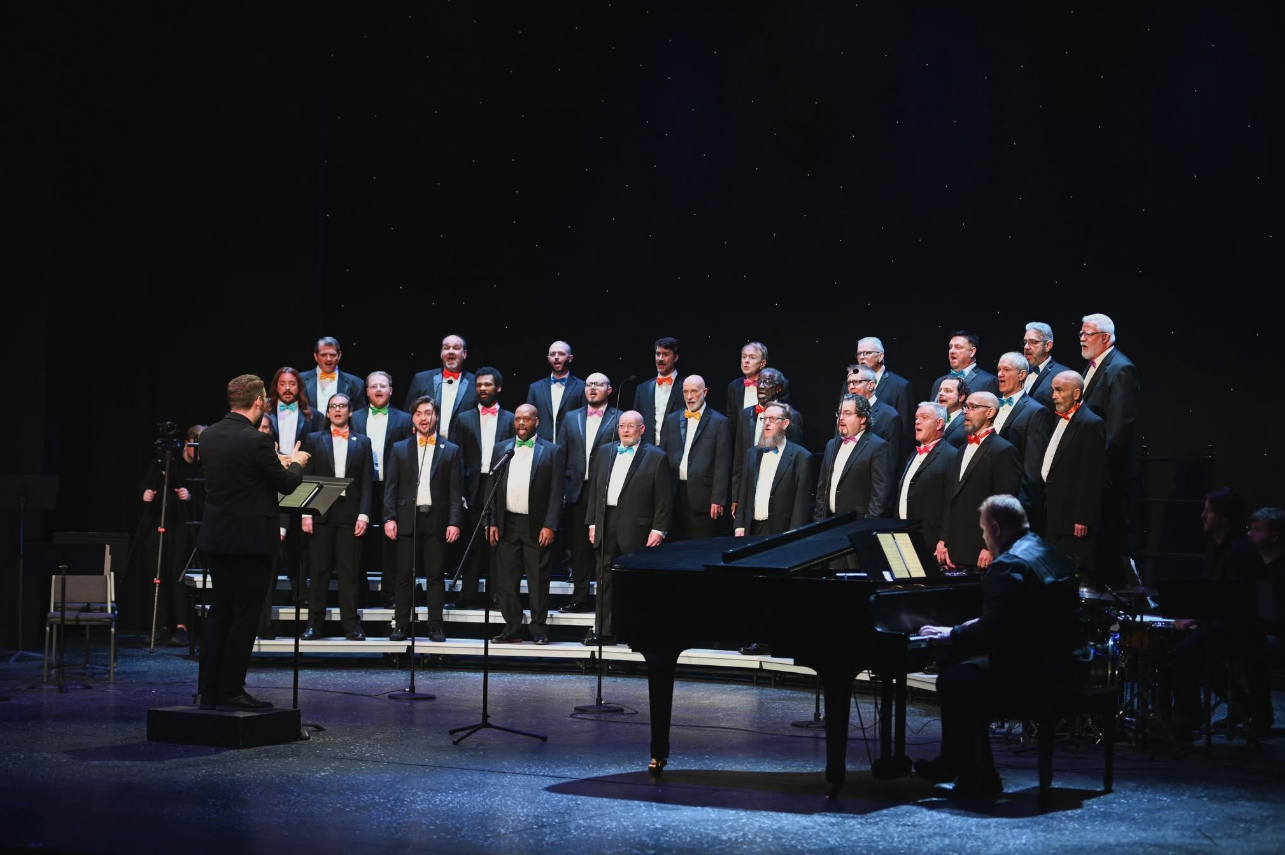
“The idea that legislators can hand-pick certain art to put in or take out is unconstitutional and illegal, and starts to create this scenario where the only art that can be supported is the art deemed appropriate by the state,” Mary Adam, executive director of the Greenville Gay Men’s Chorus, told the Post and Courier.
That concern gets to the heart of the controversy. Art has never exactly been famous for staying inside everyone’s comfort zone. Theater, music and performance routinely tackle politics, identity, sexuality, religion, race, heartbreak and every other subject humans have managed to argue about since the dawn of time.
So deciding which art is sufficiently “appropriate” can become a very slippery slope. And LGBTQ+ artists know perhaps better than most what happens when someone else gets to define which stories are acceptable.
The Chorus Is Already Raising Money
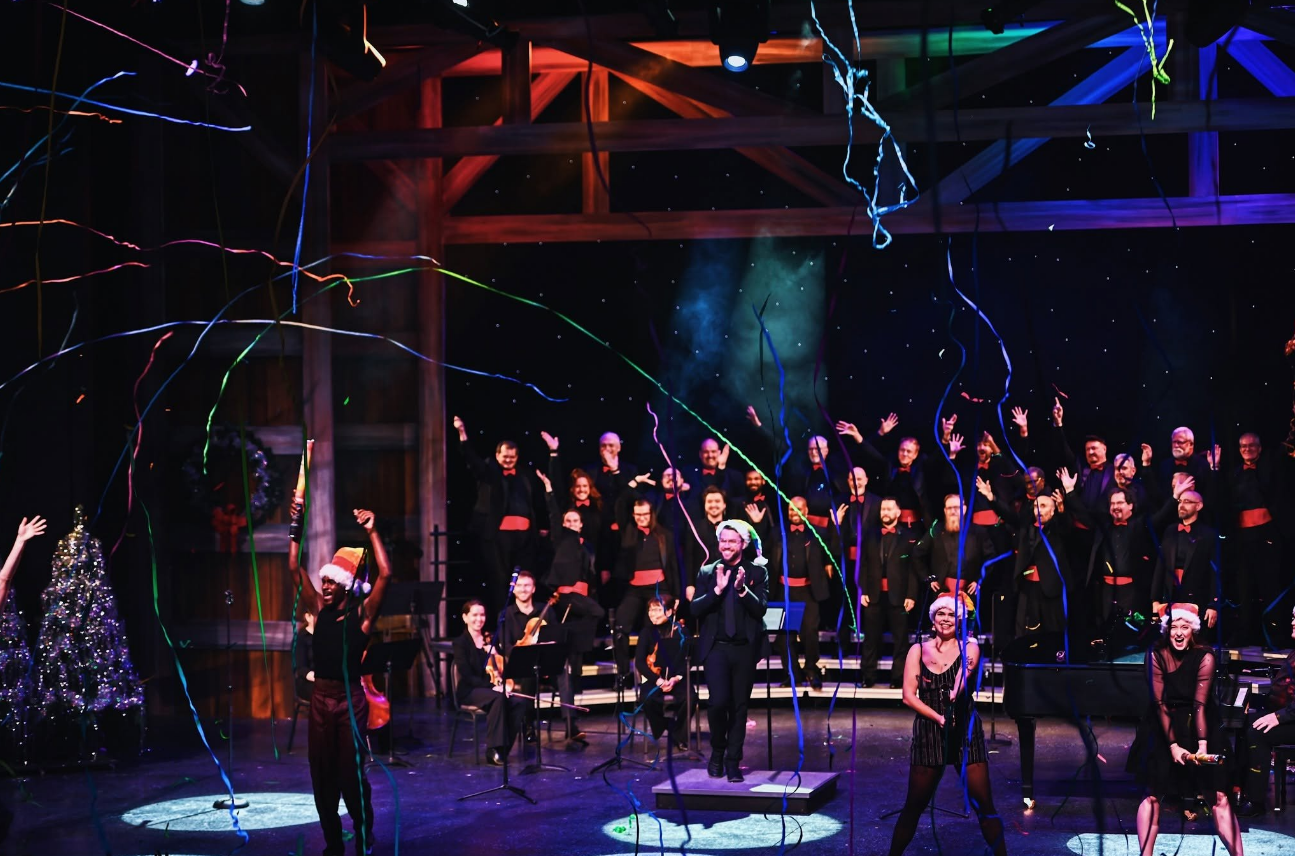
With the funding now in question, the Greenville Gay Men’s Chorus has launched a GoFundMe to help cover the shortfall. As of Monday morning, it had raised more than $10,000 toward its $13,000 goal.
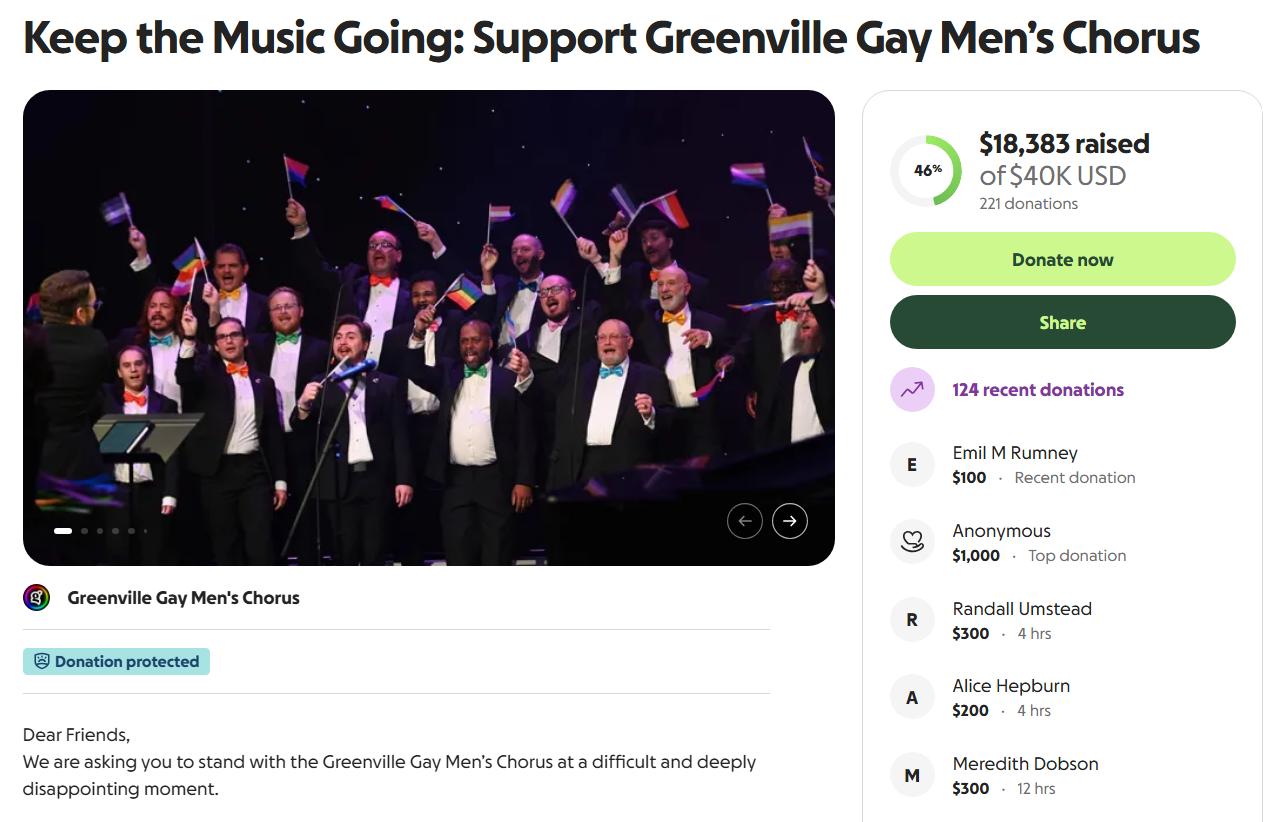
“This treatment is not only unfair and discriminatory, it is illegal,” the Chorus said of the committee’s decision. “Public arts funding should be based on the quality and impact of an organization’s work — not on whether it serves or is created by the LGBTQ+ community. The ACLU of South Carolina has also raised concerns about the Commission’s actions and the new resolution it adopted addressing ‘ideology’ in grant-funded work.”
Both organizations have reportedly been told they must defend their artistic merit at the committee’s October 15 meeting. The problem? As of the time of the report, they had not been given instructions explaining exactly how they are supposed to do that.
Which is, admittedly, an unusual position to put an arts organization in: Congratulations, your funding is on hold. Please prove your art is good enough. We’ll let you know what the test is later.
For now, the Greenville Gay Men’s Chorus and Proud Mary Theater Company are left waiting for answers, while supporters are left wondering why the state’s arts funding process suddenly seems to have developed a very specific interest in two LGBTQ+ organizations.
The money may represent a tiny slice of South Carolina’s arts budget. But the question hanging over it is much bigger: When public money supports the arts, should the standard be the quality of the work — or whether the people making it fit someone else’s idea of acceptable?
Source: THEM
Not surprising coming from a state whose Republican senator was a closet case.
Thank you for telling this very important story. GGMC is a small but extremely talented group. They add some wonderful happiness in our extremely red state.