


Texas tried to put drag back in the legal naughty corner. A federal judge has now rejected the state’s effort again.
RELATED: Darline Graham Says National Security “Isn’t My Thing.”
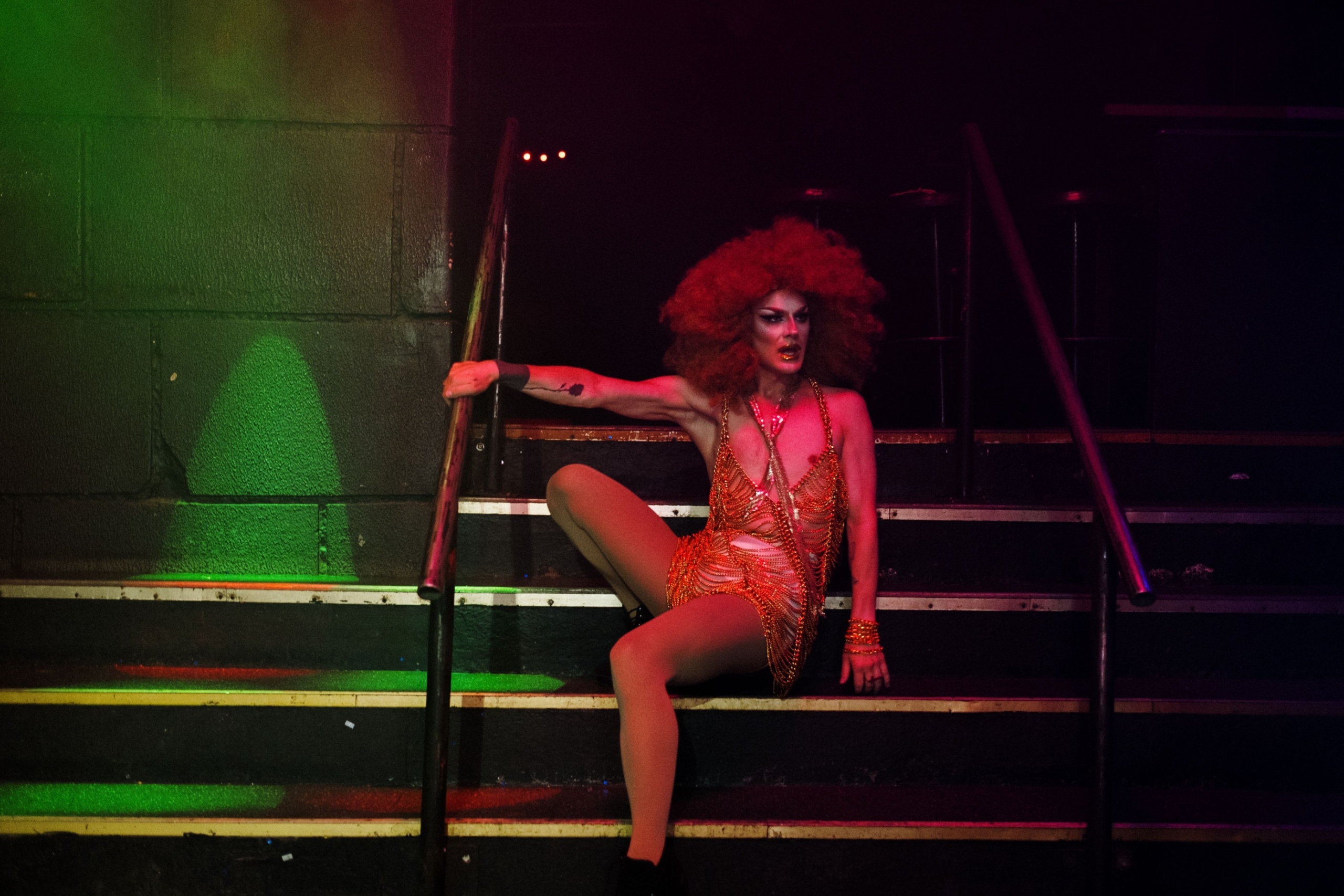
U.S. District Judge David Hittner ruled Tuesday that Texas Senate Bill 12 is unconstitutional, reaffirming a decision he first reached in 2023. The law sought to restrict what it described as “sexually oriented performances” and was widely promoted by supporters as a measure aimed at drag shows. Hittner’s response to anyone who finds such performances offensive was refreshingly direct:
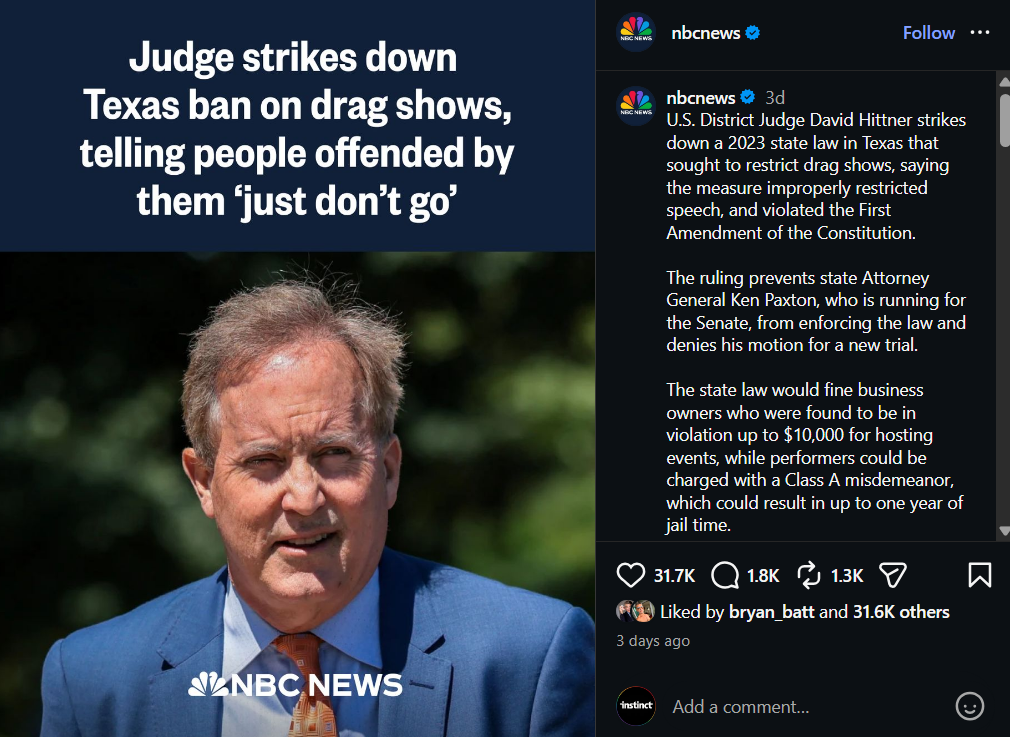
“Finally, for those who find such activities as described in this case offensive, the solution is relatively simple … just don’t go,” Hittner wrote Tuesday.
And honestly? Put it on a T-shirt. Texas Attorney General Ken Paxton has pledged to appeal the ruling, so the legal drama isn’t over yet. But Hittner’s latest decision marks another significant setback for Texas’ attempt to regulate performances that can include drag.
RELATED: Georgia Just Sent Its First Out Gay Man to Congress!
Texas Isn’t the Only State Coming for the Stage
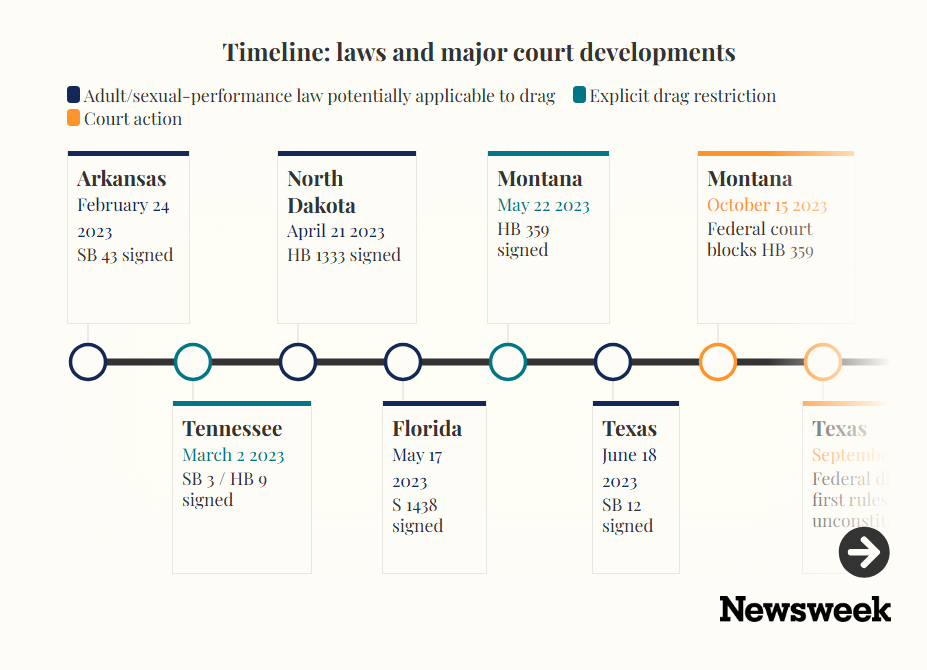
Texas is hardly alone in putting drag performances under a legal microscope. According to the Movement Advancement Project, six states currently have laws that either explicitly restrict drag performances or could be used to target them through broader regulations covering adult or sexual performances.
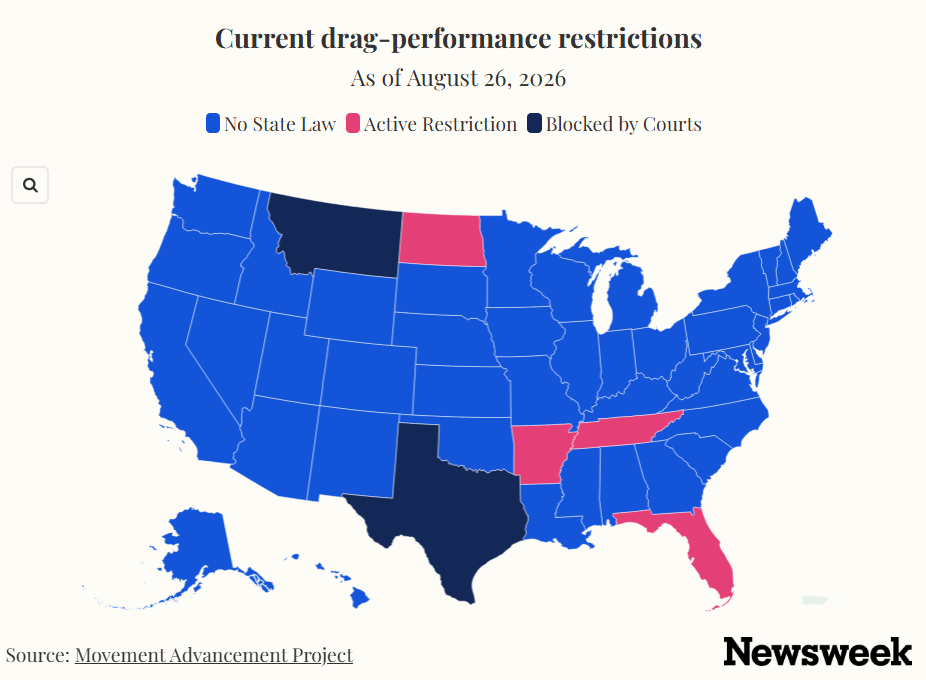
Tennessee and Montana have laws specifically restricting drag performances. Arkansas, Florida, North Dakota and Texas have adopted broader measures concerning adult-oriented performances that advocates say could also be used against drag events. That distinction matters. A law doesn’t always have to say “drag” to potentially affect drag performers, venues and events.
Supporters of these measures have generally argued that they’re about protecting children from sexually explicit material in public spaces. Critics counter that the laws are deliberately broad and risk sweeping up protected artistic expression along with anything lawmakers deem inappropriate.
And when a law aimed at one supposedly scandalous performance can potentially reach ballet, Broadway or cheerleading, suddenly the definition of “sexually oriented” starts looking rather flexible.
“Legislators appear to have recognized this fundamental flaw, at least for now,” Casey said. “Unlike many other anti-LGBTQ policies in recent years, drag restriction laws have not spread across the country: the first laws of this kind—including in Texas, Montana, Florida, and Tennessee—were enacted in 2023, and no more have been enacted since 2023. All those states I mentioned were promptly sued after passing their laws, and all were blocked by court order within a matter of months.”
For all the political noise surrounding drag, that is an important part of the story. These restrictions have repeatedly ended up in court, where their reach and constitutionality are being tested.
Drag Is Having Its First Amendment Moment
The central legal question keeps coming back to the First Amendment. Opponents of drag restrictions argue that drag is artistic expression, placing it in the same broad constitutional conversation as theater, music and dance. Their argument is that the government cannot simply decide that an expressive performance loses constitutional protection because some people find it objectionable.

Texas is now back in that fight.
“This latest Texas ruling joins similar decisions in Montana, Florida, and Tennessee, where courts have found these laws to be unconstitutional restrictions on free speech.”
The result is a national patchwork. Some states have passed restrictions. Some of those laws have been blocked by courts. Others remain tied up in litigation. And plenty of states have never adopted them in the first place. For performers and LGBTQ+ communities, that uncertainty can make something as ordinary as putting on a show feel unnecessarily complicated. Because apparently a microphone, a spotlight and a pair of heels can become the subject of constitutional litigation.
Public Opinion Is Getting Complicated, Too
The courtroom battles are unfolding while American attitudes toward LGBTQ+ issues are shifting in different directions.
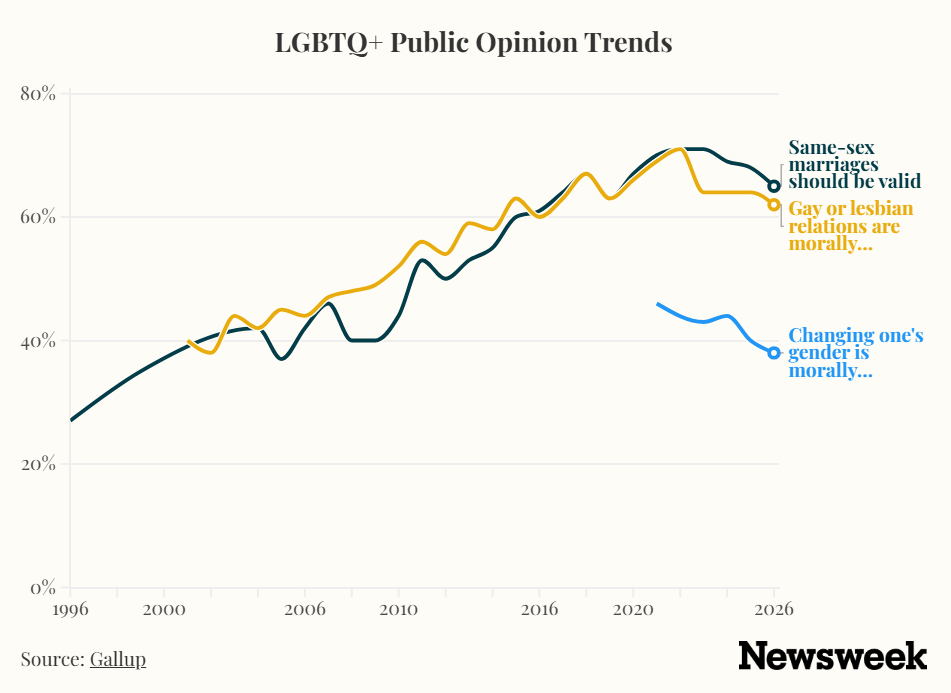
Gallup polling released this year found that 65 percent of Americans continue to support legal same-sex marriage. That’s still a clear majority, although it’s down from the recent high of 71 percent recorded in 2022 and 2023. Gallup also found that 62 percent of Americans consider gay and lesbian relationships morally acceptable, the lowest level recorded since 2016.
Attitudes toward transgender issues have moved more sharply. Just 38 percent of Americans said changing one’s gender is morally acceptable, down from 46 percent when Gallup first asked the question in 2021. Gallup found that much of this decline has been driven by Republicans, while attitudes among Democrats have remained comparatively stable.
So yes, America still has majority support for same-sex marriage. But LGBTQ+ issues have also become a much louder political battleground, particularly around transgender rights, schools, parental rights and drag. It’s a strange contradiction: LGBTQ+ acceptance remains substantial in many areas, while political fights over LGBTQ+ visibility have become increasingly intense.
More People Are Coming Out While the Backlash Gets Louder
The demographic picture adds another layer. Research from PRRI found that about one in 10 Americans now identify as LGBTQ+, more than twice the share recorded a decade ago. Among adults ages 18 to 29, the figure is roughly 20 percent.
In other words, LGBTQ+ visibility isn’t exactly disappearing. More Americans are openly identifying as LGBTQ+, particularly among younger generations, even as political movements push back against that visibility.
Drag sits right in the middle of that cultural tug-of-war. Republican lawmakers have increasingly connected drag performances to debates over children, sexual content, education and parental rights.
Democrats and LGBTQ+ advocates have instead framed the issue around free expression and equal treatment under the law. Which leaves drag performers in the rather bizarre position of becoming unwilling participants in America’s latest culture war. The queens asked for a stage. They got a constitutional controversy.
The Next Act Will Probably Be in Court
The Texas decision is unlikely to end the fight. Paxton has pledged to appeal, meaning Senate Bill 12 could return to the courts and potentially become another test of how far states can go in regulating expressive performances.
Brian Klosterboer, senior staff attorney at the ACLU of Texas, said the law was so sweeping that its potential reach extended far beyond drag.
“This ruling blocks S.B. 12, a law so sweeping and vague that the court found it could reach everything from ballet to Broadway musicals to cheerleading. Drag is a joyful art form with a deep history across the country,” Brian Klosterboer, senior staff attorney at the ACLU of Texas, told Newsweek in a statement.
He continued:
“As the court itself put it, anyone who finds it offensive has a simple solution — just don’t go. Efforts to ban drag have largely failed nationwide, but several cases are still moving through the courts — and we’ll keep working to protect this cherished art form.”
For now, Texas’ latest attempt to restrict the performances covered by Senate Bill 12 has been blocked. The legal fight may continue, but Hittner’s advice remains wonderfully uncomplicated: if you don’t like drag, nobody is forcing you to attend. You can simply stay home. The rest of us have a show to catch.
Source: Newsweek