


A Tennessee appeals court has overturned a man’s manslaughter conviction in the killing of a Black trans woman, ordering a new trial over evidence the jury was not allowed to hear. The decision has renewed debate about the so-called “trans panic defense” and how transgender identity can factor into criminal proceedings.
Here’s what happened and why the case matters to the LGBTQ+ community.
What Happened to Paris Lee?
The defendant, Samuel Ward Jr., shot and killed Paris Lee outside her home in Memphis,Tennessee in June 2022. Ward claimed he acted in self-defense, alleging that Lee had pulled a gun on him. A jury convicted him of voluntary manslaughter in May 2025.
On October 5, 2026, the Tennessee Court of Criminal Appeals overturned that conviction and ordered a new trial. The court found that the original trial judge had improperly excluded evidence of Lee’s biological sex, which Ward’s lawyers argued was relevant to his claim that he feared her during their confrontation.
The ruling does not establish that Ward was innocent or that the shooting was justified. Instead, it means the Tennessee appeals court determined that the trial court made a legal error by excluding evidence it considered relevant to the defense.
READ: Will Riley Gaines Finally Go Away with The New Defeat to Her 15 Minutes of Hate?
What Is the Trans Panic Defense?
The term describes a legal strategy in which a defendant argues that a victim’s actual or perceived sexual orientation or gender identity contributed to their fear, provocation, or actions. It can be raised alongside arguments such as self-defense or provocation in an attempt to reduce or avoid criminal liability.
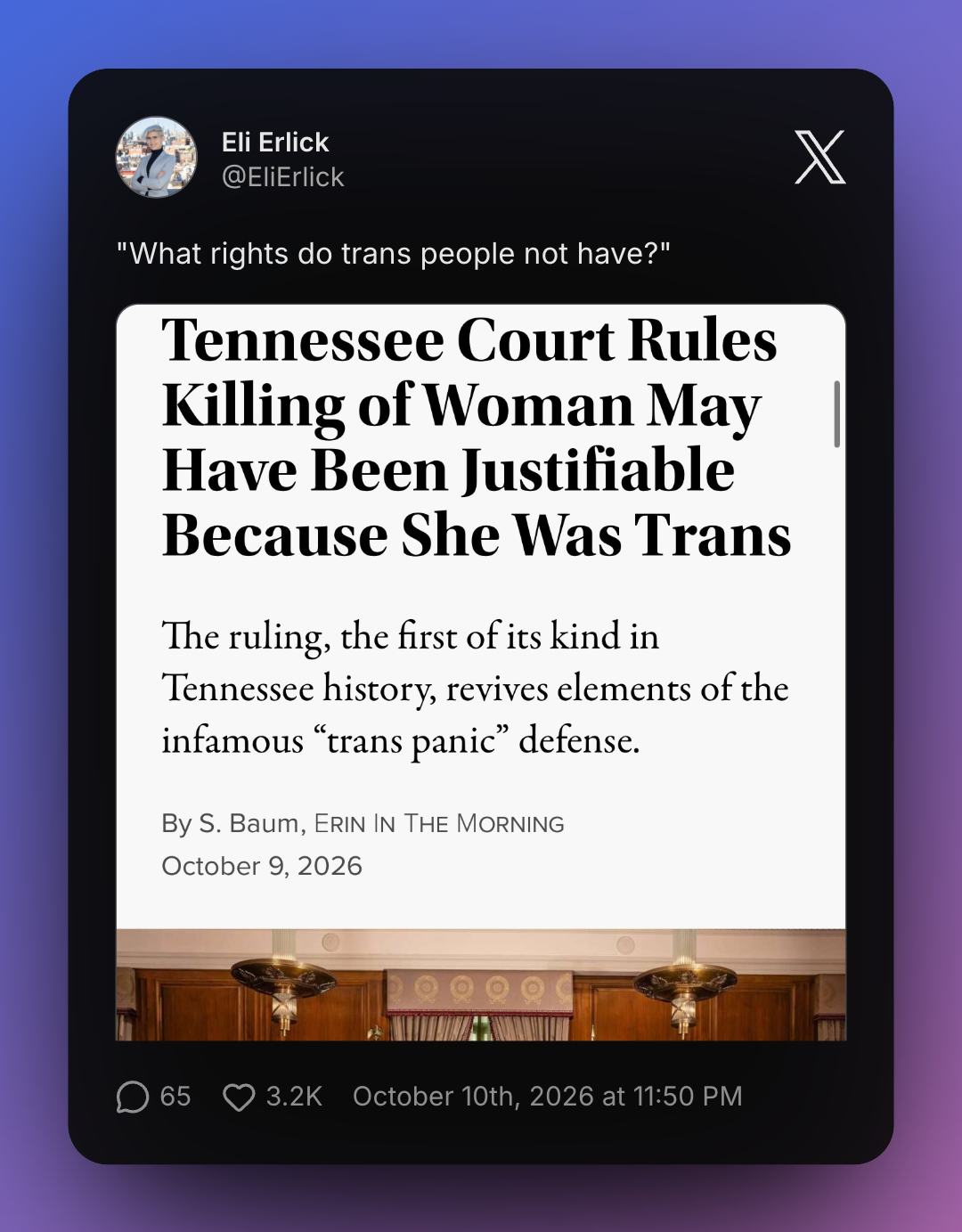
According to the National LGBTQ+ Bar Association, these arguments can invite jurors to consider a victim’s LGBTQ+ identity when evaluating a defendant’s actions.
In Lee’s case, Ward’s lawyers argued that her biological sex was relevant to understanding his claimed fear. The appeals court agreed that the evidence should have been admitted, leaving the self-defense question to be considered in further proceedings.
READ: Need an ID to Use the Restroom? Bar Fined $15,000 After Trans Discrimination
Why Are LGBTQ+ Advocates Concerned?
Critics of panic defenses worry that these arguments can reinforce stereotypes by presenting LGBTQ+ identity as a reason someone should be feared. They also raise questions about whether prejudice could influence how jurors assess violence against queer and trans people.
As PinkNews reported, LGBTQ+ advocates have raised concerns about the broader implications of the ruling. Tennessee has not enacted a ban on LGBTQ+ panic defenses, unlike a number of other states.
What Happens Next?
Ward’s case returns to the Tennessee trial court for a new trial. The case is not over, and the ruling does not determine the outcome of the next proceedings.
Here’s why this matters to the LGBTQ+ community: being trans shouldn’t turn someone into the villain in their own death. With a new trial ahead, the question is how Lee’s identity will factor into the case this time around.