


Darline Graham’s campaign for the U.S. Senate got a little awkward when the Trump-backed candidate was asked a basic question about national security: Does the United States have a national security interest in Taiwan and the South China Sea?

Her answer was refreshingly blunt, if not exactly reassuring.
RELATED: Log Cabin Republicans Remove the “T” and Return to an LGB-Only Agenda
“National security is not my thing.”
She followed it with another admission:
“I’m not that informed on national security.”
For someone running for a six-year Senate term, that is a rather unfortunate sentence to have on the campaign highlight reel. The question is particularly significant because Graham is seeking the seat previously held by her late brother, Lindsey Graham, whose Senate career was heavily defined by foreign policy and national security. Lindsey Graham made repeated trips overseas, including visits to Taiwan, and regularly weighed in on the U.S. relationship with China.
RELATED: Trans Actress Jesse James Rose Alleges Sen. Graham Hired Her
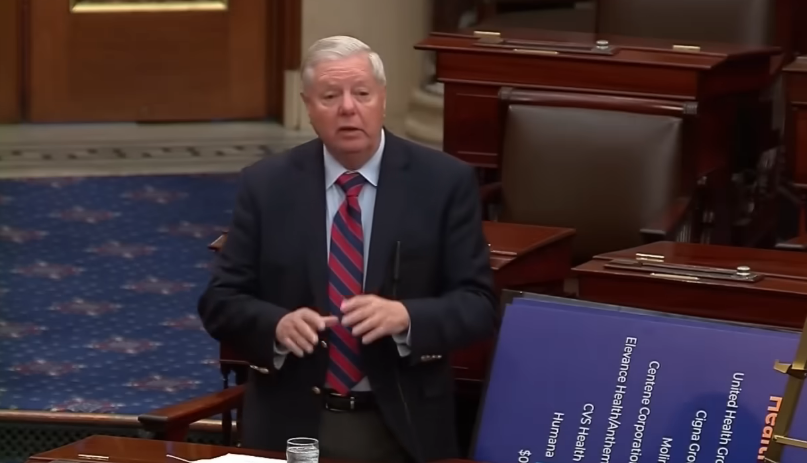
Darline Graham, by comparison, says national security simply isn’t her area of expertise. And perhaps that would be less eyebrow-raising if she weren’t campaigning for the United States Senate, where foreign policy, military affairs and national security are rather difficult things to avoid. Her Republican runoff opponent, Rep. Ralph Norman, certainly thought the admission was a problem.
“By her choice, she’s running for the United States Senate. It’s a six-year term,” Norman said. “You need to get fully versed in what issues you’re going to be dealing with. This isn’t a get training on the job, you can’t do that.”
Ouch. Nothing says campaign season like your own Republican opponent suggesting you might want to read the syllabus.
National security? Apparently, not her thing.
Graham was asked whether Taiwan and the South China Sea are national security issues for the United States and, if so, why. Rather than directly answering, she pointed to her family’s military background and her support for the armed forces.
“My brother was in the Air Force for 33 years, so I will do everything I can to support the military,” said Graham, who often read from a legal pad on which she had notes, its pages draped over the front of her lectern. “My dad was in the Army. I’m not a polished politician up here; national security is not my thing, not my area of expertise, but I do support the military.”
The distinction is worth noting. Supporting the military and understanding national security aren’t necessarily the same thing, particularly when the question involves Taiwan, China and the South China Sea. And those aren’t exactly obscure corners of foreign policy.
Taiwan has long been a flashpoint between China and the United States, while the South China Sea is one of the world’s most strategically important waterways. The U.S. maintains a policy of strategic ambiguity over whether it would intervene militarily if Taiwan were attacked, while continuing to support the island’s defense.
So yes, national security is complicated. That is precisely why candidates for the Senate are generally expected to have some idea what they’re talking about. Graham later defended herself by arguing that voters have more immediate concerns.
“They’re worried about their pocketbooks more than they’re worried about the South China Sea, quite honestly,” Graham said. “So that’s going to be my biggest focus.”
She also insisted she had repeatedly addressed the broader threat posed by China.
“I realize national security is very important,” Graham said. “I probably said 10 times up there tonight how bad China is, how they’re a national threat to us.”
And when she appeared on Fox News with Sean Hannity, Graham acknowledged that she had stumbled but framed the moment as an example of being candid with voters.
Darline Graham: I tripped up on one question last night, regarding Taiwan. I don’t speak politician. I was just honest. Of course, Taiwan is our friend. But I think people in South Carolina are more worried about boys in girls sports. pic.twitter.com/xKZNxkldrN
— Acyn (@Acyn) August 20, 2026
“I tripped up on one question last night regarding Taiwan, but you know, I’ve said many times, I’m not a politician, certainly not a career politician. I don’t speak politician,” Graham said. “You know, I was just honest, and I think that’s kind of a foreign concept.”
Honesty is certainly preferable to pretending to be an expert. But when national security involves Taiwan, China and the possibility of a major international conflict, “I’m still getting familiar with this” is probably not the most comforting campaign slogan. And then, somewhat remarkably, the national security controversy isn’t even the only thing Graham has managed to make headlines over.
Trans kids, healthcare and another head-scratcher
After narrowly advancing in South Carolina’s Republican primary, Graham turned her attention to her Democratic opponent and trans rights, declaring that she wants to “turn confused little boys into little girls and vice versa.”
Apparently, national security may not be her thing, but telling everyone else what to do with their gender certainly seems to be. Graham also took aim at gun control, abortion rights and public healthcare. Her healthcare argument, however, may be the strangest part of the campaign.
“I grew up in the back of a bar and liquor store in one room in Central South Carolina,” she said. “My parents worked long, hard hours to make ends meet. We didn’t take vacations.”
That paints a picture of a difficult childhood. But Graham then explained that her parents couldn’t afford to stay home when they were sick because their business depended on them showing up.
“If they were sick, they had to get up and go to work, because if the doors weren’t open we weren’t making money,” she added. “My mother passed away when I was 11, and my father just over a year later. … I understand the struggles of South Carolina families, because I’ve faced them too.”
The obvious lesson might be that working families shouldn’t have to choose between earning money and taking care of their health.
Darline Graham: Government run health care…. bad idea after bad idea. Annie Andrews backs it all. I have a different background. My parents worked long, hard hours. If that were sick, they had to get up and go to work. My mother passed away when I was 11 and my father just over… pic.twitter.com/fvFCrmudhi
— Acyn (@Acyn) August 26, 2026
Instead, Graham’s remarks appear to make that hardship part of her argument against publicly funded healthcare. And that’s where the campaign starts to feel especially strange.
Her own story demonstrates precisely why healthcare access matters: when families have no safety net, illness doesn’t simply mean a trip to the doctor. It can mean lost wages, closed businesses and, in the worst circumstances, devastating consequences for children.
For LGBTQ+ voters, that contradiction is hard to miss. Trans people are being presented as a political threat while healthcare is treated as something people should somehow figure out for themselves. Meanwhile, the candidate seeking a Senate seat has openly acknowledged that national security isn’t her area of expertise. That’s quite a résumé.
Maybe learn the job before taking the job?
Graham is a political novice who became an interim senator following her brother’s death and has been surrounded by many of his former Capitol Hill staffers. She has pointed to the legislation she’s already helped pass, including a Russia sanctions bill named for Lindsey Graham.
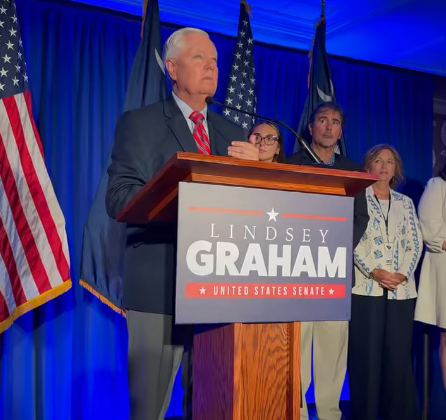
But the national security question isn’t going away simply because the campaign has other talking points. Her brother spent years building a reputation around foreign policy and national security, including multiple trips to Taiwan. Darline Graham has repeatedly said she wants to lead differently, which is perfectly legitimate.
But leading differently doesn’t necessarily mean being unprepared. There is nothing wrong with admitting what you don’t know. In fact, voters could reasonably appreciate a candidate who admits her limitations and intends to learn.
The problem is that national security isn’t an optional subject for a U.S. senator. Neither is foreign policy. Neither is healthcare. Neither are the rights of the people whose lives will be affected by the laws that senator votes on.
Graham may want to focus on South Carolina families’ pocketbooks, and those concerns absolutely matter. But voters can care about their grocery bills and national security.
They can care about jobs and Taiwan. They can care about healthcare and the rights of trans kids. The Senate doesn’t exactly offer a “pick three issues and ignore the rest” option. So perhaps Darline Graham’s most memorable campaign line isn’t necessarily the one she intended.
Moderator: Senator, are Taiwan and the South China sea national security issues for the United States and if so, why?
Darline Graham: National security is not my thing, not my area of expertise but I support the military. pic.twitter.com/F0FEFmc6GW
— Acyn (@Acyn) August 19, 2026
But if you’re asking Americans to give you six years in the United States Senate, it might be worth making it your thing.
Source: AP News