

There’s a famous myth about King Midas, whose touch turned everything into gold. Donald Trump, unfortunately, seems to have inherited the opposite gift — an un-Midas touch where everything he grabs somehow ends up colder, emptier, and deeply awkward; instead of everything turning to gold, it tends to quietly unravel. And his latest foray into cultural leadership is playing out less like a victory lap and more like a cautionary tale.
After returning to office, Trump found himself at the center of yet another eyebrow-raising headline when he was controversially awarded FIFA’s first-ever peace prize — a moment that confused soccer fans, diplomats, and pretty much everyone with access to the internet. Riding that wave of unlikely sports-world validation, Trump soon crossed over into a very different arena: American high culture.
🚨 NEWS: The Trump–Kennedy sign has been affixed to the Kennedy Center in violation of federal law.
No vote. No legal authority.
Just power ignoring the rules in plain sight. pic.twitter.com/oHnr21zinb
— Brian Allen (@allenanalysis) December 19, 2025
RELATED: Can the Kennedy Center Even Be Renamed? The Trump Change, Explained
Trump Takes the Kennedy Center
Earlier this year, Trump was elected chair of the board at the John F. Kennedy Center for the Performing Arts by a newly minted group of trustees. His promise was simple and characteristically blunt: he would “make it hot again.” That meant bringing in new audiences, stripping away what he labeled “woke” programming, and reshaping the institution in his image.
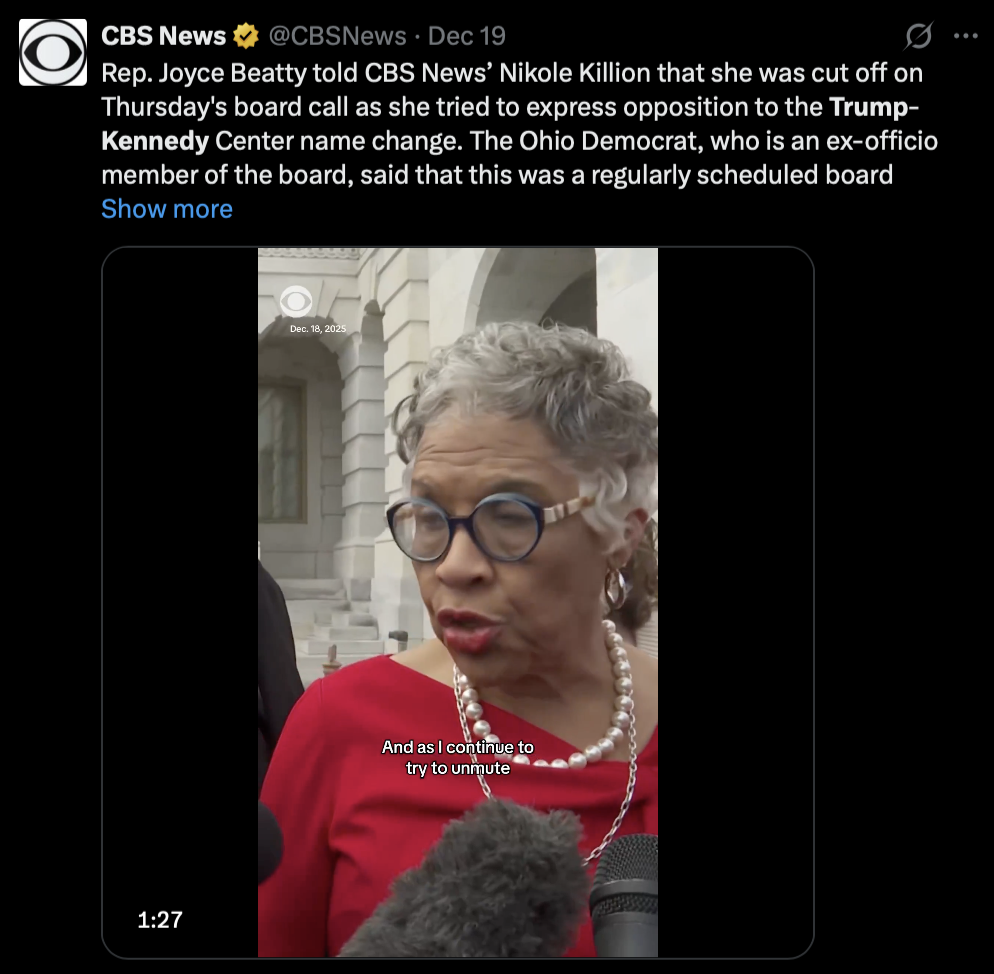
Soon after, the board voted to add Trump’s name to the venue itself. Yes, really. The iconic arts institution is now officially called The Donald J. Trump and The John F. Kennedy Memorial Center for the Performing Arts — a rebrand that stunned longtime patrons and raised questions about whether cultural legacy was being swapped out for political branding.
The Seats Tell a Different Story
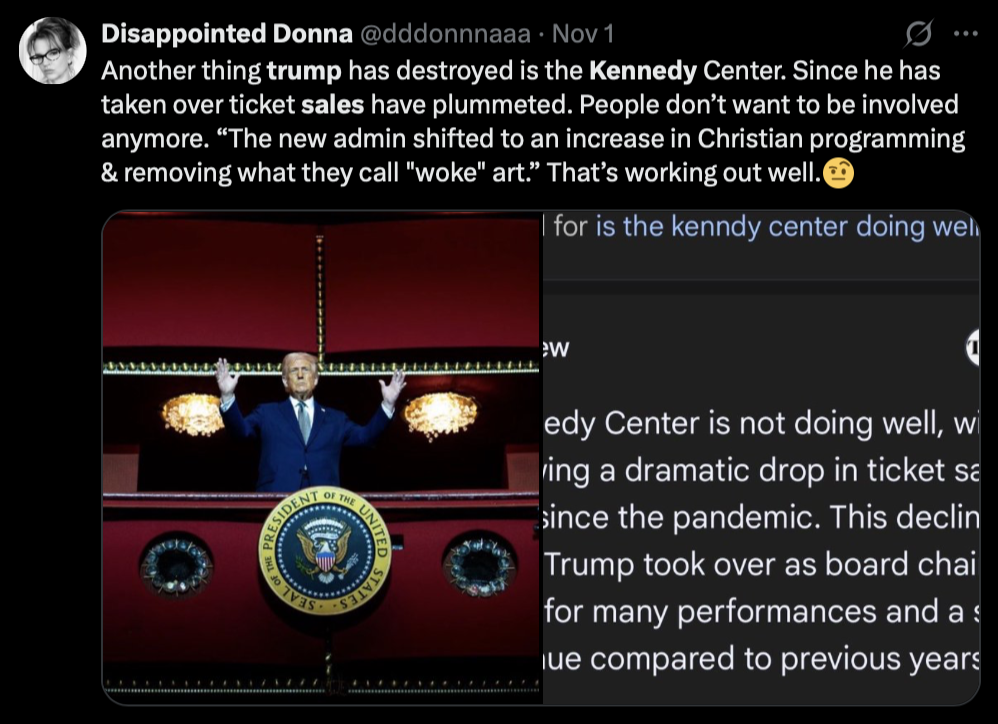
Eight months into Trump’s tenure, the numbers are in — and they’re not exactly standing ovation material.
Back in October, The Washington Post published an analysis of ticketing data covering September 3 to October 19, focusing on shows programmed under Trump appointee Richard Grenell. The findings were stark: 43 percent of all tickets went unsold. For comparison, during the same period in 2024, only seven percent of tickets remained empty.
Even marquee productions struggled. Jason Robert Brown’s Parade revival national tour was moved from the larger Opera House to the smaller Eisenhower Theater — and still only managed to sell 57 percent of its seats. It actually outperformed other offerings, including Stayin’ Alive: The Bee Gees & Beyond with Rajaton, which sold just 34 percent of available tickets.
If this was Trump’s idea of making the arts “hot again,” audiences weren’t exactly sweating.
Boycotts, Backlash, and a Brand Problem
According to the Post, the decline stems from a combination of factors. Arts attendance has been down industry-wide, but the Kennedy Center’s drop was sharper than most. Trump’s deployment of the National Guard in Washington, D.C. dampened nightlife and tourism, while longtime patrons reportedly chose to boycott the venue altogether.
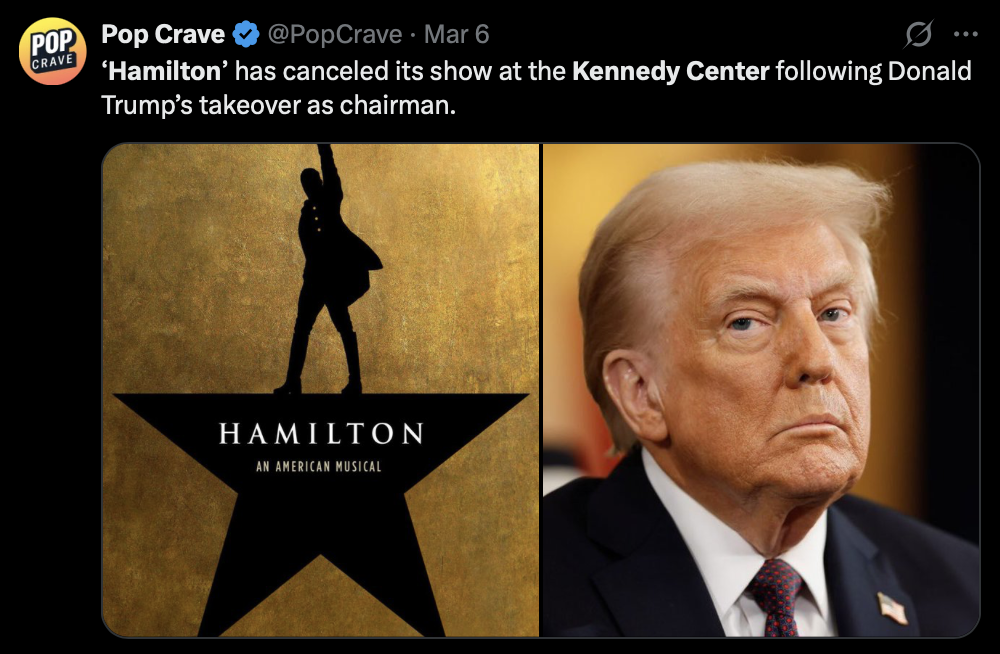
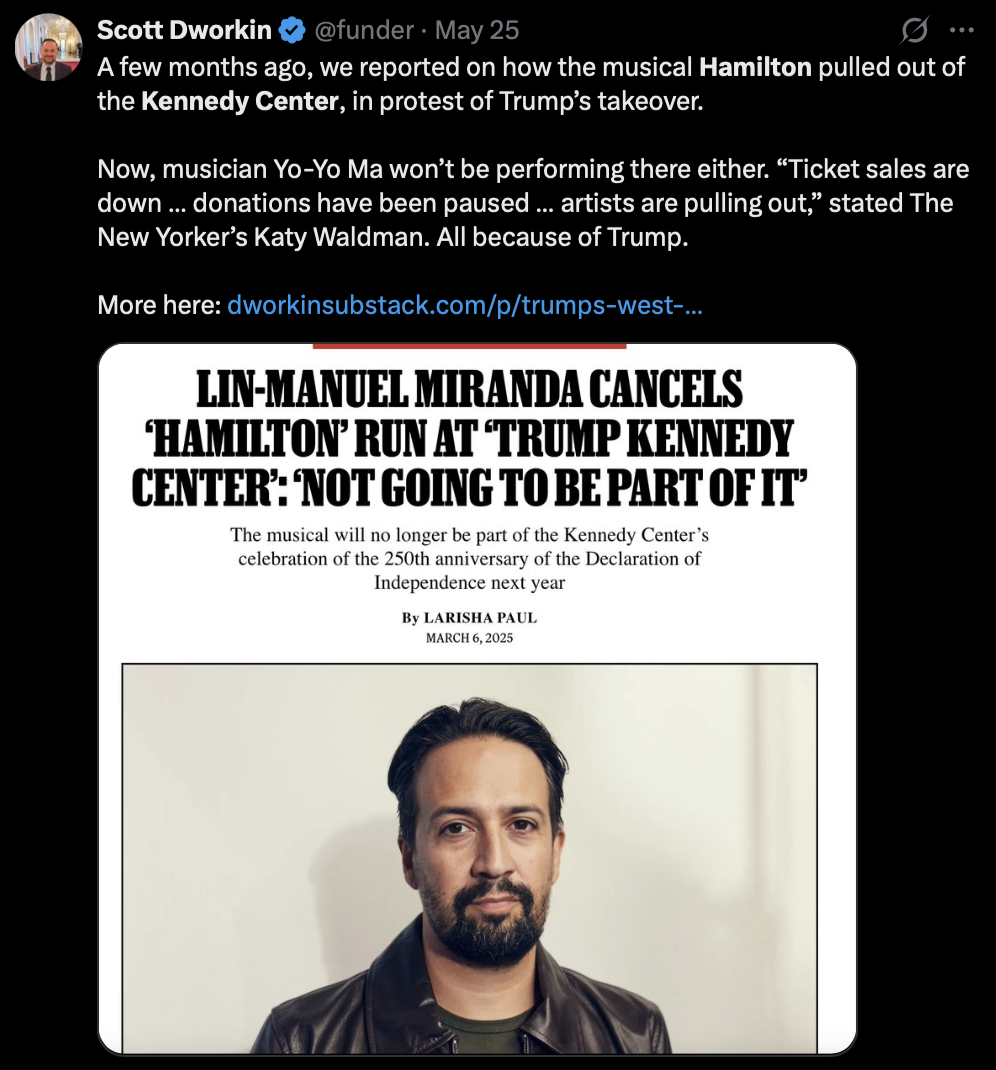
Then there were the cancellations. Several artists and productions pulled out of scheduled Kennedy Center stops, including the Broadway tour of Hamilton. Earlier this summer, during a performance of Les Misérables attended by Trump, multiple cast members opted to sit out the show entirely — a silent protest that spoke volumes.
An anonymous Kennedy Center staff member told the Washington Post that the downturn felt personal.
“This isn’t just about pricing or programming,” they said. “It feels directly tied to the new regime’s leadership shift and the broader political climate. I’ve heard from ticket buyers who say they’re choosing not to attend because of what the Kennedy Center now represents.”
The New York Times Confirms the Slide
The Post’s reporting echoed earlier findings from The New York Times, which revealed that single-ticket sales were down 50 percent in April and May compared to the same period in 2024. Together, the reports paint a picture of an institution struggling not just financially, but existentially.
Once seen as a largely apolitical cultural cornerstone, the Kennedy Center has become something else entirely — a symbol caught in the crossfire of America’s culture wars.
When Politics Plays the Arts
Trump’s crossover from FIFA ceremonies to theater boards may be unprecedented, but the result feels familiar. Whether it’s soccer fans confused by peace prizes or arts patrons recoiling from rebrands, the reaction is the same: disengagement.
The irony is hard to miss. In trying to dominate yet another space, Trump may have done what critics say he does best — turn attention into absence. From sports arenas to symphony halls, the applause just isn’t there.
And if the empty seats at the newly renamed Kennedy Center are any indication, the arts, much like soccer fans before them, may already be voting with their feet.
From the Kennedy Center to the World Cup, Backlash Is the New Headliner
The backlash theme doesn’t stop at the arts. It’s also playing out on the world’s biggest sporting stage, where FIFA was recently forced into a public retreat over its World Cup ticket pricing. Fans erupted after discovering that some seats for the North America-hosted tournament — including the final — were priced as high as $4,185, effectively shutting out the very supporters who travel year after year to follow their national teams.
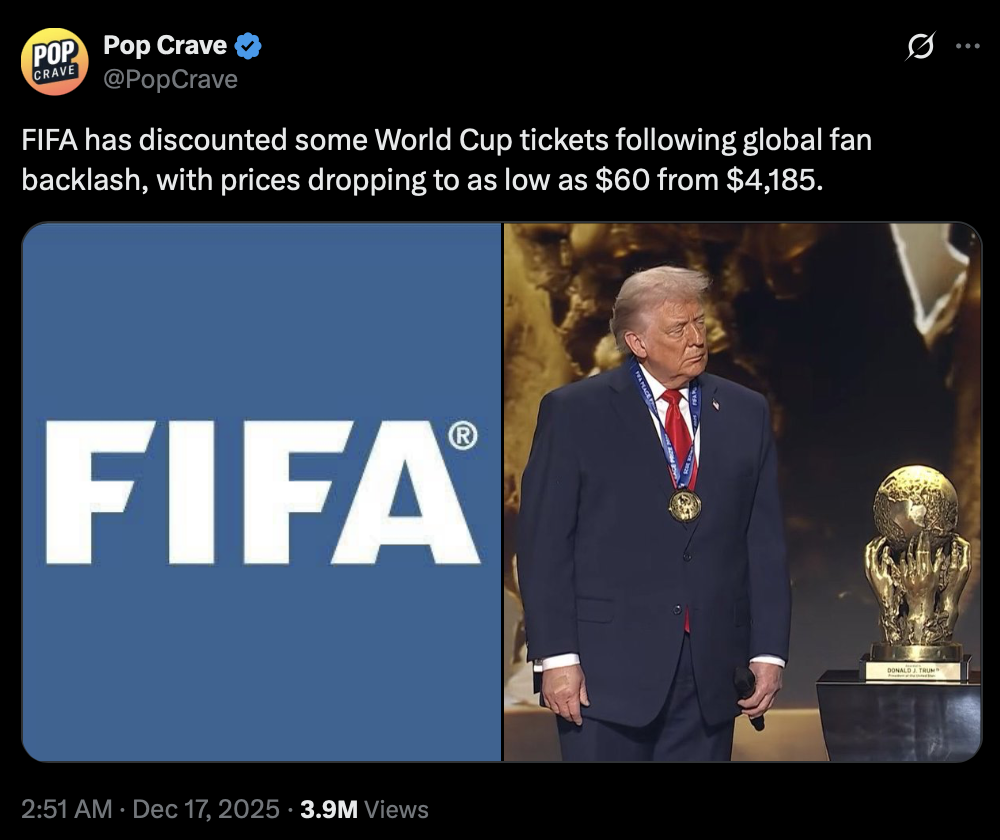
In response, FIFA introduced a new “Supporter Entry Tier,” offering a limited number of $60 tickets for every match. The organization said the move was meant to support loyal, traveling fans, though the discounted seats will reportedly number in the hundreds, not thousands. The reversal came after months of criticism over dynamic pricing, extra resale fees, and the broken promise of widely available low-cost tickets — a familiar story of institutions underestimating how quickly audiences will push back when they feel priced out and ignored.
REFERENCE: The Washington Post, CNN. The New York Times