


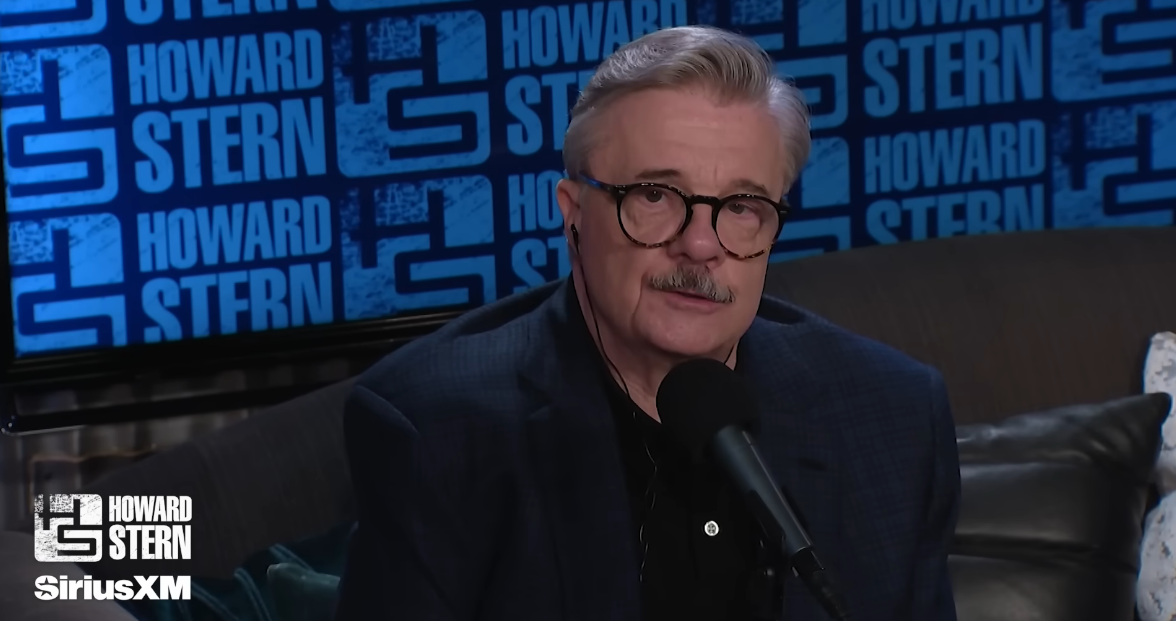
Speaking on The Howard Stern Show, the actor revisited what he calls the hardest conversation he’d had up to that point. There’s no polish to it, no attempt to soften the edges—just memory, intact.
RELATED: Ricky Martin’s Coming Out Changed Rafael De La Fuente’s Life
“I didn’t want to tell her, but before I left, we had been through so much together and, you know, I had never lied to her, and so I sat her down and said, ‘Look, I know you think I’ve been seeing a girl, but actually, I’ve been seeing a guy,'” Lane said.
Her response didn’t come with anger—but it didn’t come with acceptance either.
“She said, ‘You mean you’re a homosexual?'” Lane recounted. “And I had never heard it put that way. And I said, ‘Yeah, I guess so.’ And she didn’t say it in a vindictive or angry way. She said it with a sort of sadness, ‘I would rather you were dead.'”
And then, in a line that somehow manages to be both devastating and razor-sharp, Lane replied:
“I knew you’d understand.”
A Joke That Isn’t Just a Joke
That response lands like a punchline, but it’s doing more than getting a laugh. It’s deflection, yes—but also control. In a moment where everything could have collapsed into silence or hurt, Lane grabbed the narrative, even briefly.
He later added context that doesn’t excuse the reaction, but situates it: “You have to understand this is another generation. And that was, you know, this was not a sophisticated person in that way.”
There’s something very specific about that framing. It doesn’t rewrite what happened, but it acknowledges the gap—cultural, emotional, generational—that so many people have had to navigate when coming out.
When “I’ll Tell Them Myself” Lasts About Five Minutes
If that conversation wasn’t difficult enough, it didn’t stay contained for long. Lane asked his mother not to tell his brothers, Bob and Dan. He wanted to handle that himself. That plan lasted… not long.
“And then she immediately called them and told them. So I had to deal with that,” Lane said.
What followed was a mixed bag that will feel familiar to a lot of people. One brother came with questions, trying to make sense of it in the way people often do:
“He did ask the typical question of ‘Do you think it’s maybe just a phase?’ And I said, ‘No I don’t think it’s a phase.'”
The other response was simpler—and arguably, the one people hope for most:
“He was like, ‘I love you no matter what.'”
Before and After The Birdcage
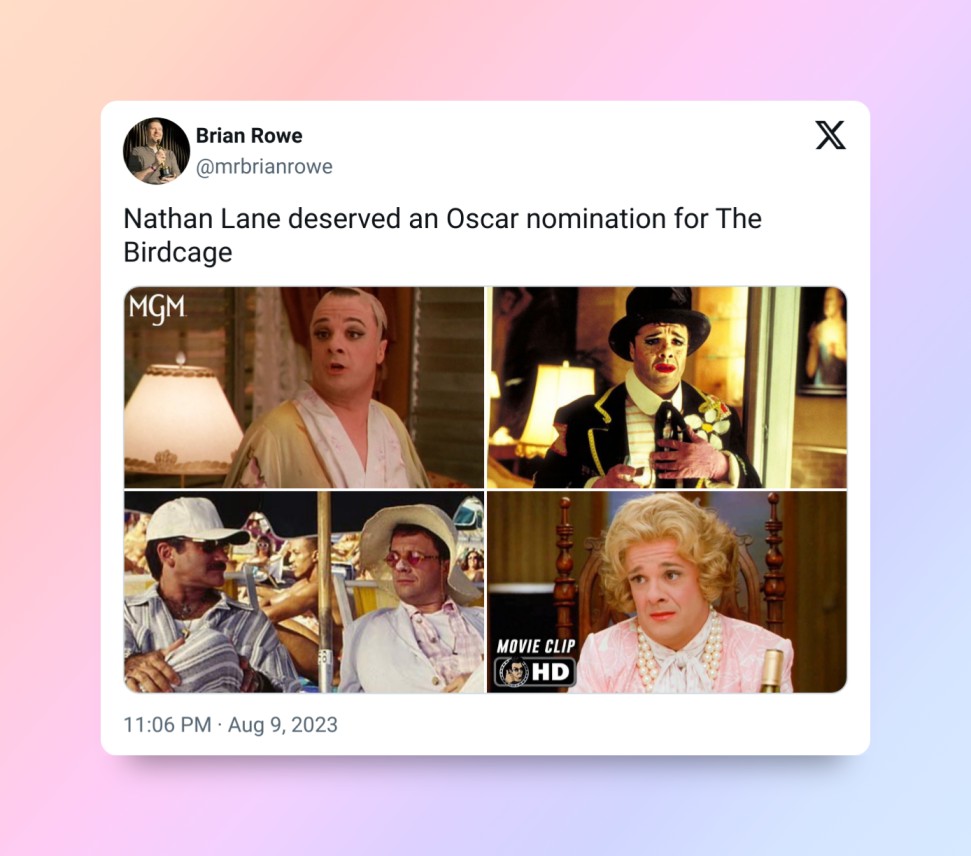
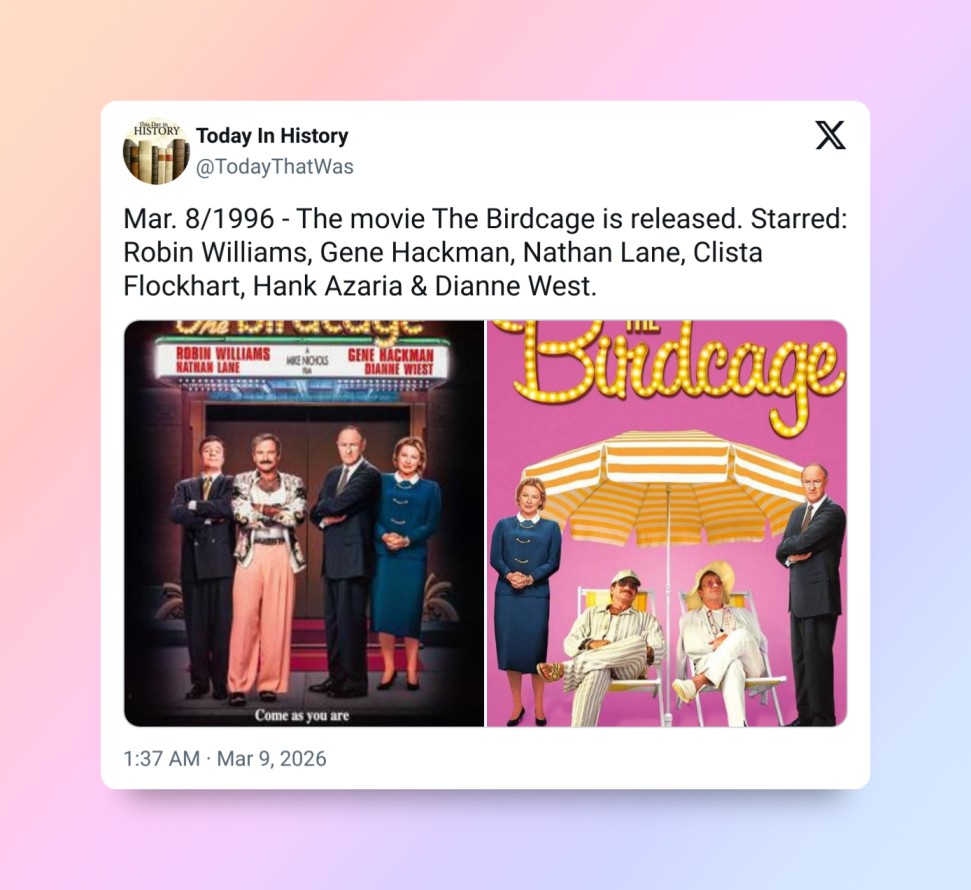
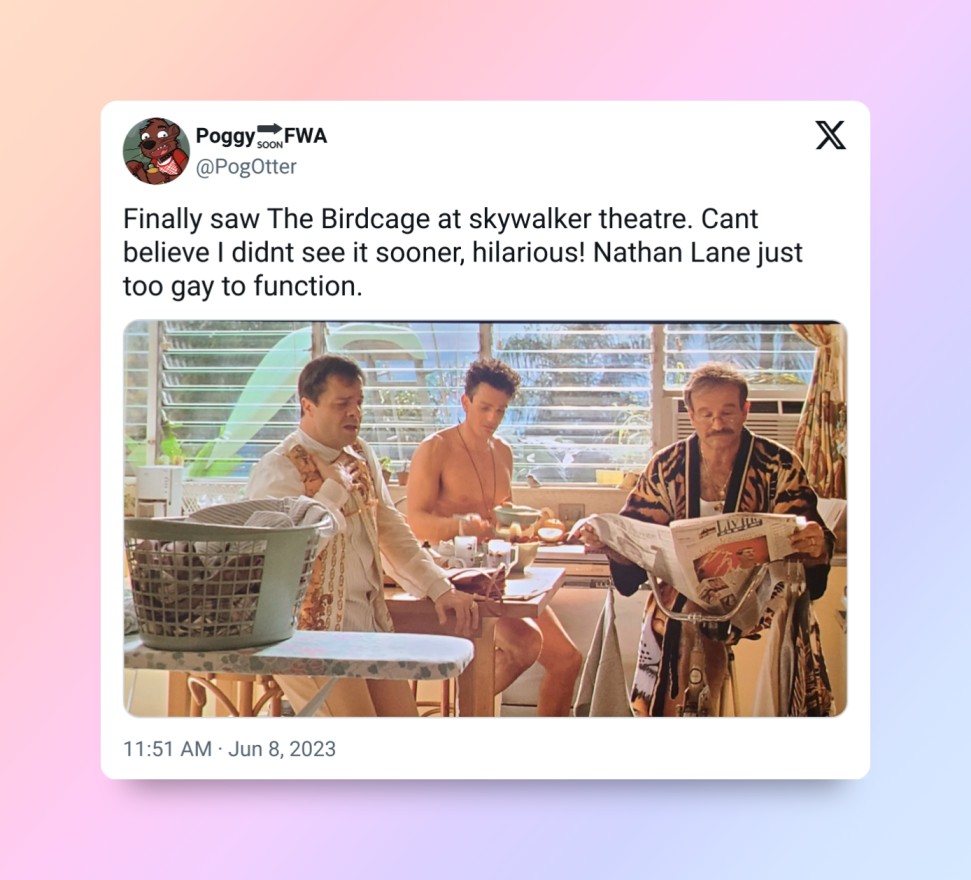
Long before he publicly came out in 1999, Lane had already delivered one of the most memorable performances in a film that remains a cultural touchstone: The Birdcage, directed by Mike Nichols and starring Robin Williams and Gene Hackman.
There’s an irony baked into that timeline—playing an openly gay character before publicly coming out himself. But the casting almost went very differently.
Lane shared: “It was supposed to be Steve Martin and Robin. Robin was going to play the part I played and and Steve had another. commitment and Robin thought because he had played Mrs. Doubtfire, he should play the more subdued role. And so that’s why the part opened up.”
Call it timing, instinct, or fate—whatever opened that door, Lane walked through it and made the role his own.
Nathan Lane and the Story That Stays With You
Lane’s public coming out wasn’t just about personal readiness—it was shaped by something far heavier. The murder of Matthew Shepard, a 21-year-old targeted for being gay, became a turning point.
Three years after The Birdcage, Lane chose to come out in an interview with The Advocate. Not because it was easy—but because, at that moment, it felt necessary.
The Story That Stays With You
There’s no tidy resolution to a story like this. His mother’s reaction doesn’t get rewritten into something comforting. The family dynamic doesn’t magically become perfect. What does emerge is something more honest: a mix of pain, humor, misunderstanding, and, eventually, pockets of acceptance.
And maybe that’s why this story lingers. Not because it’s shocking—but because it’s recognizable. The line “I knew you’d understand” gets the laugh, sure. But it also quietly carries everything that came before it—and everything that followed.
Source: EW
Love his acting! A lot of good movies with him and funny too!